
Follow Us on Twitter: Appalachian Voices | iLoveMountains.org

Posts Tagged ‘Appalachian Water Watch’

Appalachian Voices and Partners Challenge Kentucky’s Backroom Deal With Coal Company

Friday, May 17th, 2013 - posted by eric

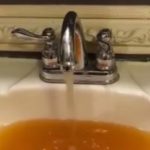
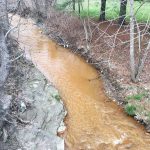
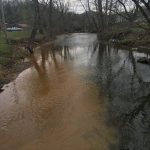
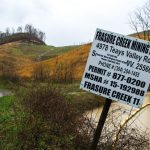
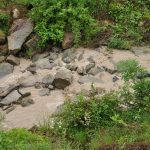
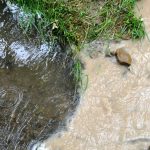
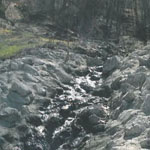
Watercolors by Frasure Creek. State inspector's photos show a variety of colors of water at Frasure Creek mines.

Yesterday, Appalachian Voices and our partner organizations filed a “petition for review”, essentially an appeal of a settlement between Frasure Creek Mining and the Kentucky Energy and Environment Cabinet. This settlement lets Frasure Creek off the hook for thousands of water quality violations over the past two years, while doing little to ensure that the company fixes its water quality problems.

Our challenge of this settlement focuses on the way in which it came about. But first, a bit of background.

We have a separate case that is ongoing against Frasure Creek for submitting false water monitoring data (entire reports were duplicated and only the dates were changed). After we uncovered this problem the company began turning in more accurate reports, which for the first time showed lots of pollution problems. We then filed a second suit against Frasure Creek for thousands of these pollution problems (which had been hidden by reporting problems before our first suit). Then the cabinet also filed a complaint for these pollution violations and more like them in state administrative court (a court run by the cabinet itself).

We intervened in that case and became full parties to it, but were then shut out of it completely. In fact the settlement was entered despite our previous objections, and there is no evidence that our objections were even considered. The cabinet and Frasure Creek negotiated a settlement completely without us. The law and common sense both dictate that an agreement is not valid unless all the parties involved agree to it, and that is the basis for our challenge of this settlement yesterday.
(more…)

Appalachian Residents Push for Clean Water Protections: Cabinet’s Agreed Order Challenged for Lack of Process, Inadequate Remedies

Friday, May 17th, 2013 - posted by eric

FOR IMMEDIATE RELEASE

Appalachian Voices * Kentuckians For The Commonwealth * Kentucky Riverkeeper * Waterkeeper Alliance

CONTACTS:
• Eric Chance, Appalachian Voices, 828-262-1500, eric@appvoices.org
• Pat Banks, Kentucky Riverkeeper, 859-200-7442, kyriverkeeper@eku.edu
• Peter Harrison, Waterkeeper Alliance, 828-582-0422, pharrison@waterkeeper.org
• Ted Withrow, Kentuckians For The Commonwealth, 606-784-6885 or 606-782-0998, tfwithrow@windstream.net

Frankfort Kentucky-Continuing their campaign to make sure Kentucky’s water is safe for everyone, several groups have challenged plans by the Beshear administration to let Frasure Creek Mining “off the hook” for repeated violations of the Clean Water Act.

Appalachian Voices, Waterkeeper Alliance, Kentuckians For The Commonwealth, Kentucky Riverkeeper and several individuals (the petitioners) asked the Franklin Circuit Court Thursday to vacate an Agreed Order signed in April by Environment and Energy Cabinet Secretary Len Peters that claims to resolve all recent water quality violations by the company.

They point out that the settlement “is inadequate to address Frasure Creek’s pollution problems and prevent such harms from occurring in the future.” They called the administration’s action “arbitrary and capricious, an abuse of discretion, contrary to law, and not supported by substantial evidence.”

“This settlement lets Frasure Creek off the hook for thousands of water quality violations,” explained Eric Chance, a water quality specialist with Appalachian Voices. “For years Frasure Creek had been submitting false monitoring reports. During that time they never reported any water quality problems. After we exposed these false reports, they began using more reputable labs and started showing hundreds of water quality violations every month.

“Over the past few years Frasure Creek’s water discharges haven’t really improved and I don’t expect there to be any improvements in the water coming off Frasure’s mines from this settlement,” Chance added.

“Clean water is not just a good idea. Clean water is critical to our health and well being,” said Pat Banks with Kentucky Riverkeeper. “We have learned that we cannot be complacent. The Clean Water Act enforces the notion that if companies are out of compliance and enforcement by the state fails, then citizens can and must step in to protect our waters. That’s what we are doing here.”

The petitioners also point out that they were granted full party status in the administrative enforcement case but were shut out of negotiations between the Cabinet and Frasure Creek that resulted in the final Agreed Order.

“The Cabinet has once again systematically excluded Kentucky citizens who are fighting to protect the water they use. After bringing Frasure Creek’s false reporting and pollution to the Cabinet’s attention, the Cabinet has tried, at every step, to sweep this matter under the rug and quickly settle with the company and exclude citizens from the process,” said Mary Cromer, with the Appalachian Citizens Law Center and one of the attorneys representing the petitioners. “We bring suit against the Cabinet for failing to do what’s necessary to ensure that Frasure Creek’s pollution is cleaned up and for excluding the citizens from their rightful roles as co-enforcers of the Clean Water Act.”

“We as citizens have the right to intervene and see and participate in this process,” explained Ted Withrow with Kentuckians For The Commonwealth. “Yet the Cabinet continues to ignore the law and shield another coal company from any meaningful enforcement. This Agreed Order was done behind closed doors shutting citizens out, even though we had full rights to be part of the process.”

BACKGROUND

In June 2011, the petitioners filed a 60-day Notice of Intent to Sue, documenting more than 2,800 violations of the Clean Water Act by Frasure Creek in the first three months of 2011. After conducting its own investigation, the Cabinet filed an internal administrative enforcement action alleging many of these same violations.

In November 2011, the petitioners were granted full intervention status.

However, the Cabinet conducted negotiations with Frasure Creek without notice to and participation by the intervenors, resulting in the Agreed Order signed by Peters. Kentucky law prohibits the entry of an Agreed Order without the consent of each and every full party to the Administrative Proceeding.

The violations in this case are similar to those in a 2010 lawsuit pending in Franklin Circuit Court, in that older case false reporting made it impossible to identify pollution problems like the ones at issue in this case. In the original lawsuit, the Cabinet filed an enforcement action against Frasure Creek in Franklin Circuit Court after the same petitioners made public thousands of Clean Water Act violations. In that case, the court granted the petitioners full intervention status. So in the 2011 case, the Cabinet took a different enforcement route to avoid public intervention. However, the administrative judge also granted full intervention status.

####

The Appalachian Citizens Enforcement Project

Thursday, May 16th, 2013 - posted by Erin

Visit www.ace-project.org to learn more about the Appalachian Citizens Enforcement Project and how you can help protect clean water rights.

The Appalachian Citizens Enforcement Project (ACE Project) is a new citizen water monitoring program being launched by The Alliance for Appalachia this summer. Appalachian Voices’ own Appalachian Water Watch team has been working with several Alliance partner organizations over the last two years to recruit and train volunteers to monitor and report water quality data in their area. Now our program is joining this greater water monitoring effort through partnerships in the ACE Project.

In 2011, Appalachian Water Watch launched community-based water testing in eastern Kentucky and southwestern Virginia. Through partnerships with Southern Appalachian Mountain Stewards and Kentuckians for the Commonwealth, we recruited over 50 water monitoring volunteers. Now, the ACE Project will expand water monitoring even farther, into Tennessee and West Virginia. Coal River Mountain Watch and United Mountain Defense have already submitted additional data from West Virginia and Tennessee, more than doubling the amount of data collected.
(more…)

Kentucky’s Lab Certification- Is it strong enough?

Wednesday, May 1st, 2013 - posted by eric

Yesterday, Appalachian Voices submitted public comments on a proposed wastewater lab certification program in Kentucky. To discharge polluted water, coal companies must receive a permit under the Clean Water Act. This permit that requires companies to test wastewater and report the data to ensure it falls within the limits of the permit. In Kentucky, there are currently no standards for labs that do this type of testing.

The proposed certification program is a direct result of the lawsuits for falsified water monitoring data we filed against three of the state’s largest coal mining companies. Our investigation revealed that many coal companies were repeatedly submitting the same data and knowingly leaving out reports of any violations of their permits. After we filed these lawsuits, the Kentucky Energy and Environment Cabinet inspected the labs being used for this monitoring and found that in many cases they were not even capable of correctly performing the required tests.

This graph shows some of the inaccurate data submitted by Frasure Creek Mining before our lawsuits lead them to start using a new lab. Click to enlarge.

We believe that enforcing standards on labs used by coal companies will help ensure that labs report accurate data, and that the regulations meant to protect water and those that depend on it from dangerous pollution are effectively enforced. This proposed rule will be a big step forward and we have applauded the cabinet for its efforts to fix these problems. However, there are several weaknesses in the rule that we hope are fixed before it is finalized.

All too often the cabinet has failed to live up to its obligations to protect the people and environment in Kentucky. That is why our comments suggest that discretionary duties given to the cabinet in this rule be made mandatory. Appalachian Voices will continue to work to require the state agencies to actually enforce these standards.

>>Click here to see our comments
>>Click here to read the proposed lab certification rule
>>Click here to read the draft lab manual

Help Protect Kentucky’s Fish from Toxic Selenium

Wednesday, February 27th, 2013 - posted by eric

Two headed trout, a result of selenium pollution. Courtesy of USFWS.

The Kentucky Energy and Environment Cabinet is currently attempting to significantly weaken the state’s water quality standards for selenium.

Selenium is a pollutant common at some coal mines that deforms and kills aquatic life. It bioaccumulates, increasing in concentration as it moves up the food chain, affecting larger fish and aquatic birds. At higher levels, selenium is toxic to people. Humans can be exposed to selenium through the water they drink and the fish they eat. Long-term exposure can damage the liver, kidneys, nervous system, and circulatory system.

Selenium pollution is expensive to prevent and to treat. By loosening standards, the cabinet is trying to protect the bottom line of polluters at the expense of the health of the state’s waterways and those that depend on them.

To learn more about selenium and why it is a problem in Kentucky, click here to read our selenium fact sheet (PDF).

Public comments are being accepted through Friday, March 1. Please help protect Kentucky’s fish from the toxic effects of selenium. Take a minute to make your voice heard by submitting a comment.

Even The Daily Show has taken note of the problem of selenium pollution in our nation’s waterways. The clip focuses on pollution from phosphate mines in Idaho, but the similarities between what happened there and what is going on in Kentucky are striking.

Kentucky Attempts to loosen Selenium Standards, Fish Attempt to Leave the State

Friday, February 8th, 2013 - posted by eric

Fish deformed by selenium pollution

The Kentucky Energy and Environment Cabinet is in the process of making the state’s water quality standard for selenium less stringent. Selenium is a metal that is especially toxic to fish, and is often released into streams through coal mining.

There will be a hearing before the Administrative Regulation Review Committee on Monday February 11, at 1 p.m. in Room 149 of the Capitol Annex, where, according to the Energy and Environment Cabinet website, the public “may” be able to speak out about this, but we still encourage concerned citizens to attend.

Selenium is a toxic nonmetal that is present in some coal and coal ash. Some of Kentucky’s mines release a lot of selenium because they are mining high-selenium coal seams, while others don’t release any.

Selenium is extremely toxic to fish in very low amounts because of its tendency to bioaccumulate. Selenium builds up in small fish and macro-invertebrates, and it accumulates even more in the fish that eat them. Toxic effects of selenium in fish include reproductive problems, deformities, damage to gills and organs, and death. The most obvious deformities are strangely curved spines, and “pop eye” — a buildup of fluid behind the eyes, causing them to bulge out. (more…)

Appalachain Voices and Partners Object to Backroom Deal With Kentucky Coal Company

Monday, February 4th, 2013 - posted by eric

Frasure Creek owner, and billionaire, Ravi Ruia's yacht. Note the matching helicopter! Frasure Creek Mining is apparently on the verge of bankruptcy, but it's owners seem to be doing just fine. Click the image to learn more about the boat.

A coalition of citizens’ groups including Appalachian Voices filed objections to a proposed settlement between Kentucky’s Energy and Environment Cabinet and one of the state’s largest coal mining companies, Frasure Creek Mining. The agreement would legally resolve over a thousand water pollution violations from 2011 and 2012 at all of Frasure Creek’s mines across Eastern Kentucky, but the agreement will not fix the pollution problems.

Despite the fact that we are full parties to this enforcement action, this agreement was crafted entirely behind closed doors without us. Over and over again the cabinet has made every effort to exclude us and aid polluters. One of our objections to this settlement is that it has violated our right to due process since our names are on this agreement yet we had no say in it whatsoever.

Some of Frasure Creek's false conductivity values

Even more alarming, we expect that if this agreement is entered the cabinet will likely try to argue that this makes another ongoing case that we are involved in moot. That case is primarily based on blatantly false water monitoring reports submitted by Frasure Creek. Prior to that legal action, Frasure never admitted having pollution problems like the ones at issue in this case. It was not until they came under increased scrutiny, following our initial court filing, that they began reporting more truthful water monitoring data, uncovering the pollution violations at issue in this settlement.
(more…)

Citizens Object to State of Kentucky’s Backroom Deal With Coal Company

Friday, February 1st, 2013 - posted by eric

Appalachian Voices * Kentuckians For The Commonwealth * Kentucky Riverkeeper * Waterkeeper Alliance

Contact:
• Eric Chance, Appalachian Voices, 828-262-1500, eric@appvoices.org
• Ted Withrow, Kentuckians For The Commonwealth, 606-782-0998, tfwithrow@windstream.net
• Pat Banks, Kentucky Riverkeeper, 859-200-7442, kyriverkeeper@eku.edu
• Peter Harrison, Waterkeeper Alliance, 828-582-0422, pharrison@waterkeeper.org

Frankfort, Kentucky–A coalition of citizens’ groups hoping to protect Kentucky’s waters filed objections today to a proposed settlement between Kentucky’s Energy and Environment Cabinet and one of the state’s largest coal mining companies, Frasure Creek Mining. The agreement purports to resolve hundreds of water pollution violations from 2011 and 2012 at all of Frasure Creek’s mines across eastern Kentucky, but the groups say that the agreement will not fix the pollution problems.

“We are full parties to this enforcement action yet we had no say in it whatsoever,” said Peter Harrison of Waterkeeper Alliance. “Our names are at the top of the document as though we agreed to it, but it was crafted entirely behind closed doors without us. This is an end-run around citizens’ rights to due process. The cabinet continues to make every effort to exclude citizens and aid those who choose to dump poisonous chemicals into our water supply.”

The citizens’ groups—Appalachian Voices, Kentuckians For The Commonwealth, Kentucky Riverkeeper, Waterkeeper Alliance, and several individual citizens are represented by Mary Cromer of the Appalachian Citizens’ Law Center (Whitesburg), Lauren Waterworth of Waterworth Law Office (Boone, NC), and the Pace Law School Environmental Litigation Clinic (White Plains, NY). The groups’ members are concerned that the agreement is too lenient, and will not ensure that Frasure Creek will clean up its pollution problems.

The citizens’ objection letter, filed in the state administrative court, states:

Approval of this Agreed Order would not appropriately penalize Frasure Creek or deter future violations, but instead it punishes the citizens of Kentucky. The Agreed Order sends a message to Frasure Creek and other coal companies that they can come into Kentucky, enjoy a near amnesty from state and federal environmental regulation, plunder the state’s natural resources, annihilate mountains and destroy rivers and streams, endanger the lives of the people living downstream, all before leaving without being held accountable for the destruction they have wrought. To enter the Agreed Order would be to endorse to this shameful scam.

“It is the cabinet’s responsibility to ensure that Kentucky has safe water, not to get in bed with the companies it is supposed to regulate,” said Pat Banks, Kentucky Riverkeeper. “If these foreign companies get a slap on the wrist for the hundreds of times they broke the law, then they’ll just smile, write a little check and do it again as soon as nobody is watching.”

Frasure Creek has made numerous statements indicating that it was in financial trouble and unable to pay penalties in another settlement, but has failed to substantiate these claims and the cabinet has failed to require them to do so. Frasure Creek is owned by Essar Group, an India-based multinational conglomerate that made $15 billion last year, and projects to double its profits over the next year.

Claiming concern that Frasure Creek will declare bankruptcy and abandon unreclaimed mines, the state has agreed to waive $440,000 of the total $660,000 penalty if certain conditions are met. If Frasure Creek abandons unreclaimed mines, the bonds would be used to cover the cost of reclamation; however, the federal Office of Surface Mining has found that Kentucky does not set bond amounts high enough to cover the cost of reclamation at most mines.

“How does letting Frasure Creek off the hook for $440,000 do anything to ensure that it will reclaim its mines when it already has $54 million in bonds to cover their reclamation?” Eric Chance, water quality specialist for Appalachian Voices asks. “Given OSM’s finding that many bonds in Kentucky are insufficient for reclamation, we are concerned that Frasure Creek is purposefully using the threat of bond forfeiture to leverage a lower penalty.”

In 2010, the same citizens’ groups began a legal action against Frasure Creek for submitting blatantly false water monitoring reports. Prior to that legal action, Frasure Creek never acknowledged having pollution problems like the ones at issue here.

“The citizens of Kentucky demand that these foreign scofflaws play by the rules,” said Ted Withrow of Kentuckians For The Commonwealth. “This settlement is a license to break the law and dump poisons into our drinking water again and again. The citizens of Kentucky want an end to backroom deals and demand that we have our day in court so we can stop this sham.”

###

Kentucky Governor Under Suit for Pro-Coal Corruption

Friday, October 19th, 2012 - posted by eric

Kentucky Governor Steve Beshear

Former Mine Permits director Ron Mills claims he was fired for failing to sign illegal coal mining permits.

Mills was a political appointee of Kentucky Governor Steve Beshear, whose official website states:

As governor, Beshear has helped restore public trust by creating a culture of integrity in state government that has included rooting out cronyism and implementing stronger ethics standards.

Click below to read the recent Lexington Herald Leader stories:
>>Trial delayed again in case that probes coal’s influence on Beshear
>>Beshear trying to settle lawsuit brought by former mine permits director

Landmark Settlement Proposed in Kentucky Water Pollution Case

Friday, October 5th, 2012 - posted by eric

Appalachian Voices, along with a coalition of citizens’ groups, has reached a historic agreement with International Coal Group, Inc. (ICG), and the Kentucky Energy and Environment Cabinet over years of false reporting and water pollution violations in Eastern Kentucky and a failure by the state to enforce the Clean Water Act.

We are very glad to achieve this settlement which will help clean up pollution in streams throughout the coal-impacted region, and we are proud to have worked with our partners in this important case that has already yielded changes in the coal industry and state regulatory agencies. The agreement was filed today in Franklin County Circuit Court and needs to be approved by the judge before taking effect.

Read our press release to find out more about the settlement.

In 2010, we uncovered dozens of pollution monitoring reports submitted by ICG and Frasure Creek Mining to the cabinet that were clearly false. Our analysis showed that some reports included all the same data as previous reports, but the dates had been changed. In other cases, there were multiple and contradictory reports for the same discharge point. Not only were the reports inaccurate, they were masking major pollution problems, as can be seen in the graphs below.

ICG Knott Conductivity

(more…)