Get Our RSS Feed!
Front Porch Blog


EPA’s Benefits Greatly Outweigh Costs, According to OMB Report


Wednesday, May 15th, 2013 | Posted by Davis Wax


A new report shows the EPA's rules, especially on air pollution, are saving money and lives.

During their push to abolish, obstruct and stymie the Environmental Protection Agency over the past few years, House Republicans have beleaguered the agency for regulatory measures they consider “job-killing” or “anti-industry,” hoping to revert federal environmental regulation to state control or make protections obsolete altogether.

Those in favor of federal rules have argued that national standards allow for the most effective and consistent protections and, as a result, will lead to reduced costs in health care directly associated with air and water pollution.

A new report from the White House’s Office of Management and Budget makes a clear case for why the country needs the EPA. The report includes an analysis of the costs and benefits of a number of federal regulations over the past decade and shows EPA rules, especially those pertaining to air protection, to be the most costly among all the rules evaluated but also the most beneficial.

The budget office estimates that the EPA’s rules account for 58 to 80 percent of the monetized benefits of all federal rules, but 44 to 54 percent of the total costs. Out of these benefits, close to 99 percent come from rules that seek to improve air quality. The report claims that the large estimated benefits of the EPA rules following the arrival of the Clean Air Act stem mostly from the reduction of a single air pollutant: fine particulate matter.

Read more
...


Clean Water Protection Act Introduced with 45 Cosponsors


Tuesday, May 7th, 2013 | Posted by Thom Kay


Yesterday, Rep. Frank Pallone (D-NJ) and Rep. Dave Reichert (R-WA) introduced the Clean Water Protection Act in the 113th Congress with 45 original cosponsors.

The Clean Water Protection Act, H.R. 1837, is a bill in the U.S. House of Representatives which would sharply reduce mountaintop removal coal mining by making it illegal to dump mining waste into valleys and streams. To date, more than 2,000 miles of streams have been buried or severely polluted.

As the bill sponsors point out in their Dear Colleague letter to other members of Congress:

An EPA scientific study in 2008 shows that more than 63% of the streams sampled below mountaintop removal coal mining operations exhibited long-term impairments to aquatic organisms. In some large watersheds, more than half of the streams are impaired.

Last Congress, more than 130 representatives, from Kentucky to Hawaii, took a stand against mountaintop removal coal mining by cosponsoring the Clean Water Protection Act.

It is crucial that we carry over the momentum we built during the last Congress by having a large group of cosponsors. For your Representative to sign onto the bill, they need to hear from you.

Take action now and tell your Congressperson you expect their support of this important legislation.

Mountaintop Removal 101: Congressional Research Service Updates Report


Thursday, May 2nd, 2013 | Posted by Brian Sewell


An updated report by the Congressional Research Service provides a look at the current legal and legislative challenges to mountaintop removal.

Every day, more Americans become concerned with the threat of mountaintop removal in Appalachia. Just yesterday, I was made aware of a website called “What About Mountains?” created by a fourth grade class at the Episcopal School of Knoxville. These students may just be learning about the issue, but they know that “mountaintop removal coal mining is not OK,” and seeing a photo of lush mountains reduced to “ugly blobs of land” is as fine a place to start as any.

Whether you’re in fourth grade or in your forties, it’s helpful to have a convenient compendium on the issue of mountaintop removal, especially considering the ever-evolving legal battles, status of bills on Capitol Hill, and state and federal level regulations. An updated report from the nonpartisan Congressional Research Service called Mountaintop Mining: Background on Current Controversies acts as a CliffsNotes for anyone concerned with the situation and interested in catching up.

The report summarizes the legal challenges, agency and congressional actions related to mountaintop removal and points out that, despite two recent court rulings underscoring the need for greater protections, few people on either side are please with the U.S. Environmental Protection Agency’s record on the issue. Mountaintop removal supporters complain of onerous rules that hamper employment and opponents point to poisoned water, unhealthy communities and shortened lives.

Read more
...


A Good Week for Mountains – Multiple Court Rulings Favor Science and Enforcement


Tuesday, April 23rd, 2013 | Posted by Brian Sewell


Earth Week is off to a good start after two major rulings in two days mean we may start seeing less of this.

We’re only two days into Earth Week — if we must limit it to one week out of the year — but it sure is getting off to a great start. In the past two days, two major court rulings have underscored the need for increased scrutiny from the federal agency responsible for evaluating environmental impacts of mountaintop removal coal mining according to the National Environmental Policy Act and issuing permits under the Clean Water Act.

Yesterday, the 6th U.S. Court of Appeals revoked the U.S. Army Corps of Engineers use of Nationwide Permit 21 (NWP 21), a streamlined and inadequate process that has contributed to the expansion of mountaintop removal in Appalachia since 1992. Kentucky and West Virginia residents, with the support of groups including Kentuckians for the Commonwealth, Kentucky Waterways Alliance and the Kentucky Riverkeeper, have challenged the legality of NWP 21 in state and federal court for a decade.

In its ruling, the three-judge panel called the Corps’ actions “arbitrary and capricious” and found that the agency did not follow the applicable Clean Water Act (CWA) and National Environmental Policy Act (NEPA) regulations, which require it to document its assessment of environmental impacts and examine past impacts before issuing new permits. From the ruling:

Though we generally give greatest deference to an agency’s “complex scientific determination[s] within its area of special expertise,” we may not excuse an agency’s failure to follow the procedures required by duly promulgated regulations.

After opting for streamlined nationwide permitting, the Corps took the easier path of preparing an environmental assessment instead of an environmental impact statement. Having done so, it needed to follow the applicable CWA and NEPA regulations by documenting its assessment of environmental impacts and examining past impacts, respectively. Failing these regulatory prerequisites, the Corps leaves us with nothing more than its say-so that it meets CWA and NEPA standards.

According to the Corps, approximately 70 surface mining permits authorized under NWP 21 qualify for a five-year accommodation to “provide and equitable and less burdensome transition” for coal operators. Whatever its impact on existing mountaintop removal permits, the ruling acknowledges that when it comes to protecting Appalachia, the Corps “say-so” is insufficient.

Read more
...


EPA Releases Proposal To Update Clean Water Act Standards for Power Plant Pollution


Monday, April 22nd, 2013 | Posted by Sandra Diaz


The U.S. Environmental Protection Agency has finally proposed a range of options to regulate waste water from power plants which are responsible for half of the nation’s water pollution. While the public comment period has yet to begin, a public hearing is schedule for July 9th in Washington, DC.

More details on the rule itself, and how to submit your comments will be become available on appvoices.org/rww/power-plant-waste/

Below is a press statement from Appalachian Voices and a number of allied organizations.

After 30 years of inaction, EPA finally proposes plans for power plant water pollution includes options protecting waters from toxic pollution as well as weaker standards that maintain the status quo

Washington, D.C. – The Environmental Protection Agency proposed a number of regulatory options late last Friday night, known as steam electric effluent limitation guidelines for power plants, two of which will finally clean up water pollution from hundreds of power plants.

Power plant water discharges are filled with toxic pollution such as mercury, arsenic, lead, and selenium – heavy metals that can cause neurological and developmental damage, cause harm in utero, damage internal organs and cause cancer. Power plants are the biggest sources of water pollution in the country, yet the EPA has not reviewed regulations for this industry in more than 30 years. To address this unacceptable delay, environmental groups filed a lawsuit in 2010 to force the EPA to take action and regulate this dirty industry.

Read more
...


“War on Coal” Claims are a War on Reality


Wednesday, April 10th, 2013 | Posted by Melanie Foley


A national average of 88,152 coal mining jobs under President Obama represents a 15 percent increase from the average under the Bush administration of 76,470. Graph by Appalachian Voices

The coal industry and the members of Congress who depend on its support have accused President Obama and the U.S. Environmental Protection Agency of waging a “war on coal.” Industry supporters argue that limits on emissions from coal-fired power plants and increased scrutiny of mountaintop removal mining permits are killing jobs. But the numbers show that, aside from being a tired rhetorical trope, the “war on coal” is also a myth.

This week, Appalachian Voices released an analysis of the latest data from the Mine Safety and Health Administration that reveals the fallacy behind “war on coal” claims. An average of 88,152 coal mining jobs under Obama represents a 15 percent increase from the Bush average of 76,470. Employment in 2011 and 2012 was the highest two-year period in 15 years. Each of the top 10 coal-producing states have seen more jobs on average under Obama than under Bush, and nine of those states saw higher employment in 2012 than at any point during the Bush years.

One of the main factors contributing to the employment increase is a decrease in productivity. Coal is growing scarce and difficult to reach, especially in Appalachia, and it takes more miners than it once did to mine the same amount of coal. Since its peak in 2000, productivity has declined 30 percent. Increased underground mining explains some of this decline since it requires more workers than large-scale surface mining methods such as mountaintop removal.

Read more
...


Canvassing Against Coal Ash


Friday, March 15th, 2013 | Posted by Matt Grimley


The Red, White & Water team hit the streets near Belmont, N.C., to speak with residents who live near Duke Energy's G.G. Allen Steam Station about the threats of coal ash pollution.

Last Saturday, the Red, White and Water team traveled to Belmont, N.C., to the G.G. Allen Steam Station for a day of canvassing. Walking door-to-door, we asked residents of the communities near the coal-fired power plant if they had been impacted by water pollution.

I met Archie Dixon, who was featured in the Gaston Gazette a few months ago. Dixon had complained to Duke Energy, which owns the power plant, about coal ash staining his property and getting into his drinking water. I spoke with him while he and his grandson (also named Archie, or “Lil’ Arch”) waited for a plumber for a broken pipe on their property. In his garage sat a waist-high stack of bottled water. Mr. Dixon said that he still refuses to drink his own home’s water.

The pollution near the plant happens in two ways. One is through coal ash ponds. Coal ash is the waste byproduct from burning coal and it contains contaminants such as arsenic, mercury and chromium. Because the one active coal ash pond at G.G. Allen is an unlined impoundment, these toxics can seep into groundwater. Tests near the plant have revealed exceedances in manganese, iron and nickel in the groundwater.

Effluent is the other form of pollution at G.G. Allen — the plant wastewater that discharges directly into the surface waters of nearby Lake Wylie. Under the Clean Water Act, permits are issued for each of the plant’s discharge points. These permits, however, only set limits for traditional pollutants, including oil and grease, “total suspended solids” and pH. They rarely limit pollutants such as mercury, selenium, and arsenic. And with a lack of federal guidelines, many states don’t set their own permit limits for these toxic chemicals.

Read more
...


An Uphill Climb Gets Steeper


Tuesday, March 12th, 2013 | Posted by Melanie Foley


Sequestration Comes to Appalachia

In August 2011, Congress and President Obama made a pact. They agreed to $1.2 trillion worth of cuts over 10 years if another deficit reduction compromise could not be reached. Efforts to avoid the severe and widespread cuts failed, and as of the beginning of this month the sequester is in effect. President Obama, as required by law, has signed an order withdrawing $85 billion for the seven months left in fiscal year 2013. The Office of Management and Budget released a report calculating reductions of 13 percent for defense programs, and nine percent for non-defense programs over the remaining year.

Congressional Sequester

The Democrats on the U.S. House of Representatives Appropriations Committee released an analysis of nationwide effects of the sequestration predicting a major reduction in U.S. Environmental Protection Agency air quality enforcement due to loss of manpower and cuts to monitoring systems — an estimated 1,000 fewer inspections. The members cautioned that, “shutdown of some air monitoring sites would make it more difficult if not impossible to determine if some areas of the country meet Clean Air Act standards.” This is bad news for Appalachia, which is overrun with aging coal plants, high incidents of asthma, lung cancer and other respiratory diseases.

Reduced enforcement for clean air and water will threaten environmental and public health in every state. But here are the figures from The White House on reductions in Central Appalachian states:

Cuts for Clean Air and Water by State:
Kentucky – $2,100,000
North Carolina – $3,606,000
Tennessee – $2,211,000
Virginia – $2,997,000
West Virginia – $2,013,000

Read more
...


McCarthy Nominated to Lead EPA


Monday, March 4th, 2013 | Posted by Tom Cormons


President Obama today announced the nomination of Gina McCarthy as the U.S. Environmental Protection Agency administrator, replacing Lisa Jackson who served throughout the president’s first term. McCarthy is currently the assistant administrator for the EPA’s Office of Air and Radiation.

Appalachian Voices released the following statement from Executive Director Tom Cormons:

“This nomination clearly shows the president’s commitment to addressing the very real environmental consequences of American energy policy.

“From the Romney statehouse to the Obama EPA, Gina McCarthy’s approach to environmental problems and solutions rises above partisan politics — which is exactly where this conversation needs to take place as the U.S. grapples with the immensely challenging issues affecting the nation’s natural resources upon which our economy, health and future rely.

“Appalachian Voices urges swift Senate approval, and looks forward to working with Ms. McCarthy to reduce greenhouse gas emissions, protect citizens from coal ash pollution, and end the destruction of Appalachia’s mountains, waters and communities.”

Virginia Transportation Board OKs Coalfields Expressway Project


Thursday, February 21st, 2013 | Posted by Nathan Jenkins


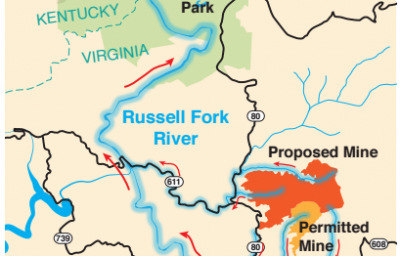
Approved on Wednesday by the Commonwealth Transportation Board, the redrawn route prioritizes Alpha Natural Resources' access to coal, not travelers' access to local communities. Click to view the full-size map.

Yesterday, Virginia’s Commonwealth Transportation Board approved a four-lane divided highway that will flatten steep mountain ridges in southwest Virginia along a route proposed by Alpha Natural Resources — the largest coal company operating in Appalachia today.

The proposed 26-mile Coalfields Expressway is only a few miles off of several less destructive routes studied by the Virginia Department of Transportation in 2001 when it conducted a detailed environmental review of the area. The difference is that VDOT looked for a suitable place to build a highway. Alpha and other coal companies such as Rapoca Energy, on the other hand, selected the most profitable route for surface mining, using the highway as justification for the environmental toll they would inflict along the way.

This difference in purpose of the proposed routes is apparent when you look at the estimated impacts. The route VDOT selected in 2001 would have a 750-foot right of way that would disturb about 1,100 acres of land, four miles of streams and 720 acres of forest. Those impacts alone are daunting, but they pale in comparison to the redrawn route. Alpha’s path of destruction, with its 2,200-foot right of way, would flatten more than 2,100 acres, bury 12 miles of streams and clear-cut more than 2,000 acres of forest — not to mention destroy two churches and three cemeteries.

Nevertheless, VDOT sees this “coal-synergy” project as beneficial because it will cost taxpayers $2.8 billion to build, as opposed to the projected $5.1 billion without collaboration from the coal industry. The savings are disputable, however, and do not factor in the environmental cost of the road’s relocation. VDOT’s rush to make this project a reality has led them to disregard recommendations from the U.S. Army Corps of Engineers, the U.S. Environmental Protection Agency and the U.S. Fish and Wildlife Service — all of which are asking for a full environmental review of the new route.

Read more
...


N.C. State Rep. Harrison: Let the EPA Do Its Job


Wednesday, February 20th, 2013 | Posted by Davis Wax


Watch N.C. Rep. Pricey Harrison testify before the U.S. House Subcommittee on Environment and Economy.

What should the role of the states be in protecting human health and the environment?

Last Friday, the U.S. House Energy and Commerce Subcommittee on Environment and Economy held a hearing to untangle that complex question. North Carolina Rep. Pricey Harrison testified to the committee on the need for increased oversight and regulatory enforcement by the U.S. Environmental Protection Agency.

“The question is not whether states or the federal government have a role in environmental protection,” she told subcommittee members, “but whether each is playing its appropriate role under current law.”

Harrison highlighted the growing concerns of North Carolinians’ surrounding coal ash pollution from disposal ponds owned by Duke Energy as an example of how states are failing to protect citizens. The state began requiring more extensive groundwater monitoring a few years ago. But even now, with known instances of groundwater standards violations, no action has been taken by the state to get Duke Energy to address the contamination.

Another emerging issue is the reckless push to bring hydraulic fracturing to the state. State Senate Bill 76 would allow fracking in the state in two years, no matter the status of the state’s regulatory development, resources or staffing.

Read more
...


N.C. Rep. Pricey Harrison to Make Case for Federal Environmental Protections


Thursday, February 14th, 2013 | Posted by Brian Sewell


North Carolina Rep. Pricey Harrison will testify at a House subcommittee hearing on the states' role in environmental protection.

On Friday morning, North Carolina Rep. Pricey Harrison will testify before a House hearing on “the role of the states in protecting the environment under current law.” It’s an area she knows a lot about – in 2007, Harrison introduced a bill to prohibit utilities in North Carolina from purchasing or burning coal from mountaintop removal mines.

Subcommittee members will hear testimony on issues related to current laws including the Safe Drinking Water Act and Resource Conservation and Recovery Act under which states are given the primary authority to regulate wastewater and coal ash pollution.

Watch Rep. Pricey Harrison’s testimony and the hearing Friday at 9:30 a.m. here.

During tomorrow’s hearing, Harrison will likely focus on the concerns of North Carolinians surrounding coal ash and the state’s failure to adequately protect communities and local waterways. The problem of coal ash is growing in North Carolina, and even as Duke Energy begins to retire ancient coal-fired power plants, the state has no clear plan on how to deal with legacy ash disposal sites that will remain long after plants are closed.

Learn about the hazards and history of coal ash sites in North Carolina and across the Southeast.

Duke merged with Progress Energy last year to become the largest utility in the country. Meanwhile, the N.C. Department of Environment and Natural Resources is coming off a fresh round of budget cuts, and faces continued uncertainty if North Carolina lawmakers continue on their current path.

Adding insult to injury, nearly every step of the process to bring fracking to North Carolina has been haphazardly handled. Now, the state General Assembly has introduced a law to circumvent the rule-making commission it put in place, you know, if it isn’t moving fast enough.

North Carolina has a history of environmental leadership, but recent proposals in the state legislature, including a reckless plan to remove all the members of several environmental commissions, are threatening to reverse that trend.

Lawmakers are on an anti-regulatory bender in the Tarheel State. And without federal oversight North Carolinians will be at risk as underfunded state agencies work to enforce environmental rules while finding ways to prevent the next budget cut.

Despite Positive PR for Duke Energy, Our Water is Still at Risk


Friday, February 1st, 2013 | Posted by Sandra Diaz


Duke Energy announced it would retire the Riverbend Power Plant in April, two years ahead of schedule. A good headline, but water is still being put at risk.

Don’t like what people are saying about you? Change the conversation!

Duke Energy has gotten a ton of mileage for their decision to retire or convert some of their older, more inefficient power plants in the Tarheel State. It’s environmentally-friendly after all – recycling news stories!

And you can create a whole new news story by moving your timeline. Duke Energy announced today they will be retiring their octogenarian coal plants, Riverbend in Gaston County and Buck in Rowan County this April, nearly two years ahead of schedule.

And while we are happy that Mountain Island Lake and the Yadkin River will be suffering from less pollution from toxic heavy metals like arsenic, selenium, chromium and so on, could it be that Duke Energy is trying to distract from the PR crisis they are currently facing around their leaking coal ash impoundments?

Like the fact that Western North Carolina Alliance intends to pursue legal action against Progress Energy for not complying with the Clean Water Act and allowing illegal discharges into the French Broad River. Or that the Catawba Riverkeeper has documented seeps into Mountain Island Lake, Charlotte’s drinking water supply, and Lake Wylie. Or how about that the Cape Fear Riverkeeper is reporting high arsenic levels in groundwater near well water supplies at the Sutton plant in Wilmington.

On top of that, Duke University scientists publishing reports that seem to back up many of these claims. So while Duke’s announcement is indeed good news for water, we need to continue to hold Duke and Progress accountable. There is more to be done.

The Mayan Calendar Has Ended, And There is Still Coal Ash in the Tennessee River


Friday, December 21st, 2012 | Posted by Sandra Diaz


So the world did not end today, as much of the discussion around the end of Mayan calendar seemed to suggest. But it might have seemed like that to the residents of Harriman, Tn. exactly four year ago today, when an earthen dam at a nearby power plant failed, and 1 billion gallons of coal ash waste flooded across fields and farmland and oozed into nearby rivers. The amount spilled is enough to fill 1,500 Olympic-sized swimming pools.

Though no one was directly hurt or killed, the catastrophe at the Tennessee Valley Authority power plant surely devastated lives. People got sick from the fumes coming off the ash and had to boil their water. Property values plunged, compelling people to sell their homes and property to TVA. Dangerous heavy metals were released into the Emory River, a tributary of the Tennessee River.

It was the first time a majority Americans learned what coal ash was and how dangerous it could be. People were shocked to know that a waste product from burning coal was most often dumped into unlined pits behind earthen dams. More shocking is the fact that, in the absence of federal standards coal ash — laced with heavy metals, known carcinogens and other toxins — is less regulated than household waste.

In the Southeast, we know there are 450 of these impoundments holding back 118 billion gallons of coal ash. Not only is there the risk of a dam breaking, there is the more insidious pollution of our waterways. (See if there is one near you).

I will never forget the day Donna Lisenby, Coal Campaign Coordinator for Waterkeeper Alliance, John Wathen, Hurricane Creekkeeper and I traveled to “ground zero” and paddled to where the Emory River ceased being a river and began to look like a sludge pit. It looked like the end of the world. 

Little has happened since the TVA spill. Clean-up that was supposed to take a few weeks still isn’t completed. TVA has decided to allow “natural recovery” to take place, which basically means TVA will stop trying to dredge the river and see if Mother Nature might be able to finish the job with the remaining 9% of the ash still left. 

Read more
...


No Longer Hidden in Plain Sight, Thanks to SoutheastCoalAsh.org!


Monday, December 10th, 2012 | Posted by Sandra Diaz


For how large coal ash impoundments can be, they are sure hard to spot.

For example, there are two large earthen dams full of coal ash just north of Charlotte near Mountain Island Lake. Can you spot them?

(Answer: They’re on that long ridgetop to the left of the plant.)

Since Duke Energy is probably not going to place yellow neon signs near the impoundments to alert the public to the dangers that these dams may cause to groundwater or public safety anytime soon, we did the next best thing. Working with Southern Alliance for Clean Energy and other partner organizations like Southern Environmental Law Center and NC Conservation Network, we have helped create Southeastcoalash.org. With just five key strokes (your zip code) you can see where coal ash impoundments are hiding in plain sight near you.

Read more
...


A Physician’s Take on Coal Pollution


Tuesday, December 4th, 2012 | Posted by Brian Sewell


"I look at the attacks on EPA as a war on health … The Environmental Protection Agency is working mightily and against increasing odds to really make important public health decisions that are protective of human health and benefit everyone." - Dr. Alan Lockwood in an interview with Earthjustice.

A few weeks after releasing our report, The Human Cost of Mountaintop Removal Coal Mining, and helping launch the No More Excuses campaign through iLoveMountains.org, I was turned on to a interview about the impacts to human health during various stages of the coal use cycle.

On Earthjustice’s Down to Earth podcast, Jessica Knoblauch spoke with Dr. Alan Lockwood, the co-chair of the Physicians for Social Responsibility’s Environment and Health Committee and the author of the new book, The Silent Epidemic: Coal and the Hidden Threat to Health.

For its short length, the interview does a great job of touching on coal’s impacts, the importance of regulations that protect human health, and why Lockwood feels it is his responsibility as a physician to educate others in the medical community, legislators and the general public about the true cost of coal. Listen to the full interview below, or read the transcript here.

Read more
...


Cape Fear: Starring Toxic Contaminants, Directed by Coal Ash


Sunday, October 28th, 2012 | Posted by Matt Grimley


When state regulators were shown groundwater test samples taken near the Cape Fear River in eastern North Carolina with elevated levels of arsenic, thallium and chloride, the contaminants that seeped in from Lake Sutton, a coal ash pond next to the Sutton coal plant….that means the regulators made the plant clean it all up, right?

It's as simple as she says: do we want coal ash (which makes Robert de Niro in Cape Fear look like an alright guy), or do we want clean water?

Well, they didn’t. That’s why last week, the Southern Environmental Law Center filed a formal complaint on behalf of four groups in North Carolina to push for more enforcement from the state Environmental Management Commission on the regulation of coal ash ponds. Kemp Burdette, the Riverkeeper with Cape Fear River Watch, said that state regulators are collecting samples that exceed NC groundwater standards, but are not forcing any of the coal plants to clean it up. “Over time, exposure to this stuff is going to make people really sick,” he said. “It’s going to have an impact on the human body.”

Coal ash, the toxic byproduct of burning coal for electricity, is typically stored in wet, often unlined ponds. These ponds then seep into neighboring groundwater. All across the nation, groundwater resources have been contaminated by coal ash. And as the Washington Post recently demonstrated, any protection of our nation’s waters from coal ash is being halted until after the election.

Read more
...


Worried about Water? The EPA’s New Tool Can Help


Tuesday, October 23rd, 2012 | Posted by Brian Sewell


Maps provide a valuable perspective of the lay of the land, the ability to identify local waterways, their length and proximity to urban or agricultural areas, and their connectivity as they wrap around hills or snake through open plains. But there was always something you couldn’t learn about rivers and streams near your community by just looking at a map, at least until now.

On the 40th Anniversary of the Clean Water Act last week, Appalachian Voices was so caught up celebrating with the release of our “Clean Water Act at 40” report and video, we almost missed the release of the U.S. Environmental Protection Agency ingenious, easy-to-use website and mobile app, “How’s My Waterway?” Just enter your town, or let the tool find your location, and you’ll see a map like most others. But in a few clicks, you can find out which of your local waterways are polluted — and for those that are, what’s being done about it.

Once a river or stream is selected, “How’s My Waterway?” provides a rundown on the type of pollution reported for that waterway. Keep clicking and you’ll find a wealth of technical information and reports with descriptions of each type of water pollutant, likely sources and potential health risks. Pretty cool, huh?

Checking up on my local waterways using the EPA's new "How's My Waterway" tool.

So cool, that I’ve been digging into water data that I didn’t even realize was available. After letting the tool find my home in downtown Boone, I zoomed in on the Middle and East forks of the New River where they run through the eastern edge of town. According to the 2010 data used in creating “How’s My Waterway?”, both stretches of water are impaired for aquatic life. Looking at the map, the streams border the Boone Golf Course.

Read more
...


Welcome to Virginia’s Energy Conference, with your host King Coal


Thursday, October 11th, 2012 | Posted by Nathan Jenkins


Last week, Appalachian Voices and members of the Wise Energy for Virginia Coalition attended the Virginia Governor Bob McDonnell’s Energy Conference. Looking at the agenda, we were prepared for what would surely be a biased conference. But we didn’t know it would be this bad.

At every stage of the conference, the coal companies and electric utilities that survive on dirty energy completely suppressed the arguments for investment in energy efficiency and renewable generation. The state’s largest utilities, Dominion Virginia Power and Appalachian Energy, along with mountaintop removal giant Alpha Natural Resources, were the conferences top sponsors. Those sponsorships influenced the agenda, just as they influence in the Virginia General Assembly.

Virginia's energy policy is so concerned with how to keep coal relevant, Gov. McDonnell might as well wear his sponsors on his sleeve.

Dominion spent more than $5.5 million during the last decade in exchange for a hand in writing the laws under which it is regulated. That investment has proven worthwhile considering that Dominion stands to take in a $76 million bonus for spending less than $8 million on “clean” energy from other states, while building no new wind or solar in Virginia. This is just one of examples of corporate influence on energy policy reported in a white paper written by Appalachian Voices, the Sierra Club, and the Chesapeake Climate Action Network.

Use of coal for electricity generation is declining in the Southeast, largely due to market forces. While there is a lot of natural gas coming out of some of our neighbor states, we do not have much in Virginia. What we do have is a vast potential for energy efficiency and renewable generation, yet this conference refused to acknowledge this or take the rapidly growing wind and solar industries seriously.

Read more
...


Clean Air, Water Standards Important to Undecided Voters


Monday, October 1st, 2012 | Posted by Matt Abele


In light of the upcoming national elections, the National Resource Defense Council’s Action Fund investigated how undecided voters view some of today’s key environmental concerns. Public Policy Polling polled over 22,000 likely voters in eight battleground states, including Ohio and Virginia. These polls came back overwhelmingly in favor of candidates who support clean air standards and clean energy policies.

In these states, 60 percent of those polled favored reducing toxic mercury pollution from power plants and increasing fuel efficiency standards. A majority also favored stronger limits on carbon pollution and supported greater incentives for renewable energy.

Undecided voters were also asked how they would vote for candidates based on clean energy investments and the EPA’s role in protecting our resources. Fifty-three percent favored candidates who back increased incentives for renewables, and 72 percent believed that the EPA should protect “the air we breathe and water we drink.”

Overall, the message is clear from this polling and can best be summed up by a statement from NRDC Action Fund director Heather Taylor-Miesle: “Most Americans want clean air and energy and want polluters held accountable for the pollution they dump in our communities.”

For more information, visit: nrdcactionfund.org/undecidedvoters

Facebook Twitter FlickR YouTube
Front Porch Bloggers Tags
Show/Hide list (-)

15th Anniversary 112th Congress 113th Congress A & G A & G Coal Corporation Acid Mine Drainage Across Appalachia Agriculture Air Pollution air quality Alabama ALEC Alexadra Cousteau Alliance for Appalachia Alpha Natural Resources American Chestnut american dream appalachia Appalachian Appalachian Culture Appalachian history Appalachian Identity Appalachian Legislators Appalachian politics Appalachian Regional Commission Appalachian State University Appalachian Streams Appalachian Transition Appalachian Treasures Appalachian Voices Appalachian Voices board of directors Appalachian Water Watch Appalachia Restoration Act Appalachia Water Watch Appalshop arch coal Arsenic Art Asheville Athens County Avian wildlife Bank of America bark Batson Creek Battle of Blair Mountain Bearwallow Mountain Beyond Coal campaign biodiversity black bears blair mountain blood mountain Blue Ridge Commons: Environmental Activism and Forest History in North Carolina Blue Ridge Escarpment Book Club Boone buffalo creek cancer carbon capture Carolina Mountain Land Conservancy Center for Appalachian Studies Central Appalachia Charlottesville Chattanooga Chimney Rock State Park China citizens united Clean Air Clean Air Act clean energy Clean Water Clean Water Act Clean Water Act 40th Anniversary Clean Water Protection Act Climate Climate Change climate change denial Coal Coal Ash coal ash health effects coal ash ponds coal decline coal electricity coal employment Coal generation Coal mining coal plants coal production Coal Report Coal Waste conductivity Congress Connestee Falls constellation Creation Care Cross-State Air Pollution Rule Cumberland Plateau Cypress creek d.c. Daniel Martin Moore David Brewer David McKinley Democracy dnc Documentaries Don Blankenship Downstream Strategies duke Duke Energy DuPont State Recreation Forest Earth Day EarthJustice Earth Ministry Eastern Band of Cherokee Economic Transition Economy editorial Education efficiency electricity Electric Utilities Elk Knob State Park Emory River Endangered species end mountaintop removal energy Energy Efficiency Energy Information Administration Energy Saving Energy Savings Environment environmental education Environmental Justice environmental literacy Environmental Protection Agency EPA Expedition Blue Planet extinction FArCES of Coal FERC Fish Kill Florence Nature Preserve fly ash Folktales Fontana Lake Foothills Trail forest Forestry Fox Squirrels fracking Frasure Creek Frasure Creek Mining and International Coal Group friends of smokies Gallatin game species gas gas emissions Georgia Georgia Power ghost stories globalization Golden-winged warbler Google Earth Gov. Steve Beshear grandfather mountain Great Smoky Mountains National Park green green-collar green building green economy green energy future GreenFaith and the Evangelical Environmental Network Greenhouse Gases Greenpeace Green River Preserve Hal Rogers Hampton Roads Hampton Roads Coal Plant HB 710 headquarters Health Heifer USA Hickory Nut Gorge Hidden Treasures High Falls hiking Hiking the Highlands hiking trails home improvement and remodeling Hooker Falls houses Hunting hydraulic fracking hydroelectricity ICG iLoveMountains Inside Appalachian Voices Interfaith Power & Light Interior Department Ison Rock Ridge Jay Rockefeller Jeff Goodell Jeff Goodell Jr. Jim Justice Jim Rogers jobs Joe Manchin Joseph Pizarchik Jr. Kathryn Newfont Kathy Mattea Kens Rock Kentuckians for the Commonwealth Kentucky Kentucky Energy and Environment Cabinet Kentucky Litigation Kentucky Riverkeeper Kudzu kudzu bug land Land Conservation Land management land protection LEAF lobbying local farming Marcellus Shale Massey Energy Matt Wasson membership spotlight Mercury Mercury and Air Toxics Standard mercury and air toxic standards Michael Johnathon mine Mine Safety and Health Administration Mining Jobs Molly McGinn mountains Mountaintop Removal Mountaintop removal permits MSHA Mussels N.C. Politics Nally & Hamilton Nantahala National Forest National Mining Association National Resources Defense Council Natural Gas Naturalist's Notebook nature New River Nick Rahall North Carolina NRDC nuclear ODEC Office of Surface Mining offshore wind Ohio Operation Medicine Cabinet opportunities Outdoor Recreation Patriot Coal Pennsylvania Photography Pine Mountain Park Pisgah Forest Politics pollution Possum Jenkins Powder River Basin Prescribed burns President Obama progress Progress Energy Property Rights public lands re-zoning recycling recycling building materials Red Red White and Water Religion in the Environment Renewable Energy Renewable Portfolio Standards Rick Boucher Riverkeeper Rivers Robert F. Kennedy Same Sun Here scenic vistas Scenic Vistas Protection Act Science and Nature science education SELC Selenium selenium pollution Senate settlement sewanee coal seam shale gas Sharyn McCrumb Shelley Moore Capito Sierra Club Silver Slip sludge sludge safety project Solar Solar Energy Solar Homestead Project South Carolina South Cumberland Plateau Southern Appalachian Mountains Southern Appalachian Mountain Stewards Southern Environmental Law Center SouthWings spirituality Sportsman’s Heritage Act spruce pine state environmental policy Stone Mountain stop mountaintop removal Stream Buffer Zone Stream Protection Rule summer camps Sundance Power Systems surface mining Surface Mining Control and Reclamation Act Surry Surry Coal Plant sustainability sustainable agriculture sustainable alternatives sustainable building sustainable farming tax credits and incentives Tennes Tennessee Tennessee Scenic Vistas Protection Act Tennessee State legislature The American Chestnut Foundation The American Legislative Exchange Council The Appalachian Voice the human cost The Voice This Green House Tom Cormons Tom Hansell Tom Kilgore TRAIN Act Transylvania County treasures Triple Falls TVA TVA Kingston coal ash spill U.S. Department of Energy U.S. Representatives from North Carolina U.S. Representatives from Tennessee U.S. Representatives from Virginia U.S. Representatives from West Virginia UMWA Uncle Falls United Mine Workers of America United Mountain Defense united states Upper Watuaga Riverkeeper uranium mining US Forest Service Viewpoint Virginia Virginia General Assembly Virginia ODEC virginia state parks Virginia Tech Wales War on Coal washington Washington DC Watauga Water Waterkeeper Waterkeeper Alliance Water Pollution Water quality weatherization Weed Patch Mountain Week in Washington West Virginia White Squirrel Hiking Challenge Wilderness Society Wildlife Williamson wind energy Wind Power wind turbine Wise County Wise Energy for Virginia Wise Energy for Virginia Coalition wvdep Youngs Mountain

Tags