Get Our RSS Feed!
Front Porch Blog


Moving Appalachia Forward!


Thursday, November 8th, 2012 | Posted by Brian Sewell


Editor’s Note: As part of the launch of the “No More Excuses” campaign on iLoveMountains.org, we asked people whose lives have been directly impacted by mountaintop removal coal mining to contribute their thoughts on why President Obama should make ending mountaintop removal a priority in his second term.

The first in the series is a reflection by Nick Mullins, who was born and raised in southwestern Virginia and, until recently, worked at an underground coal mine there. Nick is now studying at Berea College in eastern Kentucky and blogs on the web site he created, The Thoughtful Coal Miner.


What are the Appalachian Mountains? Are they simply huge mounds of dirt and rock covered by forests? Are they containers for vast resources of energy and wealth? To my family — who have called the Appalachian Mountains home for ten generations — the mountains are much, much more. The mountains are our life, our heritage and our happiness. They are our shelters, our providers of clean water. They are a place where community and being a neighbor is more than just living beside someone.

Unfortunately, there are also those who see our mountains only as a source of wealth, rather than as part of our homes and our culture. They see them as obstacles to profit, and the people of Appalachia as the labor resource to harvest it.

Every day more blasts are detonated and more miles of freshwater streams are destroyed by mountaintop removal mining operations in the mountains where I was raised. The clean water that families once depended upon is now and forever stained and polluted.

Read more
...


Showing Faith in Appalachia’s Future


Friday, November 2nd, 2012 | Posted by Nathan Jenkins


Last Saturday, the Office of Justice & Peace of the Catholic Diocese of Richmond and Hollins University in Roanoke, Va., hosted an “Eco-Evening” to discuss how environmental issues in Virginia influence poverty and human health.

I was invited to relate the devastation caused by mountaintop removal coal mining. Many attendees were seeing photos of the desecrated mountains and sludge ponds in their state and other parts of Appalachia for the first time. Groans filled the room when I said that over 25 percent of Wise County, Va. has already been leveled.

Proponents of mountaintop removal have long promised that the practice would bring economic development to the region. Instead, we’ve been left with flattening mountains, polluted air and water. Fewer than 11 percent of abandoned mountaintop removal mines sites have been developed, and many that have been are publicly funded projects such as jails and community colleges. Occasionally a Wal-Mart or strip mall take root on the rocky soil.

Read more
...


Worried about Water? The EPA’s New Tool Can Help


Tuesday, October 23rd, 2012 | Posted by Brian Sewell


Maps provide a valuable perspective of the lay of the land, the ability to identify local waterways, their length and proximity to urban or agricultural areas, and their connectivity as they wrap around hills or snake through open plains. But there was always something you couldn’t learn about rivers and streams near your community by just looking at a map, at least until now.

On the 40th Anniversary of the Clean Water Act last week, Appalachian Voices was so caught up celebrating with the release of our “Clean Water Act at 40” report and video, we almost missed the release of the U.S. Environmental Protection Agency ingenious, easy-to-use website and mobile app, “How’s My Waterway?” Just enter your town, or let the tool find your location, and you’ll see a map like most others. But in a few clicks, you can find out which of your local waterways are polluted — and for those that are, what’s being done about it.

Once a river or stream is selected, “How’s My Waterway?” provides a rundown on the type of pollution reported for that waterway. Keep clicking and you’ll find a wealth of technical information and reports with descriptions of each type of water pollutant, likely sources and potential health risks. Pretty cool, huh?

Checking up on my local waterways using the EPA's new "How's My Waterway" tool.

So cool, that I’ve been digging into water data that I didn’t even realize was available. After letting the tool find my home in downtown Boone, I zoomed in on the Middle and East forks of the New River where they run through the eastern edge of town. According to the 2010 data used in creating “How’s My Waterway?”, both stretches of water are impaired for aquatic life. Looking at the map, the streams border the Boone Golf Course.

Read more
...


A Chance to Learn and Share at Weekend in Wise


Thursday, October 18th, 2012 | Posted by Nathan Jenkins


The annual Weekend in Wise County event, hosted by the Southern Appalachian Mountain Stewards, is more than an opportunity for people to witness mountaintop removal coal mining and what it leaves behind for the people of Appalachia. It is an opportunity to meet an amazing community trying to raise their families in an environment where the land and water are under attack from the very industry that claims to sustain them.

Coal is a fact of life in southwestern Virginia and it has been for more than a century. The problem now is that the industry is taking far more than they are giving back. The coal industry has found a cheaper way to mine coal: use giant machinery, employ fewer miners and leave behind more problems.

Members of the artists group, the Beehive Collective, presented their intricate portrait of "The True Cost of Coal"

The whole issue – the past, present, and future of coal – was presented in an intricate piece of art from the Beehive Collective. The artists collected people’s stories from all over Appalachia to capture this struggle. Weekend in Wise is just one of many events where the artists present the “True Cost of Coal” and tell the story behind the work.

Read more
...


Welcome to Virginia’s Energy Conference, with your host King Coal


Thursday, October 11th, 2012 | Posted by Nathan Jenkins


Last week, Appalachian Voices and members of the Wise Energy for Virginia Coalition attended the Virginia Governor Bob McDonnell’s Energy Conference. Looking at the agenda, we were prepared for what would surely be a biased conference. But we didn’t know it would be this bad.

At every stage of the conference, the coal companies and electric utilities that survive on dirty energy completely suppressed the arguments for investment in energy efficiency and renewable generation. The state’s largest utilities, Dominion Virginia Power and Appalachian Energy, along with mountaintop removal giant Alpha Natural Resources, were the conferences top sponsors. Those sponsorships influenced the agenda, just as they influence in the Virginia General Assembly.

Virginia's energy policy is so concerned with how to keep coal relevant, Gov. McDonnell might as well wear his sponsors on his sleeve.

Dominion spent more than $5.5 million during the last decade in exchange for a hand in writing the laws under which it is regulated. That investment has proven worthwhile considering that Dominion stands to take in a $76 million bonus for spending less than $8 million on “clean” energy from other states, while building no new wind or solar in Virginia. This is just one of examples of corporate influence on energy policy reported in a white paper written by Appalachian Voices, the Sierra Club, and the Chesapeake Climate Action Network.

Use of coal for electricity generation is declining in the Southeast, largely due to market forces. While there is a lot of natural gas coming out of some of our neighbor states, we do not have much in Virginia. What we do have is a vast potential for energy efficiency and renewable generation, yet this conference refused to acknowledge this or take the rapidly growing wind and solar industries seriously.

Read more
...


Revealing the True Cost of Coal by Taking the “Con” Out of Economics


Friday, September 28th, 2012 | Posted by Brian Sewell


When it comes to revealing external costs, the true cost of coal on the environment and our health must come first.

At the Democratic National Convention, Appalachian Voices’ staff attended and participated in several panel discussions and events relevant to our work. Perhaps the most engaging forum that I was fortunate enough to attend was the “Summit for a Sustainable Economy,” hosted by the American Sustainable Business Council.

Shortly after I arrived, flipped through the materials and familiarized myself with the panelists, I began to hear things from the front of the room that piqued my curiosity, things like “Not everything with a price has value, not everything with value has a price.” It didn’t take long to realize that these were folks who understand not only the moral reasons why people must come before profit, but that it’s also just good business.

Lew Daly, director of the Sustainable Progress Initiative and a senior fellow at Demos, did not speak this priceless phrase as a spontaneous thought, but as if it were a chief operating principle that should be accepted by businesses of all sizes, publicly and privately owned.

During the transition from a manufacturing-based to service-based economy, analysts began calling it a shift to the new economy. But that period of high growth soon stalled, and eventually the bubble burst. We’ve become disillusioned with the new economy and now thousands of businesses and groups like the ASBC are revealing the true economy. They know that calculating the true cost of coal — carbon pollution, environmental degradation and its many other external costs — imposed on the local and global environment will be essential in achieving this goal.

Read more
...


Update: House Passes Dirty Coal Package


Monday, September 24th, 2012 | Posted by Thom Kay


UPDATE: Last Friday, the House passed the Dirty Coal package, H.R. 3409, by a vote of 233-175. Thirteen Republicans, led by Rep. Mike Fitzpatrick (PA-8), crossed party lines to oppose the bill and stand up for Appalachian communities and public health. The three parts of the bill not related to mountaintop removal mining had received little Republican opposition, but the pro-mountaintop removal language caused over a dozen Republicans to oppose.

Disappointingly, Ben Chandler (KY-6) and Larry Kissell (NC-8), both cosponsors of the Clean Water Protection Act, voted FOR the bills, as well as bad amendments.

The “Stop the War on Coal Act of 2012” is not expected to be taken up in the Senate, and the President has threatened to veto the legislation.
————————————————————————————————————————-
This Friday, the U.S. House of Representatives will vote on a package of bills they are calling the “Stop the War on Coal Act of 2012,” and so far they’ve managed to keep a straight face. The package is comprised of five bills, four of which have already been passed at least once by the House, including the Dirty Water Act, the coal ash bill (again), and a bill to stop EPA from regulating carbon emissions. Instead of bringing the fifth bill up for a vote by itself, House Majority leadership has, for no legitimate legislative reason, decided to lump it in with four others that give coal companies the right to ignore both the Clean Water Act and the Clean Air Act.Bill Johnson Likes Coal

The fifth bill is Rep. Bill Johnson’s (OH-6) H.R. 3409, the “Coal Miner Employment and Domestic Energy Infrastructure Protection Act,” which may seem a bit wordy but has the catchy acronym “CMEDEIPA.” The bill is all about protecting the coal industry’s ability to continue mountaintop removal mining in Appalachia, although it would also derail efforts to protect streams from underground longwall mines.

Read more
...


Looking Beyond November


Monday, September 10th, 2012 | Posted by Brian Sewell


Appalachian Voices' Sandra Diaz signed up scores of people in Charlotte for the campaign to end mountaintop removal.

Last week, Appalachian Voices was on the front lines of our democracy at the Democratic National Convention in Charlotte. Our “bourbon and bluegrass” reception for our friends and allies was a smashing success, with impassioned calls to end mountaintop removal coal mining and rousing endorsements of our work from Sen. Ben Cardin, Van Jones and North Carolina Representative Pricey Harrison. 


We handed out thousands of “I Heart Mountains” buttons and engaged countless people on the need to end mountaintop removal. We talked with dozens of lawmakers and leaders, were interviewed by numerous media outlets, and participated in a lively panel discussion on the dangers of coal ash.

Election Day is just weeks away. With the presidential candidates of both parties now officially nominated, the stage is set for one of the most important elections in recent history.
 
No matter who wins the White House, we will be defending Appalachia’s communities and environment with more voices, speaking louder than ever. We remain undeterred from our mission of moving state and national leaders to:

– End mountaintop removal once and for all;
– Recommit to the Clean Water Act and support the public servants who are entrusted with protecting public and environmental health; and
– Set the country on course for a cleaner energy future while providing opportunities for energy entrepreneurs to create jobs.

The first 100 days after a presidential election is a critical time to reach out to the existing or incoming White House on matters of national policy. In our view, ending mountaintop removal and protecting clean water in Appalachia must be a priority.

DNC Dispatch: Key political players attend App Voices party


Tuesday, September 4th, 2012 | Posted by Brian Sewell


Greetings from the DNC!

We had an absolutely fantastic evening at our “Bourbon, Bluegrass and a Better Future for Appalachia” reception in the heart of the convention area in uptown Charlotte yesterday. A full house joined us to celebrate our work protecting the environment and communities of Appalachia.


Van Jones speaks to a crowd of attendees at the App Voices reception Monday night

Van Jones delivered a powerful testimonial on the theme of “America the beautiful” in calling for an end to mountaintop removal coal mining and preserving the region’s outstanding scenic beauty. Van, a renowned environmental activist and former advisor to the White House Council on Environmental Quality, applauded Appalachian Voices as strong defenders of the basic patriotic principles of ensuring clean air, clean water and justice for all.

Read more
...


Ten Years In, the Clean Smokestacks Act Continues to Benefit Us All


Saturday, September 1st, 2012 | Posted by Brian Sewell


Right now, members of Congress are at home hearing from their constituents about the issues they most care about. In this spirit, we joined residents of North Carolina working on water issues to visit the Charlotte office Sen. Kay Hagan. It was exciting to be in the Queen City, as it gears up for the Democratic National Convention, which Appalachian Voices will participate in next week.

On the issues important to us, Senator Hagan has voted on the side of clean air and water. She opposed a Senate Joint Resolution to overturn the Mercury and Air Toxics Rule, which will greatly reduce the amount of mercury that coal-fired power plants contribute to that air, water and fish. Hagan also opposed overturning the Cross-State Air Pollution rule which unfortunately has been having some trouble in the courts.

We took advantage of the opportunity to thank her for these votes, and encouraged her to remain strong on these issues, as we suspect these attacks will continue into the new Congress. The 112th Congress has been rated as one of the most anti-environmental Congresses ever, with 31 votes to undermine Clean Water Act protections and a total of 247 anti-environmental votes since January of 2011.

Read more
...


A One-Two Punch in the Fight for Clean Water


Thursday, August 23rd, 2012 | Posted by Brian Sewell


It has been a week of good news in the fight for stronger protections against coal ash pollution. A court settlement in South Carolina and a major decision regarding the 2008 TVA Kingston coal ash spill make for a one-two punch against the poorly regulated toxic waste.

A federal court found that the Tennessee Valley Authority is ultimately liable for the December 2008 coal ash spill. The failed pond at TVA's Kingston Plant released more than one billion gallons of toxic coal ash and covered 300 acres.

This morning, a federal court ruled that the Tennessee Valley Authority is liable for the massive coal ash spill at its Kingston Plant in December 2008. In his written opinion, U.S. District Judge Thomas Varlan ruled that the spill resulted ultimately from TVA’s “negligent nondiscretionary conduct” — far from the unpredictable geologic event that TVA lawyers claimed was the cause during the trial.

In fact, we know more than ever just how preventable the catastrophic spill was. In the months following the event, an engineering firm hired by TVA issued a report that identified the unstable layer of soil beneath the coal ash which had gone undetected for decades as TVA continued to pile on larger amounts of the toxic waste. Subsequent reports revealed internal agency memos that contained warnings that could have prevented the spill. And in his ruling, Varlan was sure to mention that had TVA investigated and addressed the unstable pond, the spill might have been avoided.

Shorty after the coal ash pond failed, it became clear that the Kingston spill would become the worst environmental disaster of its kind in American history. TVA initially estimated that 1.7 million cubic yards burst from the pond and into the Emory and Clinch Rivers. They later had to revise that estimate to more than 5.4 million cubic yards — more than a billion gallons and 100 times larger than the 1989 Exxon Valdez oil spill.

Read more
...


Another Setback for the Much Needed Cross-State Pollution Rule


Tuesday, August 21st, 2012 | Posted by Thom Kay


The EPA's Cross-State Air Pollution Rule that was rejected by the U.S. Court of Appeals on Tuesday would improve air quality for an estimated 240 million Americans and prevent between 13,000 to 34,000 premature deaths each year.

A critical clean air rule from the U.S. Environmental Protection Agency, which would help provide cleaner air for an estimated 240 million Americans — including Appalachians — was dealt a setback today by the U.S. Court of Appeals which rejected the rule 2-to-1.

Finalized in August 2011, the Cross-State Air Pollution Rule would help prevent pollution from power plants in one state from reaching downwind states. EPA estimates that the rule would prevent between 13,000 and 34,000 premature deaths by 2014, along with preventing thousands of nonfatal heart attacks, asthma attacks, sick days and other negative health impacts associated with air pollution.

The rule focuses on the reduction of sulfur dioxide and nitrogen oxide emissions. These pollutants are emitted mostly from coal-fired power plants, particularly plants concentrated in the Southeast that burn high-sulfur Central Appalachian coal, much of which is from mountaintop removal mines.

Advocacy groups across the country are already calling for the Obama administration to appeal the ruling, and we fully expect them to do so. The other option is to start from scratch, delaying much needed pollution limits even longer.

That is not an alternative we can live with.

Working to Change an Energy Landscape: Reflections on a Summer Internship


Thursday, July 26th, 2012 | Posted by Erin Burks


Summer is coming to a close, as is my internship with AppVoices. Today is my last day. Two and a half months of my time with this organization has allowed me to travel, to write, to organize, and to learn.

The most important aspect of any internship is to learn from those around you. I’ve learned so much about the atrocities that mountaintop removal presents to communities and experienced little of it myself.
Citizens in mining communities of WV and KY wake up everyday with coal ash dust speckling their homes, black lung disease and cancers slowly killing off family members.
I wake up every morning, breathing clean air, removed from the realities of coal mining, but connected all the while.
Most Americans are able to flick a switch for electricity any time they need it. It’s so easy that most people don’t think about it–where this power source comes from and what the human cost is.

At the Alliance for Appalachia’s annual Week in Washington, I drew closer to the cause and heard firsthand accounts of sickness and unemployment in the coal-bearing regions of Appalachia. I heard anger and deep sadness in the voices of those who spoke about what mountaintop removal mining had done to their lives. Until recent years, I had not begun to think of the consequences of this energy system on which we so heavily rely.

Unfortunately, many people in coal country USA have been persuaded to believe their livelihood depends on coal usage. Coal mining has provided jobs for many generations, but with the advent of surface mining, coal companies moved in a more harmful direction. Mountaintop removal coal mining strips people of their jobs and gives the job of mining coal to machinery.

Coal companies are BIG. They have big money and a big voice. Their influence carries over in Congress and in the minds of many citizens.

To argue that coal is the only fuel that will keep America running, as coal companies do, is an insult to our ingenuity and capability as a species. Humans by nature are smart and adaptable creatures; surely we can adapt to a changing energy landscape. We can phase out the dirty resources that make our people and environment sick, and we can use the power of people and their voices to do so.

Community Organizing & Water Testing Training


Thursday, July 19th, 2012 | Posted by Pallavi Podapati


Kentuckians for the Commonwealth is hosting an Organizing and Water Testing Training in Whitesburg, KY. This will be a hands-on training about ways to use the tools of community organizing and citizen water testing to protect our water and health. Conductivity meters will be available at the training for use. No prior experience is necessary. We encourage volunteers to invite friends to the training and for later testing to build community ownership.

When: Saturday July 28th, from 10:30 AM – 4:30 PM
Where: Ermine Senior Citizen’s Center, 156 Main St. Whitesburg, KY
If you plan to attend: Please contact Lisa Abbott at (859) 986-1277 or lisa@kftc.org; we want to be sure we have enough equipment for everyone.
Lunch: We will provide soup beans, cornbread, drinks, and snacks, but please feel free to bring another dish to share with everyone.

We will start off the morning by reviewing some principles of organizing and how this can be incorporated with water testing. In this first training we will be learning how to use basic conductivity meters and we will get an understanding of what conductivity is and why is it important. We will also be thinking through and developing skills to involve local communities in water testing, and understanding the implications and uses of the results.

Participants will also learn how to post their test results in an on-line public database, Appalachian Water Watch. This database provides an interactive map of test results, as well as other useful resources for citizens.

Appalachian Voices has been working with KFTC, Southern Appalachian Mountain Stewards (SAMS), and the Sierra Club since the spring of 2011 to collect stream and river water quality data throughout Eastern Kentucky and Southwestern Virginia. These data provide an overview of baseline water quality, as well as indications of where industries may be polluting public water.

If you are interested in learning more about this program, please email aww-admin@appalachianwaterwatch.org or erin@appvoices.org

Sustainability: What it Means and How to Achieve it.


Friday, July 13th, 2012 | Posted by Erin Burks


On Monday I had the opportunity to hear Chief Scientist of the Rocky Mountain Institute Amory Lovins speak at the campus of Appalachian State University. The lecture took place in the midst of the Appalachian Energy Summit, presented by Sustain Appalachia. If you missed the speech in person, you can check out the TED talk version of it.

“Sustain Appalachia,” I cannot think of a better name for the university’s mission.

Our organization, working with citizens nationwide, strives to sustain Appalachia everyday. Our goals include working to end the destruction of our land from mountaintop removal mining and protecting our air and water from the burning of coal and the resulting waste it produces. We are working to clear the way for a cleaner and more sustainable energy future.

What does sustainability mean to you?

Perhaps it means protecting the health of people and the environment today. Maybe it means ensuring that businesses can continue generating products and customers into the future, or maybe it means transitioning to an energy source that won’t run out. Sustainability is all of these things and more.

Read more
...


Celebrating the Past, Working for the Future


Wednesday, July 4th, 2012 | Posted by Brian Sewell


I have only seen a bald eagle in the wild once. It was during an otherwise uneventful excursion on Lake James near Morganton, N.C. It soared silently overhead, and in a matter of seconds I felt my stomach tighten, the hair on my arms stood up and tears welled up in my eyes. I considered it a gift.

The patriotic pin

That’s the first memory that came to mind when I began to write this post — how I once was lucky enough to see a bald eagle, our national bird and a symbol of our national pride, glide across a lake. The Fourth of July calls not only for the commemoration of our still young nation’s independence, but for the multitude of things that make America great. But before we light up the sky tonight, it seems appropriate to reflect on the nature of our nationalism.

Surveying my desk, the lack of red, white and blue makes me self-conscious. Finally, I spot one of the “I Heart Mountains” pins so ubiquitous around the Appalachian Voices office. Its blue ridges and bright red heart bring the same emotions as that tried and true trio of colors. But it’s the simple phrase that evokes feelings of pride for the places and people we work to protect. After all, when we say we love America, we mean we love the people and places in America as much as the ideals on which the nation was founded.

Read more
...


Reflecting on Gainesville Loves Mountains


Thursday, May 10th, 2012 | Posted by Brian Sewell


————————————————————————————————————————————–
We’re happy to share this guest blog post by Kathy Selvage. Last month, Kathy traveled to Florida to speak at Gainesville Loves Mountains. There she found engaged citizens with open hearts and minds.
————————————————————————————————————————————–

I landed at the airport in Jacksonville, FL., on Saturday afternoon, April 14, 2012 at the behest of Jason Fults who invited me to be part of the second Gainesville Loves Mountains series of events and activities. The image of two smokestacks near Jacksonville, seen from high above the earth, seemed to drive their image into my chest as we descended. It haunted me for quite awhile but quickly dissipated by the warm and wonderful people I met afterward.

Saturday night was devoted to getting to know my extraordinary hosts, Jason Fults and Laurel Nesbit, and I was thankful for that time to unwind slightly before we wound ourselves up again for what has proven to be a whirlwind of events.

The very next morning, I attended service with amazing people at UC Gainesville. It was a beautiful service, amazingly inclusive, a wonderful sermon by a seemingly “too young to be a minister” young man named Vince Amil. The repetitive words from a song stuck with me: “When the worship is over, service begins.” After crossing a very inviting courtyard, we met at 11:00 in a separate room for an Adult Education Class on Mountaintop Removal. How cool is that? I left them with a book for the church library accessible to all to remind others of the consequences of burning fossil fuels in this country, the consequence that is most often left out and ignored, the consequence of the extraction process on the Appalachian region and its people. I left there knowing in my heart that these intelligent, thoughtful people would engage and continue to be creative in ways not yet imaginable by me.

Circles close quickly when we are open to others and will have heartfelt conversations with them. I met a woman in the Church who was born in Wise, VA, where I have lived nearly all my life.

Read more
...


Rebranding Bank of America’s Responsibility


Wednesday, May 2nd, 2012 | Posted by Brian Sewell


————————————————————————————————————————————–
Join us in Charlotte on May 9 to remind Bank of America, the largest financier of the U.S. coal industry, of their responsibility to citizens and the environment. Visit our action page for more info and to sign up.
————————————————————————————————————————————–

BREAKING: Daring Action at Bank of America Stadium,” read the first email in my inbox this morning. Immediately, I thought what a crazed football fan might be capable of — in the offseason no less — if they were to break into the complex.

Turns out my imagination had taken the wrong course. The “daring action” at Bank of America Stadium targeted the bank itself. This morning, five activists from the Rainforest Action Network scaled the stadium walls before unfurling a banner suggesting a more appropriate name for the corporation. The “Bank of Coal” banner is a reminder to shareholders, board members and thousands on their daily commute, that the Charlotte-based bank cannot hide its long-standing relationship with coal industry under fluffy pronouncements of corporate responsibility.

Read more
...


The EPA’s New Carbon Rule, Getting Serious About Climate Change


Sunday, April 1st, 2012 | Posted by Brian Sewell


New EPA regulations that will cut carbon emissions that contribute to climate change and impact human health will become law later this year.

So we’re a little late to the punch on this one. Let’s take a moment to catch up. Last Tuesday, March 27, the U.S. Environmental Protection Agency released the first-ever rules regulating carbon pollution from power plants. For those who didn’t already know this news, I should also mention this is not an April Fool’s joke, nor would it be a particularly funny one if it were.

The Tuesday announcement from the EPA represents the findings of a several year-process, beginning in 2007 with a U.S. Supreme Court decision. The ruling that got the ball rolling found that, under the Clean Air Act, the EPA could regulate greenhouse gas pollution that threatens Americans’ health and welfare by making us sick and contributing to global climate change and. But not only do they have the authority to regulate greenhouse gases such as carbon dioxide, they’re required to, unless they could prove a scientific basis for their refusal, the court ruled further.

Read more
...


Asheville’s Call to Action: The Beginning of the End for Toxic Coal Ash


Friday, March 30th, 2012 | Posted by Patrick Cavanaugh


It’s hard to miss the Asheville coal-fired power plant as you drive into Lake Julian Park in Arden, N.C. The smokestacks and discolored water surrounding the plant scream of environmental abuse and disfigurement. Our mission was the hidden abuses this plant perpetrates on nearby residents that brought us together specifically to discuss the threat of toxic coal ash.

Thursday, March 22, was more than just a warm welcome to spring, it marked the nineteenth annual World Water Day, a day to focus international attention on the impacts of rapid urban development, industrial consumption and climate change threatening our precious resources.

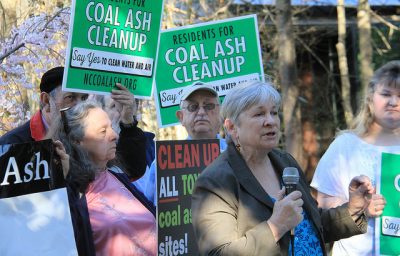
The “Clean Water Not Coal Ash” rally, hosted by Appalachian Voices, the Western North Carolina Alliance along with several organizations, called attention to the threat posed by coal ash to drinking water and the nation’s rivers. The rally brought out more than 200 residents of all ages from Asheville and surrounding areas demanding something be done about the threat of toxic coal ash to North Carolina’s waterways.

Our message was simple: Keep our precious water clean for current and future generations.

Read more
...