

Letters to the Editor
Appalachian Voice welcomes letters to the editor and comments on our website. We run as many letters as possible, space permitting. The views expressed in these letters, and in personal editor responses, are not necessarily the views of the organization Appalachian Voices. Write to [email protected].
Article ignores benefits of natural gas
Dear Editor,
I have been a long time reader of Appalachian Voice. Although I do not always agree with your viewpoint, I usually find your articles on southern Appalachia interesting and informative. However, your recent article on gas development in Virginia was biased and generally overshadowed the local and regional benefits of natural gas production from our state.
Natural gas is the cleanest burning fossil fuel available, and as such has been endorsed by environmental organizations including the Sierra Club. It is so clean burning that many western states give financial incentives for households to switch from wood to gas-burning stoves in an attempt to reduce smog,
pollution, and greenhouse gases. Some of these gas burners are so clean burning that they can actually be vented indoors.
Your article also indicated that natural gas development in southwestern Virginia was not beneficial to the locals. Contrary to your statement, the majority of the people that work in our industry are in fact Virginia residents and these jobs are typically some of the highest paying in our region.
In addition to providing local employment, natural gas producers in Virginia paid over $20 million in severance taxes over the last year. This tax, which is in addition to property tax on wells, mineral tax, income tax, and sales tax, generally goes back to the producing counties and is used to build schools, roads, and public water systems.
Virginia is a net importer of natural gas since current production from our state is not sufficient to meet demand. Homegrown Virginia gas is good business for southwest Virginia, the State, and the nation by providing a clean, domestic alternative to imported oil.
Jerry Grantham
Virginia Oil and Gas Association
Abingdon, Virginia
The Editor’s Response:
Thanks for your comments. You make a good point — no question, gas is a cleaner fuel than coal or oil. Given what we now know about gas reserves in Appalachia, it seems to be an important new option for the future.
Question: Do you think the idea of small increases in state taxes to help with small localized environmental enforcement by state officials has any traction among your members? These relatively small problems are at the heart of the issues raised by our correspondents and could be remedied fairly easily, it seems to me.
Bill Kovarik
Editor, Appalachian Voice
[email protected]
Dear Editor,
I do believe that natural gas in Virginia is a great resource for all involved. To answer your question, VOGA has worked with the State in the past and supported higher well permit fees to provide for additional staffing for the Virginia Division of Gas and Oil.
In regard to environmental enforcement, the State Review of Oil and Natural Gas Environmental Regulations (STRONGER), Inc. in conjunction with the
Interstate Oil and Gas Compact Commission (IOGCC), the EPA, and the DOE began multi-stakeholder reviews of states’ environmental programs in 1989. To date, 20+ state programs have been reviewed. Virginia’s review was completed in April 2004 and consisted of a six-person team including members from the Railroad Commission of Texas, Trout Unlimited, IOGCC, Pennsylvania Department of Environmental Protection, as well as a Virginia industry representative, and a local attorney who works with the industry (who served as an observer).
The team found that “The Virginia program is well-managed and several aspects of Virginia’s program are exemplary and may offer ideas for other state programs,” and further, “the Commonwealth of Virginia has in place a significant E&P regulatory program.” In addition, they noted that “The Virginia program covers several areas that are beyond the scope of the current (STRONGER) guidelines.”
Jerry Grantham
Related Articles
Latest News
More Stories

Signs of Life
In the Nantahala National Forest, a team of biologists spotted Indiana bats, an endangered species that hasn’t been seen in North Carolina for the last 11 years.

‘First Line of Defense’
During Hurricane Helene and its aftermath, rural fire departments and other first responder hubs played critical roles in keeping their communities safe, even without power and cut off from outside support for days or weeks after the storm. Two years later, plenty of work remains to ensure these hubs have the resources they need to operate day to day and be ready when emergencies or natural disasters strike.

The Rocky Road — and Bridge — to Recovery
Hurricane Helene is estimated to have damaged nearly 7,000 private roads and bridges in Western North Carolina. Two years later, many restoration projects are complete, but the journey hasn’t been easy — and isn’t over for others.
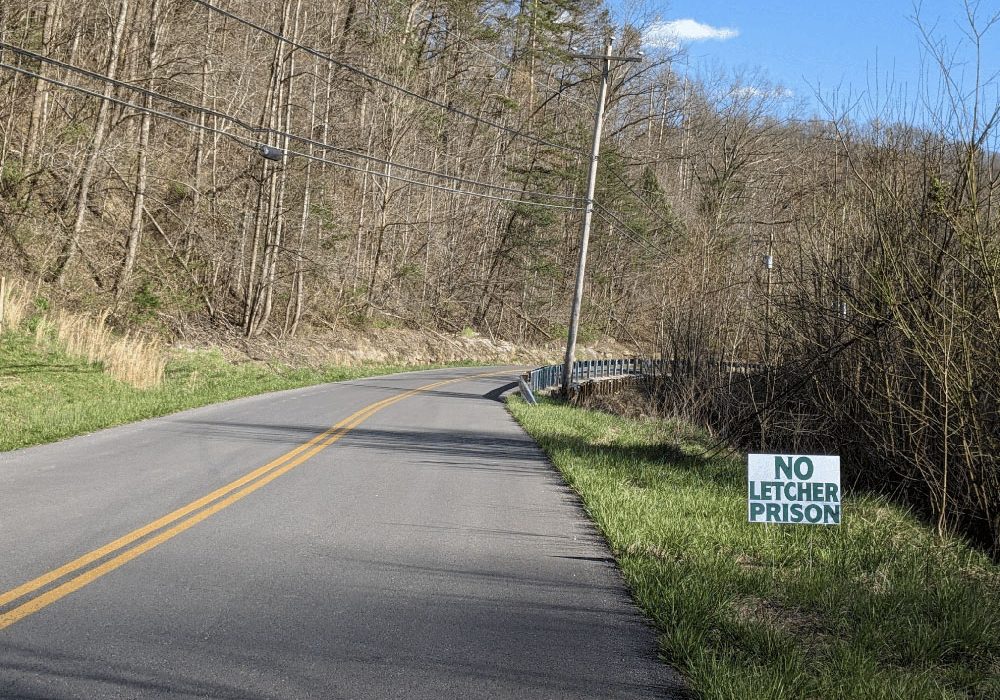
After 20 Years, Letcher County Prison Proposal Is Still Alive, Though Obstacles Remain
A $605 million proposal for a federal prison on a former strip mine site in Letcher County, Kentucky, championed by U.S. Rep. Hal Rogers, refuses to die, despite local opposition, a lack of support from the executive branch and numerous other obstacles.
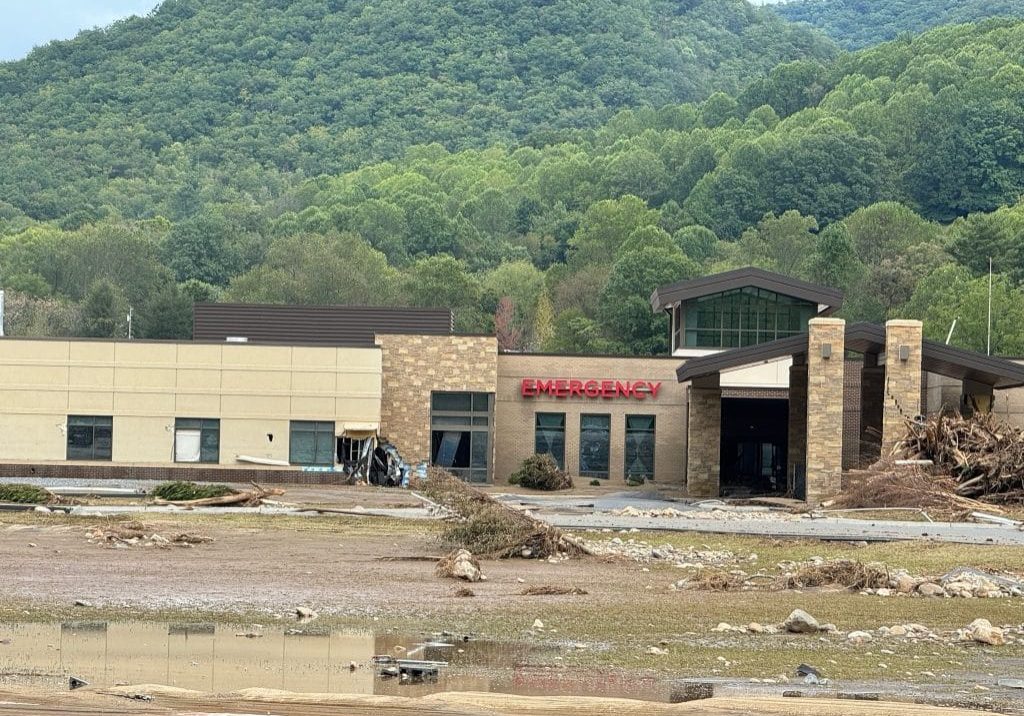
The Washout and Rebuild
For nearly two years, residents of Unicoi County, Tennessee, have had to make do without a hospital after Hurricane Helene destroyed the rural hospital. Ballad Health, which owns the hospital, broke ground on a new location — in another floodplain — in August 2026.

The Shenandoah Salamander
The Shenandoah salamander is a woodland salamander, which has adapted to life at higher elevations away from water. This sparkling rarity lives among the dry leaves, cracked logs, and stony hillocks on the highest peaks of Shenandoah National Park.

Leave a comment
Your email address will not be published. Required fields are marked *
Leave a Comment