Get Our RSS Feed!
Front Porch Blog


Appalachian Voices and Partners Challenge Kentucky’s Backroom Deal With Coal Company


Friday, May 17th, 2013 | Posted by Eric Chance


Watercolors by Frasure Creek. State inspector's photos show a variety of colors of water at Frasure Creek mines.

Yesterday, Appalachian Voices and our partner organizations filed a “petition for review”, essentially an appeal of a settlement between Frasure Creek Mining and the Kentucky Energy and Environment Cabinet. This settlement lets Frasure Creek off the hook for thousands of water quality violations over the past two years, while doing little to ensure that the company fixes its water quality problems.

Our challenge of this settlement focuses on the way in which it came about. But first, a bit of background.

We have a separate case that is ongoing against Frasure Creek for submitting false water monitoring data (entire reports were duplicated and only the dates were changed). After we uncovered this problem the company began turning in more accurate reports, which for the first time showed lots of pollution problems. We then filed a second suit against Frasure Creek for thousands of these pollution problems (which had been hidden by reporting problems before our first suit). Then the cabinet also filed a complaint for these pollution violations and more like them in state administrative court (a court run by the cabinet itself).

We intervened in that case and became full parties to it, but were then shut out of it completely. In fact the settlement was entered despite our previous objections, and there is no evidence that our objections were even considered. The cabinet and Frasure Creek negotiated a settlement completely without us. The law and common sense both dictate that an agreement is not valid unless all the parties involved agree to it, and that is the basis for our challenge of this settlement yesterday.

Read more
...


Coal Ash: Now a Part of a Balanced Breakfast


Thursday, January 31st, 2013 | Posted by Hallie Carde


This just in: in addition to fruits and veggies, our nation’s children should be getting their daily dose of coal ash. Or at least that’s what statements at a public hearing in Franklin County, Missouri, seem to suggest.

Just last week, there was a hearing for a lawsuit filed by the Labadie Environmental Organization over a zoning amendment that would allow Ameren Corp. to construct a new coal ash landfill in the heart of a floodplain. Toxicologist Dr. Lisa J.N. Bradley, testifying on behalf of Ameren Energy Corporation, said, “A child could consume coal ash every day and have no increased exposure to arsenic.”

Bradley was recently elected to the Executive Committee of the American Coal Ash Association, a lobbying organization whose membership includes Ameren, Duke Energy, Southern Company and other large coal-burning utilities. Unfortunately, it seems that conflict of interest was lost on Associate Circuit Court Judge Robert D. Schollmeyer, who dismissed the lawsuit citing Bradley’s testimony.

Maximiliano Calcano, age 2, is one of the first children born with a dramatic birth defect attributed to the coal ash dumping in the Dominican Republic.

There are many who have had to face the traumatic effects of toxic coal ash firsthand. Following the AES Corporation’s dumping of 80,000 tons of coal ash waste along the shores of the Dominican Republic between 2003 and 2004, the country’s women have suffered years of consistent miscarriages, abnormal levels of arsenic in their blood, and births to babies with cranial deformities, external organs, and missing limbs.

While we have yet to uncover such a horrific case here in the states, concerns over coal ash are real. Archie Dixon lives just south of Belmont, N.C., where Duke Energy’s coal ash ponds are some of his closest and most unwelcome neighbors. Distrustful of the visible grime and discoloration of his water, Mr. Dixon has been buying bottled water for years, unwilling to ingest the water from his home’s private well. Despite reassurance from Duke Energy officials who say that lab tests show that the sediment in Mr. Dixon’s water is of naturally occurring materials, he refuses to take any risks with his water. Dixon is not the only member of his community concerned about coal ash.

Read more
...


Cape Fear: Starring Toxic Contaminants, Directed by Coal Ash


Sunday, October 28th, 2012 | Posted by Matt Grimley


When state regulators were shown groundwater test samples taken near the Cape Fear River in eastern North Carolina with elevated levels of arsenic, thallium and chloride, the contaminants that seeped in from Lake Sutton, a coal ash pond next to the Sutton coal plant….that means the regulators made the plant clean it all up, right?

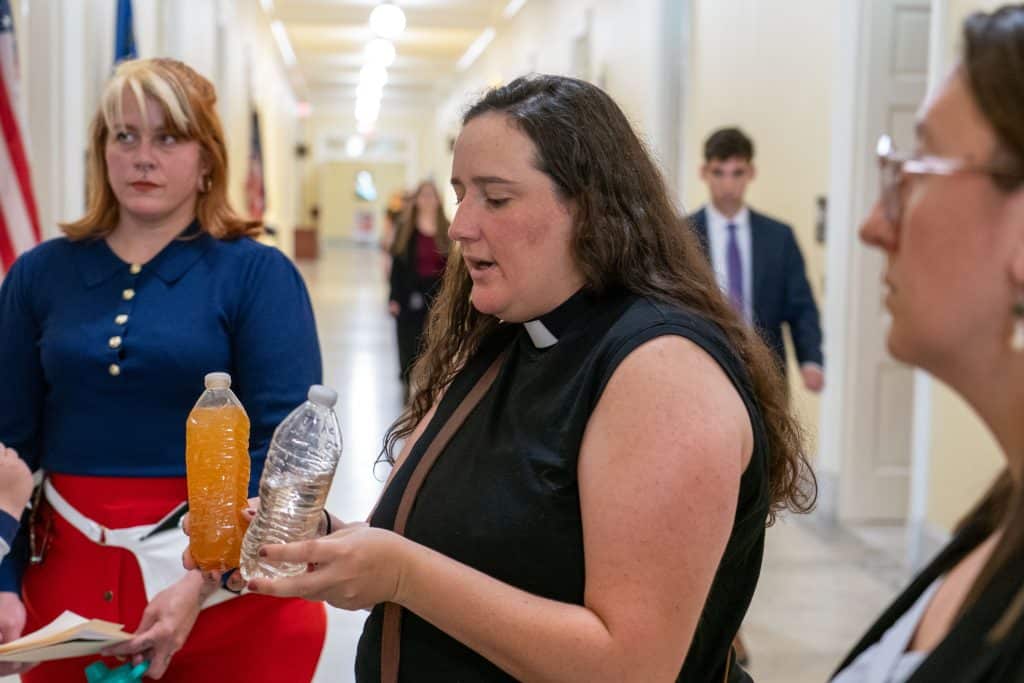
It's as simple as she says: do we want coal ash (which makes Robert de Niro in Cape Fear look like an alright guy), or do we want clean water?

Well, they didn’t. That’s why last week, the Southern Environmental Law Center filed a formal complaint on behalf of four groups in North Carolina to push for more enforcement from the state Environmental Management Commission on the regulation of coal ash ponds. Kemp Burdette, the Riverkeeper with Cape Fear River Watch, said that state regulators are collecting samples that exceed NC groundwater standards, but are not forcing any of the coal plants to clean it up. “Over time, exposure to this stuff is going to make people really sick,” he said. “It’s going to have an impact on the human body.”

Coal ash, the toxic byproduct of burning coal for electricity, is typically stored in wet, often unlined ponds. These ponds then seep into neighboring groundwater. All across the nation, groundwater resources have been contaminated by coal ash. And as the Washington Post recently demonstrated, any protection of our nation’s waters from coal ash is being halted until after the election.

Read more
...


A One-Two Punch in the Fight for Clean Water


Thursday, August 23rd, 2012 | Posted by Brian Sewell


It has been a week of good news in the fight for stronger protections against coal ash pollution. A court settlement in South Carolina and a major decision regarding the 2008 TVA Kingston coal ash spill make for a one-two punch against the poorly regulated toxic waste.

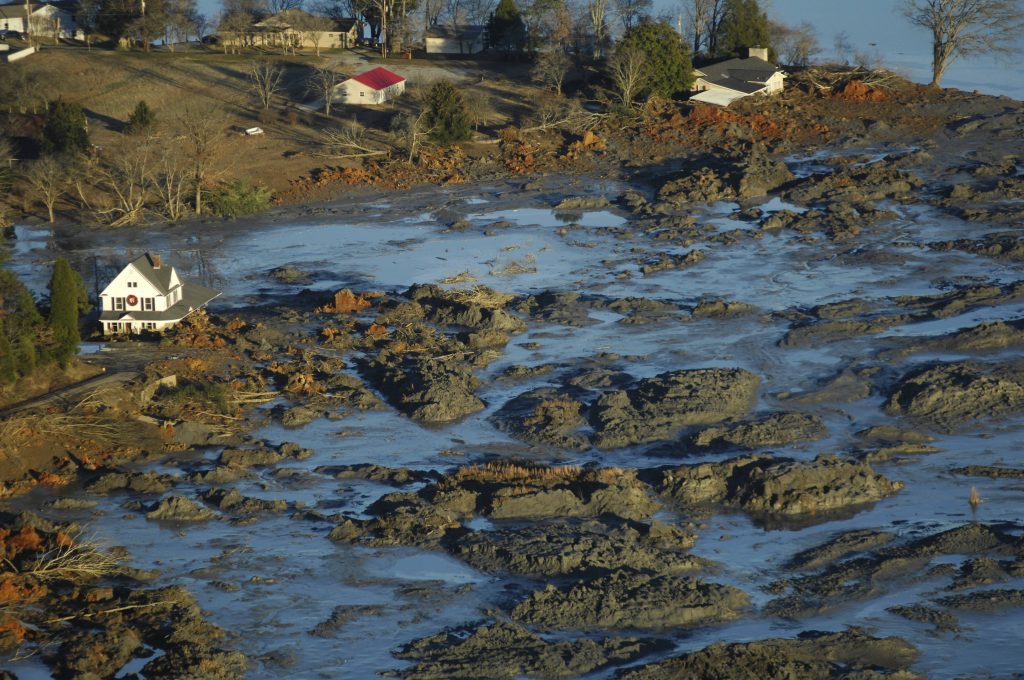
A federal court found that the Tennessee Valley Authority is ultimately liable for the December 2008 coal ash spill. The failed pond at TVA's Kingston Plant released more than one billion gallons of toxic coal ash and covered 300 acres.

This morning, a federal court ruled that the Tennessee Valley Authority is liable for the massive coal ash spill at its Kingston Plant in December 2008. In his written opinion, U.S. District Judge Thomas Varlan ruled that the spill resulted ultimately from TVA’s “negligent nondiscretionary conduct” — far from the unpredictable geologic event that TVA lawyers claimed was the cause during the trial.

In fact, we know more than ever just how preventable the catastrophic spill was. In the months following the event, an engineering firm hired by TVA issued a report that identified the unstable layer of soil beneath the coal ash which had gone undetected for decades as TVA continued to pile on larger amounts of the toxic waste. Subsequent reports revealed internal agency memos that contained warnings that could have prevented the spill. And in his ruling, Varlan was sure to mention that had TVA investigated and addressed the unstable pond, the spill might have been avoided.

Shorty after the coal ash pond failed, it became clear that the Kingston spill would become the worst environmental disaster of its kind in American history. TVA initially estimated that 1.7 million cubic yards burst from the pond and into the Emory and Clinch Rivers. They later had to revise that estimate to more than 5.4 million cubic yards — more than a billion gallons and 100 times larger than the 1989 Exxon Valdez oil spill.

Read more
...


Nally & Hamilton Case Continues in State Court


Friday, December 9th, 2011 | Posted by Eric Chance


Yesterday Appalachian Voices along with our partners Kentucky Riverkeeper, Kentuckians For The Commonwealth, and Waterkeeper Alliance challenged the recent settlement between Nally & Hamilton and the Kentucky Energy and Environment Cabinet in state court.

Click here to see the press release with more information on this newest development.

Click here to see the how the case has developed.

Click here to view the state court petition.

Several Kentucky news outlets covered this development. Click the links below to see the news articles.
Ronnie Ellis for the Daily Independent
Erica Peterson for WFPL Public Radio
Bill Estep and Beth Musgrave for the Lexington Herald-Leader

Kentucky Energy and Environment Cabinet cuts deal with Nally and Hamilton for Water Pollution Violations


Wednesday, November 23rd, 2011 | Posted by Eric Chance


Last week the Kentucky Energy and Environment Cabinet entered a settlement with Nally and Hamilton Enterprises to resolve tens of thousands of violations of the Clean Water Act. The pending agreed order, originally submitted in September, was signed by the Cabinet Secretary Len Peters, now making it official.

Nally and Hamilton is one of the largest producers of Mountain Top removal Coal in Kentucky. They are also being sued by a number of citizens over flooding caused by one of their mines, which lead to a great deal of property damage and killed two people.

Read more
...


Connecting Kids to Their Watersheds


Monday, November 7th, 2011 | Posted by Erin Savage


Here in Watauga County we are lucky to have relatively clean rivers and a public that is well connected with the health of the local environment. In order to support continued generations of residents who act as good stewards for the High Country and beyond, we must educate students about threats to our local environment and ensure that they feel pride and ownership of the world around them.

The Upper Watauga Riverkeeper has helped with school water-based programs at Hardin Park Middle School and Watauga High School this fall. At Hardin Park, science teacher Alan Felker invited me to speak with each of his 7th grade science classes about the many roles of a Riverkeeper. Our discussion ranged from local river cleanups to litigation against major polluters in Kentucky. I was impressed with the quality of both questions and answers I heard from many of the students. I met up with the students later in the week to assist with Mr. Felker’s aquatics lab on the New River. Students were game to get in the chilly fall water in order to measure water velocity and turbidity, and look for macroinvertebrates used as indicators of biological condition. I hope to see many of these same students for a Watauga cleanup in the spring.

On October 19th, I helped with one of several presentations focusing on marine mammals, climate change, pollution and our connection to those issues here in Watauga County. The North Carolina Museum of Natural Science and the North Carolina Fort Fisher Aquarium, through a grant from NOAA, brought in a geodome presentation that highlighted different marine mammals and threats to them resulting from global warming and plastic pollutants. Lisa Doty, the Watauga County Recycling Coordinator, and I presented a local perspective on recycling and reducing consumption in Watauga County, and the ways our efforts can impact the ocean environment.

I was pleased to find that at least one student in each group knew that plastics are made from fossil fuels, which are non-renewable resources. The students were surprised to learn that Watauga County does not have an operational landfill, so our garbage must be shipped to Lenoir. This means that not only is our waste management more costly, but it also uses more fossil fuel: an average of 8 tractor trailer loads of garbage are sent to Lenoir every day, which costs roughly $1.3 million per year. In contrast, as recycling technology has improved, the demand for recycled plastic has increased: other companies pay Watauga County for recycled plastics and recycling creates 14,000 jobs North Carolina.

We tried to impress upon students some simple every-day things they could do to help curb the influx of waste into our waterways and oceans. Two of the easiest changes that create a large and lasting impact are reducing your use of plastic water bottles and plastic grocery bags. According to the Earth Policy Institute, 1,500 plastic water bottles end up as garbage every second. Additionally, plastic grocery bags are more costly to produce from recycled material than from virgin oil. So when your Watauga High School students turn down that store-bought water in favor of a reusable container or tell you there will be no trip to the store without reusable bags, commend them for doing their part to create a healthier planet!

Excel Mining Addresses Pike County Residents’ Flaming Well With A Solution Other Than Just Drilling More Contaminated Wells


Wednesday, September 21st, 2011 | Posted by Erin Savage


In the end of July, Appalachian Voices was contacted by Ted Withrow of Kentuckians for the Commonwealth, who reported a family in rural Pike County, Kentucky, with possible methane contamination of their drinking water well, as indicated by flames shooting more than a foot out of the top of the well. The fire had been reported to local media by friends of the family. The contamination was believed to be the result of underground mining activities by the nearby Excel Number 2 Mine. As we looked into this case further to see how we might help, we realized the problem was more wide-spread and long-term than we originally thought.

Appalachian Voices initially provided heavy metal testing for four families – the Howard family, whose well was on fire, and three nearby families. Next, through the generous donation of 30,000 bottles of water from Keeper Springs Natural Spring Water and Nestle Pure Life Purified Water, KFTC and Appalachian Voices were able to provide safe drinking water to each affected family – 13 families in total.

Upon delivery of the water, we spoke with multiple affected families and collected additional water samples for volatile organic compound testing. We learned that some families had already been purchasing bottled drinking water for 8 years. In a country where we often assume our access to clean drinking water is a right, it was astonishing to realize that this right had been stripped from these families for so long. The families reported recent health problems, including hair loss, skin rashes, and burning sensations while showering. Several families also reported sounds of explosions and rocks falling underneath their homes. Pontiki Coal (an associate of Excel Mining, both subsidiaries of Alliance Resource Partners) reported operating an underground coal mine beneath these homes between 1985 and 1987. We heard anecdotal reports from the residents of recent underground slurry injection, a common use for abandoned underground mines, in the immediate area. The site of the coal waste injection was allegedly far from the road and difficult to relocate, as it may have been covered with brush by heavy machinery. Appalachian Voices is continuing to investigate the possibility of slurry injection in the area, though potentially illegal, unpermitted injection would be difficult to verify after the fact.

We learned of an ongoing history between the families and Pontiki coal. The Howard family had two wells drilled by Pontiki Coal. The first well was determined to be unusable and eventually exploded, burning down the pump house on May 1, 2011. Pontiki Coal had drilled new wells for at least two other families, but these wells were also determined to be unusable by the families. Following the well explosion, Pontiki Coal wanted to cap the burning well, but the family initially refused, fearing this would increase the chance of a methane explosion at their home. The well was tested for methane by Pike County Emergency Management, Mine Safety and Health Administration (MSHA), Kentucky Division of Mine Reclamation and Enforcement (DMRE), and Pontiki Coal on May 3rd and May 10th, 2011, with results ranging widely, from 9.0% to 92.2% methane. The Kentucky Energy and Environment Cabinet tested the composition of the gas emitting from the well and determined it to be similar to that of coal bed methane, a form of natural gas from coal beds, indicating that the gas was likely caused by mining activity. The coal seam in this area is also known for high methane concentrations.

Of the four wells tested for heavy metals by Appalachian Voices and KFTC, two came back with elevated levels of iron and manganese – the levels were above the EPA secondary maximum contaminant levels for drinking water. Not surprisingly, manganese and iron are two metals commonly associated with water pollution from coal mining. The Kentucky Energy and Environment Cabinet also inspected and tested several wells. The Cabinet declared the burning well “mine impacted” due to the methane presence. The Cabinet’s inspection also indicated elevated iron and manganese levels in the Howard’s well, but sulfate levels below those commonly found in mine impacted water. The Cabinet tested the wells of at least three other families for heavy metals. Though they found elevated levels of iron and manganese at a second home and elevated manganese levels at a third home, neither of these wells were declared mine impacted, apparently because the wells contained neither methane nor sufficiently high sulfate levels, nor were they on fire.

Despite only one well being declared mine impacted, it appears all families will soon receive a permanent water solution. With assistance from Excel Mining, the families should be able to connect to Martin County water lines. Though the families live in Pike County, the Martin County lines are closer to the homes – approximately 1.1 miles. Martin County Judge Executive Kelly Callihan met with Excel Mining representatives, persuading the company to pay for the water line extension and water meters. The families will have to pay for lines from the main meter to their homes. Shane Watts, General Manager for Excel, said, “We’re just trying to be good neighbors.” While we thank Excel Mining for addressing this issue, we are disappointed it took intense media coverage of the flaming well and the water donation before they found a permanent solution. According to Ronnie Ellis’s story, neither the families nor the Department of Natural Resources have received any notice of the pending water line extension or funding for the project. Appalachian Voices will continue to monitor this situation to be sure that a permanent solution is implemented. In the words of affected resident, Denise Howard, “When I see it running through my faucets, I’ll believe it.”

Cleaning Up The Watauga!


Tuesday, September 13th, 2011 | Posted by Erin Savage


A big thanks goes out to all those who helped make the Watauga River a cleaner, more beautiful place to swim, fish, and boat.

On Saturday, September 10th, the Upper Watauga Riverkeeper helped to complete a cleanup of the Watauga River, as part of the nationwide river cleanup day. Wendy Patoprsty and staff from the Watauga County Cooperative Extension organized the event and several ASU professors recruited student volunteers.

A total of 114 volunteers removed 3,740 pounds of trash from the Watauga along Highway 105 between Foscoe and Boone, and along Highway 321. The total weight collected last fall was 1,940 pounds. Let’s hope this indicates that this year’s volunteers did an even better job of finding trash and removing hard-to-access objects, and not that more people have been discarding trash in the river.

I was privileged to take a group of Appalachian State freshman down to the Guy Ford bridge, off Highway 321. I was able to con about 13 students into joining me at the bridge with sincere promises that the area around Guy Ford bridge “wasn’t that bad.” Little did I know, some campers had half-burned camping equipment and left it with broken glass and other trash just downstream of the bridge. After the campsite was cleaned, students hiked up and down the river. The best finds were by volunteers who swam through the river, which had calmed after Tuesday’s rain, and dove to find tires, lumber and even a large road construction sign.

The collection from our site alone filled the back of a pickup truck.

I hope the volunteers who were new to the area took ownership and pride in their contribution and will return to enjoy the river in its spruced up state. When you are down at the river, keep in mind the awesome service the new students contributed to our community.

Other group leaders included: Barbara Michel of ASU Walker School of Business, Dick Hearn, Joan Hearn, and Teresa Buckwalter from the Watauga River Partners, Travis Small and Andi Cochran of Appalachian Geographical Society, Jaimie McGirt, and Andy Hill. Thanks goes out to GDS disposal service, Watauga County Sanitation, and Watauga County Maintenance for help with trash and recyclable disposal.

Check out the Watauga County Cooperative Extension blog for more information.

Big Coal’s Watergate Hearing Wrap Up


Wednesday, September 7th, 2011 | Posted by Erin Savage


The hearing against the Kentucky Energy and Environment Cabinet, and ICG and Frasure Creek coal companies wrapped up last Friday. Appalachian Voices, Kentuckians for the Commonwealth, Kentucky Riverkeeper, and Waterkeeper Alliance intervened in the settlement between the Cabinet and the coal companies, arguing the settlement was not fair, reasonable or in the public interest. Appalachian Voices has identified more than 20,000 Clean Water Act (CWA) violations committed by the two companies between 2008 and 2009. Additional violations have been identified in 2011, but are the subject of a separate Notice of Intent to sue. Under the CWA, the violations could result in fines of more than $740 million dollars. The Cabinet originally fined the two companies a total of $1.25 million, but negotiated a consent judgment of $660,000 — $310,000 for Frasure Creek and $350,000 for ICG. These fines represent less than 1% of the total possible fines.

Wednesday, the first day of the hearing, began with opening statements, in which our attorney, Mary Cromer, argued the Cabinet’s fines were insufficient and did not account for the financial benefit gained by the companies through inaccurate reporting. The types of violations identified by Appalachian Voices included repeating data in reports from different quarters, and exceeding pollution limits. State employees, Jeff Cummins, Assistant Director of the Division of Environmental Protection, and R. Bruce Scott, Commissioner of Environmental Protection, were questioned to determine how violations were identified and counted, as well as how fines were assessed. Cabinet attorneys objected to many of the questions regarding the Cabinet’s deliberative process. Judge Shepherd, a former Cabinet Secretary, rejected most of the objections, stating that an understanding of the process was necessary to determine whether fines were adequate, and would probably help the Cabinet’s case.

The Cabinet employees reported that they did not know the total number of pollution discharges held between the two coal companies. Mark Cleland, Environmental Control Manager, attributed some of the violations to transcription and administrative errors. Recognizing the implications of inaccurate discharge monitoring reports (DMRs), Judge Shepherd later asked Scott, without accurate data, “how will the cabinet ever determine if there is a water pollution violation?”

On Thursday, the opposing counsel requested summary judgment from Judge Shepherd, but the judge declined. Tom Gabbard, manager of the Cabinet’s Compliance and Technical Assistance branch, was called as a witness. Gabbard testified to inspections of three sediment ponds. Gabbard reported high conductivity readings, as well as red-orange precipitate, indicative of acid-mine drainage, extending as far as 300 feet down a stream exiting one of the ponds. While the Cabinet’s settlement does require corrective action plans, Gabbard stated that, besides remedial action, the plans do not require anything further than what is already required under existing law.

Eric Chance, of Appalachian Voices, testified that he calculated $31,000 per month saved by Frasure Creek and $10,000 saved by ICG through the use of non-certified, and therefore less expensive, labs. Patrick Garrity, the state’s Drinking Water Laboratory Certification Officer, testified the previous day to the inadequacies of one of the labs used by the coal companies. He cited a lack of record keeping, failure to use proper quality control procedures, and disorganized equipment in the lab. The opposing counsel challenged Chance’s data interpretation. When asked by Frasure Creek attorney Jack Bender if he had included the instances of repeating data in his graphs, he replied, “It was not our priority to correct your DMRs.”

In the final day of the hearing, Bruce Scott was called as a witness for a second time, this time in defense of the Cabinet. He testified to the Cabinet’s efforts in addressing the violations of ICG and Frasure Creek, but claimed that the suit was interfering in the ability of the Cabinet to pursue other environmental problems within the state. Nevertheless, Scott also admitted that Appalachian Voices identified violations that had not been noticed by the Cabinet. Furthermore, the Cabinet has only investigated and fined the three coal companies original identified by Appalachian Voices as having violated the CWA. The coal companies each called a witness to assert that the problems were merely a result of substandard lab work and that the companies had quit using the offending lab, S & S Monitoring. ICG has recently hired a new company, East Kentucky Water Monitoring, to collect water samples. The company was founded and operated by the same employees who previously worked at S & S Monitoring.

At the end of the hearing, all parties agreed to submit post-trial findings and conclusions within 30 days, in place of oral closing statements. Judge Shepherd strongly urged all parties to attempt to settle through a second round of mediation. Judge Shepherd stated that he foresees “difficult and novel issues that are likely to keep the problem in litigation for a long time.”

Appalachian Voices is willing to consider a second round of mediation, provided the other parties come to the table in good faith. Any settlement reached must assure that these companies stop polluting Kentucky’s waterways. Barring successful mediation, we look forward to continuing with this precedent-setting litigation. Setting new legal precedents in clean water act litigation is something that makes Waterkeepers very happy. Regardless of the future outcome, we have already succeeded in achieving record-setting Clean Water Act fines against coal companies in Kentucky and changing the way they have to do environmental compliance.

Additional coverage of the hearing can be found in the following news articles:

Wall Street Journal
Courier-Journal
The Lexington Herald-Leader
The Independent: article 1, article 2, article 3

First Day Wrap-up of Kentucky Coal Trials


Thursday, September 1st, 2011 | Posted by Erin Savage


The first day of the hearing against the Kentucky Energy and Environment Cabinet and ICG and Frasure mining companies concluded Wednesday evening. Appalachian Voices, Kentucky Riverkeeper, Kentuckians for the Commonwealth and Waterkeeper Alliance intend to show that the penalties assessed by the Cabinet for the two coal companies are not sufficient to address the severity of the Clean Water Act violations committed by the two companies. If the judge rules in our favor, we will be able to pursue further legal action against both ICG and Frasure Creek for their violations.

Over the course of the day, our attorneys built a case that demonstrated the violations found were not merely administrative violations, but substantive pollution violations that indicated clear disregard for the law. Patrick Garrity, of the Kentucky Department for Environmental Protection, testified to the poor condition of the lab used for many of the coal companies’ discharge monitoring reports, as well as the large discrepancies between testing results from the lab and the state during split sampling. The Cabinet was reluctant to disclose details of the means by which the number of violations and fine amounts were determined. Judge Shepherd acknowledged the need for “protection of the Cabinet’s deliberative process,” but explained that understanding this detail would allow the court to determine the appropriateness of the Cabinet’s actions against the coal companies. Throughout the proceedings, objections came quickly from the opposing counsel. For the most part, these objections were overruled or noted, rather than sustained. We were not allowed to call the Energy and Environment Cabinet Secretary, Len Peters, as a witness, as he was not directly involved with investigation of the companies. We were allowed to ask questions about his op-ed article addressing reasons for the Cabinet’s enforcement failures. You can read more on this in Ronnie Ellis’s story here.

Several interesting facts were revealed during the hearing. The Cabinet admitted to not knowing the total number of NPDES pollution discharges held between the two companies. Given that wastewater discharge pipes from sediment and slurry ponds on surface coal mines are required to be permitted under the Clean Water Act, it is reasonable to believe that an accurate count of such discharges would be known to the regulators. Additionally, the Cabinet acknowledged new, on-going violations by both companies in 2011. Unlike many earlier violations that consisted of repeating “cut and paste” data, the 2011 violations are often permit limit violations of heavy metals and pH levels. This confirms our suspicion that the earlier inaccurate data likely covered up excessive, illegal pollution discharges. The Cabinet has brought new enforcement actions against both companies for the new violations. Additional coverage of the trial can be found in James Bruggers’s article.

Appalachian Voices just received copies of the Notice of Violation (NOV) documents submitted by the Cabinet to both ICG and Frasure for their most recent violations. The violations, listed below, are clearly much more serious than mere administrative violations.

The violations cited for ICG are:

• 75 instances of permit limit violations for manganese, iron, total suspended solids and pH
• 17 instances of failing to report twice a month as required
• failure to submit any DMRs for the Left Fork Processing Waste Impoundment for January, February, and March 2011
• failure to submit iron, manganese and flow results for three outfalls

The violations cited for Frasure Creek are:

• failure to submit any DMRs for 260 outfalls at 32 facilities for January, February and March 2011
• 165 instances of monthly average and daily max permit limit violations for manganese, iron, total suspended solids and pH
• failure to get permit coverage for 9 outfalls (discharging without a valid permit)
• 4 instances of failing to sample twice a month as required

To put these violations in perspective, it would require all wastewater outfalls* from sewage and storm water treatment facilities between Pike, Letcher, Harlan, Martin, Floyd, Knott and Perry counties in eastern Kentucky discharging illegally for 7 months in order to equal the violations from 260 outfalls for which Frasure Creek submitted no DMRs in any one of three total months.

The Cabinet seems to be more stringent in its requirements of Frasure Creek, as compared to ICG. The Cabinet required Frasure to submit 21 corrective action plans to prevent additional pollution discharges above allowable levels; however, even though ICG had 75 pollution exceedences at 18 facilities, they were not required to submit any corrective action plans.

While we are pleased that the Cabinet has continued to investigate both companies for on-going violations, we realize we must not consider our job done. These violations would likely not have been identified had we not put pressure on both the coal companies and the Cabinet through the original notices of intent (NOI) to sue. This most recent set of NOVs came only after we filed our second set of NOIs against Frasure and ICG — the the NOVs were filed just inside the 60 day notice period. Furthermore, the Cabinet has only brought complaints against the companies we have identified. While we certainly hope this fact indicates that all other surface coal mines are operating within the law, we find this possibility unlikely. The fact remains that mountaintop removal mining and valley filling result in tremendous negative impact to water quality, making it both difficult and costly for mining companies to properly control their pollution discharge.

*as calculated from 35 total outfalls mapped by the state of Kentucky for the above mentioned counties.

Flaming wells, poisoned water show abuses of coal.


Saturday, August 20th, 2011 | Posted by Donna Lisenby


I have just returned from another epic journey into the dark side of coal mining. If you, me or anyone else in America poisoned a neighbor’s drinking water we would be castigated and made a pariah at the very least and possibly jailed for attempted murder at the worst. But if you are a coal company operating in Appalachia you can get away with it. Very seldom will anyone in government or law enforcement make the coal industry stop harming human health. It is a tragedy that has been repeated time and time again across Appalachia. Here is the latest chapter:

[ Read the full story ]
[ Watch a video report by WKYT ]

The Brook Trout: highlighting local, regional & global environmental issues


Thursday, May 26th, 2011 | Posted by Parker Stevens


>>This latest Creature Feature highlighting NC’s native trout species — the Brook trout — comes from our new intern Adam Reaves. Thanks, Adam! To learn more about native aquatic critters in the area, don’t miss RiverFest on June 4th.<<

Throughout the Southern expanse of the Appalachian Mountains, the Brook trout spends its seven-year lifespan hunting for mollusks, insects, and frogs in cold streams, lakes and ponds. The Brook trout, sometimes known as the speckled trout or squaretail, is the only native trout species in the Appalachian Mountains and has been at the center of many natural resource management agencies’ efforts to preserve trout stocks.
Brook Trout: North Carolina's State Freshwater Trout
According to a study conducted by the North Carolina Wildlife Resources Commission, 92,000 resident and non-resident anglers in the High Country contributed over $150 million to the North Carolina economy. Anglers and environmentalists both have an interest in preserving the health and integrity of the trout population.

The Brook Trout in particular, highlights many complex environmental issues and how they will affect the High Country in the future.

Read more
...


Pickers of all Ages to Take the Stage at RiverFest


Monday, May 9th, 2011 | Posted by Parker Stevens


Appalachian Voices’ 2nd annual RiverFest is coming up on June 4th at the beautiful park in Valle Crucis, N.C. With lots of great activities – from storytelling to fly tying, primitive skills to facepainting – and a variety of vendors, RiverFest promises to be a great day by the river.

Local and regional musicians will provide foot-stompin’ tunes from a solar powered stage. Festival goers can hear blues and bluegrass throughout the day and can even bring their own instruments and join in at the Pickin’ Parlor.

Bill Adams, Banty RoosterBill Adams from Charlottesville, Va., will start the morning off with some solo, acoustic guitar picking. His unique fingerstyle arrangements blend old time and blues and even a little ragtime. His country blues approach to traditional fiddle tunes makes for a fun, one-of-a-kind sound that everyone can enjoy. Sample some of his songs online at www.fngrpkr.com. (11 am – 1 pm)

Boone is full of talented performers of all ages, and some of our younger musicians are taking the stage at RiverFest to show off their skills. Jammers from the Watauga Junior Appalachian Musicians program range from third to eighth grade and attend weekly classes at the Jones House Community Center where they learn traditional folk tunes on guitar, banjo, and fiddle. (1:15 pm to 1:45 pm)

Upright & Breathin'
The mountain sounds of the Boone-based band Upright & Breathin’ will round out the afternoon. The core of Upright & Breathin’ consists of Jeff Moretz, Brian Kreher, and Chris Capozzoli, but the group is frequently joined by other talented musicians. Their songs are some of the best bluegrass tunes around, though they also spice things up with elements of jazz, gypsy swing, and good old fashioned rock & roll. (2 pm – 4 pm)

So, bring your dancing shoes and an instrument if you’ve got one, and don’t miss the Appalachian sounds of these regional acts at RiverFest 2011!

Learn more about RiverFest at www.AppalachianVoices.org/Riverfest.

Vulcan’s Boone Quarry Pollution Problem


Thursday, April 21st, 2011 | Posted by Eric Chance


Last night I was driving home, and noticed that Laurel Fork (along Hwy 105, just outside of Boone) was running a grayish color. I tracked down the source of the gray water, and it turned out to be the discharge from the Vulcan Boone Quarry (Just south of Boone on 105). Here is a video and some pictures of what I found.

A Gray-Brown Plume of water enters Laurel Fork from the Vulcan Boone Quarry. At the top of the photo you can see clear water in the Laurel Fork and then gray-brown water entering the creek from the right.

Gray-Brown Plume in Laurel Fork, created by Vulcan Boone Quarry

Discharge Pipe

Discharge Pipe

The Vulcan Boone Quarry has had repeated problems in the past with discharging milky white and gray water and they got in trouble for it before. As a result they have some fancy monitoring equipment to watch their discharge. The question remains, why is this still going on if they have they monitor this water, and if they have gotten in trouble for this before?

Monitoring Equipment and Pollution

Monitoring Equipment and Pollution

Check back for updates on what Vulcan and the North Carolina Division of Water Quality are going to do about this.

Vulcans Boone Quarry

Vulcan's Boone Quarry

Great New Post about our Fight against Big Coal in Kentucky


Wednesday, March 16th, 2011 | Posted by Eric Chance


We would like to thank Daily Kos and DWG for writing an awesome article about our ongoing legal battle with 3 coal companies and the state regulatory agency in Kentucky. Check out the article here.

Another Coal Company on the Run


Thursday, March 10th, 2011 | Posted by Eric Chance


Yesterday we announced our intent to sue Nally and Hamilton Enterprises for more than 12,000 violations of the clean water act at more than a dozen of its strip mines in Eastern Kentucky. Click here for more information on that action.

Later in the day we noticed something odd about their website, it was gone. In its place was a slideshow of mostly green reclamation sites and by this morning even that was gone. Click here to see if they have anything on their site now. Luckily we acted quickly and were able to capture their old website, so we thought we would share it here. However, one big question still remains, why are they trying to hide? Any ideas? We look forward to your comments.

Click to enlarge images, then click again to make them full size:

Home Page

Locations

Blasting

Awards

Photo Gallery

There was one more page, under the History tab but this page just repeated the text on the homepage, so just go to the homepage.

See James Bruggers’ article on this amazing disappearing website.

Another Kentucky Coal Company Falsifies Water Monitoring Data


Wednesday, March 9th, 2011 | Posted by Eric Chance


Working in coalition with national and state-wide environmental and social justice groups, we are once again seeking justice for clean water in Appalachia.

At 2pm today, Appalachian Voices and partners announced an intent to sue yet another coal company in Kentucky for violations of the Clean Water Act – this time with a single outfit wracking up more than 12,000 violations.

The company named in this newest suit is Nally & Hamilton, a mining operation based in Bardstown, KY and is one of the largest mining companies in eastern Kentucky.

Nally & Hamilton is not known for being a good neighbor to local residents. In one instance, ex-coal miner Elmer Lloyd’s fish pond in Cumberland, Ky was completely destroyed by toxins, sediment, and mud flowing from a Nally & Hamilton owned strip mine above his home.

The notice against Nally and Hamilton alleges that the company may have filed false, potentially fraudulent, water monitoring reports with the state over the past three years, including cutting and pasting previous data in later reports in lieu of submitting actual data for each month. The suit also claims that the company repeatedly omitted legally-required data from its reports.

Appalachian Voices and its partners previously sued two other coal companies late last year in a legal case that has had as many twists and tangles as an errant patch of kudzu. That case currently has a court date set of June 14.

Appalachian Voices and partners, including Kentuckians for the Commonwealth, the Kentucky Riverkeeper, the Waterkeeper Alliance, teamed up with lawyers from Natural Resources Defense Council on this case.

Nally & Hamilton and the state government have 60 days to respond to the allegations.

Boone Limits Coal Tar Sealants- Fish and River Lovers Celebrate


Wednesday, February 16th, 2011 | Posted by Eric Chance


Last night (February 15) the Boone Town Council passed strict new regulations aimed to limit the impacts of coal tar based asphalt sealants.

Coal tar based asphalt sealants are terrible for the environment and have serious human health effects because they are a major source of polycyclic aromatic hydrocarbons (PAHs). If you have ever stood in a parking lot that is really black, that is coal tar asphalt sealant, and if it smelled like tar or weird chemicals, those are the PAHs. There is really no reason to use this type of sealant, because asphalt based sealants are the same price and are far less toxic.

Although, the regulations do not outright ban the use of coal tar sealants, they do make it much more difficult. The regulations set up a permitting process, for anyone wishing to apply a pavement sealant. There will be a minimal fee for non coal tar based sealants, and a much higher fee for coal tar sealants. The permitting process is designed to allow for education on pavement sealants, and to ensure that sealants are applied in a safe manner (like when there is no chance of rain). The new permitting process will be implemented April 1, to allow for time to develop education materials and finalize the fee structure.

These new regulations are in response to the Hodges Creek fish kill. This past summer the BB&T on Highway 105 in Boone applied coal tar based asphalt sealant to their parking lot in the rain. The sealant washed off into Hodges Creek, killing all life in the creek until its confluence with Boone Creek, near the mall, 1.5 miles downstream. Shea Tuberty of Appalachian State told the town council that he had done sampling in Hodges Creek in January, little life has returned to the Creek, six months after the spill.

Thanks to everyone who came out to the town council to stand up for clean streams!

Great News for Clean Water in Kentucky


Friday, February 11th, 2011 | Posted by Eric Chance


In a precedent setting move today, Judge Phillip Shepherd granted limited intervention rights to Appalachian Voices, KFTC, the Kentucky Riverkeeper and Waterkeeper Alliance in the Kentucky Energy and Environment Cabinet’s Case against International Coal Group (ICG) and Frasure Creek Mining.

Cartoon

Here is the full press release:

FOR IMMEDIATE RELEASE

Judge grants environmental groups the right to
intervene in Kentucky Clean Water Act case

- – - – - – - – - – - – - – - – - – - – - – - – - – -
CONTACTS
Donna Lisenby…. 704-277-6055…. donna@appvoices.org
Sandra Diaz….407-739-6465…. sandra@appvoices.org
- – - – - – - – - – - – - – - – - – - – - – - – - – -

A Kentucky judge today granted environmental groups a motion to intervene in a legal case against two coal companies in violation of the Clean Water Act.

State Court Judge Phillip Shepherd set a precedent by issuing an order granting four environmental groups’ motion to intervene in a lawsuit between the State Energy and Environment Cabinet and defendants, ICG and Frasure Creek Mining, the two largest coal companies in Kentucky. The ruling marks the first time a third party intervention has been allowed in a state proceeding between a potential Clean Water Act violator and a state agency in Kentucky.

The plaintiffs in the case include Appalachian Voices, Kentuckians for the Commonwealth, Kentucky Riverkeeper and Waterkeeper Alliance as well as four individual citizens.

Saying it would be “an abuse of discretion to deny those citizens and environmental groups the right to participate in this action,” Judge Shepherd ordered that the groups be allowed to fully participate in the legal proceedings leading up to a June 14th hearing on whether the proposed settlement between the Cabinet and the coal companies is “fair, adequate, and reasonable, as well as consistent with the public interest.”

“We look forward to working cooperatively with the Kentucky Energy and Environment Cabinet to execute the Judge’s orders to conduct additional inquiry and get to the bottom of this case,” said Donna Lisenby, Director of Water Programs for Appalachian Voices.

The case was brought against the coal companies by the Kentucky Energy and Environment Cabinet in December, in response to a 60-day Notice of Intent to Sue filed by the environmental groups in October 2010. The original notice alleged 20,000 violations of the Clean Water Act, with potential fines of $740 million for the companies. The Cabinet’s proposed settlement attempted to fine the coal companies a combined total of only $660,000.

The environmental groups moved to intervene in the proposed settlement between the state and the coal companies, providing evidence that the state’s plan did not sufficiently address the alleged violations or deter future violations. The judge ordered the Kentucky Energy and Environment Cabinet to allow public comments on the case, eventually receiving many letters from citizens across the state.

Judge Phillips summed up the key reasons for granting the intervention in his order, stating “The Cabinet, by its own admission, has ignored these admitted violations for years. The citizens who brought these violations to light through their own efforts have the legal right to be heard when the Cabinet seeks judicial approval of a resolution of the environmental violations that were exposed through the efforts of these citizens. In these circumstances, it would be an abuse of discretion to deny those citizens and environmental groups the right to participate in this action, and to test whether the proposed consent decree is “fair, adequate, and reasonable, as well as consistent with the public interest.”

“We are very pleased with the decision, which will allow us to conduct depositions and other discovery,” said Peter Harrison, a third year law student with the Pace Environmental Litigation Clinic who argued on behalf of the environmental organizations and citizens in court last month. “By allowing our intervention, the judge has ensured that the people’s interest in clean, healthy waters will be adequately represented as we move forward.”

“Enforcement of clean water laws, enacted to protect the public from harmful pollution, was intended to be a transparent process,” said Attorney Mary Cromer of the Appalachian Citizens’ Law Center and counsel for the plantiffs. “By allowing intervention, the Court has made sure that will be the case. This is a major victory for the citizens of Kentucky.”

Community members like Ted Withrow, a member of Kentuckians for the Commonwealth, were encouraged by the decision. “For over 100 years the people of Kentucky have been blocked by King Coal and the government they control, from redress of wrongs inflicted upon them,” said Withrow. “Judge Shepherd is to be commended for his brave action in upholding the rights of the people. He has put his finger on the scales of justice today and attempted to bring balance.”

###

For interviews and images, please contact sandra@appvoices.org.
Visit www.appvoices.org/kylitigation/ for details.
For video from the court room in January, please see: Kentucky Legal Action Update

Facebook Twitter FlickR YouTube
Front Porch Bloggers Tags
Show/Hide list (-)

15th Anniversary 112th Congress 113th Congress A & G A & G Coal Corporation Acid Mine Drainage Across Appalachia Agriculture Air Pollution air quality Alabama ALEC Alexadra Cousteau Alliance for Appalachia Alpha Natural Resources American Chestnut american dream appalachia Appalachian Appalachian Culture Appalachian history Appalachian Identity Appalachian Legislators Appalachian politics Appalachian Regional Commission Appalachian State University Appalachian Streams Appalachian Transition Appalachian Treasures Appalachian Voices Appalachian Voices board of directors Appalachian Water Watch Appalachia Restoration Act Appalachia Water Watch Appalshop arch coal Arsenic Art Asheville Athens County Avian wildlife Bank of America bark Batson Creek Battle of Blair Mountain Bearwallow Mountain Beyond Coal campaign biodiversity black bears blair mountain blood mountain Blue Ridge Commons: Environmental Activism and Forest History in North Carolina Blue Ridge Escarpment Book Club Boone buffalo creek cancer carbon capture Carolina Mountain Land Conservancy Center for Appalachian Studies Central Appalachia Charlottesville Chattanooga Chimney Rock State Park China citizens united Clean Air Clean Air Act clean energy Clean Water Clean Water Act Clean Water Act 40th Anniversary Clean Water Protection Act Climate Climate Change climate change denial Coal Coal Ash coal ash health effects coal ash ponds coal decline coal electricity coal employment Coal generation Coal mining coal plants coal production Coal Report Coal Waste conductivity Congress Connestee Falls constellation Creation Care Cross-State Air Pollution Rule Cumberland Plateau Cypress creek d.c. Daniel Martin Moore David Brewer David McKinley Democracy dnc Documentaries Don Blankenship Downstream Strategies duke Duke Energy DuPont State Recreation Forest Earth Day EarthJustice Earth Ministry Eastern Band of Cherokee Economic Transition Economy editorial Education efficiency electricity Electric Utilities Elk Knob State Park Emory River Endangered species end mountaintop removal energy Energy Efficiency Energy Information Administration Energy Saving Energy Savings Environment environmental education Environmental Justice environmental literacy Environmental Protection Agency EPA Expedition Blue Planet extinction FArCES of Coal FERC Fish Kill Florence Nature Preserve fly ash Folktales Fontana Lake Foothills Trail forest Forestry Fox Squirrels fracking Frasure Creek Frasure Creek Mining and International Coal Group friends of smokies Gallatin game species gas gas emissions Georgia Georgia Power ghost stories globalization Golden-winged warbler Google Earth Gov. Steve Beshear grandfather mountain Great Smoky Mountains National Park green green-collar green building green economy green energy future Greenhouse Gases Greenpeace Green River Preserve Hal Rogers Hampton Roads Hampton Roads Coal Plant HB 710 headquarters Health Heifer USA Hickory Nut Gorge Hidden Treasures High Falls hiking Hiking the Highlands hiking trails home improvement and remodeling Hooker Falls houses Hunting hydraulic fracking hydroelectricity ICG iLoveMountains Inside Appalachian Voices Interfaith Power & Light Interior Department Ison Rock Ridge Jay Rockefeller Jeff Goodell Jeff Goodell Jr. Jim Justice Jim Rogers jobs Joe Manchin Joseph Pizarchik Jr. Kathryn Newfont Kathy Mattea Kens Rock Kentuckians for the Commonwealth Kentucky Kentucky Energy and Environment Cabinet Kentucky Litigation Kentucky Riverkeeper Kudzu kudzu bug land Land Conservation Land management land protection LEAF lobbying local farming Marcellus Shale Massey Energy Matt Wasson membership spotlight Mercury Mercury and Air Toxics Standard mercury and air toxic standards Michael Johnathon mine Mine Safety and Health Administration Mining Jobs Molly McGinn mountains Mountaintop Removal Mountaintop removal permits MSHA Mussels N.C. Politics Nally & Hamilton Nantahala National Forest National Mining Association National Resources Defense Council Natural Gas Naturalist's Notebook nature New River Nick Rahall North Carolina NRDC nuclear ODEC Office of Surface Mining offshore wind Ohio Operation Medicine Cabinet opportunities Outdoor Recreation Patriot Coal Pennsylvania Photography Pine Mountain Park Pisgah Forest Politics pollution Possum Jenkins Powder River Basin Prescribed burns President Obama progress Progress Energy Property Rights public lands re-zoning recycling recycling building materials Red Red White and Water Religion in the Environment Renewable Energy Renewable Portfolio Standards Rick Boucher Riverkeeper Rivers Robert F. Kennedy Same Sun Here scenic vistas Scenic Vistas Protection Act Science and Nature science education SELC Selenium selenium pollution Senate settlement sewanee coal seam shale gas Sharyn McCrumb Shelley Moore Capito Sierra Club Silver Slip sludge sludge safety project Solar Solar Energy Solar Homestead Project South Carolina South Cumberland Plateau Southern Appalachian Mountains Southern Appalachian Mountain Stewards Southern Environmental Law Center SouthWings spirituality Sportsman’s Heritage Act spruce pine state environmental policy Stone Mountain stop mountaintop removal Stream Buffer Zone Stream Protection Rule summer camps Sundance Power Systems surface mining Surface Mining Control and Reclamation Act Surry Surry Coal Plant sustainability sustainable agriculture sustainable alternatives sustainable building sustainable farming tax credits and incentives Tennes Tennessee Tennessee Scenic Vistas Protection Act Tennessee State legislature Tennessee Valley Authority The American Chestnut Foundation The American Legislative Exchange Council The Appalachian Voice the human cost The Voice This Green House Tom Cormons Tom Hansell Tom Kilgore TRAIN Act Transylvania County treasures Triple Falls TVA TVA Kingston coal ash spill U.S. Department of Energy U.S. Representatives from North Carolina U.S. Representatives from Tennessee U.S. Representatives from Virginia U.S. Representatives from West Virginia UMWA Uncle Falls United Mine Workers of America United Mountain Defense united states Upper Watuaga Riverkeeper uranium mining US Forest Service Viewpoint Virginia Virginia General Assembly Virginia ODEC virginia state parks Virginia Tech Wales War on Coal washington Washington DC Watauga Water Waterkeeper Waterkeeper Alliance Water Pollution Water quality weatherization Weed Patch Mountain Week in Washington West Virginia White Squirrel Hiking Challenge Wilderness Society Wildlife Williamson wind energy Wind Power wind turbine Wise County Wise Energy for Virginia Wise Energy for Virginia Coalition wvdep Youngs Mountain

Tags