

Solar Leasing: Crediting Electric Bills with the Sun
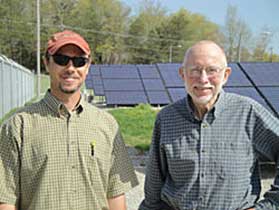
Josh Bills and Steve Boyce at the Berea Solar Farm. Photo courtesy Josh Bills
Energy distribution for the people, by the people. That was the founding principle of electric cooperatives and municipal utilities as they sprang up in the United States throughout the twentieth century.
Today, any profits made by these member- or city-owned utilities go back into infrastructure, operation, or payments towards their member-investors. Seldom have they veered from the distribution game and tried generating their own energy, but across the country this is beginning to change. It’s a new tide in the energy world driven by the pull of solar power.
In 2009, the city of Berea, Ky., wishing to upgrade its energy infrastructure, applied for the federal Energy Efficiency and Conservation Block Grant, which aids the development of energy efficiency and conservation programs for small municipalities. Within a year, Berea was awarded $125,000.
“Most of the money went to lighting upgrades and municipal energy efficiency programs, but twenty-five percent was set aside for Berea Solar Farm,” says Joshua Bills, a program coordinator at the Mountain Association for Community Economic Development, a non-profit that promotes energy efficiency in Appalachian Kentucky.
- Raising the Standard: State Laws and our Clean Energy Future
- Democratizing the Grid: Community-owned Renewable Energy
- Bio-energy Creates a Mass of Questions
- Beyond Renewable: The Cutting Edge in Energy
- A Guide to Clean Energy Incentives

In Berea, the push for solar generation came largely from community members. “One of the main benefits of this utility is that its advisory board is made up of non-staff members,” says Bills, currently the board’s chair. “Lots of different voices have been given avenues.”
The idea for the solar farm itself came about in part due to Steve Boyce, former chair of the Berea Utilities Advisory Board, who was inspired by the success of a similar venture in Colorado.
United Power, a rural electric co-op near Denver, began allowing its customers to not just lease panels that the utility built and maintained on its site, but earn credits directly back on their electric bills as well.
The model at United Power helped shape Berea’s plan, where the cooperative initially allowed leases of up to two of its 240-watt solar panels per customer. “All leases were gone before the initial construction was finished,” says Bills.
The program quickly doubled to 120 panels and now customers can lease as many as they like, with each costing $750 for 25 years. While Berea Utilities maintains and owns the panels, leasing customers own the energy produced.
Those who lease don’t have to worry about maintenance and they get a fair price on solar, a deal of about $3.15 per installed watt. According to the Department of Energy, as early as 2011 the median cost of installing residential solar panels similar to Berea’s panels was $6.13 per watt.
Berea’s solar program is looking to expand. A new batch of 132 panels is currently being installed on the wastewater treatment site. More panels are planned in upcoming phases and will eventually allow an opportunity for customers to completely offset their electricity use with solar. This new construction should be completed in the next couple of months, says Bills.
While the complete turnover of the utility’s energy distribution to purely solar is a long way off, customers applying today for leases can potentially achieve a full solar-offset in the future.
Related Articles
Latest News
More Stories
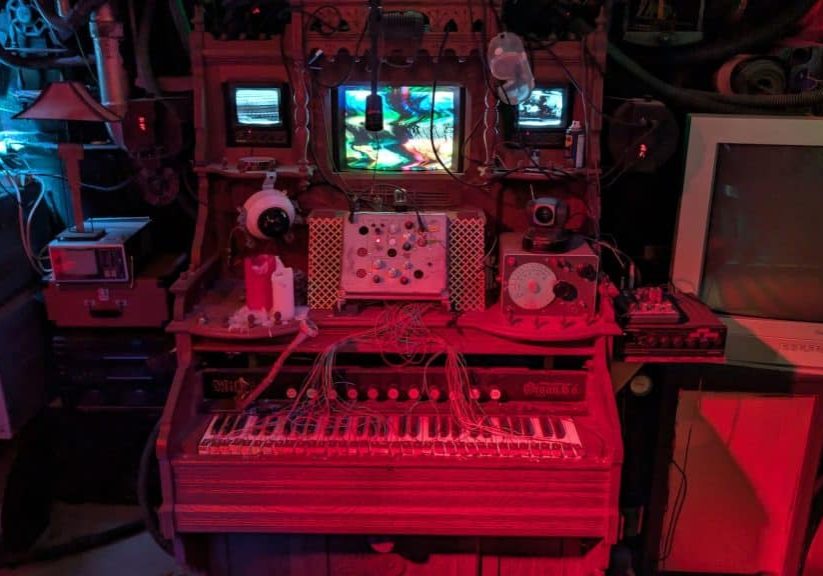
Halloween Approaches, and Night School Is in Session
The House of Art in Bluefield, West Virginia, looks like a haunted tower, making it the perfect location for its sixth annual haunt event: Night School. The Night School will be open every Friday and Saturday night through Oct. 31.
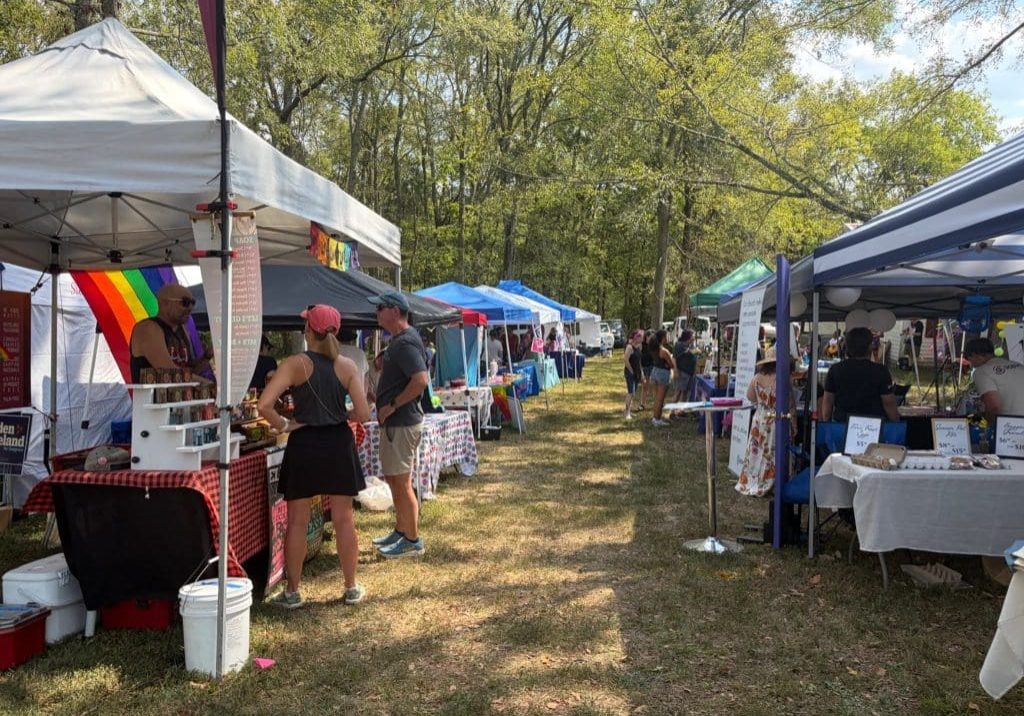
‘The Most Perfect Act of Love’
After losing its rural pride celebration, hundreds of people attended the second annual Affirming Sumner Pride celebration on a 24-acre farm dubbed “Fruity Farm” in Bethpage, Sumner County, Tennessee.

Signs of Life
In the Nantahala National Forest, a team of biologists spotted Indiana bats, an endangered species that hasn’t been seen in North Carolina for the last 11 years.

‘First Line of Defense’
During Hurricane Helene and its aftermath, rural fire departments and other first responder hubs played critical roles in keeping their communities safe, even without power and cut off from outside support for days or weeks after the storm. Two years later, plenty of work remains to ensure these hubs have the resources they need to operate day to day and be ready when emergencies or natural disasters strike.

The Rocky Road — and Bridge — to Recovery
Hurricane Helene is estimated to have damaged nearly 7,000 private roads and bridges in Western North Carolina. Two years later, many restoration projects are complete, but the journey hasn’t been easy — and isn’t over for others.

After 20 Years, Letcher County Prison Proposal Is Still Alive, Though Obstacles Remain
A $605 million proposal for a federal prison on a former strip mine site in Letcher County, Kentucky, championed by U.S. Rep. Hal Rogers, refuses to die, despite local opposition, a lack of support from the executive branch and numerous other obstacles.

Leave a comment
Your email address will not be published. Required fields are marked *
Leave a Comment