

Pike County Rejects Mega Landfill
Community uproar defeats proposal on former mineland
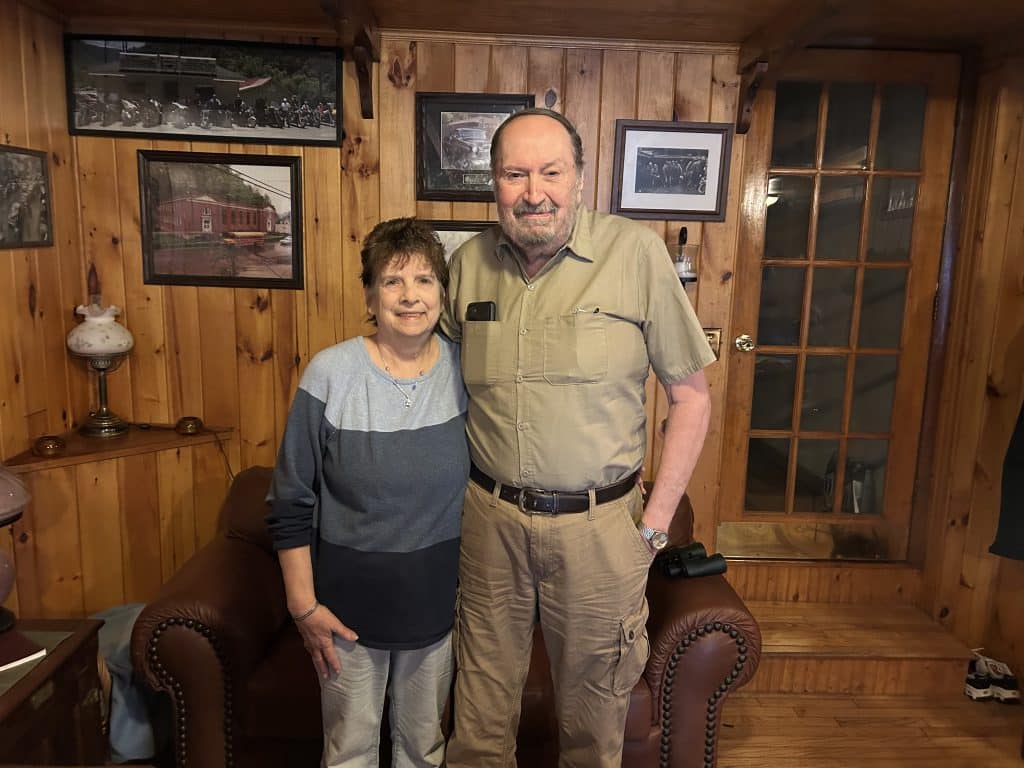
Many residents of Pike County, Kentucky, are breathing a sigh of relief since county commissioners finalized their decision to rescind a contract with an out-of-state waste management company in early March.
Had it not been revoked, the county’s earlier agreement with the Connecticut-based firm USA Waste and Recycling, Inc. would have converted a 1,500-acre former coal mining site in Myra — a small unincorporated community located just a few miles off U.S. Route 23 near Dorton — into a mega landfill, allowing waste from as far away as Lexington and neighboring states to be shipped into Pike County, either via truck or by railway.
The Pike County Fiscal Court originally entered into a host community agreement between the county and one of USA Waste and Recycling’s subsidiaries during a special meeting on January 29.
The county commissioners moved the meeting into an hour and 35-minute closed executive session after just five minutes of public discussion, with no explanation for why they were moving into a closed session. Following the executive session, Judge Executive Ray Jones motioned to approve the agreement with the three commissioners — Clinard “Buddy” Adkins, Freddie Lewis and Ronald Scott — supporting the motion with a “yes” vote.
Almost immediately, community members began raising alarms.
Community raises the alarm
James Cochran, a local farmer who lives about five miles from the proposed project site, expressed concerns over how the landfill would affect his farm.
“They’re going to put me out of business,” he told the Lexington Herald Leader, citing concerns about how the landfill would affect his bees and chickens. “This is my retirement.”
Community members formed a coalition group called Save Our Levisa Valley Environment or SOLVE. According to the group’s Facebook page, it “exists to ensure that the people of Pike County and the broader Levisa Valley are not forced to bear the environmental, economic and social burdens of becoming a regional waste destination.”
The proposed landfill site in Myra was formerly a mining site owned by Cambrian Coal, LLC, which filed for bankruptcy in 2019. Cambrian attempted to transfer their permits to the Myra Resources LLC. But in February 2023, the Kentucky Energy and Environment Cabinet determined that Myra Resources LLC did not have the ability to take over the permit, according to Matt Hepler, environmental scientist at Appalachian Voices, the nonprofit that produces this publication.
The mine permit remains under bond for reclamation, with multiple unresolved violations related to the reclamation of the site. The site is what is known as a “zombie mine,” an idling coal mine that has never been officially closed nor reclaimed.
For years, coal companies have often failed to set aside enough money to pay for cleanup, leaving many states without sufficient funds to clean up these sites, leading to a host of reclamation issues.
Larry Thacker, a SOLVE steering committee member and seventh-generation Pike County resident who lives in the Pompey community, was one of the landfill project’s most vocal opponents. He describes this particular zombie mine as “honeycombed” with flooded underground mine workings. The community has already been living with drainage problems associated with the site, including a 2,000-foot wide coal slurry impoundment above Shelby Creek, where the water level is on the verge of spilling over.
“Geologically, I don’t think that you could pick a worse place than a surface mine,” Thacker says.
He points to both surface mining and other methods like highwall mining, where coal is drilled out from the side of a hill. Even when operators are required to restore the land to its approximate original contour, these reconstructed slopes differ from natural geologic conditions and can remain less stable than undisturbed ground, increasing the risk of erosion and slope movement. These concerns are even more pronounced on zombie mines that have not achieved meaningful reclamation.
Thacker believes the site was likely attractive to outside waste management companies such as USA Waste and Recycling, Inc., due to railways that were once used for coal, which could be repurposed to haul out-of-state waste. According to Thacker, this waste would have included sewage from large northern cities. At its height, the Big Run Landfill in Boyd County, Kentucky, was taking in as much as 3,500 tons of out-of-state waste per day, including sewage from northeastern cities.
Additionally, Thacker expressed concern that the landfill would have carried considerable leachate contamination risks to the Levisa Fork and downstream water systems that serve multiple communities, including Pikeville, which is Pike County’s county seat and most populated area. He’s worried about the ability of water treatment facilities to take care of both immediate and long-term issues from the site.
Thacker also worried about this project setting a precedent, noting that if one former mine site is approved as a mega landfill operation, it could potentially open the door to a similar fate for former mine sites in neighboring counties such as Letcher and Harlan. Indeed, the fight to keep out-of-state waste out of Appalachia isn’t isolated to Pike County or to the state of Kentucky. The controversial Moss 3 Landfill project proposal at another former mine site was ultimately shot down in 2024 in Russell County, Virginia.
‘We won a battle, but we still got to win the war’
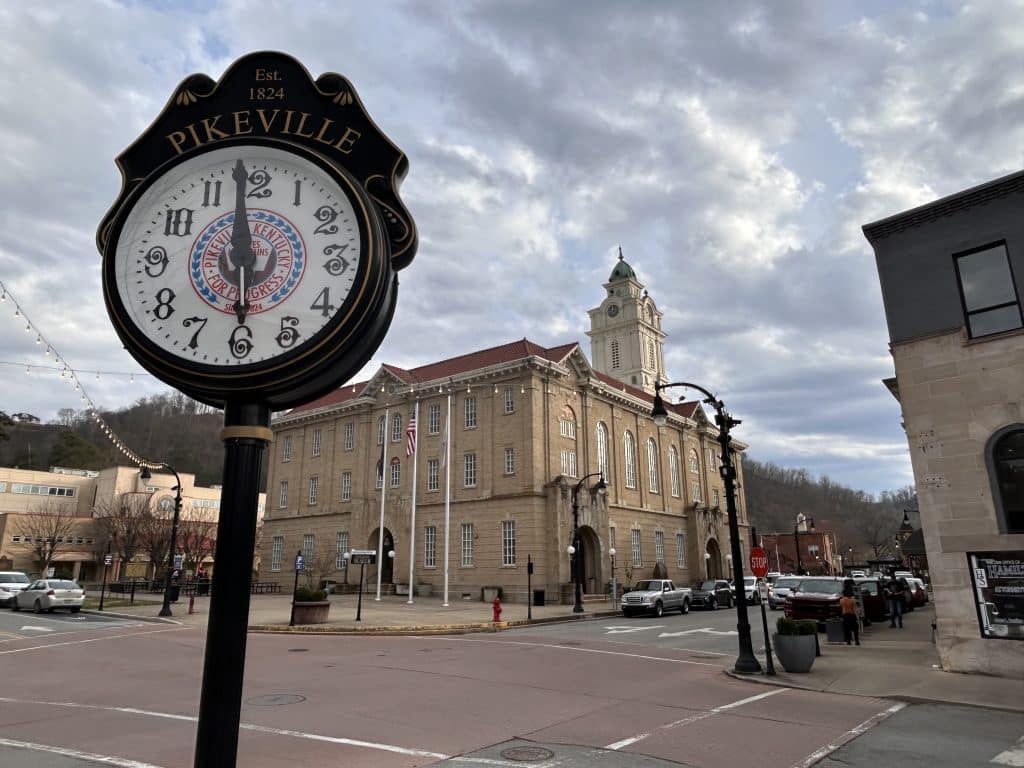
In addition to the environmental concerns raised by the community, the proposed landfill faced multiple legal challenges from the beginning.
Tom “Fitz” FitzGerald is an attorney with the Kentucky Resources Council, or KRC, which is “Kentucky’s only statewide public-interest environmental law and advocacy organization,” according to their website. Fitz explains that he first connected with SOLVE shortly after the initial closed-door session when community members began raising alarms about the project.
Fitz identified the host agreement contract as void for two reasons. First, it constituted an illegal franchise under Kentucky’s state constitution, which bars franchise contracts that last longer than 20 years or are executed without competitive bidding. Secondly, it committed the county to a predetermined outcome on amending its solid waste plan before the public had an opportunity to comment.
“You can’t — as a public entity — make deals by contract that are going to deprive the public of the right to be heard before a decision on the merits,” Fitz says. He adds that at least one commissioner believed that the contract was merely exploratory and that commissioners admitted that they had very little time to review the contract before the initial vote in January.
On Feb. 24, three of the county’s four commissioners called a special meeting and voted to withdraw from the contract over the strong objections of Judge Executive Jones, who cited concerns about Pike County’s fiscal health and capacity issues at the current county-owned landfill as reasons for his support of the project, according to the Lexington Herald-Leader.
Judge Executive Jones was the only “no” vote on rescinding the agreement and backed the landfill as an economic development project and as a way to save the county money. The county’s current landfill only has a few years of capacity remaining, though an expansion is currently underway.
At a second meeting on March 4, the decision to rescind the contract with one of USA Waste and Recycling’s subsidiaries was ratified and finalized.
Fitz expressed surprise that Jones entertained the proposed agreement, noting that similar projects, such as a landfill in Boyd County, Kentucky, that took trainloads of sewage sludge from New York and New Jersey, created an “absolute nightmare” of odors and generated significant opposition and legal battles. That landfill ultimately agreed to pull up its rail tracks and stop accepting out-of-state waste as part of a citizen-initiated lawsuit.
Referring to former mine sites such as the one in Myra, Fitz says, “You don’t build a landfill on strip mine property, because the fracturing of the underlying strata is so pervasive from the blasting and such, and the differential settlement is so great on those areas that it’s really not an advisable place to ever build a proposed containment such as a landfill.”
Fitz also notes that an expansion of the county’s current landfill is already underway and that the county has already spent substantial funds on that expansion.
Even with the Pike County contract gone, Thacker and Fitz point to the need for constant vigilance, including monitoring state-level legislation that could affect local fiscal court authority over landfill and other solid waste decisions — making it easier for a future proposal to bypass the local communities altogether. Such a bill was proposed in the recently ended session, and was amended after concerns were raised by several counties that currently host landfills.
“We won a battle, but we still got to win the war,” Thacker says.
Related Articles
Latest News
More Stories
Neighbors Help Neighbors
A photo essay that celebrates the volunteer spirit of the grassroots group Hurricane Helene WNC and speaks to the resourcefulness, collaboration and hard work embodied by thousands and thousands of volunteers, first responders and aid workers across the region after Hurricane Helene.

Halloween Approaches, and Night School Is in Session
The House of Art in Bluefield, West Virginia, looks like a haunted tower, making it the perfect location for its sixth annual haunt event: Night School. The Night School will be open every Friday and Saturday night through Oct. 31.
‘The Most Perfect Act of Love’
Hundreds of people attended the second annual Affirming Sumner Pride celebration on a 24-acre farm dubbed “Fruity Farm” in Bethpage, Sumner County, Tennessee.

Signs of Life: Endangered Bats Found in Nantahala for First Time in More Than a Decade
In the Nantahala National Forest, a team of biologists spotted Indiana bats, an endangered species that hasn’t been seen in North Carolina for the last 11 years.

‘First Line of Defense’
During Hurricane Helene and its aftermath, rural fire departments and other first responder hubs played critical roles in keeping their communities safe, even without power and cut off from outside support for days or weeks after the storm. Two years later, plenty of work remains to ensure these hubs have the resources they need to operate day to day and be ready when emergencies or natural disasters strike.

The Rocky Road — and Bridge — to Recovery
Hurricane Helene is estimated to have damaged nearly 7,000 private roads and bridges in Western North Carolina. Two years later, many restoration projects are complete, but the journey hasn’t been easy — and isn’t over for others.

Leave a comment
Your email address will not be published. Required fields are marked *
Leave a Comment