From Farm to Farmers Market, Appalachians Seek to Bring New Meaning to Modern Agriculture
Story by Bill Kovarik

Young Journey Emmons display's spring sunflower sprouts at her parent's Harmony Acre Soap Company stand during the Watauga County, N.C.farmers market.
Stroll through any farmer’s market and you’ll find a riot of color, taste, and sensation.
And, quite likely, crowds of consumers.
Farmers markets are the most visible sign of rapid change in agriculture. For consumers it means healthier choices, better tasting vegetables and a new relationship with the farmers. For farmers, it means more income, more opportunities for young farmers and better environmental practices.
And according to the Farmers Market Coalition, the number of farmers markets in the U.S. has doubled in the past 10 years, topping 5,000.
Various labels describe the change—sustainable farming, organic produce, community supported agriculture, and the locally grown food movement. Each is aimed at enhancing consumer health, food security, the environment and the farm economy.
“It’s exploded in a way that’s really kind of astounding,” said Charlie Jackson, director of the Appalachian Sustainable Agriculture Project (ASAP) in Asheville, N.C. “When we started to focus on ‘local’ as a market it was a brand new concept. Now it’s far exceeded what we could have imagined.”
Urban – rural balance
The idea of striking a balance between urban and rural life is not entirely new to America. Benjamin Franklin, for example, was concerned about a benign balance between city and country, according to historians.
Thomas Jefferson favored the idea of independent “yeoman” farmers as the backbone of democracy. Others, like Henry Thoreau and Ralph Waldo Emerson extolled the virtues of rural life in the mid 19th century.
During the early 20th century, the Country Life movement envisioned nature-centered education as helping to slow down the problems of urbanization. It was backed by President Teddy Roosevelt and others in the early 1900s.
Through the 1930s and 40s, the idea of helping small farmers animated most political discussions about agriculture. At the same time, food needs were increasingly met by large scale agriculture, and the proportion of farmers in the population dropped from one-third in Teddy Roosevelt’s day to less than two percent of the population today.
An early reaction to industrial ag- riculture involved new concepts about sustainable farming. British, German and American agronomists worried about soil depletion and overuse of synthetic chemicals and fertilizers. The term organic farming was coined in1940 by Walter James from the idea of the farm itself as a living organism. And the concern over the environmental impact of pesticides was heightened in the 1960s with the publication of Silent Spring by Rachel Carson.
The “back to the land” movement of the 1970s saw a modest resurgence of interest in farming and rural life. And the “slow food” reaction to fast-food franchises in the 1990s, along with the recent emergence of lcoal food activists like Michael Pollan, have made a dramatic impact. Pollan’s bestselling “Omnivore’s Dilemma” of 2006 described agribusiness as having lost touch with natural cycles, and advocated old and new farming methods to make agriculture sustainable.
Organic food is healthier, according to a May 2010, report by the President’s Panel on Cancer, which recommended that consumers seek out foods that are grown without carcinogenic pesticides and herbicides. Some 1,400 pesticides have been registered for use in the US, many of which are known carcinogens.
Organic and local foods tend to be somewhat more expensive, and organic methods mean somewhat lower crop yields, but the disadvantages are offset by higher productivity per unit of land, often with ten times the dollar output per acre than large farms, according to Food First/Institute for Food and Development Policy. The trend may be seen in the sharp upswing in the number of small and micro-sized farms, from 580,000 to 700,000 out of a national total of 2.2 million in the past decade.
Large farms have also cre- ated large environmental prob- lems that are external costs of industrial agriculture. David Kirby, in the April 2010 book Animal Factory, notes that the volume of domestic animal waste is 100 times that of hu- mans in the U.S., and that con- centrated in confined animal farming operations (CAFOs), the waste is causing fish kills and deadly human diseases.
To endure and endure and endure …
Farming in Appalachia is somewhat different from the rest of the nation. Despite the economic challenges, there seems to be a Faulknerian quality of endurance among Appalachian farmers.
Appalachian farms have an average size of 152 acres – about one-third of the U.S. average, and regional land in cultivation has dropped 36 percent in the past 35 years, compared to the national average of 16 percent, according to a paper by Dale Colyer of West Virginia University.
But the Appalachian region is in a different—and potentially better—position for catching the wave of the local foods movement.
Dennis Dove, who earned a PhD in agronomy and worked at Virginia Tech in the 1980s, found to his surprise that many old agricultural practices and heirloom varieties were still being cultivated in Appalachia.
“I’d go into the hollows and coves of the coalfields and find varieties [of vegetables] that haven’t been seen in years and years,” he said. People still passed on knowledge of farming to their children, and while most small farms needed some other income source, the basic pattern of agriculture had not been altered as it had been elsewhere.
“It was all still here,” Dove said.
Dove and partner Tenley Weaver began organizing the Good Food Good People marketing co-op in 1997, a Floyd, Va.-based project to bring produce from local farms to restaurants and farm markets, and one that was able to work with both older and younger farmers.
“I realized we had to promote and pre- serve local and regional agriculture from the tractor-trailer situation,” Dove said. By demonstrating the success of an organic and local farm marketing co-op, Dove feels he is doing more for farming than he could have done as an agricultural researcher. Today, organizing is easier, Dove and Weaver say, because digital communications technology in rural areas is now helping to link farmers and consumers.
Grayson Landcare
Another model of innovation is the Gray- son County Landcare co-op, based in Independence, Va. The group was formed by five local farmers committed to returning more money to the local community, and sparked by Jerry Moles, a PhD who started the Landcare movement in Australia and Sri Lanka.
What resulted was Grayson Natural Foods, which specializes in grass-fed beef and “hair” sheep that are marketed without hormones, antibiotics or animal byproducts in the feed.
“What Landcare is about is institutional change,” Moles said. “What I’m trying to do is find out how to change the flow of money, how to change the flow of information and how to change the flow of materials.”
Training a new generation
Twenty five years ago, the focus in reforming agriculture was on reducing input costs to make farming more profitable, said Jim Lucans, executive director of the Southern Sustainable Agriculture Working Group (SSAWG).
“That same thing happens with consumers buying local, not depending on supermarkets, and having more control.”
Since local operations are smaller in scale, this also cuts down on environmental damage from factory farming of livestock, he notes.
The SSAWG is one of several nonprofit organizations in the Appalachian region taking on an educational role. The organization holds annual conferences where farmers talk about their local and organic operations, about marketing issues, and about legal and infrastructure problems. Other non-profits include Southern Sustainable Agriculture Research and Education.
Universities are also beginning to offer more programs in sustainable agriculture. Notable are new sustainable agriculture programs at Appalachian State University, the University of Tennessee Knoxville and North Carolina A & T. Two regional colleges have used farming as a way to help support education since their founding over a century ago: Warren Wilson in North Carolina, and Berea College in Kentucky.
Berea operates a 500-acre working farm, and about 90 acres are in the process of transitioning to certified organic, according to Sean Clark, an associate professor in the agriculture and natural resources department.
Transitioning to organic certification is a process that requires inspections and record keeping. “It’s a lot like doing income taxes,” Clark said. “We do it for the educational process, and because it makes you plan and be a better manager, thinking ahead, and anticipating potential problems.”
Online resources
NC Farm Fresh: www.ncfarmfresh.com
Southern Organic Resource Guide: attra.ncat.org/
Appalachian Sustainable Ag Project: buyappalachian.org/
Appalachian Transisiton: appalachiantransition.net/
Central Appalachian Network: www.cannetwork.org/
Appalachia’s Farmers Build Community
Story by Julie Johnson
As locally produced foods gain popularity, Appalachia’s family farmers help create a supportive system of community services to reclaim the marketplace.
Sprouting a Small Farm
“In this region, where people have always relied on self-sufficiency, agriculture is about making a job,” said Martin Richards, a former farmer and current Economic Development Organizer for Kentuckians for the Commonwealth.
Faced with dwindling job markets in industry and manufacturing, enterprising Appalachians are again turning to agriculture for income. To do this independently, as opposed to contract farming for a large industrial operation, a farmer faces many challenges. The climate and geography of the steep slopes and hollows present a unique challenge to the region’s farmers. “Having a small or steep field definitely puts constraints on the type of equipment that can be used, “ said Richard Boylan, an Ashe County, N.C. farmer and agricultural agent for the Watauga County, N.C. Cooperative Extension Service.
“The short growing season can be challenging,” Boylan said, “but also provides growers in this area with a huge opportunity to produce cool season crops far earlier than other regions.” Offering crops like broccoli and lettuces in late August allows Appalachian farmers a competitive edge.
“Permaculture design teaches us to take each challenge and find the opportunity in it,” said Boylan. Farmers that can adapt to Appalachia’s challenging landscape can produce unique crops that thrive in mountainous conditions.
At Upper Mountain Research Station in Ashe County, N.C., crop researchers have hybridized a strawberry called “day neutral.” This crop is unique to high elevations, and continues to fruit throughout the summer, as long as temperatures stay below 90 degrees. For farmers in Appalachia, this means the ability to offer vine-fresh berries long after lowland producers.
Making it to Market
Once a farmer begins production, finding a niche in the marketplace can be difficult. Competing with the low prices of mass-produced goods is extremely difficult for an independent farmer trying to make a profit.
“The small farmer has always had to be a jack of all trades,” said Johnson County, Tenn. farmer Tommy Culver. “I don’t know if anyone’s ever been able to make a living just on farming; you have to be creative and have something to fall back on in case your crop fails.”
Culver, who also brings in income making musical instruments, is growing heirloom tomatoes and is experimentally cultivating hops. “I found out that my soil was particularly acidic, and those two crops thrive in it.”
Understanding soil quality and knowing what to grow and when can be a daunting challenge for a green farmer.
Research farms and county-run agriculture extension offices provide farmers with valuable resources to overcome farming obstacles. Many offer soil quality testing. Often farmers can attend workshops that teach a variety of techniques, or networking events that connect farmers to chefs and restaurateurs.
“We’ve taught everything from making hoop houses for season extension to canning and preserving to making solar-powered dehydrators,” said Brooke Kornengay, manager of the Goodnight Family Endowment sustainable development research farm in Valle Crucis, N.C., part of the Appalachian State University system.
“Because these services are subsidized by the state, we don’t have worry about making a profit,” said Kornengay. “We’re just here to support the community.”
“We’re still trying to create networks for Eastern Kentucky farmers,” said Richards. A recent weekend of workshops hosted by Kentuckians for the Commonwealth members in Floyd County brought out farmers interested in improving their marketing skills and sharing information.
“In our region, the imposed quotas set by the tobacco industry eliminated the need for a farmer’s marketing skills,” said Martin. “The workshops are aimed at making farmers independent marketers as well as producers.” Participants learned how to set up an eye-catching table at market, and how to work with restaurateurs and cooperative wholesalers.
Farmer’s markets are an obvious choice for many, but they require a strong organizer and an easily accessible, central location. There is no middleman between farmer and consumer, but the farmer’s profit can vary strongly from week to week.
The schedule can also be rigorous for a farmer that has already worked in the fields all week. “Sometimes you just get tired of waking up at 4 a.m. every Saturday,” said Boylan. “However, it’s a great place to connect customer to farmer and those connections are very important.”
Creating community
Regardless of the method or market, “agriculture creates community,” said Kornengay. Farming communities have long fostered neighborly bonds to help plant, produce and harvest one another’s yields.
Mike Hindman, a Butler, Tenn. alpaca farmer, said that he lets a neighbor down the road cut and use the hay from one of his emptier fields. “I got the field, and more hay than I need for my animals and I don’t want to keep it cut all the time,” he said.
“No money changes hands, we just help each other out and we both benefit.”
Increasing the number of farmers in an area also increases demand for equipment sellers, supply shops and livestock veterinarians. Area restaurants also benefit from a steady supply of fresh meat and produce that they can order practically on demand, without having to sacrifice quality to cross- country shipments.
The Watauga County, N.C. Agriculture Extension Service is hosting a chef-to-farm field trip this June. “We want to get chefs and farmers together so they can see what’s growing and what’s cooking,” said Boylan. “Making personal connections helps strike up business opportunities for both.”
“We want to create a better knowledge base on who has resources, and spark discussions with farmers, consumers and restaurateurs to find out how we can all strengthen community relationships,” said Kornengay.
“At the core of it, being a farmer is about feeding people. The farmer is really a community philanthropist,” said Culver.
Saving Appalachian History – One Seed at a Time
By Julie Johnson
Appalachia’s growers are encouraging crop diversity and saving heirloom vegetable varieties from extinction by creating a network of seed saving and swapping.
Heirloom fruits and vegetables are often far tastier than their supermarket cousins and express characteristics that have been developed by generations of natural growth in backyard gardens and small farms.
From the yellow-striped Green Zebra tomato to the Dark Pot Liquor butterbean to the crimson Bloody Butcher corn, heirloom varieties deliver diversity in agriculture and allow each grower to bring something unique to market.
There are many organizations and seed swap events in and around Appalachia that promote planting heirloom varieties and help growers save and share their seeds after harvest.
The Southern Seed Legacy (SSL), based out of the University of Georgia’s Anthropology department, has numerous research farms and operates a program called “Pass Along Southern Seed” (PASS.) For a $15 annual membership, you can order any of 130 heirloom seeds from their seed bank. Once successfully grown, you must keep one-third of the next generation for yourself, pass one-third to another grower and return one-third to SSL.
Check in your area for seed swaps near you.
Farming in the Shadow of Coal
Story by Julie Johnson
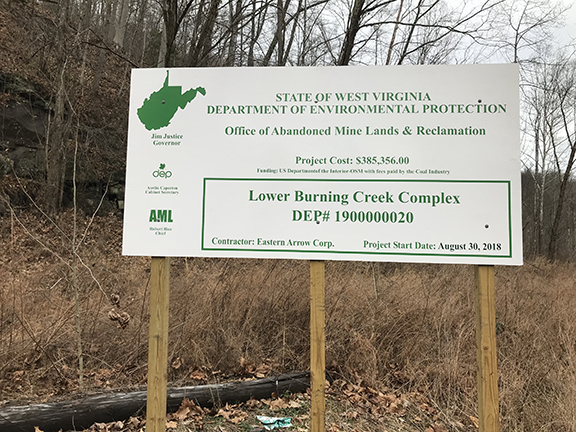
Many farmers in the coalfields are finding environmental pollution has ruined their irrigation.
“In the coal fields,” said Martin Richards, Economic Development Organizer for Kentuckians for the Commonwealth, “you can have a nice piece of bottom land with great soil, but if there is a mine site, active or inactive, in your watershed, the residual pollution can ruin your field.”
Institutions like Pine Mountain Settlement School in Harlan County, Ky., help mitigate this problem. The school functions as a research center and local outreach service. They provide workshops on stream and water quality testing, and raise test plots that help community members learn to grow according to the rigorous parameters that mountain geography provides.
Visit PineMountainSettlementSchool.com to find out more.