
The Appalachian Voice
Appalachian Mussels: Our Living Freshwater Filters
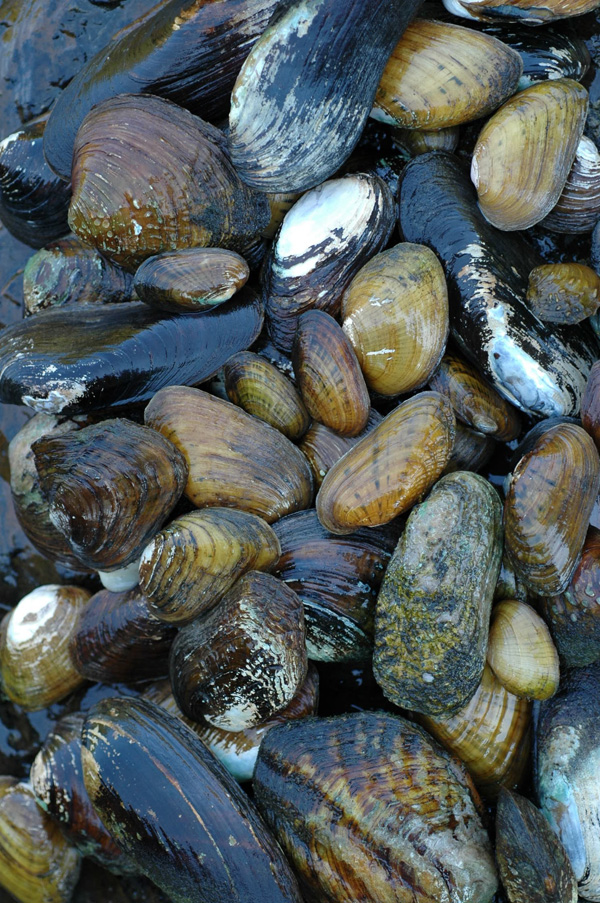
By Jesse Wood When European settlers first waded through Appalachian streams hundreds of years ago, freshwater mussels practically paved the riverbeds. In the early 1900s, the aquatic creatures were so abundant that thousands of pearl hunters flocked to the forks of the Holston and Clinch rivers in Tennessee hoping to strike it rich. Of course,…
Read MoreNorth Carolina Lawmakers Fumble Over Fracking Vote
By Brian Sewell After Gov. Bev Perdue vetoed a controversial bill to legalize hydraulic fracturing in North Carolina, both the state Senate and House allowed little time for debate before voting to override the block. In the Republican-led House of Representatives, the veto override created controversy when it succeeded by one mistaken vote. Rep. Becky…
Read MoreRecognizing Renewable Opportunities
Kentucky could realize 34 percent of its energy demand from renewable sources by 2025, a new study shows. Authored by West Virginia-based Downstream Strategies and Kentucky-based Mountain Association for Community Economic Development, the report found that solar photovoltaic and combined heat and power, the simultaneous generation of mechanical power and thermal energy used for heating…
Read MorePartnerships Protect Western North Carolina’s Rare Aquatic Ecosystems
By Brian Sewell Public and private groups working together to protect land in Western North Carolina are making sure that the region’s aquatic ecosystems and the rare plants and animals found in them are also preserved. The Box Creek Wilderness, a newly designated state Significant Natural Heritage Area, encompasses 3,300 acres along the McDowell-Rutherford county…
Read MoreHIDDEN TREASURES #2 — Public Lands
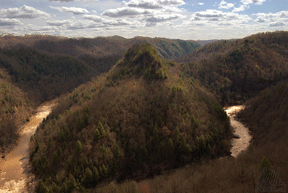
Stories by Madison Hinshaw, Jillian Randel, Jamie Goodman and Molly Moore Welcome to part two in our exploration of the most amazing places in the Central and Southern Appalachian Mountains — this time exploring some of our most fabulous Public Lands. Take this pull-out section with you as you explore the Hidden Treasures of our…
Read MoreCoal River Makes America’s Most Endangered Rivers List — Again
By Anna Norwood Coal River in West Virginia has been named one of America’s Most Endangered Rivers for 2012, ranking ninth on watchdog organization American Rivers’ list of the top 10 threatened waterways in the country. American Rivers cites mountaintop removal coal mining with contaminating Coal River.The report states that, “approximately 20 percent of the…
Read MoreCoal Financing Under Scrutiny
By Molly Moore Bank of America, JP Morgan Chase, Citi, Morgan Stanley and Wells Fargo ranked as the five worst banks for coal financing in an annual report issued by Rainforest Action Network, BankTrack and Sierra Club. Banks were rated according to their investment in mountaintop removal coal mining and coal-fired power plants. The report…
Read MoreMeet the Incredible Environmental Duo
Tom Cormons, Deputy Director of Programs and Director of our Virginia office, and his wife Heather recently welcomed to the world not one, but two budding Appalachian Voices conservationists and whitewater rafting enthusiasts (if mom and dad have anything to say about it!). Cassie and her brother Kai join big sister Brooke in rounding out…
Read MoreOrganizational Roundup
Coal Ash Debate Spills Into Transportation Bill Appalachian Voices’ Red, White and Water campaign is working to oppose an amendment on the federal Transportation Bill that would essentially halt the U.S. Environmental Protection Agency’s rule-making process on toxic coal ash storage and disposal. The bill passed the House in April, and is now undergoing review…
Read MoreStorming Capital Hill
On June 2, more than 150 people gathered in Washington, D.C., for the 7th annual End Mountaintop Removal Week in Washington, sponsored by The Alliance for Appalachia. After a day of training, participants spent three days meeting with Congressional representatives to urge them to support legislation restoring the Clean Water Act to its original language,…
Read More