

The Appalachian Trail
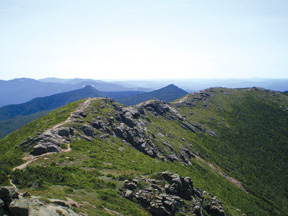
The Franconia Ridge on the New Hampshire section of the AT. Photo by Paul Rago, used by permission under the GNU Free Documentation License
Story by Bill Kovarik
This winter, as three million enthusiasts check their gear and prepare for spring on the Appalachian Trail, they’ll be happy to know that more protection and an expanded trail network are on the way.
Also on the way is a better understanding of the trail’s problems through the AT Mega-Transect project.
These are only a few of the things that are needed, experts say, to keep the beloved trail from being loved to death.
New areas protected
Legislation protecting 53,000 acres of land alongside the Appalachian Trail in southwestern Virginia passed the U.S. Senate in January 2009 and was expected to pass the House.
The land would be accessible for hiking, hunting, fishing and other recreational use, but is protected from development. The legislation was first introduced in 2004.
Trail expansions needed
Many walking trail expansions are shovel-ready, and would be a welcome part of the economic stimulus package, according to Greenways Incorporated founder Charles Flink. Writing recently in the Raleigh News & Observer, Flink said that many trail and greenway projects could be developed quickly.
Such projects “would provide jobs in construction and in the manufacturing of materials such as concrete, asphalt, bridges, boardwalks, signs, hand tools and heavy equipment.” One major suggestion is the Mountains-to-Sea Trail across North Carolina, a 1,000-mile walking trail stretching from the Great Smoky Mountains to Jockey’s Ridge State Park on the Outer Banks.
More walking trails would also provide work along the Civilian Conservation Corps model introduced by President Franklin D. Roosevelt 75 years ago.
Citizen science to help monitoring
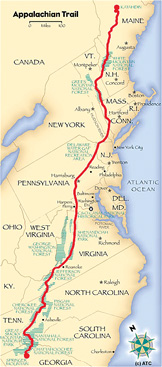
Because the Appalachian Trail is so close to 120 million Americans on the East Coast, it is an ideal indicator for environmental problems, according to managers of a collaborative project called the AT Mega-Transect.
For example, AT thru-hikers are currently exposed to high levels of ozone for weeks at a time, and backcountry rangers in Great Smoky Mountains National Park are not allowed to go in the field on high ozone days, the Appalachian Trail Conservancy said, describing the need for the project.
Additional help is needed to monitor birds and other wildlife along the trail. The ATC notes that up to 2,000 endangered species are found along the trail from Maine to Georgia.
The term “mega-transect” was coined by Michael Fay of National Geographic to describe a way to examine a suite of environmental variables on a continental scale. A consortium of groups, including the National Park Service, the U.S. Geological Survey, the ATC and others serve on the AT Mega-Transect project.
“Because of the magnitude of the project, volunteer engagement is vital to this effort,” a recent Mega-Transect report said. “Citizen scientists will play an active role, participating in monitoring activities and providing policy-makers, scientists and land managers with the data needed to further protect the Trail.”
Interested individuals and groups can track progress and sign up for volunteer opportunities via the Appalachian Trail Conservancy’s web site www.appalachiantrail.org, or by contacting [email protected].
Related Articles
Latest News
More Stories

Signs of Life
In the Nantahala National Forest, a team of biologists spotted Indiana bats, an endangered species that hasn’t been seen in North Carolina for the last 11 years.

‘First Line of Defense’
During Hurricane Helene and its aftermath, rural fire departments and other first responder hubs played critical roles in keeping their communities safe, even without power and cut off from outside support for days or weeks after the storm. Two years later, plenty of work remains to ensure these hubs have the resources they need to operate day to day and be ready when emergencies or natural disasters strike.

The Rocky Road — and Bridge — to Recovery
Hurricane Helene is estimated to have damaged nearly 7,000 private roads and bridges in Western North Carolina. Two years later, many restoration projects are complete, but the journey hasn’t been easy — and isn’t over for others.
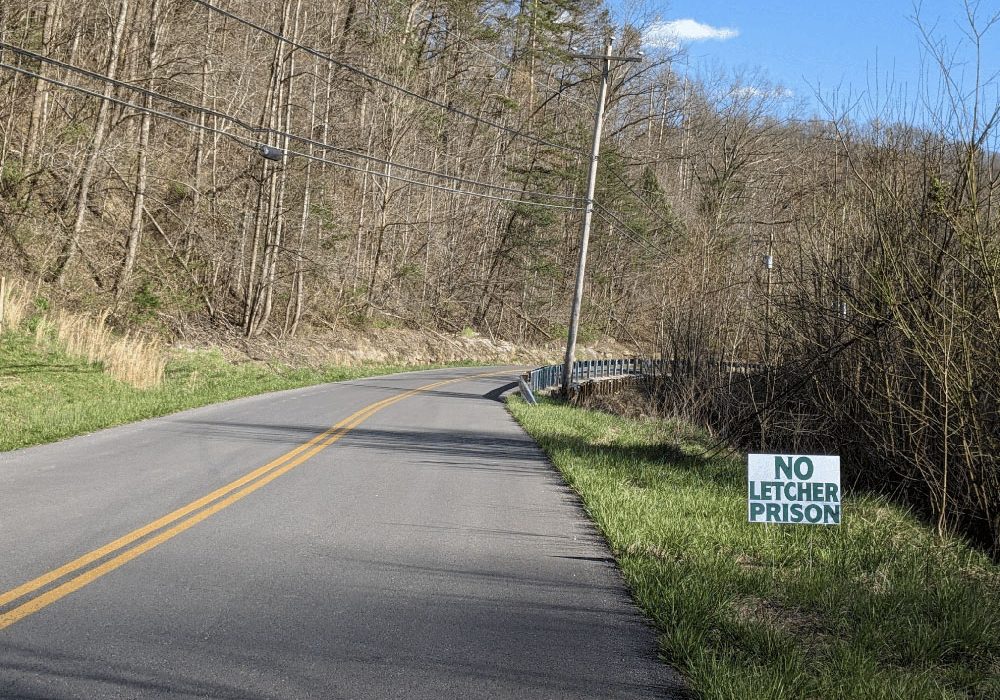
After 20 Years, Letcher County Prison Proposal Is Still Alive, Though Obstacles Remain
A $605 million proposal for a federal prison on a former strip mine site in Letcher County, Kentucky, championed by U.S. Rep. Hal Rogers, refuses to die, despite local opposition, a lack of support from the executive branch and numerous other obstacles.
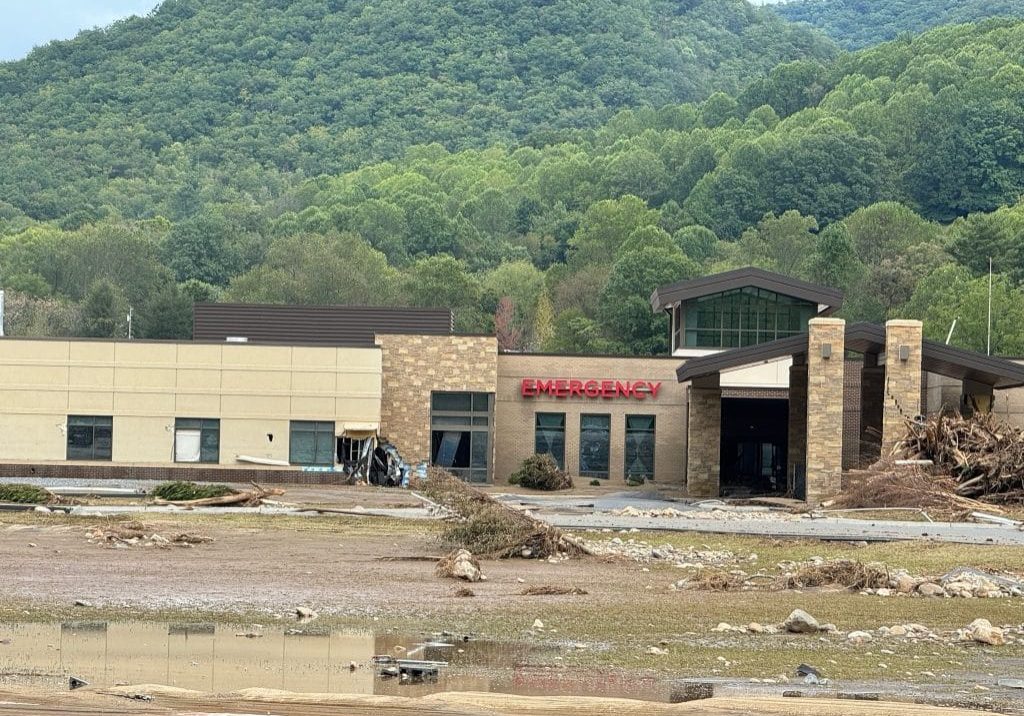
The Washout and Rebuild
For nearly two years, residents of Unicoi County, Tennessee, have had to make do without a hospital after Hurricane Helene destroyed the rural hospital. Ballad Health, which owns the hospital, broke ground on a new location — in another floodplain — in August 2026.

The Shenandoah Salamander
The Shenandoah salamander is a woodland salamander, which has adapted to life at higher elevations away from water. This sparkling rarity lives among the dry leaves, cracked logs, and stony hillocks on the highest peaks of Shenandoah National Park.

Leave a comment
Your email address will not be published. Required fields are marked *
Leave a Comment