Follow Us on Twitter: Appalachian Voices | iLoveMountains.org

Posts Tagged ‘Ohio’

The Appalachian States of Energy Efficiency

Tuesday, April 16th, 2013 - posted by Jil

By Matt Grimley

Every year, the American Council for an Energy-Efficient Economy releases rankings on individual state’s energy efficiency performance. And every year, Appalachia is middling at best in saving energy.

The ACEEE’s State Energy Efficiency Scorecard examines everything from building codes to utility programs and policies to determine who takes the top spot. 2012’s top three states were Massachusetts, California and New York; the bottom three were West Virginia, North Dakota and Mississippi. Below we indicate our regional rankings based on the ACEEE 2012 report, followed by the increase or decrease in ranking from the 2011.

Good news, locally: since 2011, the states in Central and Southern Appalachia improved by an average of 0.875 spots. Better news: there’s always next year!

Georgia

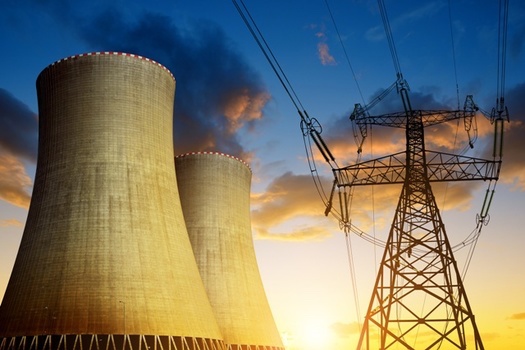
#33 (+3) — In 2012, Georgia ranked second in the nation in annual growth of electricity consumption. To help combat that, the state utilities must file an integrated resource plan every three years that accounts for, but does not require, efficiency measures. The state also does not require its utilities to meet annual energy savings targets. In other news, last year the Georgia Nuclear Regulatory Commission approved the construction of two new nuclear reactors at the Vogtle plant. Peachy!

Kentucky

#36 (+1) — With Gov. Steve Beshear’s seven-point strategic energy plan, Kentucky is calling for improving the efficiency of its homes, buildings, industries and transportation fleet to offset at least 18 percent of the state’s projected 2025 energy demand. Maybe the state could look at the nonprofit organization MACED and their How$Mart Kentucky program to see how on-bill financing (which helps residents pay for retrofits and save money on their electric bills) might expand?

North Carolina

Tied for #22 (+5) — The state’s Renewable Energy and Energy Efficiency Portfolio Standard has saved an estimated $577 million for the government and electric utilities since 2007. Recent state legislation was introduced seeking to repeal these standards. North Carolina has been a leader in the Southeast in efficiency — would N.C. Rep. Mike Hager, a former Duke Energy employee championing the bill, really want to undo that legacy?

Ohio

Tied for #22 (+2) — The Buckeye State passed a strong standard back in 2008 for its utilities to meet energy savings targets. Recently, an Ohio Senate panel began its five-year checkup of those rules. State Sen. Bill Seitz, who is leading the review and supported the standard in 2008, said the policy reminded him of “Joseph Stalin’s five-year plan.” At least we know which way he’s “Lenin.”

South Carolina

#40 (+6) — Duke Energy Carolinas wants to increase their electric rates for residential customers by 16.3 percent in South Carolina, in part to help pay for two new power plants, in part to not promote more energy savings programs. Luckily, in January, a law became effective in the state that requires builders of all new homes to adopt more efficient measures such as getting a third party to conduct air duct tests on the new abode. It’s a start for this warm-weather state, which suffers from massive energy demand peaks.

Tennessee

#32 (-2) — The Tennessee Valley Authority is meeting its annual energy savings goals, but budgets for the efficiency programs are lower than anticipated. In March, Pathway Lending announced that it lowered the interest rate of the Tennessee Energy Efficiency Loan Program to two percent. The program partners include the state of Tennessee and the U.S. Department of Energy. It has provided nearly $10 million in funding to more than 50 Tennessee businesses since 2010 in an effort to help businesses reduce operating costs and spur economic growth.

Virginia

#37 (-3) — ACEEE in a report found that aggressively pursuing all cost-effective efficiency measures today would supply 31 percent of Virginia’s energy needs in 2025. The state currently has a goal of a 10 percent reduction in energy use by 2022, and if they choose to, utilities can voluntarily, maybe, help out. Dominion Virginia Power, thank everything, chose to help with their very own efficiency Blogspot: e-conserve.blogspot.com. It updates every two weeks, so get ready.

West Virginia

#49 (-5) — West Virginia’s residential electric rates have risen more than 50 percent in the past five years. FirstEnergy Corp. isn’t helping. The utility wants to sell the Harrison Power Station to a West Virginia subsidiary, and Mountain State customers would fund the purchase through increased electric bills. The state legislature, however, will soon look at House Bill 2803 to encourage greater investment in energy savings and House Bill 2210 to set definite demands for energy demand reduction by state electric utilities. At least that close there’s a lot to gain.

Hidden Treasures – Ohio

Wednesday, August 8th, 2012 - posted by meghan

Gorge Trail

Gorge Trail

Photo by Larry Beers

East Gorge Walk and West Gorge Trail create a two-mile loop along Mill Creek in Northeast Ohio. The part boardwalk, part footpath trail takes visitors by huge sandstone rock formations, a suspension bridge, and one of Mill Creek Metroparks’ most impressive landmarks: Lanterman’s Falls and Mill.

The waterfall’s 15-foot free fall into a deep, rocky pool is made even more amazing by its location adjacent to the nearly seven-story mill made of stone and wood. Depending on the water level, the creek is still used to operate the grist mill, which functions today as it did in the 1800s, grinding corn, wheat and buckwheat.

To add length to the Gorge Trail, jump onto another trail through Mill Creek Metroparks, which cover more than 4,400 acres of land in Mahoning County. Mill Creek Park was the first park district in Ohio, opening in 1893. — JK

More Info: Located near Youngstown, Ohio. Visit: millcreekmetroparks.org.

Ohio – Hidden Treasures

Monday, June 11th, 2012 - posted by Anna

Cantwell Cliffs

Photo by Ohio Department of Natural Resources

Among the natural wonders of Southeast Ohio is a set of reddish-brown sandstone formations known as Cantwell Cliffs. The cliffs are situated atop a bed of Blackhand Sandstone (southeast Ohio is the only place in the world where this type of sandstone exists). Characterized by a 150-foot-tall horseshoe-shaped formation overlooking a beautiful gorge, the cliffs feature narrow passageways and towering rock walls. No guardrails are in place, so keep an eye on young children. Cantwell Cliffs are the northernmost location in the alluring Hocking Hills State Park system, making them a less-visited spot and one of Ohio’s most hidden public treasures. — JR

More Info: Located off of S.R. 374, near Rockbridge, Ohio. Visit: thehockinghills.org

BLM/OSM Merger Postponed | Newsbites

Tuesday, December 20th, 2011 - posted by molly

Interior Secretary Ken Salazar has announced a postponement of a merger between the Bureau of Land Management and the Office of Surface Mining and Reclamation Enforcement to Feb. 15, 2012.

In late October, Salazar announced the proposal and received immediate and staunch criticism. Some argued that the two agencies have little overlap and expressed doubts over whether the merger would be effective. Others questioned if Salazar’s proposal is legal, since both the BLM and OSMRE were created by acts of Congress.

At a hearing held by the Energy and Natural Resources Committee, panelists gave testimony questioning the effects of the merger. West Virginia University College of Law Professor Patrick McGinley noted the order was made with no prior notice or consultation of Congress, coalfield citizens or the coal industry and argued that mingling OSMRE employees with those of agencies that promote development or use of coal is explicitly prohibited by the Surface Mining Control and Reclamation Act.

The BLM is the federal agency tasked with administration of the United States’ public lands, while the OSMRE, an unrelated branch of the Department of the Interior, is entrusted with implementation and enforcement of 1977’s SMCRA legislation.

Mine Agency Releases Inspection Results, Audited for Poor Fine Collection

In the wake of the 2010 Upper Big Branch mine disaster in Raleigh County, W.Va., the Mine Health and Safety Administration announced a plan to increase their presence in monitoring mine sites for safety hazards in Appalachia. The results of the October impact inspections were announced Nov. 22.

The eight inspected coal mines were issued 145 citations and 18 orders. A mine in Pike County, Ky., operated by Viper Coal LLC., received eight citations for mining in excess of the 20-foot maximum cut depth and exposing miners to potentially fatal roof falls.

Impact inspections target mines that have poor compliance history and require “increased agency attention and enforcement.” Since they began, 6,383 citations, 614 orders and 22 safeguards have re- sulted from 383 inspections.

Nearly a week after the inspection results were announced, the Department of Labor released an audit documenting MSHA’s failure to effectively enforce and collect fines for violations under the Federal Mine Safety and Health Act of 1977.

MSHA is scheduled to release its official report on the Upper Big Branch Mine Disaster on Dec. 6.

The full audit report concerning MSHA’s fine collection can be found on the Office of the Inspector General‘s web- site: oig.dol.gov/auditreports.htm

Delays and Setbacks for EPA Clean Air Rules

The U.S. Environmental Protection Agency (EPA) has announced another delay of new standards limiting the greenhouse gas emissions from coal-fired power plants and oil refineries. The delay is the latest setback for proposed clean air rules governing everything from smog to mercury pollution.

As the EPA plans safer air pollution rules, some in Congress have criticized the EPA’s proposed regulations, alleging they would kill jobs and hamper economic recovery. The delay comes despite new data showing the largest increase in atmospheric carbon dioxide emissions (for the year 2010) since the start of the industrial revolution – 564 million tons more than 2009 – a six percent increase.

EPA administrator Lisa Jackson reports that the finalized plan for power plants will roll out early next year. The new deadline to finalize rules concerning oil refinery emissions is now mid- November, 2012.

Surface Mines as Military Training Facilities

Military personnel bound for Afghanistan will be making a stop in West Virginia to learn to operate Mine Resistant Ambush Protected vehicles. The trainings will take place on reclaimed surface mine land adjacent to the West Virginia National Guard training complex. The terrain was chosen for its similarities to eastern Afghanistan.

Baard Energy Drops Plans for Coal-to-Liquids Plant

Due to sustained and outspoken citizen opposition and financial setbacks, Baard Energy has cancelled a proposed $5.5 billion coal-to-liquids plant in Columbiana County, Ohio. The coal-to-liquids facility would have used 9.3 million tons of coal a year, including Ohio high-sulfur coal.

West Virginia Gov. Tomblin Sworn in, Swears to fight EPA

On Nov. 13, the 35th Governor of West Virginia, Earl Ray Tomblin, was sworn into office at the state capitol in Charleston. Tomblin has continuously denounced EPA regulations. In September, as acting Governor, Tomblin gave testimony at a Subcommittee on Energy and Mineral Resource hearing where he decried the EPA’s “anti-coal” agenda and claimed West Virginian’s owe their financial health partially to coal.

Coal Industry Wants Homeland Security Exemption

The Department of Homeland Security recently accepted public comment on a 2008 rule proposing the regulation of the sale and transfer of ammonium nitrate. Traditionally a farm fertilizer, the compound can be used to create bombs via widely available instructions. The National Mining Association has requested an exemption for the purchase of ammonium nitrate used solely for the production of explosives. A letter from Tawny A. Bridgeford, the association’s deputy general counsel, claims the mining industry’s ammonium nitrate purchases are adequately regulated by the Bureau of Alcohol, Tobacco, Firearms and Explosives and that “[The] Department of Homesland Security should have a more accurate accounting for the costs of its regulatory program before finalizing its proposed rule.”

Investor Backs Away from Carbon-Capture Program

Ameren, a Midwest power company and a primary investor in an effort to implement commercial scale carbon capture and sequestration, backed out of the venture over financial concerns. Originally created in 2003, the venture FutureGen 2.0, received $1 billion through the American Recovery and Reinvestment Act for the conversion of one power plant.

Robert F. Kennedy, Jr.: The Real Deal

Monday, October 31st, 2011 - posted by Appalachian Voices

Guest blog by Jim Deming

Something good happened in Cleveland, Ohio this past Friday. In a city that has symbolized urban pollution since the 60’s and has taken some blows in the current economic recession, Bobby Kennedy came to town to celebrate.

He was here at a press conference on the banks of the Cuyahoga River to help launch journalism website EcoWatch as the national voice of the grassroots environmental movement. At the place where the rivers once burned from oil and debris, Bobby Kennedy, the founder of Waterkeeper Alliance, told us how individual private citizens banded together to form a movement that eventually resulted in the Clean Water Act and 28 more environmental legislative victories, even under a Republican president with bi-partisan support.

In his speech at the press conference, he told us how ordinary people – a mixture of plumbers, veterans, carpenters, and others – used a once-obscure law to collect bounties for nailing polluters on the Hudson River, now one of the cleanest waterways in the country. He told us that we could do the same in our towns and cities and mountains, that we could enforce the law.

Robert F. Kennedy, Jr. announces the launch of the EcoWatch and Waterkeeper Alliance news service website—www.ecowatch.org—at a press event in Cleveland, Ohio. The website works to unite the voice of the grassroots environmental movement and mobilize millions of Americans to engage in democracy to protect human health and the environment. Photo by Marianne Mangan

And that reminded me of what the Waterkeepers in Kentucky and all through the southern Appalachians are doing now with the support of Appalachian Voices and other partners: seeking to enforce the law. Bobby Kennedy was eloquent, passionate and committed, and we are fortunate to have him come speak at the annual Appalachian Voices meeting planned for Charlottesville, Virginia in May. You don’t want to miss one of the best voices in the country for fighting the corporate pillaging of our mountains and our communities.

But his speech is not what I will remember most about the day. You see, I arrived, and like the old geezer I am, I knew that the speeches would last long and I better find the facilities beforehand. As I exited the relief station, Bobby stood there with only two other people, so I stopped to talk. He shook my hand with his left hand, and I commented that I knew he had just had rotator cuff surgery on his right arm, and I told him of my experience with the same ailment. I told him some of us were working in the faith community for environmental justice, and we welcomed his support. He said he would do almost anything for Appalachian Voices because we do such a good job standing up for what is right, and that he was happy the Pope has even started talking about economic injustice and corporate greed. I thought my few minutes were up, but he wanted to talk more about rotator cuffs and recovery, so we stood there like two aging jocks discussing our wounds.

Bobby Kennedy at Appalachian Voices Boone office

Bobby Kennedy speaks at an Appalachian Voices open house in 2008.

And I saw him differently after that. Here was a guy with presidents and senators in his family history talking to a guy who has east Texas sharecroppers in his family history. No pretense. No airs.

Maybe the Occupy Wall Street folks should include guys like Bobby Kennedy, Jr. in their ranks. For the change we need is not just about shifting money around from the haves to the have nots, it’s about justice and creating sustainable communities for all people, even those not yet born. So I really like Bobby, and I don’t want you to miss hearing him. He’s one of us.

Jim Deming, Minister for Environmental Justice
Justice and Witness Ministries, United Church of Christ
Honored member of the Board of Directors of Appalachian Voices

Check out a video from EcoWatch’s press event here.

On Thursday, November 3, 2011 at 7 pm Wake Forest University’s Center for Energy, Environment and Sustainability, in partnership with the Yadkin Riverkeeper, will welcome Robert F. Kennedy, Jr. for a lecture titled Green Gold Rush: A Vision for Energy Independence, Jobs, and National Wealth. This event is free and open to the public and will be held in Wait Chapel. Visit the Center’s web page for more information.

Responding to the Threat on Our Water

Thursday, October 13th, 2011 - posted by brian

In 1969, a fire on Ohio’s heavily polluted Cuyahoga River shocked the American public into taking action. Out of that movement, several federal laws, including the Clean Water Act of 1977, were established to safeguard U.S. waterways from industrial pollution.

Now, a mere 30 years later, members of Congress are attempting to undermine the very foundation of the Clean Water Act. Conservative representatives are working to prevent the Environmental Protection Agency from establishing safety guidelines designed to protect the American people from special interests who pollute our water and health for profit.

In September, conservatives kicked off this round of clean water attacks with HR 2041, the Transparency in Regulatory Analysis of Impacts on the Nation (TRAIN) Act. The TRAIN Act would delay vital protections like the utility mercury standard (still under EPA consideration at press time), and the recently finalized Cross-State Air Pollution Rule. And this was just the first in a series of bills and riders designed to protect industry interests.

“People are shocked to know that Congress is working to dismantle the basic clean water laws that protect our way of life,” says Sandra Diaz, coordinator of Appalachian Voices’ new Red, White and Water Campaign. “It took a movement in the 1970s to create the Clean Water Act. Now it’s going to take a movement to save it.”

Appalachian Voices’ Red, White and Water campaign will spread awareness of impending clean water threats and grow the movement to protect this basic resource. Read the latest about the ongoing struggle to safeguard our waterways and stand up for clean water by signing the petition at AppVoices.org/Red-White-and-Water.