Get Our RSS Feed!
Front Porch Blog


Appalachian Voices and Partners Challenge Kentucky’s Backroom Deal With Coal Company


Friday, May 17th, 2013 | Posted by Eric Chance


Watercolors by Frasure Creek. State inspector's photos show a variety of colors of water at Frasure Creek mines.

Yesterday, Appalachian Voices and our partner organizations filed a “petition for review”, essentially an appeal of a settlement between Frasure Creek Mining and the Kentucky Energy and Environment Cabinet. This settlement lets Frasure Creek off the hook for thousands of water quality violations over the past two years, while doing little to ensure that the company fixes its water quality problems.

Our challenge of this settlement focuses on the way in which it came about. But first, a bit of background.

We have a separate case that is ongoing against Frasure Creek for submitting false water monitoring data (entire reports were duplicated and only the dates were changed). After we uncovered this problem the company began turning in more accurate reports, which for the first time showed lots of pollution problems. We then filed a second suit against Frasure Creek for thousands of these pollution problems (which had been hidden by reporting problems before our first suit). Then the cabinet also filed a complaint for these pollution violations and more like them in state administrative court (a court run by the cabinet itself). We intervened in that case and became full parties to it, but were then shut out of it completely. In fact the settlement was entered despite our previous objections, and there is no evidence that our objections were even considered. The cabinet and Frasure Creek negotiated a settlement completely without us. The law and common sense both dictate that an agreement is not valid unless all the parties involved agree to it, and that is the basis for our challenge of this settlement yesterday.

Read more
...


UPDATE: Gina McCarthy Approved by Senate Panel


Thursday, May 16th, 2013 | Posted by Thom Kay


This afternoon, Gina McCarthy cleared the first hurdle in replacing Lisa Jackson as the next Administrator of the EPA. The Senate Environment and Public Works Committee voted in favor of McCarthy in a 10-8 vote which followed party lines.Gina McCarthy

Republicans on the committee have vowed to continue to oppose her confirmation until she sufficiently responds to a list of questions and demands. John Walke from the Natural Resources Defense Council has an interesting take on those demands which you can read about here.

Next up for McCarthy is a vote on the Senate floor, where she will need support from both Democrats and Republicans to be confirmed. Appalachian Voices continues to urge the Senate to swiftly approve Gina McCarthy for the position.

The Appalachian Citizens Enforcement Project


Thursday, May 16th, 2013 | Posted by Erin Savage


Visit www.ace-project.org to learn more about the Appalachian Citizens Enforcement Project and how you can help protect clean water rights.

The Appalachian Citizens Enforcement Project (ACE Project) is a new citizen water monitoring program being launched by The Alliance for Appalachia this summer. Appalachian Voices’ own Appalachian Water Watch team has been working with several Alliance partner organizations over the last two years to recruit and train volunteers to monitor and report water quality data in their area. Now our program is joining this greater water monitoring effort through partnerships in the ACE Project.

In 2011, Appalachian Water Watch launched community-based water testing in eastern Kentucky and southwestern Virginia. Through partnerships with Southern Appalachian Mountain Stewards and Kentuckians for the Commonwealth, we recruited over 50 water monitoring volunteers. Now, the ACE Project will expand water monitoring even farther, into Tennessee and West Virginia. Coal River Mountain Watch and United Mountain Defense have already submitted additional data from West Virginia and Tennessee, more than doubling the amount of data collected.

Read more
...


EPA’s Benefits Greatly Outweigh Costs, According to OMB Report


Wednesday, May 15th, 2013 | Posted by Davis Wax


A new report shows the EPA's rules, especially on air pollution, are saving money and lives.

During their push to abolish, obstruct and stymie the Environmental Protection Agency over the past few years, House Republicans have beleaguered the agency for regulatory measures they consider “job-killing” or “anti-industry,” hoping to revert federal environmental regulation to state control or make protections obsolete altogether.

Those in favor of federal rules have argued that national standards allow for the most effective and consistent protections and, as a result, will lead to reduced costs in health care directly associated with air and water pollution.

A new report from the White House’s Office of Management and Budget makes a clear case for why the country needs the EPA. The report includes an analysis of the costs and benefits of a number of federal regulations over the past decade and shows EPA rules, especially those pertaining to air protection, to be the most costly among all the rules evaluated but also the most beneficial.

The budget office estimates that the EPA’s rules account for 58 to 80 percent of the monetized benefits of all federal rules, but 44 to 54 percent of the total costs. Out of these benefits, close to 99 percent come from rules that seek to improve air quality. The report claims that the large estimated benefits of the EPA rules following the arrival of the Clean Air Act stem mostly from the reduction of a single air pollutant: fine particulate matter.

Read more
...


A Must-Read Report, Another Reminder It’s Time to Build Something New in Central Appalachia


Tuesday, May 14th, 2013 | Posted by Brian Sewell


An updated and expanded report is a potent reminder that coal's decline isn't going away and policymakers should accept the challenges, just as many people already have. Click through to read the report's key findings.

The litany of voices pointing to the writing on the wall for the Central Appalachian coal industry continues to grow. They’re saying the same thing in almost every way imaginable, and have been for some time.

Watching coal production decline and demand shift as other energy sources out-compete coal domestically, it is vital that policymakers in Central Appalachia begin implementing policies and investments aimed at building a foundation for economic alternatives in coal-producing counties. A report released this morning by the consulting firm Downstream Strategies is a pretty good reminder why.

“The Continuing Decline in Demand for Central Appalachian Coal: Market and Regulatory Influences” expands on a January 2010 study and provides a detailed look at the challenges Central Appalachia faces, further making the case for the urgent need to act.

As the report’s lead author, Rory McIlmoil, who recently joined Appalachian Voices’ staff as energy policy director, points out:

Numerous factors influence demand for Central Appalachian coal, each of which has had — and will continue to have — a significant impact on the local economies where the coal is mined. In 2010, we recommended that state and local leaders take immediate steps to help diversify coalfield economies. To a large extent, that has not happened. However, it is vital that public officials begin making the political and financial investments necessary to build the foundation for new economic development opportunities in coal-producing counties.

Read more
...


Tending to Appalachia’s Bright Future


Tuesday, May 14th, 2013 | Posted by Cat McCue


A word cloud created from workshops and panel sessions at the conference show the prevalence of positive thinking and themes. Courtesy of Kentuckians for the Commonwealth

I had never been to Harlan County. Sure, I’ve heard the songs, seen the movie, and know the stories, but nothing compares to being there, driving the Kentucky back roads, stopping in local shops, talking to folks.

It’s beautiful country, especially in April with the redbuds blooming and the bright greens of spring blushing up the mountainsides. It’s a friendly place – people went out of their way to make me feel welcome.

It also has more than its share of economic troubles. This is coal country, after all, where big companies haul out the black rock and most of the profits along with it. Harlan County and most of the surrounding counties have a poverty rate in the range of 20 to 28 percent.

This is not news to people living here. They know it, they live it, and they are looking at a million different ways to change it, to create Appalachia’s Bright Future. This was the name of the three-day conference in Harlan, hosted by Kentuckians for the Commonwealth a few weeks ago. It brought together more than 200 people from eastern Kentucky and beyond for an extended conversation about creating a just economy in the region. There was much discussion about what that even means, and while attendees each had a slight variation, several common themes emerged:

1. There is no silver bullet. There is no single industry or company that will turn it all around. Which is a good thing, most agreed, because a root cause of the region’s woes is being too dependent for too long on one industry.

2. There is no magic wand. No one is going to come in “from the outside” to rescue Harlan, or the rest of Appalachia’s’ coal country.

3. It’s about “leadership in place.” The future lies in nurturing home-grown entrepreneurship. Unlike a generation or two ago, young people today want to stay here, and many people who moved away want to return. This profound sense of homeplace was evident throughout the conference.

4. It’s about community and resilience, improving the quality of life and opportunity for everyone, collaborating with neighbors down the street or two counties over so that all can benefit.

5. It’s also about honoring coal miners and their families, those who have sacrificed in untold ways to help build our nation and power our modern lives, who deserve all the opportunity and benefit of a “just economy” as well.

Read more
...


Pro Mountaintop Removal Amendments Sneaking Through the Senate


Monday, May 13th, 2013 | Posted by Melanie Foley


UPDATE: Both amendments proposed by Sen. Joe Manchin to the Water Resources Development Act did not make it into the bill. S.AMDT 846 and 850 would have prolonged the use of mountaintop removal by stripping the EPA’s authority to veto permits under the Clean Water Act while rolling back years of progress made to force coal operators to pay more for their pollution of Appalachia water. Thanks to everyone who called their senator yesterday and this morning for standing up for the right to clean water.

Call Your Senators Now!

The most recent assault in the “war on water” comes to us in the form of the EPA Fair Play Act (S.830). This bill is not fair play for Appalachian communities, as it would strip the Environmental Protection Agency of its ability to stop valley fill permits for mountaintop removal mines. The bill was introduced at the end of April by Senator Joe Manchin (D-WV). Sen. Manchin Getting Calls

Just last month, the U.S. Court of Appeals upheld EPA’s authority to veto the Spruce Mine permit, saying that “The Congress made plain its intent to grant the [EPA] administrator authority to prohibit/deny/restrict/withdraw a specification at any time.” Sen. Manchin’s bill would nullify the court’s decision because it is retroactive back to 1972, meaning that mountaintop mining operations currently stayed by an EPA veto, including Spruce Mine, could move forward immediately.

Sen. Manchin’s first ever bill in the Senate attacked EPA permit veto authority, and as governor of West Virginia, he sued the EPA over the same issue.

The good news is that this bill, a model of destructive efficiency, is only one page long. As such, its pernicious intent has nowhere to hide, and is unlikely to pass on its own.

The bad news is that Sen. Manchin has hidden the same EPA attack in an amendment on a “must-pass” bill. He’s attempting to attach the bad amendment, S.AMDT 846, to the Water Resources Development Act (S.601), a large bill passed every two years to authorize necessary water projects such as harbor dredging and dam repair.

S.AMDT 846 is not the only threat to clean water found in this year’s WRDA. Sen. Manchin has attached another amendment, S.AMDT 850, the Clean Water Cooperative Federalism Act of 2013, known unofficially as the “Dirty Water Act.” This bill would gut the Clean Water Act by giving states, rather than the EPA, the ultimate decision-making authority over our nation’s water quality standards. We believe that water, unconstrained as it is by state boundaries, is the best argument for a federal approach. When this bill was introduced almost two years ago, President Obama threatened to veto it, and the bill never came to a vote.

Another bad amendment to WRDA is S.AMDT 809, Regulations From the Executive in Need of Scrutiny (REINS) Act. A pet project of Senator Rand Paul (R-KY), this bill would require congressional approval for any major new rules issued by executive agencies, including the EPA. This would allow just one chamber of Congress to block any regulation, environmental or otherwise.

If passed, these amendments would roll back years of progress toward stopping the wholesale destruction of Appalachian mountains, streams, and communities by mountaintop removal coal mining.

Tell your senators to oppose S.AMDT 846, S.AMDT 850, and S.AMDT 809.

VICTORY: Senate Committee Passes Energy Savings Act


Thursday, May 9th, 2013 | Posted by JW Randolph


With Overwhelming Bipartisan Support, the U.S. Senate Yesterday Began Moving a Common Sense Energy Efficiency Bill. Here’s Why We’re Celebrating.

Well, the US Chamber of Commerce, the National Association of Manufacturers, and Appalachian Voices all agree — it’s time for America to move forward with energy efficiency.

Yesterday, the U.S. Senate Committee on Energy and Natural Resources passed the Shaheen-Portman Energy Savings Act (S 761) by a vote of 19-3. This legislation focuses on improving building codes, while increasing energy efficiency at the industrial level and for federal government facilities.

There was some very encouraging discussion on the bill (starting at 30:35-41:10, and picking up again at 42 minutes).

Democratic Chairman Sen. Ron Ryden of Oregon and Ranking Republican Sen. Lisa Murkowski were among those speaking in favor of the measure. Appalachia’s senators all voted AYE, including Republican bill sponsor Sen. Rob Portman of Ohio, Tennessee’s senior Republican Sen. Lamar Alexander and West Virginia Democrat Joe Manchin. Appalachian Voices applauds these members in their pursuit to increase energy efficiency in our region.

Below is Appalachian Voices’ statement on passage of the bill, followed by the full vote count:

On behalf of our members, Appalachian Voices strongly supports the Energy Savings and Industrial Competitiveness Act (S. 761). Since much of the region’s economy depends on the manufacturing and industrial sectors, this Act will provide significant benefits for Appalachian businesses, communities and local economies. These benefits include reduced energy costs, increased competitiveness, economic development and job creation, and healthier communities. As we expand our recently-launched Energy Savings for Appalachia program, our goal will be to serve as a partner to state and local governments who would benefit from the opportunities provided by this Act.

Appalachian Voices applauds the collaborative, bi-partisan nature of this legislation. For too long, partisan conflict has negatively impacted our ability to maximize our nation’s economic potential. That potential is directly tied to the efficient use of resources and energy. In addition, impacts to the environment and to the health of our citizens resulting from the extraction and consumption of fossil-fuels have a direct negative impact on the economy. Therefore, it is refreshing to know that our elected representatives have found common ground with the understanding that a strong economy is an efficient economy.

The requirements and models laid out in the Energy Savings and Industrial Competitiveness Act provide a strong boost for energy efficiency, which has long been promoted as the “low-hanging fruit” for energy development. As recognized by the Act, energy-efficient technologies are already available, and are extremely cost-effective, paying for themselves over a short period of time. The Act also recognizes that strengthening our economy through improvements in energy efficiency is also a long-term investment, one that requires research and development, workforce training, and strong financial incentives for businesses.

While we fully support the Energy Savings and Industrial Competitiveness Act as currently written, Appalachian Voices believes that the bill could be strengthened in the following ways:

Read more
...


Permit to Mine one of America’s “Most Endangered Mountains” Denied


Wednesday, May 8th, 2013 | Posted by Brian Sewell


Ison Rock Ridge was one of the "most endangered mountains" in America, that is, until the Virginia Department of Mines, Minerals and Energy denied a permit that would have obliterated nearly 1,300 acres of mountainous terrain.

Appalachian residents in Virginia are breathing a sigh of relief with the news yesterday that the state Department of Mines, Minerals and Energy has denied a permit for a massive strip mine on Ison Rock Ridge in Wise County.

Although the coal company, A&G Coal Corp., has appealed the decision (no surprise there), local citizens and opponents of mountaintop removal stand ready to continue defending Ison Rock Ridge, and the citizens of Wise County.

“Preserving our clean mountain water, protecting our productive forests and making this a place businesses want to move to is a key part of building an economy built to last the next 100 years. Stopping the destruction of Ison Rock Ridge is an important first step,” said Sam Broach, president of Southern Appalachian Mountain Stewards (SAMS), a Wise County-based group of local citizens, including former miners.

A&G had proposed a 1,200-acre mountaintop removal coal mine on the ridgetop, behind the town of Appalachia. The mine would have buried about 14,000 feet of streams with more than 11 million cubic yards of rock and dirt in nine separate valley fills, posing tremendous harm to the citizens and the environment.

The good news about the permit denial is due to the passion and perseverance of SAMS, Sierra Club and Appalachian Mountain Advocates. These groups have fought the project for going on five years now. (See this post from Sierra Club with a press release from SAMS.)

Read more
...


Clean Water Protection Act Introduced with 45 Cosponsors


Tuesday, May 7th, 2013 | Posted by Thom Kay


Yesterday, Rep. Frank Pallone (D-NJ) and Rep. Dave Reichert (R-WA) introduced the Clean Water Protection Act in the 113th Congress with 45 original cosponsors.

The Clean Water Protection Act, H.R. 1837, is a bill in the U.S. House of Representatives which would sharply reduce mountaintop removal coal mining by making it illegal to dump mining waste into valleys and streams. To date, more than 2,000 miles of streams have been buried or severely polluted.

As the bill sponsors point out in their Dear Colleague letter to other members of Congress:

An EPA scientific study in 2008 shows that more than 63% of the streams sampled below mountaintop removal coal mining operations exhibited long-term impairments to aquatic organisms. In some large watersheds, more than half of the streams are impaired.

Last Congress, more than 130 representatives, from Kentucky to Hawaii, took a stand against mountaintop removal coal mining by cosponsoring the Clean Water Protection Act.

It is crucial that we carry over the momentum we built during the last Congress by having a large group of cosponsors. For your Representative to sign onto the bill, they need to hear from you.

Take action now and tell your Congressperson you expect their support of this important legislation.

Of Monsters and Zombies: NC Legislature Turning into Bad Horror Flick


Monday, May 6th, 2013 | Posted by Davis Wax


NC Legislative Building.

Scary things are going on in the NC Legislative Building in Raleigh. Photo by Yassie

Among the scary legislation developing in the North Carolina assembly, there are two bills — one a monster of bad environmental reform and the other back from the dead in order to snuff out the state’s renewable energy — which stand out from the creepy pack. These bills are not exactly the slow and shambling kind of creatures from old 50s horror movies, though, and are moving quickly through the state legislature.

The first, the newly-drafted Senate Bill 612, or Regulatory Reform Act, could have many wide-sweeping and detrimental consequences for environmental regulations in North Carolina. The legislation, which passed through the state Senate last Thursday, would limit how local governments can produce and control regulations to protect the environment. Among other measures to weaken environmental protections, the bill would:

  • Loosen requirements for cleaning up groundwater pollution
  • Loosen requirements for burying demolition debris
  • Force state environmental rules to be equal to or less strong than federal standards
  • Loosen regulations in place to help wetlands
  • Create a fast-track system for erosion-control permits

The first point, fewer requirements for cleaning up pollution in groundwater, is hugely concerning. This provision would increase compliance boundaries to a facility’s property line, allowing coal-fired power plants and other industrial facilities to pollute groundwater farther away from their sites.

Second on the list, demolition debris can contain anything from lead paint to asbestos to PCBs, all of which are more likely to pollute water sources if not adequately buried. The provision does not clarify how coal ash waste applies to “demolition debris” and thus the bill could help power plants avoid certain aspects of the permitting process for coal ash ponds.

Another worrisome aspect of the bill is that it would require state environmental agencies and commissions to identify and repeal any existing rules that are stricter than similar federal rules and likewise would not allow local governments to produce rules stronger than state or federal rules.

Read more
...


Mountaintop Removal 101: Congressional Research Service Updates Report


Thursday, May 2nd, 2013 | Posted by Brian Sewell


An updated report by the Congressional Research Service provides a look at the current legal and legislative challenges to mountaintop removal.

Every day, more Americans become concerned with the threat of mountaintop removal in Appalachia. Just yesterday, I was made aware of a website called “What About Mountains?” created by a fourth grade class at the Episcopal School of Knoxville. These students may just be learning about the issue, but they know that “mountaintop removal coal mining is not OK,” and seeing a photo of lush mountains reduced to “ugly blobs of land” is as fine a place to start as any.

Whether you’re in fourth grade or in your forties, it’s helpful to have a convenient compendium on the issue of mountaintop removal, especially considering the ever-evolving legal battles, status of bills on Capitol Hill, and state and federal level regulations. An updated report from the nonpartisan Congressional Research Service called Mountaintop Mining: Background on Current Controversies acts as a CliffsNotes for anyone concerned with the situation and interested in catching up.

The report summarizes the legal challenges, agency and congressional actions related to mountaintop removal and points out that, despite two recent court rulings underscoring the need for greater protections, few people on either side are please with the U.S. Environmental Protection Agency’s record on the issue. Mountaintop removal supporters complain of onerous rules that hamper employment and opponents point to poisoned water, unhealthy communities and shortened lives.

Read more
...


Kentucky’s Lab Certification- Is it strong enough?


Wednesday, May 1st, 2013 | Posted by Eric Chance


Yesterday, Appalachian Voices submitted public comments on a proposed wastewater lab certification program in Kentucky. To discharge polluted water, coal companies must receive a permit under the Clean Water Act. This permit that requires companies to test wastewater and report the data to ensure it falls within the limits of the permit. In Kentucky, there are currently no standards for labs that do this type of testing.

The proposed certification program is a direct result of the lawsuits for falsified water monitoring data we filed against three of the state’s largest coal mining companies. Our investigation revealed that many coal companies were repeatedly submitting the same data and knowingly leaving out reports of any violations of their permits. After we filed these lawsuits, the Kentucky Energy and Environment Cabinet inspected the labs being used for this monitoring and found that in many cases they were not even capable of correctly performing the required tests.

This graph shows some of the inaccurate data submitted by Frasure Creek Mining before our lawsuits lead them to start using a new lab. Click to enlarge.

We believe that enforcing standards on labs used by coal companies will help ensure that labs report accurate data, and that the regulations meant to protect water and those that depend on it from dangerous pollution are effectively enforced. This proposed rule will be a big step forward and we have applauded the cabinet for its efforts to fix these problems. However, there are several weaknesses in the rule that we hope are fixed before it is finalized.

All too often the cabinet has failed to live up to its obligations to protect the people and environment in Kentucky. That is why our comments suggest that discretionary duties given to the cabinet in this rule be made mandatory. Appalachian Voices will continue to work to require the state agencies to actually enforce these standards.

>>Click here to see our comments
>>Click here to read the proposed lab certification rule
>>Click here to read the draft lab manual

Advancing Energy Efficiency in Virginia


Wednesday, May 1st, 2013 | Posted by Nathan Jenkins


Learn about the electric membership cooperatives that serve Virginians and communities across the region on our Energy Savings for Appalachia page.

When it comes to energy efficiency, Virginia’s policymakers could do more, a lot more. The commonwealth came in 37th place on the American Council for an Energy-Efficient Economy’s (ACEEE) most recent state scorecard, which ranks states by energy efficiency policies.

The scorecard follows up on a report the group published in 2008, stating that Virginia could meet 31 percent of projected demand by 2025 with “cost-effective” energy efficiency initiatives.

The report defines cost-effective measures as those that would cost less to implement than what the average resident currently pays for electricity. In Virginia, that is slightly over 10 cents per kilowatt hour meaning that for less than 10 cents per kilowatt-hour, Virginia could avoid 31 percent of projected electricity demand. In fact, 85 percent of the recommendations would cost less than eight cents per kilowatt hour.

Contrasting what is possible with what would have a chance in the Virginia legislature, the report also looked at a less aggressive option of 19 percent efficiency by 2025. The costs for these measures would all be less than 8 cents per kilowatt hour and many would be under three cents — or less than one-third of what it would cost to fill that gap by burning coal and natural gas.

Read more
...


Tennessee Tuesday: What Do We Do Now?


Tuesday, April 30th, 2013 | Posted by JW Randolph


This is a post about how we can improve life for Tennesseans, protect an American culture that has endured for centuries, and promote our beloved Appalachian Mountains that once stood higher than the Himalayas, and are now threatened by mountaintop removal coal mining.

Tennessee Tuesdays is a new weekly feature on the Appalachian Voices Front Porch blog. While our main goal is to end mountaintop removal, we also hope to spread the gospel of hope, bring light to issues facing Tennesseans, and offer solutions on how we can move our state toward a cleaner and more energy efficient future.

Are you from Tennessee or nearby? Introduce yourself in the comments and let us know what you’d like to hear about. For now, welcome! Have a cup of coffee and take a minute to enjoy your Tennessee Tuesday.

What’s been happening in Tennessee lately?

Tennessee Legislature 2013
My home state has been in the national news a lot the last few months and not for the greatest reasons. Our legislature was constant fodder for late night comedians (catch Daily Show and Colbert’s greatest Tennessee hits here, here, and here) and was generally considered a bumbling embarrassment for most Tennesseans who don’t respond to “Senator.”

Read more
...


The Dollars and Sense of Energy Savings


Thursday, April 25th, 2013 | Posted by Molly Moore


Using electricity wisely is vital for Appalachia, a region that has borne the burdens of our national appetite for cheap energy. Unlocking the Southeast’s vast energy savings potential could be the key to forging a cleaner, greener future.

That’s the premise behind The Dollars and Sense of Energy Savings, our first-ever issue devoted to electricity conservation. This April/May issue is stuffed with 28 pages of stories, profiles and resources. The Appalachian Voice is available free on newsstands across the region, and is delivered to the mailboxes of Appalachian Voices members.

We begin with Power to the People, which takes a broad look at how different electricity providers approach energy efficiency — hint: companies such as Duke Energy have very different motivations than member-owned electric cooperatives. While researching the story Powering With Change, Matt Grimley discovers how member-owned electric cooperatives in South Carolina are finding ways to help homeowners trim utility bills while strengthening the cooperative as a whole.

Read more
...


April 20-28 is National Park Week and includes free admissions


Thursday, April 25th, 2013 | Posted by Alix John


Growing up in the suburbs of Washington, D.C., opportunities to marvel at the beauty of nature didn’t come often. Luckily, my grandparents lived Woodstock, Va., nestled in the Shenandoah Valley. On our trips to visit, we would often change into our most comfortable clothes, lace up our sneakers and head out to the mountains.

Feeling the fallen leaves crunch with every step I took, witnessing squirrels and rabbits frolic on the forest floor and listening to the silence — only disturbed by our voices or the call of a wild animal — was eye-opening. It showed this city girl why preserving the land was so important.

From April 22-26 all national parks waive their entrance fee. It’s the perfect week to celebrate the great outdoors and visit a national park near you.

Visit one of these national parks today:

Great Smoky Mountains National Park

Courtesy of National Parks Service

  • Size: 521,085 acres.
  • Mammals: 65 species.
  • Birds: Over 200 species.
  • Amphibians/Reptiles: 80 species.
  • Fish: 50 species.
  • Flowering plants: 1,600 species.
  • Trees: 100 species.
  • Shrubs: 100 species.
  • Always free to the public.
  • Learn more

Read more
...


Rushed Anti-Renewable Energy Bill Stalls in Committee


Wednesday, April 24th, 2013 | Posted by Davis Wax


Shine On: Clean energy in North Carolina will continue to create jobs and yield benefits after a bill to repeal the state's renewable standard failed in committee today. Image licensed under Creative Commons.

A bill in the N.C. House that would repeal the state’s Renewable Energy Portfolio Standard (REPS) failed today in the House Committee on Public Utilities and Energy by a vote of 18-13.

According to the N.C. Sustainable Energy Association talk of insufficient votes in the Environment Committee prompted Rep. Mike Hager to withdraw the “Affordable and Reliable Electricity Act” from the committee’s scheduled hearing in order to attempt to push it through the Public Utilities Committee, which he chairs.

“If the only way a business can move forward is with a subsidy, then maybe we need to rethink the business,” said Hager, a former Duke Energy employee and the bill’s primary sponsor. Fellow lawmakers responded by saying that Duke Energy has an effective subsidy through its huge monopoly on electricity distribution in the state and that subsidies have been used to help up-and-coming industries for decades.

Even after Hager agreed to keep the 12.5 percent commitment to renewable energy from retail sales of state utilities in the bill in order to make it more appealing, a bipartisan majority including several key Republicans in the Utilities Committee still killed the legislation. In the most recent version Hager pushed through, the bill would still allow companies like Duke Energy to let their renewable energy contracts run out without expecting them to pursue any further commitments to wind, solar, biomass, or other industries.

Read more
...


A Good Week for Mountains – Multiple Court Rulings Favor Science and Enforcement


Tuesday, April 23rd, 2013 | Posted by Brian Sewell


Earth Week is off to a good start after two major rulings in two days mean we may start seeing less of this.

We’re only two days into Earth Week — if we must limit it to one week out of the year — but it sure is getting off to a great start. In the past two days, two major court rulings have underscored the need for increased scrutiny from the federal agency responsible for evaluating environmental impacts of mountaintop removal coal mining according to the National Environmental Policy Act and issuing permits under the Clean Water Act.

Yesterday, the 6th U.S. Court of Appeals revoked the U.S. Army Corps of Engineers use of Nationwide Permit 21 (NWP 21), a streamlined and inadequate process that has contributed to the expansion of mountaintop removal in Appalachia since 1992. Kentucky and West Virginia residents, with the support of groups including Kentuckians for the Commonwealth, Kentucky Waterways Alliance and the Kentucky Riverkeeper, have challenged the legality of NWP 21 in state and federal court for a decade.

In its ruling, the three-judge panel called the Corps’ actions “arbitrary and capricious” and found that the agency did not follow the applicable Clean Water Act (CWA) and National Environmental Policy Act (NEPA) regulations, which require it to document its assessment of environmental impacts and examine past impacts before issuing new permits. From the ruling:

Though we generally give greatest deference to an agency’s “complex scientific determination[s] within its area of special expertise,” we may not excuse an agency’s failure to follow the procedures required by duly promulgated regulations.

After opting for streamlined nationwide permitting, the Corps took the easier path of preparing an environmental assessment instead of an environmental impact statement. Having done so, it needed to follow the applicable CWA and NEPA regulations by documenting its assessment of environmental impacts and examining past impacts, respectively. Failing these regulatory prerequisites, the Corps leaves us with nothing more than its say-so that it meets CWA and NEPA standards.

According to the Corps, approximately 70 surface mining permits authorized under NWP 21 qualify for a five-year accommodation to “provide and equitable and less burdensome transition” for coal operators. Whatever its impact on existing mountaintop removal permits, the ruling acknowledges that when it comes to protecting Appalachia, the Corps “say-so” is insufficient.

Read more
...


Coal Ash Floods Congress and the Courts


Tuesday, April 23rd, 2013 | Posted by Brian Sewell


e. The trend is likely to continue until EPA announces clear rules to regulate the to

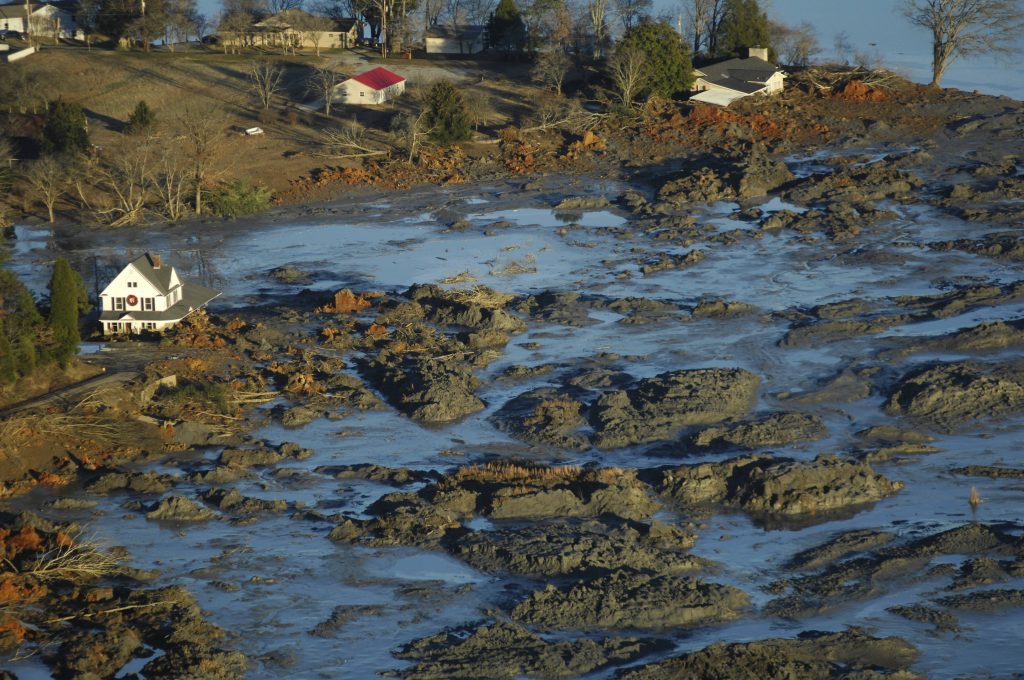
Since the 2008 Kingston, Tenn., coal ash spill, the toxic waste has been hotly debated in the media, Congress and the courts.

On April 11, the U.S. House of Representatives Subcommittee on Environment and Economy held a hearing in part to promote the Coal Ash Recycling and Oversight Act of 2013, drafted legislation that would prevent the EPA from implementing federal regulation of coal ash, leaving regulation up to the states.

Some witnesses, including the former director of the Mine Safety and Health Academy, Jack Spadaro, and Lisa Evans, an attorney for Earthjustice focused on hazardous waste, testified against the draft, which is modeled on past legislation that failed and was called “unprecedented” in environmental law by the nonpartisan Congressional Research Service.

“Without a doubt, when mismanaged, coal ash harms Americans nationwide by poisoning water and air and by threatening the very existence of communities living near high hazard dams,” Evans said at the hearing. “We must work together to establish regulations that foremost prevent injury to health and ensure the safety of all communities.”

Spadaro, who has been involved in the evaluation and regulation of coal waste dams since 1972 and wrote federal and state regulations governing the structural integrity of dams in the wake of the Buffalo Creek Flood, cautioned subcommittee members against moving ahead with the draft. According to Spadaro, the proposed legislation lacks the adequate engineering requirements and enforcement by a federal agency necessary to prevent another spill similar to the TVA disaster that would lead to irreversible environmental damage and possible loss of life.

“There are thousands of such structures in the United States at this time,” Spadaro said, “and the failure of one or more of these dams is assured unless strict engineering standards are imposed.” The Southeast is home to 40 percent of the nation’s coal ash impoundments, and according to the EPA, contains 21 of the nation’s 45 high hazard dams.

Read more
...