
The Appalachian Voice
Plant your Feet on the Battleground
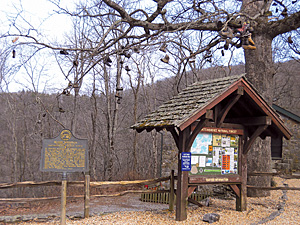
By Robert Sutherland Google “Blood Mountain” and you’ll find enough fodder for any armchair traveler. But like any other escape to the outdoors, Blood Mountain cannot be appreciated online. Named for a battle waged nearby between the Cherokee and Creek peoples, Blood Mountain is the highest peak on the Appalachian Trail in Georgia, and the…
Read MoreYesterday and Today: Defending the Clean Water Act
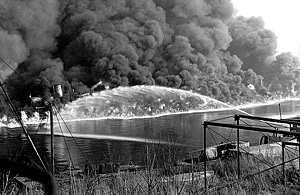
By Jamie Goodman Forty years ago, it took a flaming river to spur our nation to protect its waterways. The river that played a prominent role in the creation of the Clean Water Act and the Environmental Protection Agency is thought to have erupted in flames on thirteen separate occasions in a one-hundred-year period, ending…
Read MoreA PREVENTABLE TRAGEDY- No. 9: The 1968 Farmington Mine Disaster
By Jeff Deal Ninety-nine Americans were working in the No. 9 coal mine just north of Farmington, W.Va., on the morning of Nov. 20, 1968 — but only 21 would return safely to loved ones and the light of day. And of the 78 individuals that died from the coal mine explosion, or by suffocation…
Read MoreBears, Body Rhythms and Boundaries
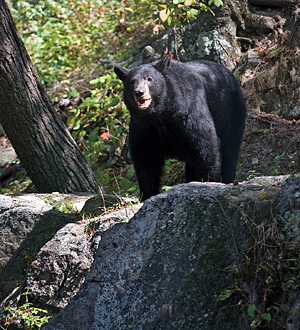
By Molly Moore It’s a feat that no rational human would attempt. A person who laid essentially dormant for up to six months without urinating or defecating would probably die from elevated levels of nitrogen and other wastes. If not, that person would at least show signs of muscle deterioration upon stirring. But not hibernating…
Read MoreChurch “Shares the Plate” with App Voices
Appalachian Voices recently had the honor of being chosen for Allegheny Unitarian Universalist Church’s “Share The Plate” program, in which the Pittsburgh, Pa., church donates 50 percent of their quarterly tithings to a justice-related nonprofit. After seeing an Appalachian Treasures presentation organized by local activist Shane Freeman, the Reverend David McFarland and the church board…
Read MoreTennessee Office Making Ground with State Legislature, TVA
In Tennessee, our staff is currently working with the state legislature to pass the Scenic Vistas Protection Act, a bill that would ban high elevation surface mining techniques such as mountaintop removal in the mountains of eastern Tennessee. In collaboration with partners across the state, we are building relationships with key members of the House…
Read MoreRed, White and Water Campaign Turns Up the Heat on Toxic Coal Ash
On Feb. 15, Appalachian Voices’ Red White and Water team, North Carolina Riverkeepers and other organizations launched a campaign called N.C. Can’t Wait, a petition and education drive to protect communities from toxic coal ash pollution. The campaign was created after monitoring near coal ash ponds at North Carolina’s 14 coal-fired power plants confirmed that…
Read MoreEPA Buffaloed Over Surface Mine
A letter sent by the EPA to WVDEP in January expresses the agency’s concerns about CONSOL Energy’s 2,308-acre Buffalo Mountain surface mine. The EPA has suggested ways to reduce the negative impacts on the environment and water quality that the surface mine, one of Appalachia’s largest, will inevitably have. Stretching from Belo to Williamson in…
Read MoreAlpha Pays $209 Million in Upper Big Branch Settlement
Alpha Natural Resources, the global coal company that purchased Massey Energy in January 2011, reached a settlement with victim’s families and the Mine Safety and Health Administration for $209 million in civil and criminal penalties for a mine explosion that killed 29 workers last year. The explosion at the Upper Big Branch Mine, one of…
Read MoreConcerned Citizens Dispute Water Quality Study
The Whitesville, W.Va.-based Sludge Safety Project is claiming that a recent study of the water quality in an area of Boone County by the West Virginia Department of Environmental Protection used flawed research methods, contains errors and misinterprets its own data. In January, the WVDEP completed a year-long study that found that drinking water supplies…
Read More