
The Appalachian Voice
Environmental Summer Camps 2013
The Evening Hour: Painting a Gripping Picture of a Gritty Place
Review by Paige Campbell Carter Sickels’ debut novel “The Evening Hour” is a study in contradictions, many rooted deeply in its Appalachian setting. The town of Dove Creek is a remote southern West Virginia community cloaked in the same desperate, static smallness that often characterizes the Appalachia of literature. At the same time, the setting…
Read MoreSafe Passage

By Matt Grimley Every fall and spring, an ongoing restlessness called zugenruhe begins to make some birds’ wings twitch at night. They will gorge on seeds and insects, fattening their bodies by as much as 10 percent per day. Solitary birds will even flock together for better predator avoidance, food finding and orientation for the…
Read MoreA Fond Farewell for a Fantastic Leader
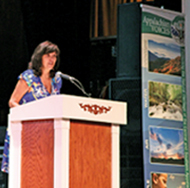
In October of 2008, I met an extraordinary person at the Appalachian Voices headquarters in Boone, N.C. She’d been hired as an organizational consultant, and I was a new member of the board. It was immediately clear that Willa Mays was a consummate professional — diplomatic, extremely smart, a person of great presence, and a…
Read MoreNorth Carolina’s Appalachian Representatives
Virginia Foxx (NC-5) Representing northwestern North Carolina, Congresswoman Foxx was elected to the House after serving 10 years in the state Senate. She is a conservative and advocates reducing the size of government wherever possible. Last year, she voted for H.R. 3409, a bundle of coal-friendly bills which Foxx wrote would “stop the U.S. Environmental…
Read MoreAppalachian States Reconsider the Role of Coal Severance Taxes
By Brian Sewell Lawmakers in Central Appalachia are seeking legislative solutions to counter declining severance tax revenue after decades of natural resource extraction. Although not all of the counties in coal-producing states in Appalachia have minable coal, they all benefit from severance taxes, which generate millions of dollars used to improve roads, build flood controls…
Read MoreTennessee’s Appalachian Representatives
Phil Roe (TN-01) Congressman Roe represents a former pro-union district in upper East Tennessee which has been held by the Republican Party since 1881. There is no coal in his district, but he has said he believes that the United States has “a 400-year supply at current usage, and we need to look and expand…
Read MoreTraditional Trout Hang on to Native Waters
By Molly Moore Although they only occupy about 25 percent of their historic range, southern brook trout are doing alright, says Jim Habera, a cold water fisheries biologist for the Tennessee Wildlife Resources Agency. He has worked on every brook trout stream in the eastern part of the state, and the remaining population has stayed…
Read MoreOrganizational Roundup
Teaming Up For Virginia Appalachian Voices’ Virginia campaign team partnered with Downstream Strategies to help in their research for a report that details how the coal industry is reaping huge benefits from the Commonwealth of Virginia each year. Released in mid-December, “The Impact of Coal on the Virginia State Budget” reveals that Virginia taxpayers have…
Read MoreThe Ebb and Flow of Appalachia’s Game Species

By Davis Wax From the mythic, raccoon-crowned Daniel Boone to the adventurous, tradition-minded hunter of today, hunting in Appalachia makes up a long and colored tale. Its most intriguing characters may be the game species themselves, each accentuating a pastime and way of life which is slowly becoming history. A Game Icon of Southern Appalachia…
Read More