
Front Porch Blog
East Tennessee communities paid a high price to win federal protections from coal ash. Now the EPA is rolling them back.

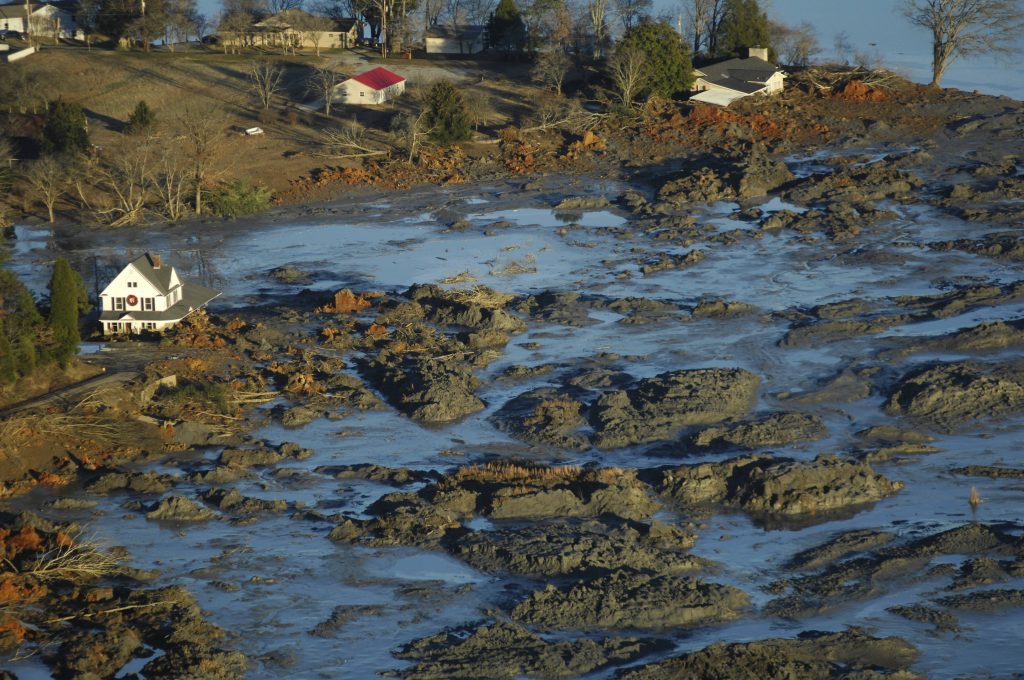
Aerial photo of the immediate devastation following the Kingston coal ash spill in December 2008. Photo by Dot Griffith and flight courtesy of Southwings.
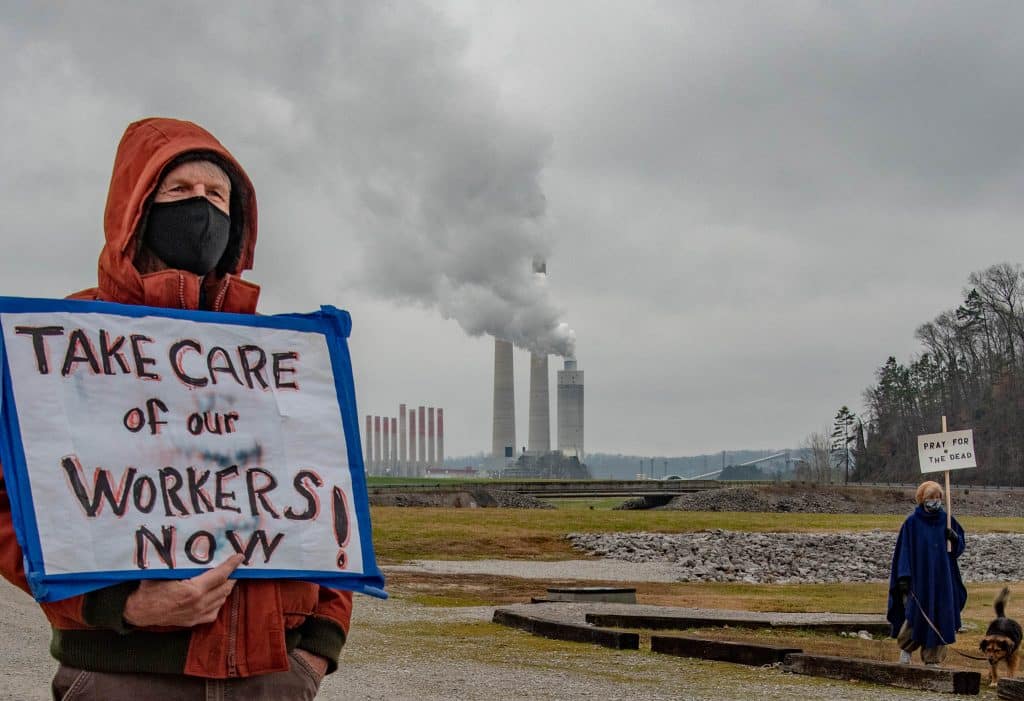
Coal ash, the leftover waste from burning coal at power plants, is toxic. It contains mercury, lead, arsenic and other harmful components that can cause serious health issues like cancer and organ damage.
Workers and communities in East Tennessee learned this the hard way after spending years cleaning up the 2008 Kingston coal ash disaster, when one billion gallons of coal ash burst from a Tennessee Valley Authority coal ash pond into hundreds of surrounding acres and nearby rivers.
Hundreds of communities across the country have been harmed by coal ash pollution, and each one has a story about its fight for protections from this nasty and harmful industrial waste. Here in East Tennessee, the center of our story is the loss and leadership of the Kingston workers and their families who have played a crucial role in the decades-long fight to secure federal coal ash regulations. Now, the U.S. Environmental Protection Agency is proposing to implement an industry wish list to roll the regulations back.
The Kingston coal ash spill & decades of advocacy
Before the infamous spill at Kingston, workers had spotted a leak in the dike holding the coal ash and reported the problem to TVA. Back then, there were no federal requirements for power companies to track their coal ash waste, report groundwater contamination or address safety issues with their ponds and storage units. Instead, states were in charge of oversight of coal ash, and very few required essential safeguards against groundwater contamination or even monitoring for leaks at all landfills and coal ash ponds.
Meanwhile, TVA had been operating coal plants and producing coal ash waste since the 1940s. At the Kingston site, decades of waste was sitting behind a dike — and the dike failed on the morning of Dec. 22, 2008.
The Kingston disaster is still considered the largest industrial spill in United States history. Houses were knocked from their foundations and fish were ejected from the river when a 40-foot wall of coal ash erupted into the surrounding land and water. Workers were called to respond to the spill in the middle of the night, and roughly 900 of them contributed to the cleanup over six years. Horrendously, these workers report being told the coal ash was safe enough to eat, and were denied protective equipment, including respirators, during the cleanup. There are photos of these workers covered with coal fly ash, standing waist-deep in the spill without protective suits or respirators during the cleanup.
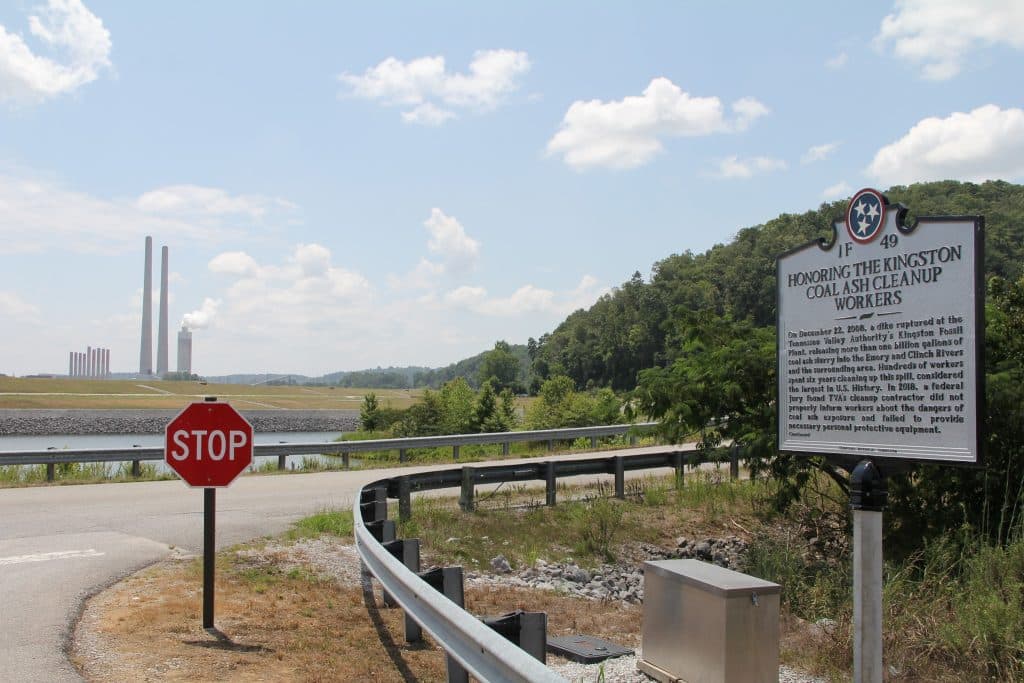
A federal court eventually found TVA responsible for the Kingston spill due to its poor design of the coal ash impoundment, which had grown to six stories tall after multiple expansions, and for faulty maintenance of the facility. Fifteen years after the spill, the workers from the cleanup settled a lawsuit against TVA’s contractor, Jacobs Engineering, for their exposure to TVA’s coal ash. Unfortunately, this settlement came after scores of the workers had died from major health issues that manifested during or after their work at Kingston.
Needless to say, the first federal regulations on coal ash came at an extremely high price. In addition to the Kingston disaster, Duke Energy had a major spill into the Dan River in 2014, and communities like Belews Creek, North Carolina, had already been fighting for coal ash cleanup for years prior. For decades, community members, workers, lawyers and organizations in East Tennessee and across the country engaged in advocacy, education, lobbying, rallies, protests and lawsuits to protect themselves from toxic coal ash.
The Kingston families and community advocates here in East Tennessee hold memorials on the anniversary of the spill each year, stage solidarity actions, put up billboards around town, and continue to share their story with local and federal elected officials. They share their stories to ensure that the public and decision-makers are informed of the dangers of coal ash and know what happened before and after TVA’s spill — and to make sure regulators like EPA remember Kingston.
These same families also supported the community near the now-demolished Bull Run Fossil Plant in nearby Claxton, Tennessee, where TVA had been storing coal ash in a large open pile near a public playground and used the waste as fill in a youth sports field. Folks near Bull Run advocated for a safer storage plan for the coal ash there, which, unfortunately, currently remains in place in unlined and leaking ponds.

PREVIOUS
NEXT

Leave a comment
Your email address will not be published. Required fields are marked *
One response to “East Tennessee communities paid a high price to win federal protections from coal ash. Now the EPA is rolling them back.”
-

Please do not ignore the dozens of lives lost to coal ash. Do not skirt the rigorous science behind these regulations. Do better.

Leave a Comment