
Front Porch Blog
A new map shows the funding need for abandoned mine cleanup across the U.S.

By Charlotte Maxwell, Advocacy and Data Analyst Intern, Summer 2026
Three million Americans live within 1 mile of an abandoned coal mine site from before 1977 that still needs to be cleaned up. That’s 3 million people living near water polluted by acid mine drainage, open mine portals, underground mine fires, polluting mine waste, dilapidated infrastructure and a number of other abandoned mine features. And while these sites exist across the country, the majority are concentrated in Appalachia, where roughly 84% of documented abandoned mine land problems are located.
Cleaning up these decades-old dangerous sites can create thousands of jobs and revitalize coal communities. Appalachian Voices created the map below using public AML data maintained by the federal Office of Surface Mining Reclamation and Enforcement. The map allows the public to easily explore the status of AML sites across the country and see the AML problems that exist in their own communities.
Understanding AMLs
Before the passage of the Surface Mining Control and Reclamation Act in 1977, the U.S. coal industry mined billions of tons of coal across the country, damaging hundreds of thousands of acres of land and polluting thousands of miles of streams and rivers. The Surface Mining Control and Reclamation Act addressed the legacy of nearly two centuries of largely unregulated coal mining in the United States by establishing the Abandoned Mine Land program to remedy the damage left behind at these sites and funding this work through a small per-ton fee on coal mined going forward.
But even after nearly 50 years of cleaning up AML sites, states and tribes are still identifying new AML problems and responding to AML emergencies like sinkholes and mine blowouts, meaning our knowledge of these sites is constantly evolving.
Today, thousands of sites remain as one of the most persistent environmental and public health challenges facing coal-producing regions. That’s in addition to problems related to more recent, post-1977 “zombie mines” that are sitting in limbo or that the coal industry has failed to reclaim.
AML cleanup funding gap
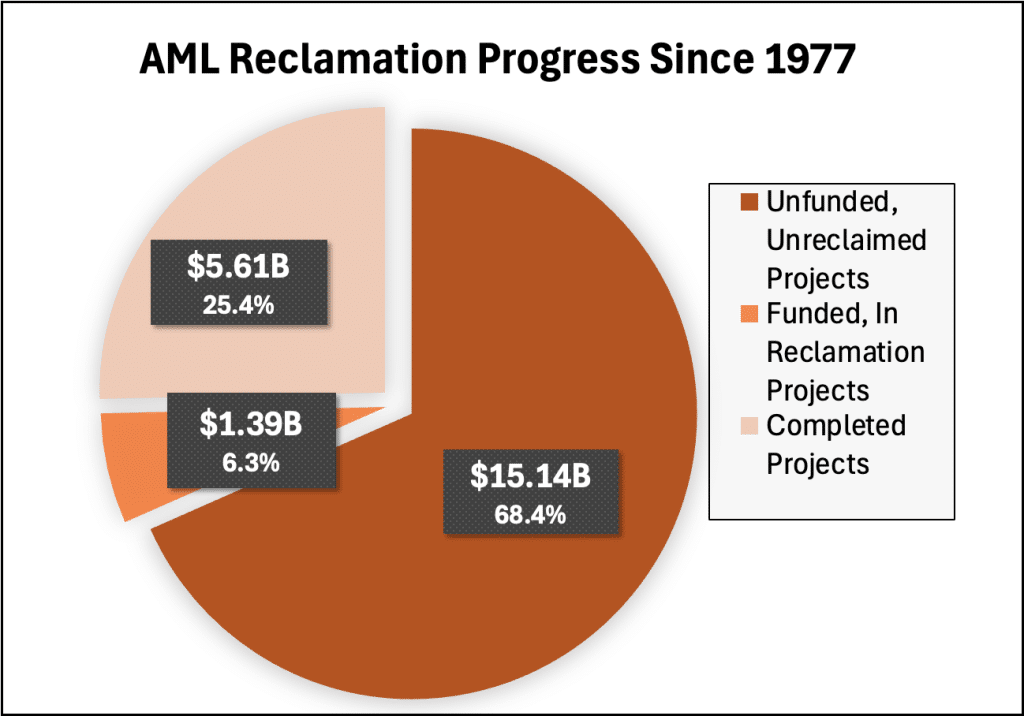
Since 1977, only 32% of AML sites have been addressed, representing $7 billion worth of work. That leaves 68% still in need of funding, with an estimated $15 billion in repair needs remaining. However, state agencies and other experts report that OSMRE’s database is not comprehensive. State agencies estimate that nearly $30 billion of AML sites are in need of reclamation, and the Ohio River Valley Institute has offered similar forecasts.
Despite this gap, AML fees that coal companies pay have been lowered twice in the lifetime of the program: once by 20% in 2006 and again by 20% in 2021.
In the 2021 Bipartisan Infrastructure Law, Congress provided $11.3 billion for abandoned mine land cleanup, matching OSMRE’s cost estimate for complete nationwide reclamation at the time. Research from the Ohio River Valley Institute estimated AML cleanup costs in 2021 to be closer to $21 billion, growing to $33.6 billion by 2050.
Since then, states and tribes have updated and improved their data. As of April 2026, OSMRE estimated the documented cost of reclamation to have grown to $15.14 billion. This number is likely to continue to grow as states and tribes update their records.
In January, Congress repurposed $500 million from the AML cleanup fund to support wildland firefighting needs for FY 2026, limiting AML reclamation that communities across the country have been requesting for decades.
The benefits of AML cleanup
Cleaning up abandoned mine lands brings real benefits to the communities that have lived alongside this damage for decades. Current federal spending on AML reclamation directly sustains nearly 4,000 jobs annually. When adding the indirect economic impacts of AML reclamation like equipment and machinery manufacturing, federal AML funding supports almost 10,000 jobs across the economy each year.
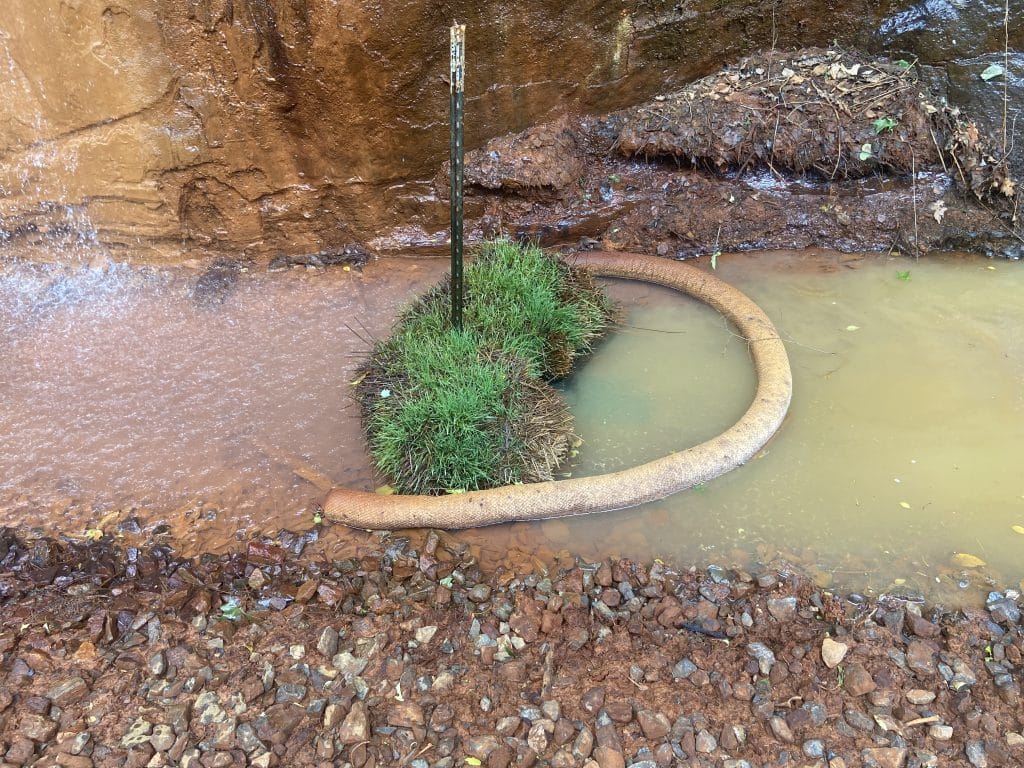
Reclamation also restores water damaged by acid mine drainage, which is one of the most expensive AML problems to resolve. Remediating acid mine drainage revives aquatic ecosystems for fishing and swimming and improves drinking water quality for communities downstream. Reclaiming mine land can also include reforesting sites with native tree species that improve air quality, restore habitat, reduce flooding and take carbon out of the atmosphere.
Lastly, reclamation removes hazards that put people at direct risk. AML issues such as open mine shafts, leaking toxic gases, water-filled pits and unstable structures have caused deaths and serious injuries. Sealing these hazards and stabilizing the land makes coal communities safer.
Map inventory limitations
While the map uses the best available federal AML data, there are limitations with the dataset. OSMRE’s Abandoned Mine Land Inventory System does not capture every AML problem nationwide. Some states maintain their own records showing more AML sites than what’s reflected in the federal database, but federal-state reporting differences limit how much of that information makes it into OSMRE’s system. Additionally, many sites on private land remain undocumented altogether.
Cost estimates for site cleanup can also be decades old, and the inventory has historically focused on high-priority hazards like dangerous highwalls, hazardous water pollution and underground mine fires. As a result, many lower-priority sites such as spoil areas, gob piles or areas needing surface mining reclamation have never been counted.

PREVIOUS
NEXT

Leave a comment
Your email address will not be published. Required fields are marked *
One response to “A new map shows the funding need for abandoned mine cleanup across the U.S.”
-

I build floating treatment wetlands that could be anchored in streams such as the one above. We can plant a variety of plants on the islands to absorb metals and nutrients.
Rob Crook
[email protected]

Leave a Comment