Follow Us on Twitter: Appalachian Voices | iLoveMountains.org

Posts Tagged ‘Red White and Water’

Kentucky’s Lab Certification- Is it strong enough?

Wednesday, May 1st, 2013 - posted by eric

Yesterday, Appalachian Voices submitted public comments on a proposed wastewater lab certification program in Kentucky. To discharge polluted water, coal companies must receive a permit under the Clean Water Act. This permit that requires companies to test wastewater and report the data to ensure it falls within the limits of the permit. In Kentucky, there are currently no standards for labs that do this type of testing.

The proposed certification program is a direct result of the lawsuits for falsified water monitoring data we filed against three of the state’s largest coal mining companies. Our investigation revealed that many coal companies were repeatedly submitting the same data and knowingly leaving out reports of any violations of their permits. After we filed these lawsuits, the Kentucky Energy and Environment Cabinet inspected the labs being used for this monitoring and found that in many cases they were not even capable of correctly performing the required tests.

This graph shows some of the inaccurate data submitted by Frasure Creek Mining before our lawsuits lead them to start using a new lab. Click to enlarge.

We believe that enforcing standards on labs used by coal companies will help ensure that labs report accurate data, and that the regulations meant to protect water and those that depend on it from dangerous pollution are effectively enforced. This proposed rule will be a big step forward and we have applauded the cabinet for its efforts to fix these problems. However, there are several weaknesses in the rule that we hope are fixed before it is finalized.

All too often the cabinet has failed to live up to its obligations to protect the people and environment in Kentucky. That is why our comments suggest that discretionary duties given to the cabinet in this rule be made mandatory. Appalachian Voices will continue to work to require the state agencies to actually enforce these standards.

>>Click here to see our comments
>>Click here to read the proposed lab certification rule
>>Click here to read the draft lab manual

Coal Ash Floods Congress and the Courts

Tuesday, April 23rd, 2013 - posted by brian
e. The trend is likely to continue until EPA announces clear rules to regulate the to

Since the 2008 Kingston, Tenn., coal ash spill, the toxic waste has been hotly debated in the media, Congress and the courts.

On April 11, the U.S. House of Representatives Subcommittee on Environment and Economy held a hearing in part to promote the Coal Ash Recycling and Oversight Act of 2013, drafted legislation that would prevent the EPA from implementing federal regulation of coal ash, leaving regulation up to the states.

Some witnesses, including the former director of the Mine Safety and Health Academy, Jack Spadaro, and Lisa Evans, an attorney for Earthjustice focused on hazardous waste, testified against the draft, which is modeled on past legislation that failed and was called “unprecedented” in environmental law by the nonpartisan Congressional Research Service.

“Without a doubt, when mismanaged, coal ash harms Americans nationwide by poisoning water and air and by threatening the very existence of communities living near high hazard dams,” Evans said at the hearing. “We must work together to establish regulations that foremost prevent injury to health and ensure the safety of all communities.”

Spadaro, who has been involved in the evaluation and regulation of coal waste dams since 1972 and wrote federal and state regulations governing the structural integrity of dams in the wake of the Buffalo Creek Flood, cautioned subcommittee members against moving ahead with the draft. According to Spadaro, the proposed legislation lacks the adequate engineering requirements and enforcement by a federal agency necessary to prevent another spill similar to the TVA disaster that would lead to irreversible environmental damage and possible loss of life.

“There are thousands of such structures in the United States at this time,” Spadaro said, “and the failure of one or more of these dams is assured unless strict engineering standards are imposed.” The Southeast is home to 40 percent of the nation’s coal ash impoundments, and according to the EPA, contains 21 of the nation’s 45 high hazard dams.
(more…)

EPA Releases Proposal To Update Clean Water Act Standards for Power Plant Pollution

Monday, April 22nd, 2013 - posted by sandra

The U.S. Environmental Protection Agency has finally proposed a range of options to regulate waste water from power plants which are responsible for half of the nation’s water pollution. While the public comment period has yet to begin, a public hearing is schedule for July 9th in Washington, DC.

More details on the rule itself, and how to submit your comments will be become available on appvoices.org/rww/power-plant-waste/

Below is a press statement from Appalachian Voices and a number of allied organizations.

After 30 years of inaction, EPA finally proposes plans for power plant water pollution includes options protecting waters from toxic pollution as well as weaker standards that maintain the status quo

Washington, D.C. – The Environmental Protection Agency proposed a number of regulatory options late last Friday night, known as steam electric effluent limitation guidelines for power plants, two of which will finally clean up water pollution from hundreds of power plants.

Power plant water discharges are filled with toxic pollution such as mercury, arsenic, lead, and selenium – heavy metals that can cause neurological and developmental damage, cause harm in utero, damage internal organs and cause cancer. Power plants are the biggest sources of water pollution in the country, yet the EPA has not reviewed regulations for this industry in more than 30 years. To address this unacceptable delay, environmental groups filed a lawsuit in 2010 to force the EPA to take action and regulate this dirty industry.
(more…)

Tuesday, April 16th, 2013 - posted by Jil

Tennessee Legislators Dodge Vote on Mountaintop Removal

Although a bill to protect Tennessee’s mountains received broad citizen and political support — and media attention from around the world — state legislators chose to deny public testimony on the measure and instead let the Scenic Vistas Protection Act die without a vote. Appalachian Voices Tennessee Director J.W. Randolph worked long hours in the halls of the state legislature to introduce and promote the bill, and was scheduled to testify along with Ann League, a good friend of our organization and a resident in Tennessee’s coal-bearing region. Just as they were called up to speak, however, the chairman stopped them short and declared the bill dead. Bill sponsors Rep. Gloria Johnson (D-Knoxville) and Senator Lowe Finney (D-Jackson) vowed to continue to build on this year’s efforts and bring the bill back in 2014 with even more grassroots support. To stay up-to-date on our work in Tennessee, visit appvoices.org/tn.

Building A Bridge Over Troubled Waters

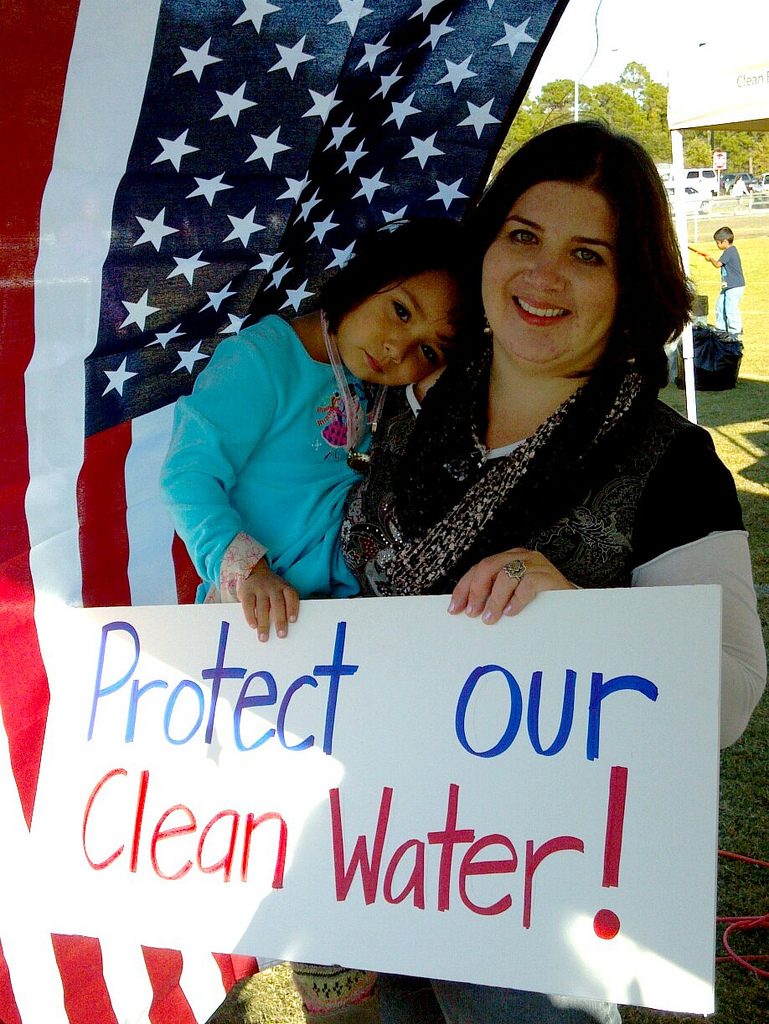
The Red, White and Water team is working to find out what residents living around coal-fired power plants have to say about water pollution in their communities.

Belmont, N.C., was the first stop. There, as with other coal-burning facilities, the G.G. Allen Steam Station contaminates the groundwater, usually from coal ash pond seepage. The plant also discharges toxic heavy metals into nearby Lake Wylie.
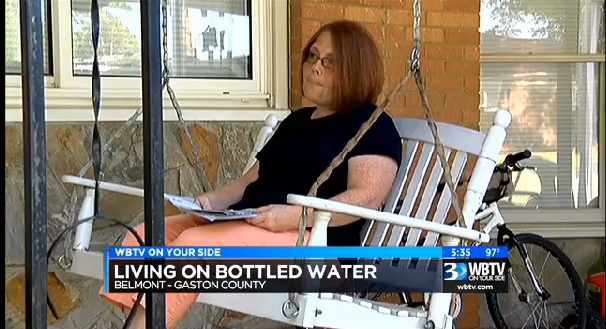
This March, our crew canvassed those living in the shadow of the G.G. Allen Plant. One resident, Archie Dixon, has a driveway that is stained with coal ash and keeps a stack of bottled water in his garage, saying he refuses to drink the well water.

Looking ahead, the RWW team will encourage more residents living near coal plants to tell their stories. Follow the latest at appvoices.org/red-white-and-water.

Clean Water News: Congress Backs Down, N.C. Steps Up

Tuesday, March 26th, 2013 - posted by sandra

Thallium was once used as rat poison. Now DENR is suing Progress Energy for Thallium polluting the French Broad River from its Asheville power plant.

Last week, there was concern that the U.S. Senate budget resolution would end up containing measures to decrease funding for initiatives of the U.S. Environmental Protection Agency such as the release of guidelines for coal ash disposal and rules to ensure states are following water quality standards. Thanks to good Americans like yourself speaking up, the Senate budget remained free of dirty water amendments.

While the budget resolution is non-binding, and the Senate Appropriations Committee decides how funding gets allocated later in the process, the resolution send a strong message regarding the Senate’s priorities. Unfortunately, one of the more controversial amendments that did pass was in support of building the Keystone XL pipeline.

While the Senate backed down on loading up the budget resolution with dirty water clauses, the North Carolina Department of Environment and Natural Resources stepped and up and decided to take legal action against Progress Energy for the release of toxic heavy metals from their Asheville plant into the French Broad River. 

Western North Carolina Alliance, Sierra Club, and Southern Alliance for Clean Energy had filed a notice of intent to sue Progress Energy for violating the Clean Water Act for unpermitted seeps into the French Broad River. It appears DENR took notice and is now taking up their own case against Progress Energy. DENR is seeking injunctive relief and demanding Progress Energy solve the issue in lieu of the state seeking monetary damages.
(more…)

Will This March Madness Be An Upset for Clean Water?

Friday, March 22nd, 2013 - posted by sandra
Basketball

Help Prevent a Clean Water Upset (Picture by mvongrue, hosted by Flickr)

UPDATE: The Senate Budget Resolution passed without any of the amendments mentioned below. Victory!

As most of you know, between the federal House of Representatives and the Senate, the Senate is usually the level-headed older brother of the family and tends to be a more deliberative legislative body. But this month the Senate decided it wanted to shake things up a bit by creating a little March Madness of its own.

The Senate is going through a seemingly insane process known on Capitol Hill as a vote-a-rama to reach a deal on a final Senate budget resolution. Senate leadership is allowing any number of amendments to be presented and voted on — whatever they can get done in 50 hours.

While all the amendments have yet to be presented, several of them take aim at the U.S. Environmental Protection Agency’s ability to do its job, which is to protect our air, water and public health. Some of the amendments could stop the EPA from:

    - Making sure states are complying with and improving water quality standards in accordance to the Clean Water Act.
    - Creating national standards for how coal ash, the toxic waste produced by coal-burning for electricity, is disposed and stored.
    - Restoring critical Clean Water Act protections to streams, wetlands and drinking water standards.

TAKE ACTION: We are asking supporters to contact their Senators. If you haven’t yet, there is still time.
(more…)

Canvassing Against Coal Ash

Friday, March 15th, 2013 - posted by Matt G

The Red, White & Water team hit the streets near Belmont, N.C., to speak with residents who live near Duke Energy's G.G. Allen Steam Station about the threats of coal ash pollution.

Last Saturday, the Red, White and Water team traveled to Belmont, N.C., to the G.G. Allen Steam Station for a day of canvassing. Walking door-to-door, we asked residents of the communities near the coal-fired power plant if they had been impacted by water pollution.

I met Archie Dixon, who was featured in the Gaston Gazette a few months ago. Dixon had complained to Duke Energy, which owns the power plant, about coal ash staining his property and getting into his drinking water. I spoke with him while he and his grandson (also named Archie, or “Lil’ Arch”) waited for a plumber for a broken pipe on their property. In his garage sat a waist-high stack of bottled water. Mr. Dixon said that he still refuses to drink his own home’s water.

The pollution near the plant happens in two ways. One is through coal ash ponds. Coal ash is the waste byproduct from burning coal and it contains contaminants such as arsenic, mercury and chromium. Because the one active coal ash pond at G.G. Allen is an unlined impoundment, these toxics can seep into groundwater. Tests near the plant have revealed exceedances in manganese, iron and nickel in the groundwater.

Effluent is the other form of pollution at G.G. Allen — the plant wastewater that discharges directly into the surface waters of nearby Lake Wylie. Under the Clean Water Act, permits are issued for each of the plant’s discharge points. These permits, however, only set limits for traditional pollutants, including oil and grease, “total suspended solids” and pH. They rarely limit pollutants such as mercury, selenium, and arsenic. And with a lack of federal guidelines, many states don’t set their own permit limits for these toxic chemicals.
(more…)

North Carolina Cares About Clean Water

Thursday, March 7th, 2013 - posted by Ian Watkins

According to a recent report by Land for Tomorrow, 91 percent of residents in North Carolina and surrounding states believe it is “important” or “very important” to conserve and protect water and other natural resources. Additionally, a 2002 publication of the N.C. State Economist it was found that people are willing to pay more money in the form of travel expenses in order to enjoy higher levels of water quality. Based on an estimated 14.7 million water-related recreation trips each year by North Carolinians, annual economic savings from water improvements are estimated to be $11.9 million for the Neuse waterway, $14.7 million for Cape Fear improvements, and $6.5 for Tar-Pamlico. While protection of natural resources may sometimes be a divisive topic, residents of North Carolina share a common desire for clean water, with good reason. Clean water is good for the environment and the economy.

The benefits of clean water can also be understood by realizing the costs associated with water treatment. According to a report by the N.C. Division of Water Quality, costs to be considered include additional water treatment, developing new drinking water sources or providing emergency replacement water, public information campaigns when pollution incidents arouse public and media interest, and payment for consulting services and staff time. When Burlington, N.C., found contaminants in their source water that were not eliminated during treatment, city subsidies were used to eliminate it from source waters.

Perhaps a more important measurement of the economic benefits of clean water is the success of publicly funded solutions for addressing water pollution. The N.C. General Assembly established the North Carolina Clean Water Management Trust Fund in 1996 and its funding of resource conservation has strengthened the state’s economic vitality. According to a report by the Trust for Public Land, every dollar invested In the N.C. Clean Water Management Trust Fund returns four dollars to the state in the areas of drinking water protection, flood control, tourism and outdoor recreation.
(more…)

Finding Arsenic in Mountain Island Lake: Even a Sixth Grader Can Do It

Wednesday, February 20th, 2013 - posted by Matt G

Just recently, sixth grader Anna Behnke found high levels of arsenic near her home on Mountain Island Lake, a drinking water source for hundreds of thousands in the Charlotte, N.C. metro area. The contamination — which exceeds EPA drinking water standards twenty-fold — comes from coal ash seepage at Duke Energy’s Riverbend power plant, which the utility announced it will decommission in April without a plan to deal with the coal ash ponds on site.

View full article here.

N.C. Rep. Pricey Harrison to Make Case for Federal Environmental Protections

Thursday, February 14th, 2013 - posted by brian

North Carolina Rep. Pricey Harrison will testify at a House subcommittee hearing on the states' role in environmental protection.

On Friday morning, North Carolina Rep. Pricey Harrison will testify before a House hearing on “the role of the states in protecting the environment under current law.” It’s an area she knows a lot about – in 2007, Harrison introduced a bill to prohibit utilities in North Carolina from purchasing or burning coal from mountaintop removal mines.

Subcommittee members will hear testimony on issues related to current laws including the Safe Drinking Water Act and Resource Conservation and Recovery Act under which states are given the primary authority to regulate wastewater and coal ash pollution.

Watch Rep. Pricey Harrison’s testimony and the hearing Friday at 9:30 a.m. here.

During tomorrow’s hearing, Harrison will likely focus on the concerns of North Carolinians surrounding coal ash and the state’s failure to adequately protect communities and local waterways. The problem of coal ash is growing in North Carolina, and even as Duke Energy begins to retire ancient coal-fired power plants, the state has no clear plan on how to deal with legacy ash disposal sites that will remain long after plants are closed.

Learn about the hazards and history of coal ash sites in North Carolina and across the Southeast.

Duke merged with Progress Energy last year to become the largest utility in the country. Meanwhile, the N.C. Department of Environment and Natural Resources is coming off a fresh round of budget cuts, and faces continued uncertainty if North Carolina lawmakers continue on their current path.

Adding insult to injury, nearly every step of the process to bring fracking to North Carolina has been haphazardly handled. Now, the state General Assembly has introduced a law to circumvent the rule-making commission it put in place, you know, if it isn’t moving fast enough.

North Carolina has a history of environmental leadership, but recent proposals in the state legislature, including a reckless plan to remove all the members of several environmental commissions, are threatening to reverse that trend.

Lawmakers are on an anti-regulatory bender in the Tarheel State. And without federal oversight North Carolinians will be at risk as underfunded state agencies work to enforce environmental rules while finding ways to prevent the next budget cut.