Follow Us on Twitter: Appalachian Voices | iLoveMountains.org

Posts Tagged ‘EPA’

EPA’s Benefits Greatly Outweigh Costs, According to OMB Report

Wednesday, May 15th, 2013 - posted by Davis Wax

A new report shows the EPA's rules, especially on air pollution, are saving money and lives.

During their push to abolish, obstruct and stymie the Environmental Protection Agency over the past few years, House Republicans have beleaguered the agency for regulatory measures they consider “job-killing” or “anti-industry,” hoping to revert federal environmental regulation to state control or make protections obsolete altogether.

Those in favor of federal rules have argued that national standards allow for the most effective and consistent protections and, as a result, will lead to reduced costs in health care directly associated with air and water pollution.

A new report from the White House’s Office of Management and Budget makes a clear case for why the country needs the EPA. The report includes an analysis of the costs and benefits of a number of federal regulations over the past decade and shows EPA rules, especially those pertaining to air protection, to be the most costly among all the rules evaluated but also the most beneficial.

The budget office estimates that the EPA’s rules account for 58 to 80 percent of the monetized benefits of all federal rules, but 44 to 54 percent of the total costs. Out of these benefits, close to 99 percent come from rules that seek to improve air quality. The report claims that the large estimated benefits of the EPA rules following the arrival of the Clean Air Act stem mostly from the reduction of a single air pollutant: fine particulate matter.
(more…)

Clean Water Protection Act Introduced with 45 Cosponsors

Tuesday, May 7th, 2013 - posted by thom

Yesterday, Rep. Frank Pallone (D-NJ) and Rep. Dave Reichert (R-WA) introduced the Clean Water Protection Act in the 113th Congress with 45 original cosponsors.

The Clean Water Protection Act, H.R. 1837, is a bill in the U.S. House of Representatives which would sharply reduce mountaintop removal coal mining by making it illegal to dump mining waste into valleys and streams. To date, more than 2,000 miles of streams have been buried or severely polluted.

As the bill sponsors point out in their Dear Colleague letter to other members of Congress:

An EPA scientific study in 2008 shows that more than 63% of the streams sampled below mountaintop removal coal mining operations exhibited long-term impairments to aquatic organisms. In some large watersheds, more than half of the streams are impaired.

Last Congress, more than 130 representatives, from Kentucky to Hawaii, took a stand against mountaintop removal coal mining by cosponsoring the Clean Water Protection Act.

It is crucial that we carry over the momentum we built during the last Congress by having a large group of cosponsors. For your Representative to sign onto the bill, they need to hear from you.

Take action now and tell your Congressperson you expect their support of this important legislation.

Mountaintop Removal 101: Congressional Research Service Updates Report

Thursday, May 2nd, 2013 - posted by brian

An updated report by the Congressional Research Service provides a look at the current legal and legislative challenges to mountaintop removal.

Every day, more Americans become concerned with the threat of mountaintop removal in Appalachia. Just yesterday, I was made aware of a website called “What About Mountains?” created by a fourth grade class at the Episcopal School of Knoxville. These students may just be learning about the issue, but they know that “mountaintop removal coal mining is not OK,” and seeing a photo of lush mountains reduced to “ugly blobs of land” is as fine a place to start as any.

Whether you’re in fourth grade or in your forties, it’s helpful to have a convenient compendium on the issue of mountaintop removal, especially considering the ever-evolving legal battles, status of bills on Capitol Hill, and state and federal level regulations. An updated report from the nonpartisan Congressional Research Service called Mountaintop Mining: Background on Current Controversies acts as a CliffsNotes for anyone concerned with the situation and interested in catching up.

The report summarizes the legal challenges, agency and congressional actions related to mountaintop removal and points out that, despite two recent court rulings underscoring the need for greater protections, few people on either side are please with the U.S. Environmental Protection Agency’s record on the issue. Mountaintop removal supporters complain of onerous rules that hamper employment and opponents point to poisoned water, unhealthy communities and shortened lives.
(more…)

A Good Week for Mountains – Multiple Court Rulings Favor Science and Enforcement

Tuesday, April 23rd, 2013 - posted by brian

Earth Week is off to a good start after two major rulings in two days mean we may start seeing less of this.

We’re only two days into Earth Week — if we must limit it to one week out of the year — but it sure is getting off to a great start. In the past two days, two major court rulings have underscored the need for increased scrutiny from the federal agency responsible for evaluating environmental impacts of mountaintop removal coal mining according to the National Environmental Policy Act and issuing permits under the Clean Water Act.

Yesterday, the 6th U.S. Court of Appeals revoked the U.S. Army Corps of Engineers use of Nationwide Permit 21 (NWP 21), a streamlined and inadequate process that has contributed to the expansion of mountaintop removal in Appalachia since 1992. Kentucky and West Virginia residents, with the support of groups including Kentuckians for the Commonwealth, Kentucky Waterways Alliance and the Kentucky Riverkeeper, have challenged the legality of NWP 21 in state and federal court for a decade.

In its ruling, the three-judge panel called the Corps’ actions “arbitrary and capricious” and found that the agency did not follow the applicable Clean Water Act (CWA) and National Environmental Policy Act (NEPA) regulations, which require it to document its assessment of environmental impacts and examine past impacts before issuing new permits. From the ruling:

Though we generally give greatest deference to an agency’s “complex scientific determination[s] within its area of special expertise,” we may not excuse an agency’s failure to follow the procedures required by duly promulgated regulations.

After opting for streamlined nationwide permitting, the Corps took the easier path of preparing an environmental assessment instead of an environmental impact statement. Having done so, it needed to follow the applicable CWA and NEPA regulations by documenting its assessment of environmental impacts and examining past impacts, respectively. Failing these regulatory prerequisites, the Corps leaves us with nothing more than its say-so that it meets CWA and NEPA standards.

According to the Corps, approximately 70 surface mining permits authorized under NWP 21 qualify for a five-year accommodation to “provide and equitable and less burdensome transition” for coal operators. Whatever its impact on existing mountaintop removal permits, the ruling acknowledges that when it comes to protecting Appalachia, the Corps “say-so” is insufficient.
(more…)

EPA Releases Proposal To Update Clean Water Act Standards for Power Plant Pollution

Monday, April 22nd, 2013 - posted by sandra

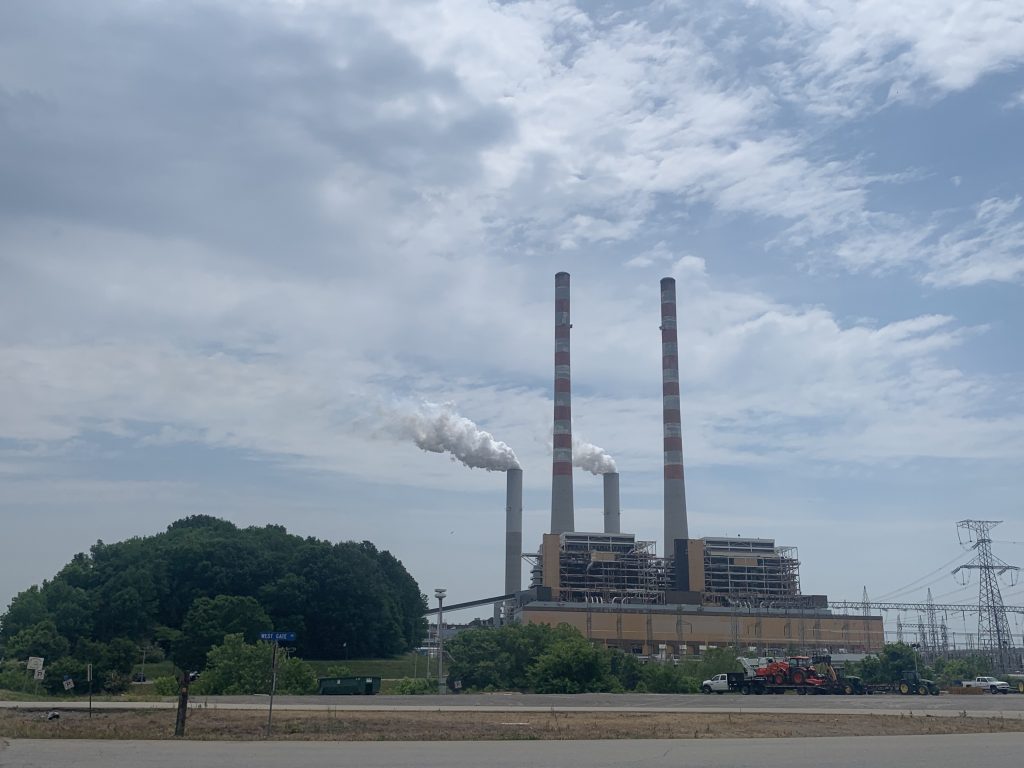
The U.S. Environmental Protection Agency has finally proposed a range of options to regulate waste water from power plants which are responsible for half of the nation’s water pollution. While the public comment period has yet to begin, a public hearing is schedule for July 9th in Washington, DC.

More details on the rule itself, and how to submit your comments will be become available on appvoices.org/rww/power-plant-waste/

Below is a press statement from Appalachian Voices and a number of allied organizations.

After 30 years of inaction, EPA finally proposes plans for power plant water pollution includes options protecting waters from toxic pollution as well as weaker standards that maintain the status quo

Washington, D.C. – The Environmental Protection Agency proposed a number of regulatory options late last Friday night, known as steam electric effluent limitation guidelines for power plants, two of which will finally clean up water pollution from hundreds of power plants.

Power plant water discharges are filled with toxic pollution such as mercury, arsenic, lead, and selenium – heavy metals that can cause neurological and developmental damage, cause harm in utero, damage internal organs and cause cancer. Power plants are the biggest sources of water pollution in the country, yet the EPA has not reviewed regulations for this industry in more than 30 years. To address this unacceptable delay, environmental groups filed a lawsuit in 2010 to force the EPA to take action and regulate this dirty industry.
(more…)

EPA Gets Its Day in Court: Hearings Begin on Spruce Mine No. 1 Appeal

Tuesday, April 16th, 2013 - posted by Jil

By Brian Sewell

Dozens of coal industry groups and environmental organizations crowded into a Washington, D.C., courtroom on March 14 for the latest chapter of a long legal battle. A three-judge panel heard arguments on the legality of the U.S. Environmental Protection Agency’s decision to veto permits for one of the largest mountaintop removal coal mines ever proposed in Appalachia.

The original permits for Mingo County Coal’s Spruce Mine No. 1 were approved by the U.S. Army Corps of Engineers in 2007 after the company addressed EPA concerns by reducing the size of the permit by 835 acres. In 2011, however, the EPA revoked the permits, citing unacceptable damage to water quality. The agency said permitted valley fills at the mine would bury more than six miles of streams with millions of tons of mining waste, eliminating all fish, small invertebrates, salamanders and other wildlife.

The action received swift condemnation from Appalachian politicians and was challenged immediately by the National Mining Association. On March 23, 2012, the veto was overturned in a D.C. District Court. In her decision, Judge Amy Berman Jackson wrote that the EPA’s attempt to veto permits after they had been issued is “unprecedented in the history of the Clean Water Act.” The EPA is back in court appealing the decision to overturn its veto.

Lawyers representing Mingo County Coal, a subsidiary of St. Louis-based Arch Coal, argue that if the EPA’s veto stands, it will “create uncertainty, hinder investments and stifle economic growth in the region.” The EPA maintains that such concerns are unfounded because it has only retroactively rescinded two other permits in the 40 years since the Clean Water Act created the permitting process.

Arguments made on the EPA’s behalf by the Justice Department maintain that the agency’s role is not to duplicate the Corps’ responsibilities, but “to exercise independent judgment, based on the record, when deciding under Section 404 of the Clean Water Act whether adverse effects to waters of the United States will occur and whether or not these effects are acceptable.”

The court’s decision could have implications for the approval of valley fill permits at surface mines by deciding just how much environmental damage is “unacceptable” when it comes to mountaintop removal.

“War on Coal” Claims are a War on Reality

Wednesday, April 10th, 2013 - posted by Melanie

A national average of 88,152 coal mining jobs under President Obama represents a 15 percent increase from the average under the Bush administration of 76,470. Graph by Appalachian Voices

The coal industry and the members of Congress who depend on its support have accused President Obama and the U.S. Environmental Protection Agency of waging a “war on coal.” Industry supporters argue that limits on emissions from coal-fired power plants and increased scrutiny of mountaintop removal mining permits are killing jobs. But the numbers show that, aside from being a tired rhetorical trope, the “war on coal” is also a myth.

This week, Appalachian Voices released an analysis of the latest data from the Mine Safety and Health Administration that reveals the fallacy behind “war on coal” claims. An average of 88,152 coal mining jobs under Obama represents a 15 percent increase from the Bush average of 76,470. Employment in 2011 and 2012 was the highest two-year period in 15 years. Each of the top 10 coal-producing states have seen more jobs on average under Obama than under Bush, and nine of those states saw higher employment in 2012 than at any point during the Bush years.

One of the main factors contributing to the employment increase is a decrease in productivity. Coal is growing scarce and difficult to reach, especially in Appalachia, and it takes more miners than it once did to mine the same amount of coal. Since its peak in 2000, productivity has declined 30 percent. Increased underground mining explains some of this decline since it requires more workers than large-scale surface mining methods such as mountaintop removal.
(more…)

Canvassing Against Coal Ash

Friday, March 15th, 2013 - posted by Matt G

The Red, White & Water team hit the streets near Belmont, N.C., to speak with residents who live near Duke Energy's G.G. Allen Steam Station about the threats of coal ash pollution.

Last Saturday, the Red, White and Water team traveled to Belmont, N.C., to the G.G. Allen Steam Station for a day of canvassing. Walking door-to-door, we asked residents of the communities near the coal-fired power plant if they had been impacted by water pollution.

I met Archie Dixon, who was featured in the Gaston Gazette a few months ago. Dixon had complained to Duke Energy, which owns the power plant, about coal ash staining his property and getting into his drinking water. I spoke with him while he and his grandson (also named Archie, or “Lil’ Arch”) waited for a plumber for a broken pipe on their property. In his garage sat a waist-high stack of bottled water. Mr. Dixon said that he still refuses to drink his own home’s water.

The pollution near the plant happens in two ways. One is through coal ash ponds. Coal ash is the waste byproduct from burning coal and it contains contaminants such as arsenic, mercury and chromium. Because the one active coal ash pond at G.G. Allen is an unlined impoundment, these toxics can seep into groundwater. Tests near the plant have revealed exceedances in manganese, iron and nickel in the groundwater.

Effluent is the other form of pollution at G.G. Allen — the plant wastewater that discharges directly into the surface waters of nearby Lake Wylie. Under the Clean Water Act, permits are issued for each of the plant’s discharge points. These permits, however, only set limits for traditional pollutants, including oil and grease, “total suspended solids” and pH. They rarely limit pollutants such as mercury, selenium, and arsenic. And with a lack of federal guidelines, many states don’t set their own permit limits for these toxic chemicals.
(more…)

An Uphill Climb Gets Steeper

Tuesday, March 12th, 2013 - posted by Melanie

Sequestration Comes to Appalachia

In August 2011, Congress and President Obama made a pact. They agreed to $1.2 trillion worth of cuts over 10 years if another deficit reduction compromise could not be reached. Efforts to avoid the severe and widespread cuts failed, and as of the beginning of this month the sequester is in effect. President Obama, as required by law, has signed an order withdrawing $85 billion for the seven months left in fiscal year 2013. The Office of Management and Budget released a report calculating reductions of 13 percent for defense programs, and nine percent for non-defense programs over the remaining year.

Congressional Sequester

The Democrats on the U.S. House of Representatives Appropriations Committee released an analysis of nationwide effects of the sequestration predicting a major reduction in U.S. Environmental Protection Agency air quality enforcement due to loss of manpower and cuts to monitoring systems — an estimated 1,000 fewer inspections. The members cautioned that, “shutdown of some air monitoring sites would make it more difficult if not impossible to determine if some areas of the country meet Clean Air Act standards.” This is bad news for Appalachia, which is overrun with aging coal plants, high incidents of asthma, lung cancer and other respiratory diseases.

Reduced enforcement for clean air and water will threaten environmental and public health in every state. But here are the figures from The White House on reductions in Central Appalachian states:

Cuts for Clean Air and Water by State:
Kentucky – $2,100,000
North Carolina – $3,606,000
Tennessee – $2,211,000
Virginia – $2,997,000
West Virginia – $2,013,000
(more…)

McCarthy Nominated to Lead EPA

Monday, March 4th, 2013 - posted by Tom

President Obama today announced the nomination of Gina McCarthy as the U.S. Environmental Protection Agency administrator, replacing Lisa Jackson who served throughout the president’s first term. McCarthy is currently the assistant administrator for the EPA’s Office of Air and Radiation.

Appalachian Voices released the following statement from Executive Director Tom Cormons:

“This nomination clearly shows the president’s commitment to addressing the very real environmental consequences of American energy policy.

“From the Romney statehouse to the Obama EPA, Gina McCarthy’s approach to environmental problems and solutions rises above partisan politics — which is exactly where this conversation needs to take place as the U.S. grapples with the immensely challenging issues affecting the nation’s natural resources upon which our economy, health and future rely.

“Appalachian Voices urges swift Senate approval, and looks forward to working with Ms. McCarthy to reduce greenhouse gas emissions, protect citizens from coal ash pollution, and end the destruction of Appalachia’s mountains, waters and communities.”