Follow Us on Twitter: Appalachian Voices | iLoveMountains.org

Posts Tagged ‘Environment’

Kentucky’s Lab Certification- Is it strong enough?

Wednesday, May 1st, 2013 - posted by eric

Yesterday, Appalachian Voices submitted public comments on a proposed wastewater lab certification program in Kentucky. To discharge polluted water, coal companies must receive a permit under the Clean Water Act. This permit that requires companies to test wastewater and report the data to ensure it falls within the limits of the permit. In Kentucky, there are currently no standards for labs that do this type of testing.

The proposed certification program is a direct result of the lawsuits for falsified water monitoring data we filed against three of the state’s largest coal mining companies. Our investigation revealed that many coal companies were repeatedly submitting the same data and knowingly leaving out reports of any violations of their permits. After we filed these lawsuits, the Kentucky Energy and Environment Cabinet inspected the labs being used for this monitoring and found that in many cases they were not even capable of correctly performing the required tests.

This graph shows some of the inaccurate data submitted by Frasure Creek Mining before our lawsuits lead them to start using a new lab. Click to enlarge.

We believe that enforcing standards on labs used by coal companies will help ensure that labs report accurate data, and that the regulations meant to protect water and those that depend on it from dangerous pollution are effectively enforced. This proposed rule will be a big step forward and we have applauded the cabinet for its efforts to fix these problems. However, there are several weaknesses in the rule that we hope are fixed before it is finalized.

All too often the cabinet has failed to live up to its obligations to protect the people and environment in Kentucky. That is why our comments suggest that discretionary duties given to the cabinet in this rule be made mandatory. Appalachian Voices will continue to work to require the state agencies to actually enforce these standards.

>>Click here to see our comments
>>Click here to read the proposed lab certification rule
>>Click here to read the draft lab manual

Lawmakers to hold hearings on Scenic Vistas bill on heels of ad campaign from conservatives

Tuesday, March 19th, 2013 - posted by brian

Press Advisory
Appalachian Voices

March 19, 2013
Contact: JW Randolph, Tennessee Director, 202-669-3670; jw@appvoices.org

“This is a golden moment for Tennessee, with elected leaders on both sides of the aisle in strong favor of this legislation to protect our mountains, our homeland, from those who would destroy it for short-term gain, whether they are from China or Chattanooga.” - JW Randolph, Tennessee director for Appalachian Voices

Nashville – Tennessee Senate and House panels are scheduled tomorrow to consider bi-partisan companion bills that protect mountain forests on the Cumberland Plateau by effectively prohibiting new surface coal mining on ridgelines above 2,000 feet.

The Scenic Vistas Protection Act is the subject of a statewide ad campaign launched today by the Tennessee Conservative Union, which supports the bill, revealing that, for the first time anywhere in the U.S., a Chinese company plans to use mountaintop removal to mine the plateau. View the ad here.

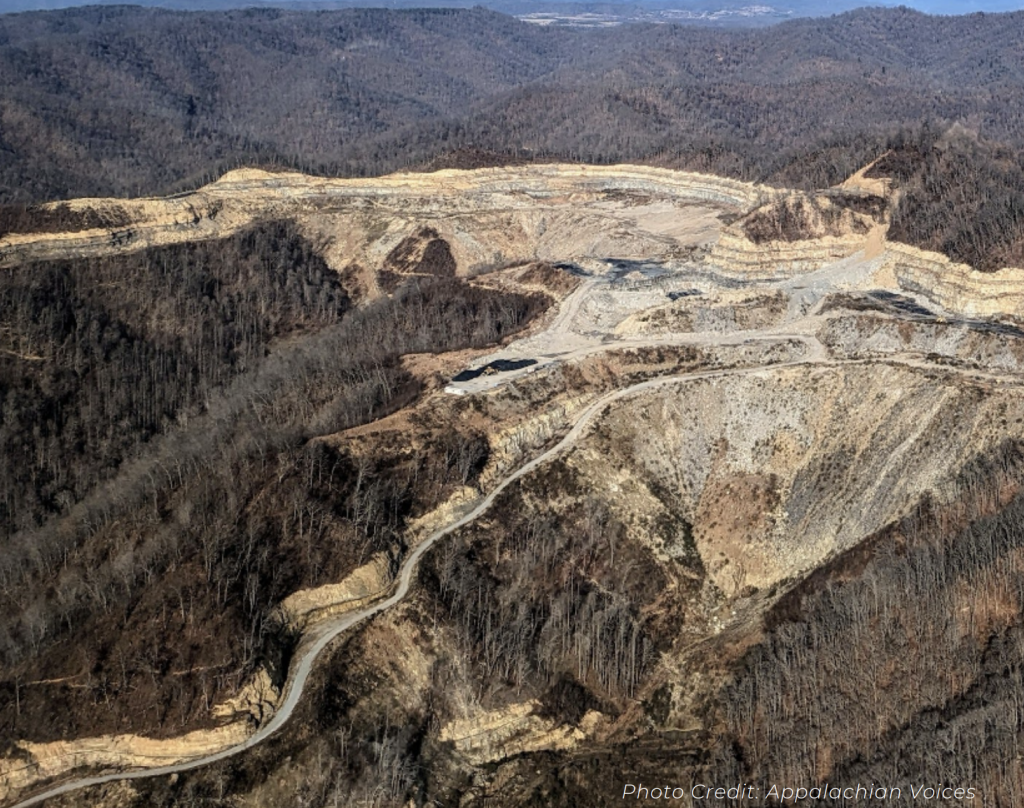
Last year, the Tennessee Senate became the first state or federal legislative body to send an anti-mountaintop removal bill to the floor. Mountaintop removal coal mining has destroyed more than 500 mountains and buried or poisoned more than 2,000 miles of streams throughout Appalachia, including Tennessee’s Cumberland Plateau.

• The Senate Energy, Agriculture and Natural Resources Committee will take up SB99 at 9:30 a.m. (CST) tomorrow.
• The House Agriculture and Natural Resources Subcommittee will take up HB43 at 1:30 p.m. (CST) tomorrow.
• The bill summary can be found here.

“This is really a golden moment for Tennessee, with elected leaders on both sides of the aisle in strong favor of this landmark legislation to protect our mountains, our homeland, from those who would destroy it for short-term gain, whether they are from China or Chattanooga,” said JW Randolph, Tennessee director for Appalachian Voices. The nonprofit group has been working on this legislation package for almost two years along with numerous other organizations from a broad spectrum of interests, including conservationists, the faith community, the tourism sector, and many others.

** JW Randolph is available by cell and email today. He has been confirmed to present testimony at the House subcommittee meeting tomorrow and will available for press statement throughout the day. **

****************************
Appalachian Voices is an award-winning, environmental non-profit committed to protecting the natural resources of central and southern Appalachia, focusing on reducing coal’s impact on the region and advancing our vision for a cleaner energy future. Founded in 1997, we are headquartered in Boone, N.C. with offices in Charlottesville, Va.; Nashville, Tn. and Washington, D.C.

WEB: www.AppalachianVoices.org
FACEBOOK: www.Facebook.com/AppalachianVoices
TWITTER: www.twitter.com/appvoices

Stop Brushing off the Bad Stuff

Tuesday, March 19th, 2013 - posted by brian

However complex the causes of the ongoing health crisis in Appalachia, denial accomplishes nothing but the perpetuation of the status quo. Yet every time claims that could negatively impact the coal industry surface, Appalachian legislators throw up a black sheet.

West Virginia University professor and public health researcher Dr. Michael Hendryx’s latest article, “Personal and Family Health in Rural Areas of Kentucky With and Without Mountaintop Coal Mining,” appeared in the online Journal of Rural Health a couple of days ago. The study immediately gained the attention of Kentucky media, and supporters of the coal industry have been quick to write off Hendryx’s methods and conclusions — they just haven’t gotten around to reading it yet.

Hendryx has published more than 100 peer-reviewed articles. He’s the director of the West Virginia Rural Health Research Center and after receiving a Ph.D. in psychology, he completed a post-doctoral fellowship in Methodology at the University of Chicago. Little of that seems to matter, however, because much of his research is concentrated on poor health in Appalachian coal-mining communities, especially those where mountaintop removal takes place.

Like other studies Hendryx has conducted, the eastern Kentucky-focused article relies on comparing data gathered in counties with mountaintop removal to data from counties without it. More than 900 residents of Rowan and Elliott counties (no mountaintop removal) and Floyd County (mountaintop removal) were asked similar questions about their family health history and incidents of cancer to those that the U.S. Center for Disease Control uses in gathering data.

After ruling out factors including tobacco use, income, education and obesity, the study found that residents of Floyd County suffer a 54 percent higher rate of death from cancer, and dramatically higher incidences of pulmonary and respiratory diseases over the past five years than residents of Elliott and Rowan counties.

These results should surprise no one, least of all the families in Floyd County that participated in the study. Yet somehow, supporters of the widespread use of mountaintop removal still refuse to consider that blowing up mountains might impact human health.
(more…)

Canvassing Against Coal Ash

Friday, March 15th, 2013 - posted by Matt G

The Red, White & Water team hit the streets near Belmont, N.C., to speak with residents who live near Duke Energy's G.G. Allen Steam Station about the threats of coal ash pollution.

Last Saturday, the Red, White and Water team traveled to Belmont, N.C., to the G.G. Allen Steam Station for a day of canvassing. Walking door-to-door, we asked residents of the communities near the coal-fired power plant if they had been impacted by water pollution.

I met Archie Dixon, who was featured in the Gaston Gazette a few months ago. Dixon had complained to Duke Energy, which owns the power plant, about coal ash staining his property and getting into his drinking water. I spoke with him while he and his grandson (also named Archie, or “Lil’ Arch”) waited for a plumber for a broken pipe on their property. In his garage sat a waist-high stack of bottled water. Mr. Dixon said that he still refuses to drink his own home’s water.

The pollution near the plant happens in two ways. One is through coal ash ponds. Coal ash is the waste byproduct from burning coal and it contains contaminants such as arsenic, mercury and chromium. Because the one active coal ash pond at G.G. Allen is an unlined impoundment, these toxics can seep into groundwater. Tests near the plant have revealed exceedances in manganese, iron and nickel in the groundwater.

Effluent is the other form of pollution at G.G. Allen — the plant wastewater that discharges directly into the surface waters of nearby Lake Wylie. Under the Clean Water Act, permits are issued for each of the plant’s discharge points. These permits, however, only set limits for traditional pollutants, including oil and grease, “total suspended solids” and pH. They rarely limit pollutants such as mercury, selenium, and arsenic. And with a lack of federal guidelines, many states don’t set their own permit limits for these toxic chemicals.
(more…)

A Week of Education and Action

Wednesday, March 13th, 2013 - posted by nathan

As part of Mountain Justice Spring Break, students acted out a skit demonstrating how banks directly support mountaintop removal. Photo by Nathan Jenkins

Last week, more than a hundred college students from around the country spent their spring break in Appalachia, Va., to learn about mountaintop removal coal mining, involve themselves in nonviolent actions, and volunteer for social projects that benefit a community that all too many choose to ignore.

By the time I arrived on Friday, the students had already learned about mountaintop removal coal mining. They had toured several mine sites in Wise County, learned how to test water for contaminants, and studied the ecosystems of Appalachia’s incredibly diverse forests.

They had worked on a full day of trail maintenance on Pine Mountain and volunteered much needed manpower to a mobile health services group that provides essential care to impoverished residents forgotten by the coal industry.

Earlier in the week, the students learned about banks that invest in mountaintop removal and how to use nonviolent action to effect change. By Friday, they were ready to make a statement. After a hot breakfast, we loaded up a caravan of cars and set out for a peaceful protest on the sidewalks outside of UBS Bank in Kingsport, Tenn.

Once there, I had my first glimpse of handcrafted props for the planned skit as they were pulled out of pickups and station wagons. The group marched around the block drawing cheers and honks of support from passing motorists. The students then sat on the sidewalk singing songs and chants, as well-dressed bankers peered out from the windows above and sent secretaries to lock doors despite a significant presence from the local police force.

For their part, the officers were incredibly polite and a few even asked me for more information about mountaintop removal. I walked the officers through the narrative of the skit as we watched a giant “fat cat” banker slip dinner plate sized coins into a 4-foot wide piggy bank while a dragon inspired dragline chewed through our mountain resources.
(more…)

Tennessee Votes on Scenic Vistas Tomorrow. CALL TODAY!

Tuesday, March 12th, 2013 - posted by jw

Call today and Urge Tennessee Legislators to Protect the Beauty and Economic Vitality of the Cumberland Plateau.

Tennessee legislators are scheduled to take up a critical vote tomorrow on the Scenic Vistas Protection Act — a good bill with broad, bipartisan support that would help one of Tennessee’s most important assets – our mountains.

Representative Gloria Johnson (D-Knoxville) will be carrying the bill (HB 43 / SB 99) in the House Subcommittee on Agriculture and Natural Resources, and Senator Lowe Finney (D-Jackson) in the Senate Committee on Energy, Agriculture, and Natural Resources.

Appalachian Voices urges you to call committee members and ask them to support the common sense “Tennessee Scenic Vistas Protection Act (HB 43 / SB 99)“.

House:
Chairman Ron Lollar (R-Bartlett) / 615-741- 7084
Curtis Halford (R-Dyer) / 615-741-7478
Andy Holt (R-Dresden) / 615-741-7847
Judd Matheny (R-Tullahoma) / 615-741-7448
Billy Spivey (R-Franklin) / 615-741-4170
John Tidwell (D-New Johnsonville) / 615-741-7098
Ron Travis (R-Dayton) / 615-741-1450
Brenda Gilmore (D-Nashville) / 615-741-1997 [This is a “Thank you!” as Representative Gilmore is a cosponsor of the Scenic Vistas bill.]

Senate:
Chairman Steve Southerland (R-Morristown)/615-741-3851
Mae Beavers (R-Mt Juliet)/ 615-741-2421
Jim Summerville (R-Dickson) / 615-741-4499
Mike Bell (R-Riceville) / 615-741-1946
Charlotte Burks (D-Monterey) / 615-741-3978
Ophelia Ford (D-Memphis) / 615-741-1767
Todd Gardenhire (R-Chattanooga) / 615-741-6682
Dolores Gresham (R-Somerville) / 615-741-2368
Frank Niceley (R-Knoxville) / 615-741-2061

Tell these legislators your name and let them know you are a Tennessean who cares about protecting our mountains. And please pass this along, so that legislators hear from as many Tennesseans as possible.

Talking points and bill information below… (more…)

An Uphill Climb Gets Steeper

Tuesday, March 12th, 2013 - posted by Melanie

Sequestration Comes to Appalachia

In August 2011, Congress and President Obama made a pact. They agreed to $1.2 trillion worth of cuts over 10 years if another deficit reduction compromise could not be reached. Efforts to avoid the severe and widespread cuts failed, and as of the beginning of this month the sequester is in effect. President Obama, as required by law, has signed an order withdrawing $85 billion for the seven months left in fiscal year 2013. The Office of Management and Budget released a report calculating reductions of 13 percent for defense programs, and nine percent for non-defense programs over the remaining year.

Congressional Sequester

The Democrats on the U.S. House of Representatives Appropriations Committee released an analysis of nationwide effects of the sequestration predicting a major reduction in U.S. Environmental Protection Agency air quality enforcement due to loss of manpower and cuts to monitoring systems — an estimated 1,000 fewer inspections. The members cautioned that, “shutdown of some air monitoring sites would make it more difficult if not impossible to determine if some areas of the country meet Clean Air Act standards.” This is bad news for Appalachia, which is overrun with aging coal plants, high incidents of asthma, lung cancer and other respiratory diseases.

Reduced enforcement for clean air and water will threaten environmental and public health in every state. But here are the figures from The White House on reductions in Central Appalachian states:

Cuts for Clean Air and Water by State:
Kentucky – $2,100,000
North Carolina – $3,606,000
Tennessee – $2,211,000
Virginia – $2,997,000
West Virginia – $2,013,000
(more…)

Lesson Learned: The Buffalo Creek Flood

Tuesday, February 26th, 2013 - posted by brian

Inspecting the Aftermath: Residents of Buffalo creek worried constantly about the stability of the slurry dams upstream. Nothing was done. Photo courtesy of West Virginia State Archives.

I woke up this morning to a frozen world. Fog and ice descended on the hills above Boone, N.C., last night and are still waiting around for the thaw. It was silent other than the periodic crack of a branch and the following echo that bounced around the hills. Stepping outside after reading Ken Ward Jr.’s remembrance of the Buffalo Creek Flood, I wondered if this stillness was similar to what the residents of communities in Logan County, W.Va., felt that morning 41 years ago today.

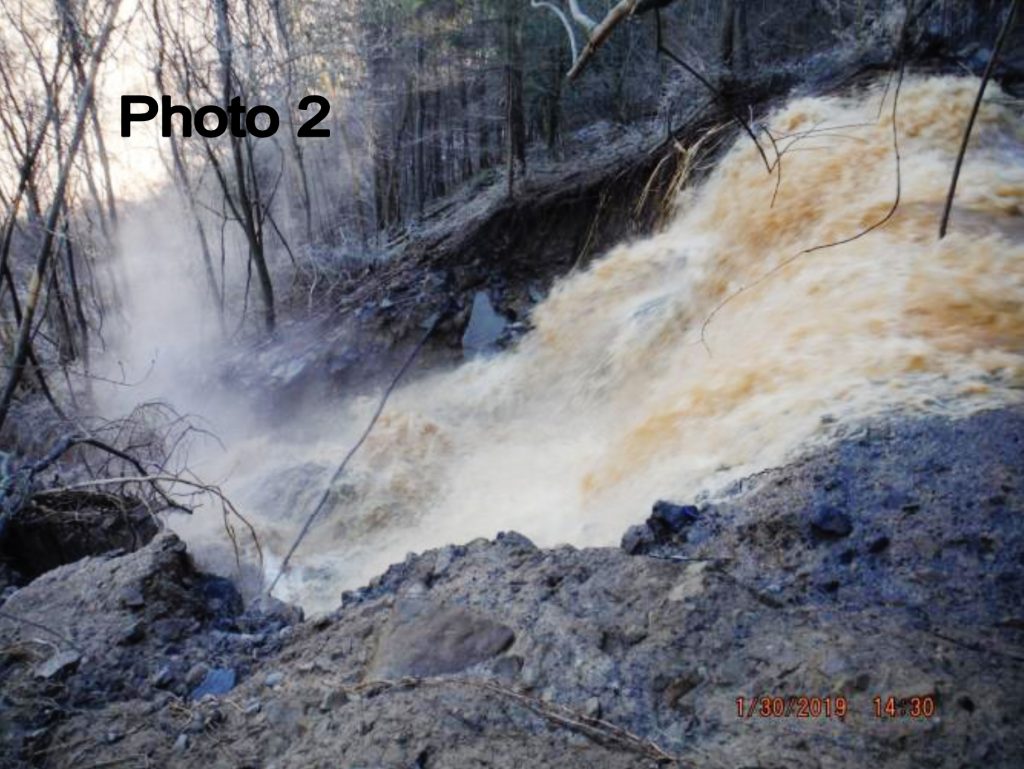
To contain the refuse of a coal preparation plant operated by Buffalo Mining Co., a series of three dams were built upstream from the communities along Buffalo Creek in the 1950s and 60s, as Logan County continued to grow into one of southern West Virginia’s prolific coal-producing counties. Dam No. 3, the largest, stood 60 feet above the pond and downstream dams below. When it gave way on the cold morning of Feb. 26, 1972, the others collapsed instantly.

The poor construction and regulation of coal waste impoundments that precipitated the Buffalo Creek Flood intensified during boom times when coal preparation plants used more water and produced more slurry just to keep up with coal production. As Jack Spadaro, a former superintendent at MSHA’s Mine Health and Safety Academy, told me for a story last year, “All along, as these dams were being built, they weren’t really constructed using any engineering methods. They were simply dumped, filled across the valley.”
(more…)

Virginia Transportation Board OKs Coalfields Expressway Project

Thursday, February 21st, 2013 - posted by nathan

Approved on Wednesday by the Commonwealth Transportation Board, the redrawn route prioritizes Alpha Natural Resources' access to coal, not travelers' access to local communities. Click to view the full-size map.

Yesterday, Virginia’s Commonwealth Transportation Board approved a four-lane divided highway that will flatten steep mountain ridges in southwest Virginia along a route proposed by Alpha Natural Resources — the largest coal company operating in Appalachia today.

The proposed 26-mile Coalfields Expressway is only a few miles off of several less destructive routes studied by the Virginia Department of Transportation in 2001 when it conducted a detailed environmental review of the area. The difference is that VDOT looked for a suitable place to build a highway. Alpha and other coal companies such as Rapoca Energy, on the other hand, selected the most profitable route for surface mining, using the highway as justification for the environmental toll they would inflict along the way.

This difference in purpose of the proposed routes is apparent when you look at the estimated impacts. The route VDOT selected in 2001 would have a 750-foot right of way that would disturb about 1,100 acres of land, four miles of streams and 720 acres of forest. Those impacts alone are daunting, but they pale in comparison to the redrawn route. Alpha’s path of destruction, with its 2,200-foot right of way, would flatten more than 2,100 acres, bury 12 miles of streams and clear-cut more than 2,000 acres of forest — not to mention destroy two churches and three cemeteries.

Nevertheless, VDOT sees this “coal-synergy” project as beneficial because it will cost taxpayers $2.8 billion to build, as opposed to the projected $5.1 billion without collaboration from the coal industry. The savings are disputable, however, and do not factor in the environmental cost of the road’s relocation. VDOT’s rush to make this project a reality has led them to disregard recommendations from the U.S. Army Corps of Engineers, the U.S. Environmental Protection Agency and the U.S. Fish and Wildlife Service — all of which are asking for a full environmental review of the new route.
(more…)

A Clearcut Connection Between Mountaintop Removal and Climate Change

Wednesday, February 20th, 2013 - posted by Melanie

Mountaintop Removal and other destructive land uses could turn the Southern Appalachians from a carbon sink to a carbon source in as little as 12 years.

Scientists from the universities of Kentucky and California recently released a study detailing the climate implications of coal extraction by mountaintop removal. If coal mining continues at its current pace, the authors predict the next 12 to 20 years will see Southern Appalachian forests switch from a net carbon sink to a net carbon source — meaning the area will emit more carbon than it takes in.

Consequently, ending mountaintop removal may have more environmental benefits than originally realized. The long-standing goals of mountaintop removal opponents have been to protect human lives, improve drinking water, and support ecosystem health. This new research shows that ending this destructive mining practice would also be a victory in the fight against climate change — and not just by moving away from dirty coal.
(more…)