Follow Us on Twitter: Appalachian Voices | iLoveMountains.org

Posts Tagged ‘Coal’

Appalachian Voices and Partners Challenge Kentucky’s Backroom Deal With Coal Company

Friday, May 17th, 2013 - posted by eric

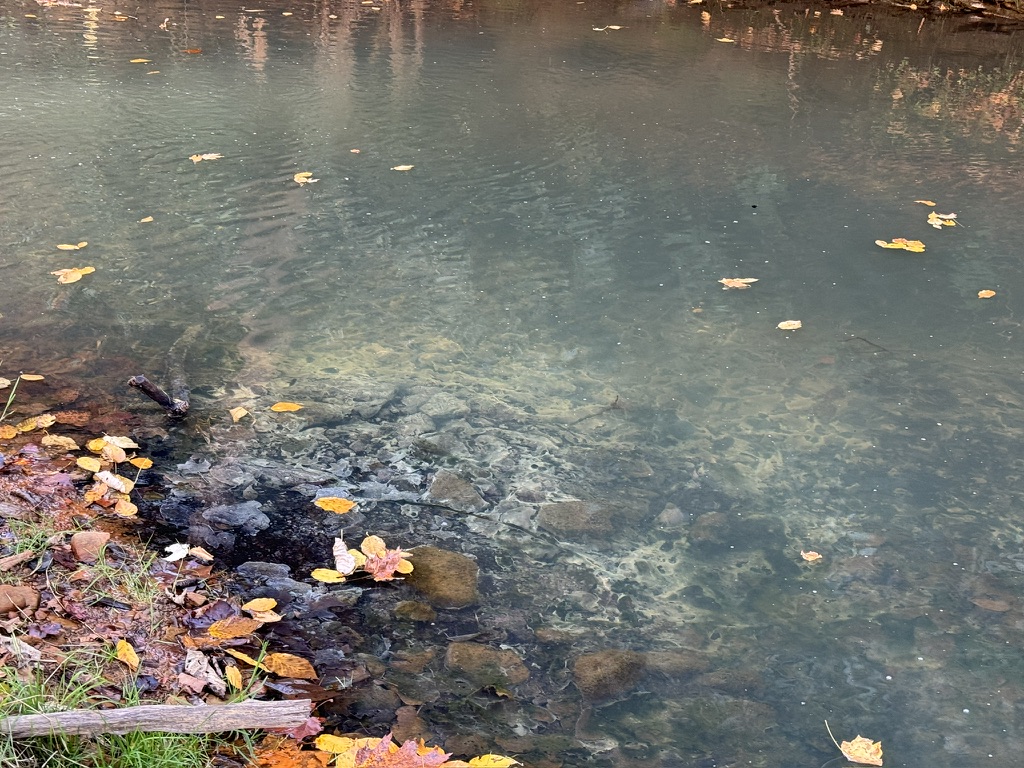
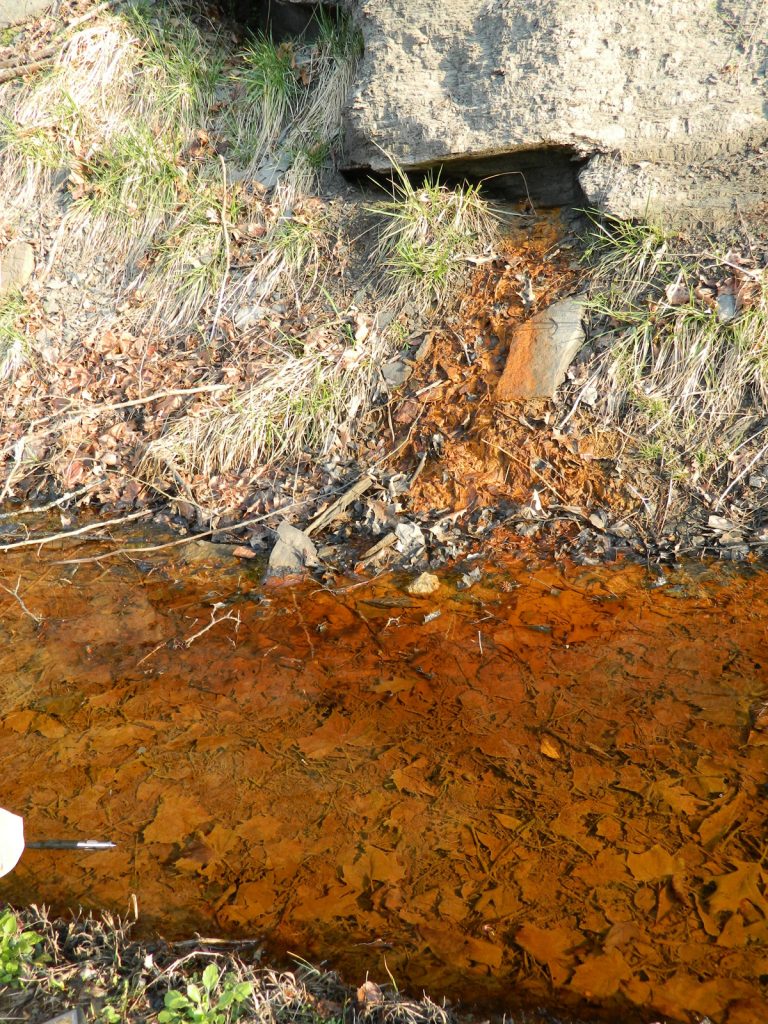
Watercolors by Frasure Creek. State inspector's photos show a variety of colors of water at Frasure Creek mines.

Yesterday, Appalachian Voices and our partner organizations filed a “petition for review”, essentially an appeal of a settlement between Frasure Creek Mining and the Kentucky Energy and Environment Cabinet. This settlement lets Frasure Creek off the hook for thousands of water quality violations over the past two years, while doing little to ensure that the company fixes its water quality problems.

Our challenge of this settlement focuses on the way in which it came about. But first, a bit of background.

We have a separate case that is ongoing against Frasure Creek for submitting false water monitoring data (entire reports were duplicated and only the dates were changed). After we uncovered this problem the company began turning in more accurate reports, which for the first time showed lots of pollution problems. We then filed a second suit against Frasure Creek for thousands of these pollution problems (which had been hidden by reporting problems before our first suit). Then the cabinet also filed a complaint for these pollution violations and more like them in state administrative court (a court run by the cabinet itself).

We intervened in that case and became full parties to it, but were then shut out of it completely. In fact the settlement was entered despite our previous objections, and there is no evidence that our objections were even considered. The cabinet and Frasure Creek negotiated a settlement completely without us. The law and common sense both dictate that an agreement is not valid unless all the parties involved agree to it, and that is the basis for our challenge of this settlement yesterday.
(more…)

Appalachian Residents Push for Clean Water Protections: Cabinet’s Agreed Order Challenged for Lack of Process, Inadequate Remedies

Friday, May 17th, 2013 - posted by eric

FOR IMMEDIATE RELEASE

Appalachian Voices * Kentuckians For The Commonwealth * Kentucky Riverkeeper * Waterkeeper Alliance

CONTACTS:
• Eric Chance, Appalachian Voices, 828-262-1500, eric@appvoices.org
• Pat Banks, Kentucky Riverkeeper, 859-200-7442, kyriverkeeper@eku.edu
• Peter Harrison, Waterkeeper Alliance, 828-582-0422, pharrison@waterkeeper.org
• Ted Withrow, Kentuckians For The Commonwealth, 606-784-6885 or 606-782-0998, tfwithrow@windstream.net

Frankfort Kentucky-Continuing their campaign to make sure Kentucky’s water is safe for everyone, several groups have challenged plans by the Beshear administration to let Frasure Creek Mining “off the hook” for repeated violations of the Clean Water Act.

Appalachian Voices, Waterkeeper Alliance, Kentuckians For The Commonwealth, Kentucky Riverkeeper and several individuals (the petitioners) asked the Franklin Circuit Court Thursday to vacate an Agreed Order signed in April by Environment and Energy Cabinet Secretary Len Peters that claims to resolve all recent water quality violations by the company.

They point out that the settlement “is inadequate to address Frasure Creek’s pollution problems and prevent such harms from occurring in the future.” They called the administration’s action “arbitrary and capricious, an abuse of discretion, contrary to law, and not supported by substantial evidence.”

“This settlement lets Frasure Creek off the hook for thousands of water quality violations,” explained Eric Chance, a water quality specialist with Appalachian Voices. “For years Frasure Creek had been submitting false monitoring reports. During that time they never reported any water quality problems. After we exposed these false reports, they began using more reputable labs and started showing hundreds of water quality violations every month.

“Over the past few years Frasure Creek’s water discharges haven’t really improved and I don’t expect there to be any improvements in the water coming off Frasure’s mines from this settlement,” Chance added.

“Clean water is not just a good idea. Clean water is critical to our health and well being,” said Pat Banks with Kentucky Riverkeeper. “We have learned that we cannot be complacent. The Clean Water Act enforces the notion that if companies are out of compliance and enforcement by the state fails, then citizens can and must step in to protect our waters. That’s what we are doing here.”

The petitioners also point out that they were granted full party status in the administrative enforcement case but were shut out of negotiations between the Cabinet and Frasure Creek that resulted in the final Agreed Order.

“The Cabinet has once again systematically excluded Kentucky citizens who are fighting to protect the water they use. After bringing Frasure Creek’s false reporting and pollution to the Cabinet’s attention, the Cabinet has tried, at every step, to sweep this matter under the rug and quickly settle with the company and exclude citizens from the process,” said Mary Cromer, with the Appalachian Citizens Law Center and one of the attorneys representing the petitioners. “We bring suit against the Cabinet for failing to do what’s necessary to ensure that Frasure Creek’s pollution is cleaned up and for excluding the citizens from their rightful roles as co-enforcers of the Clean Water Act.”

“We as citizens have the right to intervene and see and participate in this process,” explained Ted Withrow with Kentuckians For The Commonwealth. “Yet the Cabinet continues to ignore the law and shield another coal company from any meaningful enforcement. This Agreed Order was done behind closed doors shutting citizens out, even though we had full rights to be part of the process.”

BACKGROUND

In June 2011, the petitioners filed a 60-day Notice of Intent to Sue, documenting more than 2,800 violations of the Clean Water Act by Frasure Creek in the first three months of 2011. After conducting its own investigation, the Cabinet filed an internal administrative enforcement action alleging many of these same violations.

In November 2011, the petitioners were granted full intervention status.

However, the Cabinet conducted negotiations with Frasure Creek without notice to and participation by the intervenors, resulting in the Agreed Order signed by Peters. Kentucky law prohibits the entry of an Agreed Order without the consent of each and every full party to the Administrative Proceeding.

The violations in this case are similar to those in a 2010 lawsuit pending in Franklin Circuit Court, in that older case false reporting made it impossible to identify pollution problems like the ones at issue in this case. In the original lawsuit, the Cabinet filed an enforcement action against Frasure Creek in Franklin Circuit Court after the same petitioners made public thousands of Clean Water Act violations. In that case, the court granted the petitioners full intervention status. So in the 2011 case, the Cabinet took a different enforcement route to avoid public intervention. However, the administrative judge also granted full intervention status.

####

A Must-Read Report, Another Reminder It’s Time to Build Something New in Central Appalachia

Tuesday, May 14th, 2013 - posted by brian

An updated and expanded report is a potent reminder that coal's decline isn't going away and policymakers should accept the challenges, just as many people already have. Click through to read the report's key findings.

The litany of voices pointing to the writing on the wall for the Central Appalachian coal industry continues to grow. They’re saying the same thing in almost every way imaginable, and have been for some time.

Watching coal production decline and demand shift as other energy sources out-compete coal domestically, it is vital that policymakers in Central Appalachia begin implementing policies and investments aimed at building a foundation for economic alternatives in coal-producing counties. A report released this morning by the consulting firm Downstream Strategies is a pretty good reminder why.

“The Continuing Decline in Demand for Central Appalachian Coal: Market and Regulatory Influences” expands on a January 2010 study and provides a detailed look at the challenges Central Appalachia faces, further making the case for the urgent need to act.

As the report’s lead author, Rory McIlmoil, who recently joined Appalachian Voices’ staff as energy policy director, points out:

Numerous factors influence demand for Central Appalachian coal, each of which has had — and will continue to have — a significant impact on the local economies where the coal is mined. In 2010, we recommended that state and local leaders take immediate steps to help diversify coalfield economies. To a large extent, that has not happened. However, it is vital that public officials begin making the political and financial investments necessary to build the foundation for new economic development opportunities in coal-producing counties.

(more…)

Mountaintop Removal 101: Congressional Research Service Updates Report

Thursday, May 2nd, 2013 - posted by brian

An updated report by the Congressional Research Service provides a look at the current legal and legislative challenges to mountaintop removal.

Every day, more Americans become concerned with the threat of mountaintop removal in Appalachia. Just yesterday, I was made aware of a website called “What About Mountains?” created by a fourth grade class at the Episcopal School of Knoxville. These students may just be learning about the issue, but they know that “mountaintop removal coal mining is not OK,” and seeing a photo of lush mountains reduced to “ugly blobs of land” is as fine a place to start as any.

Whether you’re in fourth grade or in your forties, it’s helpful to have a convenient compendium on the issue of mountaintop removal, especially considering the ever-evolving legal battles, status of bills on Capitol Hill, and state and federal level regulations. An updated report from the nonpartisan Congressional Research Service called Mountaintop Mining: Background on Current Controversies acts as a CliffsNotes for anyone concerned with the situation and interested in catching up.

The report summarizes the legal challenges, agency and congressional actions related to mountaintop removal and points out that, despite two recent court rulings underscoring the need for greater protections, few people on either side are please with the U.S. Environmental Protection Agency’s record on the issue. Mountaintop removal supporters complain of onerous rules that hamper employment and opponents point to poisoned water, unhealthy communities and shortened lives.
(more…)

Kentucky’s Lab Certification- Is it strong enough?

Wednesday, May 1st, 2013 - posted by eric

Yesterday, Appalachian Voices submitted public comments on a proposed wastewater lab certification program in Kentucky. To discharge polluted water, coal companies must receive a permit under the Clean Water Act. This permit that requires companies to test wastewater and report the data to ensure it falls within the limits of the permit. In Kentucky, there are currently no standards for labs that do this type of testing.

The proposed certification program is a direct result of the lawsuits for falsified water monitoring data we filed against three of the state’s largest coal mining companies. Our investigation revealed that many coal companies were repeatedly submitting the same data and knowingly leaving out reports of any violations of their permits. After we filed these lawsuits, the Kentucky Energy and Environment Cabinet inspected the labs being used for this monitoring and found that in many cases they were not even capable of correctly performing the required tests.

This graph shows some of the inaccurate data submitted by Frasure Creek Mining before our lawsuits lead them to start using a new lab. Click to enlarge.

We believe that enforcing standards on labs used by coal companies will help ensure that labs report accurate data, and that the regulations meant to protect water and those that depend on it from dangerous pollution are effectively enforced. This proposed rule will be a big step forward and we have applauded the cabinet for its efforts to fix these problems. However, there are several weaknesses in the rule that we hope are fixed before it is finalized.

All too often the cabinet has failed to live up to its obligations to protect the people and environment in Kentucky. That is why our comments suggest that discretionary duties given to the cabinet in this rule be made mandatory. Appalachian Voices will continue to work to require the state agencies to actually enforce these standards.

>>Click here to see our comments
>>Click here to read the proposed lab certification rule
>>Click here to read the draft lab manual

Tennessee Tuesday: What Do We Do Now?

Tuesday, April 30th, 2013 - posted by jw

This is a post about how we can improve life for Tennesseans, protect an American culture that has endured for centuries, and promote our beloved Appalachian Mountains that once stood higher than the Himalayas, and are now threatened by mountaintop removal coal mining.

Tennessee Tuesdays is a new weekly feature on the Appalachian Voices Front Porch blog. While our main goal is to end mountaintop removal, we also hope to spread the gospel of hope, bring light to issues facing Tennesseans, and offer solutions on how we can move our state toward a cleaner and more energy efficient future.

Are you from Tennessee or nearby? Introduce yourself in the comments and let us know what you’d like to hear about. For now, welcome! Have a cup of coffee and take a minute to enjoy your Tennessee Tuesday.

What’s been happening in Tennessee lately?

Tennessee Legislature 2013
My home state has been in the national news a lot the last few months and not for the greatest reasons. Our legislature was constant fodder for late night comedians (catch Daily Show and Colbert’s greatest Tennessee hits here, here, and here) and was generally considered a bumbling embarrassment for most Tennesseans who don’t respond to “Senator.”
(more…)

A Good Week for Mountains – Multiple Court Rulings Favor Science and Enforcement

Tuesday, April 23rd, 2013 - posted by brian

Earth Week is off to a good start after two major rulings in two days mean we may start seeing less of this.

We’re only two days into Earth Week — if we must limit it to one week out of the year — but it sure is getting off to a great start. In the past two days, two major court rulings have underscored the need for increased scrutiny from the federal agency responsible for evaluating environmental impacts of mountaintop removal coal mining according to the National Environmental Policy Act and issuing permits under the Clean Water Act.

Yesterday, the 6th U.S. Court of Appeals revoked the U.S. Army Corps of Engineers use of Nationwide Permit 21 (NWP 21), a streamlined and inadequate process that has contributed to the expansion of mountaintop removal in Appalachia since 1992. Kentucky and West Virginia residents, with the support of groups including Kentuckians for the Commonwealth, Kentucky Waterways Alliance and the Kentucky Riverkeeper, have challenged the legality of NWP 21 in state and federal court for a decade.

In its ruling, the three-judge panel called the Corps’ actions “arbitrary and capricious” and found that the agency did not follow the applicable Clean Water Act (CWA) and National Environmental Policy Act (NEPA) regulations, which require it to document its assessment of environmental impacts and examine past impacts before issuing new permits. From the ruling:

Though we generally give greatest deference to an agency’s “complex scientific determination[s] within its area of special expertise,” we may not excuse an agency’s failure to follow the procedures required by duly promulgated regulations.

After opting for streamlined nationwide permitting, the Corps took the easier path of preparing an environmental assessment instead of an environmental impact statement. Having done so, it needed to follow the applicable CWA and NEPA regulations by documenting its assessment of environmental impacts and examining past impacts, respectively. Failing these regulatory prerequisites, the Corps leaves us with nothing more than its say-so that it meets CWA and NEPA standards.

According to the Corps, approximately 70 surface mining permits authorized under NWP 21 qualify for a five-year accommodation to “provide and equitable and less burdensome transition” for coal operators. Whatever its impact on existing mountaintop removal permits, the ruling acknowledges that when it comes to protecting Appalachia, the Corps “say-so” is insufficient.
(more…)

Tuesday, April 16th, 2013 - posted by Jil

OSM Approves Expansion of Appalachia’s Largest Slurry Impoundment

The Federal Office of Surface Mining recently approved an expansion of the Brushy Fork impoundment in West Virginia — one of the largest slurry disposal sites in the country — to hold two billion more gallons of the waste produced from washing coal. Unless the West Virginia Dept. of Environmental Protection denies the expansion, the earthen dam holding back billions of gallons of coal waste will expand to nearly 750-feet tall, larger than the Hoover Dam.

Photo by Vivian Stockman

Virginia Transportation Board OKs Coalfields Expressway

In February, Virginia’s Commonwealth Transportation Board approved two sections of the Coalfields Expressway despite environmental impacts and public concerns that the route will bypass communities that could possibly benefit from the highway project. Proposed by Alpha Natural Resources, the four-lane highway project would begin as a 26-mile mountaintop removal coal mine. By proposing a public-private partnership with the Virginia Department of Transportation, Alpha Natural Resources substantially reduced VDOT’s estimated costs. The project is under review by the Federal Highway Administration, which will either give VDOT approval to move forward with construction, or require a supplemental environmental study.

More Research Links Mountaintop Removal and Poor Health

A recent study focused in eastern Kentucky is the latest in a line of research by West Virginia University’s Dr. Michael Hendryx linking mountaintop removal to poor health in nearby communities. Published in the online “Journal of Rural Health,” the article compares survey responses gathered in counties where mountaintop removal occurs to counties where it does not. After ruling out factors including tobacco use, income, education and obesity, the study found that residents of Floyd County, Ky., suffer a 54 percent higher rate of death from cancer than residents of nearby Elliott and Rowan counties. Previous studies have found that cancers and other health problems increase with the amount of mining that occurs nearby. Researchers recommend that a more comprehensive study measure air and water quality to reveal exposure to pollutants.

Greenhouse Gas Rules May Have to Wait

The announcement of the EPA’s long-awaited plan to regulate carbon emissions from existing power plants last spring brought cheers from environmental groups and added to fervorous accusations of an Obama-led “war on coal.” Now that the deadline for the rule has arrived, the agency is likely to revisit its provisions and limits. As proposed, the rule would impact new power plants and permitted plants that have not begun construction by limiting carbon emissions to 1,000 pounds per megawatt-hour of electrical output — a level unlikely to be met by coal-fired power plants. Regardless of when the rule is finalized, it is almost certain to be challenged by the coal industry and receive substantial congressional attention. The delay comes as abundant natural gas is causing coal plant retirements and making the construction of new coal-fired units uneconomical. The EPA will likely reintroduce the rule for another round of public comments.

“War on Coal” Claims are a War on Reality

Wednesday, April 10th, 2013 - posted by Melanie

A national average of 88,152 coal mining jobs under President Obama represents a 15 percent increase from the average under the Bush administration of 76,470. Graph by Appalachian Voices

The coal industry and the members of Congress who depend on its support have accused President Obama and the U.S. Environmental Protection Agency of waging a “war on coal.” Industry supporters argue that limits on emissions from coal-fired power plants and increased scrutiny of mountaintop removal mining permits are killing jobs. But the numbers show that, aside from being a tired rhetorical trope, the “war on coal” is also a myth.

This week, Appalachian Voices released an analysis of the latest data from the Mine Safety and Health Administration that reveals the fallacy behind “war on coal” claims. An average of 88,152 coal mining jobs under Obama represents a 15 percent increase from the Bush average of 76,470. Employment in 2011 and 2012 was the highest two-year period in 15 years. Each of the top 10 coal-producing states have seen more jobs on average under Obama than under Bush, and nine of those states saw higher employment in 2012 than at any point during the Bush years.

One of the main factors contributing to the employment increase is a decrease in productivity. Coal is growing scarce and difficult to reach, especially in Appalachia, and it takes more miners than it once did to mine the same amount of coal. Since its peak in 2000, productivity has declined 30 percent. Increased underground mining explains some of this decline since it requires more workers than large-scale surface mining methods such as mountaintop removal.
(more…)

What We Weren’t Allowed to Say

Thursday, March 21st, 2013 - posted by jw

In this legislative session, Tennesseans’ voices were silenced. Here’s what I would have said.

Yesterday, I was honored to be called to testify before the Tennessee State Senate Committee on Energy, Agriculture, and Natural Resources, along with a friend, hero and colleague, Ann League. Ann is a property owner and resident of coal-bearing areas in Tennessee, who has lived in the shadow of Zeb Mountain. After Ann and I were called to the bench, Chairman Steve Southerland cut us off before we could sit down and say a word. The committee killed the bill on a procedural mechanism without ever allowing for discussion or taking a vote on its substance. This was despite the fact that thousands of Tennesseans from across the ideological spectrum have called for the passage of this bill. We have prayed, pleaded and lobbied on behalf of our mountains and mountain communities. Yesterday our voices were shut out, and our bill was ignored. If allowed to speak, here’s what I would have said:

“Good morning, my name is JW Randolph and I’m the Tennessee Director for Appalachian Voices.

I grew up outside of Birchwood, Tenn., in a log cabin my father built on the shores of the Tennessee River. Walking the hills and hollows of our state is how I learned what home means. Hiking and fishing out in the woods and waters is how I got to know the best of what our country has to offer, the best of what our state has to offer, and its how I got to know my family. These experiences taught me about freedom, self-reliance and responsibility.

Later in life I learned that not too far away, these same mountains were being filled with ammonium nitrate fuel oil and being brought down, poisoning the streams we ran through. These streams are no different than the one in Hamilton County where I proposed to my high school sweetheart, and where I now take our two year old daughter to learn how to skip stones.

Although she doesn’t quite yet understand, I try to explain to her the fact that when I was her age, there were 500 mountains in Appalachia that are no longer standing.
(more…)