Get Our RSS Feed!
Front Porch Blog


Needle in a Haystack: U.S. Senate Supports Lower Energy Costs for Rural America, will the House Follow Suit?


Wednesday, June 12th, 2013 | Posted by Rory McIlmoil


On June 11, the U.S. Senate passed a five-year Farm Bill that includes a rural energy savings program administered by the U.S. Dept. of Agriculture. Photo courtesy of Tim Coolong

On June 11, the U.S. Senate passed a five-year Farm Bill that includes a rural energy savings program administered by the U.S. Dept. of Agriculture. Photo courtesy of Tim Coolong

On June 11, the U.S. Senate passed a five-year Farm Bill that includes a small provision with significant potential for reducing energy costs for rural Americans.

The Rural Energy Savings Program (RESP) — based on South Carolina’s successful “Help My House” program and first introduced in 2012 as a stand-alone bill — would authorize the U.S. Department of Agriculture’s Rural Utilities Service (RUS) to provide zero-interest loans to rural electric cooperatives to create what is known as “on-bill financing” programs. Should RESP be passed as part of the final Farm Bill, Appalachian Voices will work hard to promote the program to rural residents and electric coops through our Energy Savings for Appalachia program.

With on-bill financing, electric coops offer low-interest loans to their residential customers to finance energy efficiency improvements to their home, and the residents repay the loan through an extra charge on their electricity bill. In rural America, which largely gets its electricity from electric membership cooperatives, there is a greater concentration of inefficient housing and low-income residents. Low-interest loans that save homeowners and renters a significant amount of money on their electricity bills could have a significant financial impact not only for the residents and the local economy, but also for the electric cooperatives.

On-bill financing programs supporting home energy efficiency improvements are relatively new, but they have already proven to be highly successful and growing in popularity, particularly among heavily rural, conservative states. For instance, pilot programs having been implemented in Kentucky and South Carolina, and a full-scale program is being offered through Midwest Energy in Kansas. Each of these programs has achieved an average savings of 20 percent or more for their participating customers, and initial results for the South Carolina program estimate that the average loan is saving participating low-income residents nearly $1,300 per year.

Read more
...


Tenn. Tuesday: More Sun! More Wind! More Healthcare?


Tuesday, June 11th, 2013 | Posted by JW Randolph


[Spoiler Alert] Yes, Yes, and Almost Certainly Not.

American clean energy advocates are celebrating the revelation that solar energy made up half of new generating capacity for the first quarter of this year. Tennessee is a recognized leader in our region, and we have been particularly active in advancing new solar for years. Already in 2013, TVA has put 7.5 MW of new solar up. Of course, they also capped the program at a ridiculously low level, meaning that solar installers will have to wait until 2014 to be a part of the program again (DOH!). In the meantime, wind advocates will have no problem highlighting the potential for thousands of homegrown jobs in wind energy in Tennessee.

But let’s just look at how we in Tennessee are doing compared to some of our neighbors when it comes to solar. Alabama, WE’RE CALLING YOU OUT!

  • Between 1990 and 2010, Tennessee created nearly 10 times more solar jobs than Alabama.
  • Tennessee has 142 solar companies compared to Alabama’s 22.
  • Tennessee has 3856 solar homes compared to less than 100 solar homes in Alabama.
  • Solar jobs per capita nationally: Tennessee is ranked 13th, while Alabama ranks 50th.
  • BOO-YA!!

    Alabama native Pat Byington has lamented Alabama’s failed leadership on solar development and all the jobs that come with it, saying:

    And the jobs will keep coming once [Tennessee] completes the “Tennessee solar supply chain,” which will include not only multinational manufacturers, but also local jobs for distributors, sales, system design, installation and maintenance of this new source of energy. These will be permanent, home-grown jobs.

    Read more
    ...


    Appalachian Voices and Partners Challenge Kentucky’s Backroom Deal With Coal Company


    Friday, May 17th, 2013 | Posted by Eric Chance


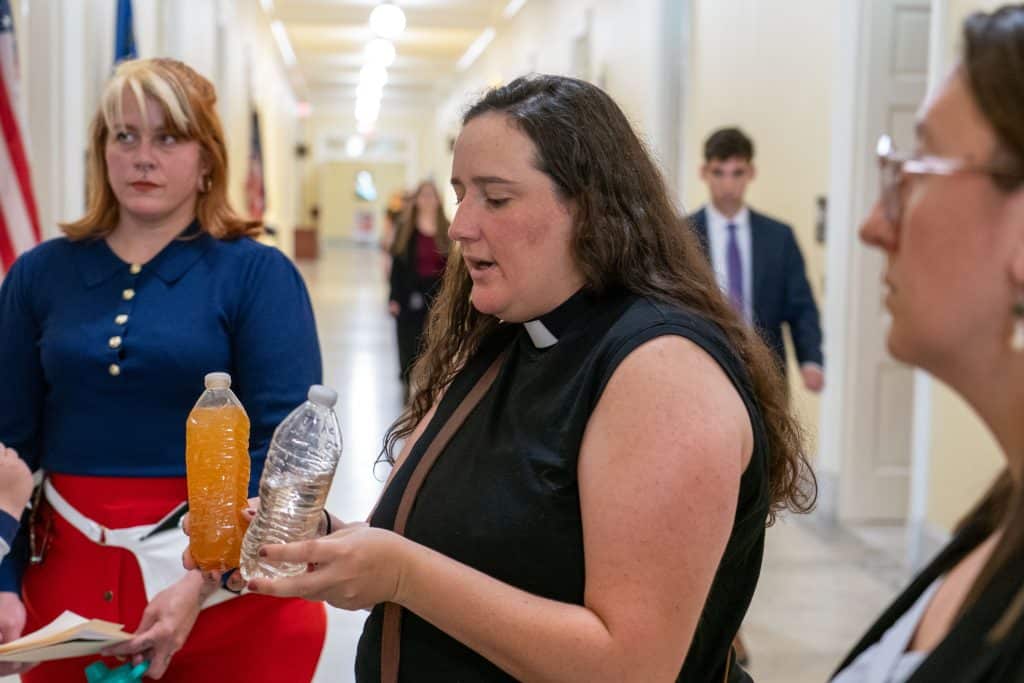
    Watercolors by Frasure Creek. State inspector's photos show a variety of colors of water at Frasure Creek mines.

    Yesterday, Appalachian Voices and our partner organizations filed a “petition for review”, essentially an appeal of a settlement between Frasure Creek Mining and the Kentucky Energy and Environment Cabinet. This settlement lets Frasure Creek off the hook for thousands of water quality violations over the past two years, while doing little to ensure that the company fixes its water quality problems.

    Our challenge of this settlement focuses on the way in which it came about. But first, a bit of background.

    We have a separate case that is ongoing against Frasure Creek for submitting false water monitoring data (entire reports were duplicated and only the dates were changed). After we uncovered this problem the company began turning in more accurate reports, which for the first time showed lots of pollution problems. We then filed a second suit against Frasure Creek for thousands of these pollution problems (which had been hidden by reporting problems before our first suit). Then the cabinet also filed a complaint for these pollution violations and more like them in state administrative court (a court run by the cabinet itself).

    We intervened in that case and became full parties to it, but were then shut out of it completely. In fact the settlement was entered despite our previous objections, and there is no evidence that our objections were even considered. The cabinet and Frasure Creek negotiated a settlement completely without us. The law and common sense both dictate that an agreement is not valid unless all the parties involved agree to it, and that is the basis for our challenge of this settlement yesterday.

    Read more
    ...


    A Must-Read Report, Another Reminder It’s Time to Build Something New in Central Appalachia


    Tuesday, May 14th, 2013 | Posted by Brian Sewell


    An updated and expanded report is a potent reminder that coal's decline isn't going away and policymakers should accept the challenges, just as many people already have. Click through to read the report's key findings.

    The litany of voices pointing to the writing on the wall for the Central Appalachian coal industry continues to grow. They’re saying the same thing in almost every way imaginable, and have been for some time.

    Watching coal production decline and demand shift as other energy sources out-compete coal domestically, it is vital that policymakers in Central Appalachia begin implementing policies and investments aimed at building a foundation for economic alternatives in coal-producing counties. A report released this morning by the consulting firm Downstream Strategies is a pretty good reminder why.

    “The Continuing Decline in Demand for Central Appalachian Coal: Market and Regulatory Influences” expands on a January 2010 study and provides a detailed look at the challenges Central Appalachia faces, further making the case for the urgent need to act.

    As the report’s lead author, Rory McIlmoil, who recently joined Appalachian Voices’ staff as energy policy director, points out:

    Numerous factors influence demand for Central Appalachian coal, each of which has had — and will continue to have — a significant impact on the local economies where the coal is mined. In 2010, we recommended that state and local leaders take immediate steps to help diversify coalfield economies. To a large extent, that has not happened. However, it is vital that public officials begin making the political and financial investments necessary to build the foundation for new economic development opportunities in coal-producing counties.

    Read more
    ...


    Tending to Appalachia’s Bright Future


    Tuesday, May 14th, 2013 | Posted by Cat McCue


    A word cloud created from workshops and panel sessions at the conference show the prevalence of positive thinking and themes. Courtesy of Kentuckians for the Commonwealth

    I had never been to Harlan County. Sure, I’ve heard the songs, seen the movie, and know the stories, but nothing compares to being there, driving the Kentucky back roads, stopping in local shops, talking to folks.

    It’s beautiful country, especially in April with the redbuds blooming and the bright greens of spring blushing up the mountainsides. It’s a friendly place – people went out of their way to make me feel welcome.

    It also has more than its share of economic troubles. This is coal country, after all, where big companies haul out the black rock and most of the profits along with it. Harlan County and most of the surrounding counties have a poverty rate in the range of 20 to 28 percent.

    This is not news to people living here. They know it, they live it, and they are looking at a million different ways to change it, to create Appalachia’s Bright Future. This was the name of the three-day conference in Harlan, hosted by Kentuckians for the Commonwealth a few weeks ago. It brought together more than 200 people from eastern Kentucky and beyond for an extended conversation about creating a just economy in the region. There was much discussion about what that even means, and while attendees each had a slight variation, several common themes emerged:

    1. There is no silver bullet. There is no single industry or company that will turn it all around. Which is a good thing, most agreed, because a root cause of the region’s woes is being too dependent for too long on one industry.

    2. There is no magic wand. No one is going to come in “from the outside” to rescue Harlan, or the rest of Appalachia’s’ coal country.

    3. It’s about “leadership in place.” The future lies in nurturing home-grown entrepreneurship. Unlike a generation or two ago, young people today want to stay here, and many people who moved away want to return. This profound sense of homeplace was evident throughout the conference.

    4. It’s about community and resilience, improving the quality of life and opportunity for everyone, collaborating with neighbors down the street or two counties over so that all can benefit.

    5. It’s also about honoring coal miners and their families, those who have sacrificed in untold ways to help build our nation and power our modern lives, who deserve all the opportunity and benefit of a “just economy” as well.

    Read more
    ...


    VICTORY: Senate Committee Passes Energy Savings Act


    Thursday, May 9th, 2013 | Posted by JW Randolph


    With Overwhelming Bipartisan Support, the U.S. Senate Yesterday Began Moving a Common Sense Energy Efficiency Bill. Here’s Why We’re Celebrating.

    Well, the US Chamber of Commerce, the National Association of Manufacturers, and Appalachian Voices all agree — it’s time for America to move forward with energy efficiency.

    Yesterday, the U.S. Senate Committee on Energy and Natural Resources passed the Shaheen-Portman Energy Savings Act (S 761) by a vote of 19-3. This legislation focuses on improving building codes, while increasing energy efficiency at the industrial level and for federal government facilities.

    There was some very encouraging discussion on the bill (starting at 30:35-41:10, and picking up again at 42 minutes).

    Democratic Chairman Sen. Ron Ryden of Oregon and Ranking Republican Sen. Lisa Murkowski were among those speaking in favor of the measure. Appalachia’s senators all voted AYE, including Republican bill sponsor Sen. Rob Portman of Ohio, Tennessee’s senior Republican Sen. Lamar Alexander and West Virginia Democrat Joe Manchin. Appalachian Voices applauds these members in their pursuit to increase energy efficiency in our region.

    Below is Appalachian Voices’ statement on passage of the bill, followed by the full vote count:

    On behalf of our members, Appalachian Voices strongly supports the Energy Savings and Industrial Competitiveness Act (S. 761). Since much of the region’s economy depends on the manufacturing and industrial sectors, this Act will provide significant benefits for Appalachian businesses, communities and local economies. These benefits include reduced energy costs, increased competitiveness, economic development and job creation, and healthier communities. As we expand our recently-launched Energy Savings for Appalachia program, our goal will be to serve as a partner to state and local governments who would benefit from the opportunities provided by this Act.

    Appalachian Voices applauds the collaborative, bi-partisan nature of this legislation. For too long, partisan conflict has negatively impacted our ability to maximize our nation’s economic potential. That potential is directly tied to the efficient use of resources and energy. In addition, impacts to the environment and to the health of our citizens resulting from the extraction and consumption of fossil-fuels have a direct negative impact on the economy. Therefore, it is refreshing to know that our elected representatives have found common ground with the understanding that a strong economy is an efficient economy.

    The requirements and models laid out in the Energy Savings and Industrial Competitiveness Act provide a strong boost for energy efficiency, which has long been promoted as the “low-hanging fruit” for energy development. As recognized by the Act, energy-efficient technologies are already available, and are extremely cost-effective, paying for themselves over a short period of time. The Act also recognizes that strengthening our economy through improvements in energy efficiency is also a long-term investment, one that requires research and development, workforce training, and strong financial incentives for businesses.

    While we fully support the Energy Savings and Industrial Competitiveness Act as currently written, Appalachian Voices believes that the bill could be strengthened in the following ways:

    Read more
    ...


    Mountaintop Removal 101: Congressional Research Service Updates Report


    Thursday, May 2nd, 2013 | Posted by Brian Sewell


    An updated report by the Congressional Research Service provides a look at the current legal and legislative challenges to mountaintop removal.

    Every day, more Americans become concerned with the threat of mountaintop removal in Appalachia. Just yesterday, I was made aware of a website called “What About Mountains?” created by a fourth grade class at the Episcopal School of Knoxville. These students may just be learning about the issue, but they know that “mountaintop removal coal mining is not OK,” and seeing a photo of lush mountains reduced to “ugly blobs of land” is as fine a place to start as any.

    Whether you’re in fourth grade or in your forties, it’s helpful to have a convenient compendium on the issue of mountaintop removal, especially considering the ever-evolving legal battles, status of bills on Capitol Hill, and state and federal level regulations. An updated report from the nonpartisan Congressional Research Service called Mountaintop Mining: Background on Current Controversies acts as a CliffsNotes for anyone concerned with the situation and interested in catching up.

    The report summarizes the legal challenges, agency and congressional actions related to mountaintop removal and points out that, despite two recent court rulings underscoring the need for greater protections, few people on either side are please with the U.S. Environmental Protection Agency’s record on the issue. Mountaintop removal supporters complain of onerous rules that hamper employment and opponents point to poisoned water, unhealthy communities and shortened lives.

    Read more
    ...


    Advancing Energy Efficiency in Virginia


    Wednesday, May 1st, 2013 | Posted by Nathan Jenkins


    Learn about the electric membership cooperatives that serve Virginians and communities across the region on our Energy Savings for Appalachia page.

    When it comes to energy efficiency, Virginia’s policymakers could do more, a lot more. The commonwealth came in 37th place on the American Council for an Energy-Efficient Economy’s (ACEEE) most recent state scorecard, which ranks states by energy efficiency policies.

    The scorecard follows up on a report the group published in 2008, stating that Virginia could meet 31 percent of projected demand by 2025 with “cost-effective” energy efficiency initiatives.

    The report defines cost-effective measures as those that would cost less to implement than what the average resident currently pays for electricity. In Virginia, that is slightly over 10 cents per kilowatt hour meaning that for less than 10 cents per kilowatt-hour, Virginia could avoid 31 percent of projected electricity demand. In fact, 85 percent of the recommendations would cost less than eight cents per kilowatt hour.

    Contrasting what is possible with what would have a chance in the Virginia legislature, the report also looked at a less aggressive option of 19 percent efficiency by 2025. The costs for these measures would all be less than 8 cents per kilowatt hour and many would be under three cents — or less than one-third of what it would cost to fill that gap by burning coal and natural gas.

    Read more
    ...


    Tennessee Tuesday: What Do We Do Now?


    Tuesday, April 30th, 2013 | Posted by JW Randolph


    This is a post about how we can improve life for Tennesseans, protect an American culture that has endured for centuries, and promote our beloved Appalachian Mountains that once stood higher than the Himalayas, and are now threatened by mountaintop removal coal mining.

    Tennessee Tuesdays is a new weekly feature on the Appalachian Voices Front Porch blog. While our main goal is to end mountaintop removal, we also hope to spread the gospel of hope, bring light to issues facing Tennesseans, and offer solutions on how we can move our state toward a cleaner and more energy efficient future.

    Are you from Tennessee or nearby? Introduce yourself in the comments and let us know what you’d like to hear about. For now, welcome! Have a cup of coffee and take a minute to enjoy your Tennessee Tuesday.

    What’s been happening in Tennessee lately?

    Tennessee Legislature 2013
    My home state has been in the national news a lot the last few months and not for the greatest reasons. Our legislature was constant fodder for late night comedians (catch Daily Show and Colbert’s greatest Tennessee hits here, here, and here) and was generally considered a bumbling embarrassment for most Tennesseans who don’t respond to “Senator.”

    Read more
    ...


    A Good Week for Mountains – Multiple Court Rulings Favor Science and Enforcement


    Tuesday, April 23rd, 2013 | Posted by Brian Sewell


    Earth Week is off to a good start after two major rulings in two days mean we may start seeing less of this.

    We’re only two days into Earth Week — if we must limit it to one week out of the year — but it sure is getting off to a great start. In the past two days, two major court rulings have underscored the need for increased scrutiny from the federal agency responsible for evaluating environmental impacts of mountaintop removal coal mining according to the National Environmental Policy Act and issuing permits under the Clean Water Act.

    Yesterday, the 6th U.S. Court of Appeals revoked the U.S. Army Corps of Engineers use of Nationwide Permit 21 (NWP 21), a streamlined and inadequate process that has contributed to the expansion of mountaintop removal in Appalachia since 1992. Kentucky and West Virginia residents, with the support of groups including Kentuckians for the Commonwealth, Kentucky Waterways Alliance and the Kentucky Riverkeeper, have challenged the legality of NWP 21 in state and federal court for a decade.

    In its ruling, the three-judge panel called the Corps’ actions “arbitrary and capricious” and found that the agency did not follow the applicable Clean Water Act (CWA) and National Environmental Policy Act (NEPA) regulations, which require it to document its assessment of environmental impacts and examine past impacts before issuing new permits. From the ruling:

    Though we generally give greatest deference to an agency’s “complex scientific determination[s] within its area of special expertise,” we may not excuse an agency’s failure to follow the procedures required by duly promulgated regulations.

    After opting for streamlined nationwide permitting, the Corps took the easier path of preparing an environmental assessment instead of an environmental impact statement. Having done so, it needed to follow the applicable CWA and NEPA regulations by documenting its assessment of environmental impacts and examining past impacts, respectively. Failing these regulatory prerequisites, the Corps leaves us with nothing more than its say-so that it meets CWA and NEPA standards.

    According to the Corps, approximately 70 surface mining permits authorized under NWP 21 qualify for a five-year accommodation to “provide and equitable and less burdensome transition” for coal operators. Whatever its impact on existing mountaintop removal permits, the ruling acknowledges that when it comes to protecting Appalachia, the Corps “say-so” is insufficient.

    Read more
    ...


    “War on Coal” Claims are a War on Reality


    Wednesday, April 10th, 2013 | Posted by Melanie Foley


    A national average of 88,152 coal mining jobs under President Obama represents a 15 percent increase from the average under the Bush administration of 76,470. Graph by Appalachian Voices

    The coal industry and the members of Congress who depend on its support have accused President Obama and the U.S. Environmental Protection Agency of waging a “war on coal.” Industry supporters argue that limits on emissions from coal-fired power plants and increased scrutiny of mountaintop removal mining permits are killing jobs. But the numbers show that, aside from being a tired rhetorical trope, the “war on coal” is also a myth.

    This week, Appalachian Voices released an analysis of the latest data from the Mine Safety and Health Administration that reveals the fallacy behind “war on coal” claims. An average of 88,152 coal mining jobs under Obama represents a 15 percent increase from the Bush average of 76,470. Employment in 2011 and 2012 was the highest two-year period in 15 years. Each of the top 10 coal-producing states have seen more jobs on average under Obama than under Bush, and nine of those states saw higher employment in 2012 than at any point during the Bush years.

    One of the main factors contributing to the employment increase is a decrease in productivity. Coal is growing scarce and difficult to reach, especially in Appalachia, and it takes more miners than it once did to mine the same amount of coal. Since its peak in 2000, productivity has declined 30 percent. Increased underground mining explains some of this decline since it requires more workers than large-scale surface mining methods such as mountaintop removal.

    Read more
    ...


    America’s “Sadness Belt”: Appalachian States Worst in U.S. for Health and Happiness


    Monday, March 25th, 2013 | Posted by Melanie Foley


    Gallup and Healthways recently released their annual Well-Being Index for 2012, and Appalachia was found once again to be home to some of the least healthy and happy Americans. The most striking result of last year’s Well-Being Index is that while the happiest states are spread throughout the country, the lowest ranking states are all clustered in Central and Southern Appalachia, and the region’s neighboring states.

    The Well-Being Index compiles surveys taken from all over the country all throughout the year and organizes them by state, community and congressional district. Participants are asked to evaluate their lives according to six categories:

    - Life Evaluation: how a person’s current life compares with their expectations

    - Emotional Health: deals with the respondent’s experiences and feelings on a given day

    - Physical Health: encompasses diseases, physical pain, sick days, body-mass index, etc.

    - Healthy Behavior: addresses both positive behaviors (e.g., exercise) and negative (e.g., smoking)

    - Work Environment: questions for workers on job satisfaction, treatment from superiors, etc.

    - Basic Access: includes access to food, housing, healthcare, etc.

    Read more
    ...


    What We Weren’t Allowed to Say


    Thursday, March 21st, 2013 | Posted by JW Randolph


    In this legislative session, Tennesseans’ voices were silenced. Here’s what I would have said.

    Yesterday, I was honored to be called to testify before the Tennessee State Senate Committee on Energy, Agriculture, and Natural Resources, along with a friend, hero and colleague, Ann League. Ann is a property owner and resident of coal-bearing areas in Tennessee, who has lived in the shadow of Zeb Mountain. After Ann and I were called to the bench, Chairman Steve Southerland cut us off before we could sit down and say a word. The committee killed the bill on a procedural mechanism without ever allowing for discussion or taking a vote on its substance. This was despite the fact that thousands of Tennesseans from across the ideological spectrum have called for the passage of this bill. We have prayed, pleaded and lobbied on behalf of our mountains and mountain communities. Yesterday our voices were shut out, and our bill was ignored. If allowed to speak, here’s what I would have said:

    “Good morning, my name is JW Randolph and I’m the Tennessee Director for Appalachian Voices.

    I grew up outside of Birchwood, Tenn., in a log cabin my father built on the shores of the Tennessee River. Walking the hills and hollows of our state is how I learned what home means. Hiking and fishing out in the woods and waters is how I got to know the best of what our country has to offer, the best of what our state has to offer, and its how I got to know my family. These experiences taught me about freedom, self-reliance and responsibility.

    Later in life I learned that not too far away, these same mountains were being filled with ammonium nitrate fuel oil and being brought down, poisoning the streams we ran through. These streams are no different than the one in Hamilton County where I proposed to my high school sweetheart, and where I now take our two year old daughter to learn how to skip stones.

    Although she doesn’t quite yet understand, I try to explain to her the fact that when I was her age, there were 500 mountains in Appalachia that are no longer standing.

    Read more
    ...


    Protecting Tennessee’s mountains? Not worth the Senate’s time.


    Wednesday, March 20th, 2013 | Posted by JW Randolph


    Despite broad citizen and political support for a bill protecting Tennessee’s mountains, the state Senate Energy, Agriculture and Natural Resources Committee today decided to not even allow public testimony on the measure and instead killed the bill.

    SB99, the Scenic Vistas Protection Act, was slated to be heard by the committee during its usual meeting time at 9:30 (CST) this morning. The bill would prohibit mountaintop removal coal mining from ridges above 2,000 feet on the Cumberland Plateau.

    Along with our good friend Ann League, a resident and property owner in Tennessee’s coal-bearing region, I had been scheduled to testify before the committee. But just as we were called up to speak, the chairman stopped us short. Several Members had left the room, and when none of the committee members offered a motion on the bill, the Chairman declared the bill dead, and we were not allowed to speak.

    Despite the fact that Tennesseans from the left, right and center, and from a broad array of interests have come together to protect our mountains, our voices were silenced.

    Instead, the senators chose to side with the coal industry whose political influence has long outlasted its ability to grow jobs in our state or protect the health and well-being of citizens in the coal region.

    Two senators who have generally supported mountain protection, Ophelia Ford and Jim Summerville, didn’t come to the meeting, and a third, Charlotte Burks, who has voted for the bill in the past, left.

    Update: We’ve posted my prepared statement here, and a powerful speech by Representative Gloria Johnson (D-Knoxville) here. The news has been picked up by outlets worldwide including Chinese television, Switzerland, Singapore, Businessweek, NBC News in states from coast-to-coast, and in dozens of outlets across Tennessee. Local blog Nooga.Com has a great summary

    Tennessee Votes on Scenic Vistas Tomorrow. CALL TODAY!


    Tuesday, March 12th, 2013 | Posted by JW Randolph


    Call today and Urge Tennessee Legislators to Protect the Beauty and Economic Vitality of the Cumberland Plateau.

    Tennessee legislators are scheduled to take up a critical vote tomorrow on the Scenic Vistas Protection Act — a good bill with broad, bipartisan support that would help one of Tennessee’s most important assets – our mountains.

    Representative Gloria Johnson (D-Knoxville) will be carrying the bill (HB 43 / SB 99) in the House Subcommittee on Agriculture and Natural Resources, and Senator Lowe Finney (D-Jackson) in the Senate Committee on Energy, Agriculture, and Natural Resources.

    Appalachian Voices urges you to call committee members and ask them to support the common sense “Tennessee Scenic Vistas Protection Act (HB 43 / SB 99)“.

    House:
    Chairman Ron Lollar (R-Bartlett) / 615-741- 7084
    Curtis Halford (R-Dyer) / 615-741-7478
    Andy Holt (R-Dresden) / 615-741-7847
    Judd Matheny (R-Tullahoma) / 615-741-7448
    Billy Spivey (R-Franklin) / 615-741-4170
    John Tidwell (D-New Johnsonville) / 615-741-7098
    Ron Travis (R-Dayton) / 615-741-1450
    Brenda Gilmore (D-Nashville) / 615-741-1997 [This is a “Thank you!” as Representative Gilmore is a cosponsor of the Scenic Vistas bill.]

    Senate:
    Chairman Steve Southerland (R-Morristown)/615-741-3851
    Mae Beavers (R-Mt Juliet)/ 615-741-2421
    Jim Summerville (R-Dickson) / 615-741-4499
    Mike Bell (R-Riceville) / 615-741-1946
    Charlotte Burks (D-Monterey) / 615-741-3978
    Ophelia Ford (D-Memphis) / 615-741-1767
    Todd Gardenhire (R-Chattanooga) / 615-741-6682
    Dolores Gresham (R-Somerville) / 615-741-2368
    Frank Niceley (R-Knoxville) / 615-741-2061

    Tell these legislators your name and let them know you are a Tennessean who cares about protecting our mountains. And please pass this along, so that legislators hear from as many Tennesseans as possible.

    Talking points and bill information below…

    Read more
    ...


    An Uphill Climb Gets Steeper


    Tuesday, March 12th, 2013 | Posted by Melanie Foley


    Sequestration Comes to Appalachia

    In August 2011, Congress and President Obama made a pact. They agreed to $1.2 trillion worth of cuts over 10 years if another deficit reduction compromise could not be reached. Efforts to avoid the severe and widespread cuts failed, and as of the beginning of this month the sequester is in effect. President Obama, as required by law, has signed an order withdrawing $85 billion for the seven months left in fiscal year 2013. The Office of Management and Budget released a report calculating reductions of 13 percent for defense programs, and nine percent for non-defense programs over the remaining year.

    Congressional Sequester

    The Democrats on the U.S. House of Representatives Appropriations Committee released an analysis of nationwide effects of the sequestration predicting a major reduction in U.S. Environmental Protection Agency air quality enforcement due to loss of manpower and cuts to monitoring systems — an estimated 1,000 fewer inspections. The members cautioned that, “shutdown of some air monitoring sites would make it more difficult if not impossible to determine if some areas of the country meet Clean Air Act standards.” This is bad news for Appalachia, which is overrun with aging coal plants, high incidents of asthma, lung cancer and other respiratory diseases.

    Reduced enforcement for clean air and water will threaten environmental and public health in every state. But here are the figures from The White House on reductions in Central Appalachian states:

    Cuts for Clean Air and Water by State:
    Kentucky – $2,100,000
    North Carolina – $3,606,000
    Tennessee – $2,211,000
    Virginia – $2,997,000
    West Virginia – $2,013,000

    Read more
    ...


    Renewed Resolve: Pushing for Energy Reform in Virginia


    Wednesday, March 6th, 2013 | Posted by Nathan Jenkins


    Appalachian Voices remains committed to achieving a more robust renewable energy policy that brings clean energy and good jobs to the commonwealth.

    Reform of Virginia’s renewable energy law was in the spotlight on both sides of the political spectrum in the General Assembly this year. In the end, only a few adjustments were made to the law, none of which encourage the vibrant solar and wind industries that Virginians want, nor support a market for small businesses promoting renewable technologies.

    But the shortcomings of Virginia’s latest legislative session have only strengthened Appalachian Voices’ resolve to achieve a more robust renewable energy policy that actually brings clean energy and good jobs to the commonwealth.

    Laws have been enacted in 38 states to encourage the development of the renewable energy industry – and they have ushered in cleaner air and job growth. In some of those states, the industry is growing exponentially, in thousands of jobs and tens of thousands of clean megawatts.

    Virginia has had a renewable energy law since 2007, but utilities have purchased credits rather than investing in Virginia jobs. At times, state law has been interpreted so that utilities cannot invest in renewable energy despite the enactment of renewable energy goals.

    Appalachian Voices hoped to fix that during this year’s legislative session by advocating for a requirement that Virginia utilities could only use new wind and solar power built in Virginia to satisfy the law. Instead, a law spawned by Virginia Attorney General Ken Cuccinelli simply removed financial incentives for renewable energy and ignored our fix, despite support from the utilities.

    Read more
    ...


    Lesson Learned: The Buffalo Creek Flood


    Tuesday, February 26th, 2013 | Posted by Brian Sewell


    Inspecting the Aftermath: Residents of Buffalo creek worried constantly about the stability of the slurry dams upstream. Nothing was done. Photo courtesy of West Virginia State Archives.

    I woke up this morning to a frozen world. Fog and ice descended on the hills above Boone, N.C., last night and are still waiting around for the thaw. It was silent other than the periodic crack of a branch and the following echo that bounced around the hills. Stepping outside after reading Ken Ward Jr.’s remembrance of the Buffalo Creek Flood, I wondered if this stillness was similar to what the residents of communities in Logan County, W.Va., felt that morning 41 years ago today.

    To contain the refuse of a coal preparation plant operated by Buffalo Mining Co., a series of three dams were built upstream from the communities along Buffalo Creek in the 1950s and 60s, as Logan County continued to grow into one of southern West Virginia’s prolific coal-producing counties. Dam No. 3, the largest, stood 60 feet above the pond and downstream dams below. When it gave way on the cold morning of Feb. 26, 1972, the others collapsed instantly.

    The poor construction and regulation of coal waste impoundments that precipitated the Buffalo Creek Flood intensified during boom times when coal preparation plants used more water and produced more slurry just to keep up with coal production. As Jack Spadaro, a former superintendent at MSHA’s Mine Health and Safety Academy, told me for a story last year, “All along, as these dams were being built, they weren’t really constructed using any engineering methods. They were simply dumped, filled across the valley.”

    Read more
    ...


    Virginia Transportation Board OKs Coalfields Expressway Project


    Thursday, February 21st, 2013 | Posted by Nathan Jenkins


    Approved on Wednesday by the Commonwealth Transportation Board, the redrawn route prioritizes Alpha Natural Resources' access to coal, not travelers' access to local communities. Click to view the full-size map.

    Yesterday, Virginia’s Commonwealth Transportation Board approved a four-lane divided highway that will flatten steep mountain ridges in southwest Virginia along a route proposed by Alpha Natural Resources — the largest coal company operating in Appalachia today.

    The proposed 26-mile Coalfields Expressway is only a few miles off of several less destructive routes studied by the Virginia Department of Transportation in 2001 when it conducted a detailed environmental review of the area. The difference is that VDOT looked for a suitable place to build a highway. Alpha and other coal companies such as Rapoca Energy, on the other hand, selected the most profitable route for surface mining, using the highway as justification for the environmental toll they would inflict along the way.

    This difference in purpose of the proposed routes is apparent when you look at the estimated impacts. The route VDOT selected in 2001 would have a 750-foot right of way that would disturb about 1,100 acres of land, four miles of streams and 720 acres of forest. Those impacts alone are daunting, but they pale in comparison to the redrawn route. Alpha’s path of destruction, with its 2,200-foot right of way, would flatten more than 2,100 acres, bury 12 miles of streams and clear-cut more than 2,000 acres of forest — not to mention destroy two churches and three cemeteries.

    Nevertheless, VDOT sees this “coal-synergy” project as beneficial because it will cost taxpayers $2.8 billion to build, as opposed to the projected $5.1 billion without collaboration from the coal industry. The savings are disputable, however, and do not factor in the environmental cost of the road’s relocation. VDOT’s rush to make this project a reality has led them to disregard recommendations from the U.S. Army Corps of Engineers, the U.S. Environmental Protection Agency and the U.S. Fish and Wildlife Service — all of which are asking for a full environmental review of the new route.

    Read more
    ...


    A Clearcut Connection Between Mountaintop Removal and Climate Change


    Wednesday, February 20th, 2013 | Posted by Melanie Foley


    Mountaintop Removal and other destructive land uses could turn the Southern Appalachians from a carbon sink to a carbon source in as little as 12 years.

    Scientists from the universities of Kentucky and California recently released a study detailing the climate implications of coal extraction by mountaintop removal. If coal mining continues at its current pace, the authors predict the next 12 to 20 years will see Southern Appalachian forests switch from a net carbon sink to a net carbon source — meaning the area will emit more carbon than it takes in.

    Consequently, ending mountaintop removal may have more environmental benefits than originally realized. The long-standing goals of mountaintop removal opponents have been to protect human lives, improve drinking water, and support ecosystem health. This new research shows that ending this destructive mining practice would also be a victory in the fight against climate change — and not just by moving away from dirty coal.

    Read more
    ...