Front Porch Blog
Clean water is overdue in West Virginia’s coal country!

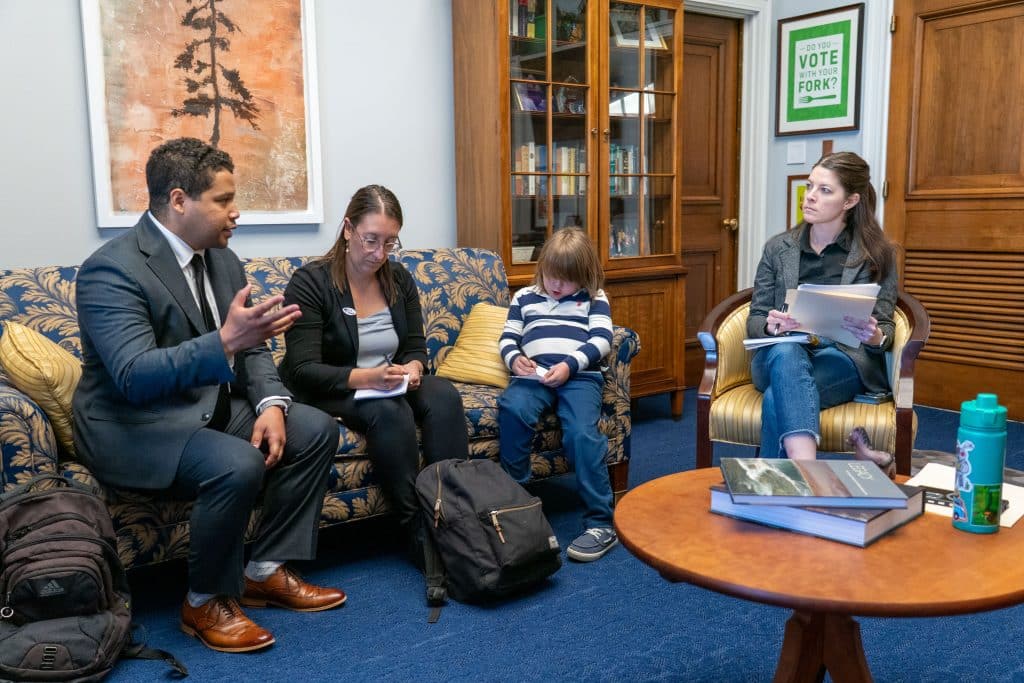
Representatives from Appalachian Voices, From Below and West Virginia Rivers met with lawmakers on Capitol Hill to lobby for an appropriation for safe drinking water in West Virginia coal country. Photo by Jay Mallin
West Virginia’s southern coalfields have faced severe drinking water issues for decades. In some cases, coal companies built the towns and kept them running, but once the mining was completed and the companies left, local governments lacked the resources to maintain the infrastructure. Local governments are too cash-strapped to improve systems without dramatically increasing rates. In other cases, pollution from coal and other industries has left residents with discolored water that stains household appliances, ruins clothing and causes residents to break out in skin rashes. It’s a multifaceted problem that has no easy solutions — but the status quo is utterly unacceptable.
Call your members of Congress today at (202) 224-3121 to advocate for clean water access in Southern West Virginia.
A nationwide academic study found that Wyoming, Boone and Mercer counties ranked as the top three counties in America for drinking water violations, all while residents are paying some of the highest public water rates in the nation.
This problem exists for families who pay for aging, failing municipal/public water systems, as well as residents whose well water has been contaminated by industrial practices. Residents frequently share videos of their discolored water, ranging from orange to black. Many report illnesses and rashes.
Residents in the coalfields and across West Virginia have sounded the alarm about the crisis for years. Recently, their message has gotten more state and national attention. CBS’s 60 Minutes reported on the lack of clean drinking water in the region during a recent episode.
Last week, Appalachian Voices partnered with West Virginia Rivers Coalition and From Below for a trip to Washington, D.C., to advocate for an infusion of federal funds to make more headway on the issue.
What led us to D.C.?
Each year during the appropriations process, members of Congress are allowed to submit a certain number of requests to the Appropriations Committee. These can be earmarks for a specific community project or requests to create new programs or change existing ones
Earlier this year, we approached the West Virginia congressional delegation with an idea: We asked them if they would support a $250 million request for improving water infrastructure in the state with at least 50% of that funding going toward projects in Boone, Fayette, Lincoln, Logan, McDowell, Mercer, Mingo, Raleigh and Wyoming counties — which have borne the brunt of West Virginia’s water crisis. This would include updating wastewater and drinking water treatment facilities, line connections and more.
We also asked for an additional $5 million for a study from the U.S. Environmental Protection Agency about barriers to accessing clean drinking water in Southern West Virginia. The study would include surveys of community members and solutions that are catered to the community level.
When Rep. Carol Miller and Rep. Riley Moore’s offices said yes, we knew we had to hit the halls of Congress to inform other representatives of why this issue is so important and why federal support is needed to make an impact.
Our organizations worked together to send a sign-on letter to congressional leaders in support of the funding requests. Over 40 organizations and nine bipartisan West Virginia state lawmakers signed. We intentionally sought to recruit state leaders after an effort led by From Below this past legislative session to secure state funding that would finally make a dent in the public health crisis. That bill didn’t pass, but some lawmakers voiced that this is a bipartisan issue that needs solutions.
Hill week
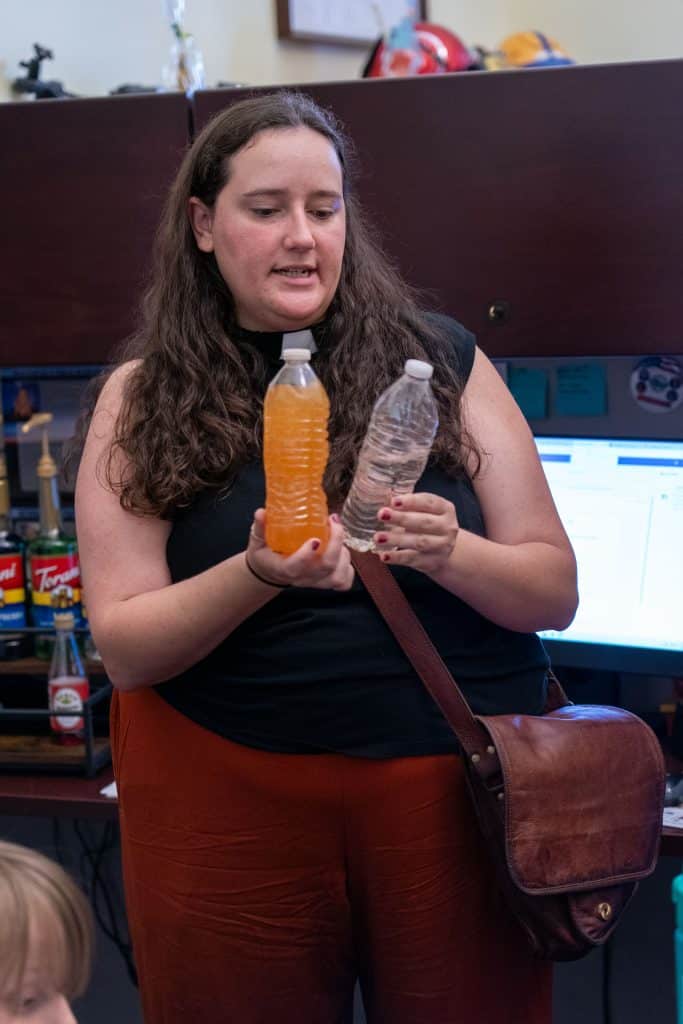
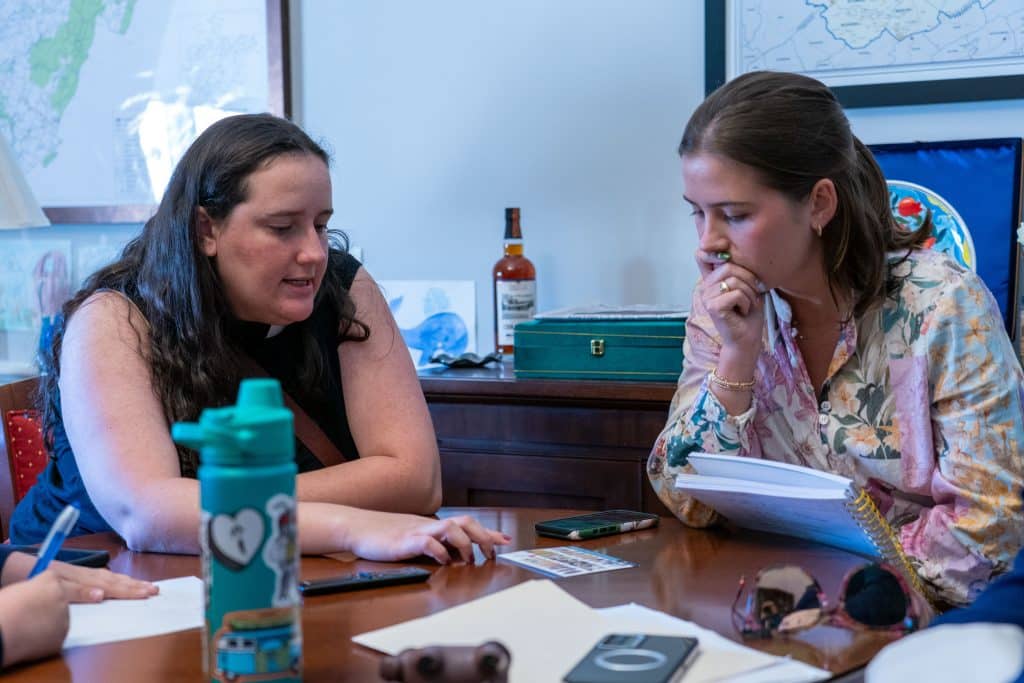
So that’s what led a group of us to D.C. last week: Jennifer Imm and me from Appalachian Voices, along with Maria Russo of West Virginia Rivers, Caitlin Ware of From Below, and community member Ashley Bunch and her son from Raleigh County. Over two days we had 12 meetings with staffers from both the House and Senate appropriators’ offices and the Senate Environment and Public Works Committee, which oversees the EPA. Caitlin brought along with her two bottles of tap water from residents of Southern West Virginia. Both showed the heavy metals that many residents are familiar with, including one that was bright orange due to its high concentration of iron.
Staffers listened intently and asked engaging questions. Most were surprised that this was a daily reality for so many in West Virginia. We even showed some portions of the 60 Minutes segment; one staffer said she had already watched it before.
We also had the opportunity to thank the staffers at Reps. Miller and Moore’s offices for their work on the $250 million appropriations request.
With her position on the Senate Appropriations committee, Sen. Shelley Moore Capito, R-W.Va., is integral to the appropriations process, and that’s why we’ll need your help reaching out to her office in the coming weeks. Nearly every congressional staffer we met with asked us what Capito thinks of the problem and the appropriations request. We’ll soon have a grassroots action alert asking people to send letters to lawmakers, but you can also call them now and ask that West Virginia water infrastructure be included in the Interior Appropriations bill.
What’s next?
The House Appropriations Interior subcommittee is expected to debate the bill on Thursday, May 21. Unfortunately, the draft bill text was released today, and funding for West Virginia drinking infrastructure is not included. Now we’ll need to do outreach, education and apply pressure on House and Senate appropriators to ensure West Virginians’ health and safety is not ignored this year. If funding isn’t included in the FY27 appropriations package, clean water advocates will continue to demand legislative action to solve this crisis until Congress listens.
Call your members of Congress today at (202) 224-3121 to advocate for clean water access in Southern West Virginia.

PREVIOUS
NEXT

Leave a comment
Your email address will not be published. Required fields are marked *
2 responses to “Clean water is overdue in West Virginia’s coal country!”
-

This is Dan Doyle M.D. of Oak Hill, WV.
I receive the WV Rivers Coalition letter.
I just read Quenton King’s article on your web site about your MOC visits last week. That was great work.
I would like to speak with Quenton, preferably in person, about the water situation on Smithers Creek, Cannelton Hollow, in Fayette County.
Please give me a call.
304-573-1798 -
Please
Everyone needs clean water
Thanks


Leave a Comment