Get Our RSS Feed!
Front Porch Blog

Front Porch Blog


Fun at the Watauga Riverkeeper Festival!


Tuesday, July 27th, 2010 | Posted by Front Porch Blog


The word on everyone’s mind after the first ever Watauga Riverkeeper Festival: Success!

Kids and adults alike came out in droves to celebrate the beautiful mountain rivers of Appalachia at the Valle Crucis Community Park on Saturday. The Watauga Riverkeeper and Appalachian Voices worked together to create a family-friendly event with plenty for kids (and adults) to do.

Between the arts and crafts, hula hooping, make-your-own trail mix, poker run, nature walks, face painting, costume parade, and beautiful weather, people of all ages had a day full of fun in the sun. There was even a watermelon-eating contest, with a messy twist – contestants had to keep their hands behind their backs for the duration of the contest!

Musical entertainment was provided by the Alberta Boys and Melissa Reaves, both of whom had the crowd excited about the mission of the Watauga Riverkeeper and Appalachian Voices.

The festival featured local foods, including homemade slaw and tomatoes straight from the garden of Appalachian Voices’ own Willa Mays.

The festivities concluded with a raffling of items donated from supporters of Appalachian Voices. All proceeds from food, T-shirts, and raffling will go to support the Riverkeeper and Appalachian Voices in protecting the mountains of Appalachia and their rivers.

Special Thanks to Mast General Store, Earth Fare, Foscoe Fishing, River and Earth Adventures, and all the volunteers who helped to make the event possible.
Be sure to check out photos from the Festival!

Crawdads: A Southern Staple


Thursday, July 22nd, 2010 | Posted by Front Porch Blog


The Watauga Riverkeeper Festival is THIS SATURDAY! Come out on July 24, from 11 a.m. until 5 p.m. at the Community Park in Valle Crucis, N.C.! Enjoy a day of outdoor recreation and a celebration of the river with live music, games, food and if the river is running—a float down the wild and wonderful Watauga River. This week’s river critter:

The Crawdad: A Southern Staple

We all know that people down south love their “crawfish boils”, where crayfish (more colloquially called crawfish or crawdads) are seasoned to delicious tastes and eaten en masse.

But crawdads aren’t just an important staple of a southern diet; even more importantly they are a staple of rivers and their ecology. The largest diversity of crawdads in the world is exhibited right here in the southeastern United States, with over 330 species populating the waters.

Relatives of the lobster, crawdads are freshwater crustaceans of the order Decapoda. This means they have ten legs, one pair of which is a set of large, sharp pincers.

When cooking up some Louisiana crawdads, we might not think about what they eat at their parties. Crawdads generally feed off of small aquatic creatures, living and dead, and plants. This diet provides important ecological processes to keep rivers healthy.

One important note: Crawdads are very sensitive to changes in river health. Most crawdads cannot withstand water pollution of any kind, so it is important to keep the waters fresh for our crustacean friends.

“Beneficial Coal Ash” — Industry Lies and EPA’s Wavering Support


Friday, July 16th, 2010 | Posted by Front Porch Blog


An unannounced change in the EPA’s web page for Coal Combustion Products Partnership (C2P2) may signal a shift in the agency’s stance on reusing toxic coal ash for “beneficial reuse.”

Since July 2, 2010 the informational page has been blank except for a lone note: “The Coal Combustion Products Partnerships (C2P2) program Web pages have been removed while the program is being re-evaluated.”

Every year, 129 million tons of coal ash waste is produced by coal fire power plants in the United States. This toxic fly-ash is made of fine particulates and heavy metals that pose a growing threat to the environment and public health. Yet, the EPA has allowed coal ash waste to be reused in agriculture, construction materials, consumer products, concrete, and even mine filling. Ash that is not reused is stored in billion-gallon ponds, known as slurry ponds, or dumped in landfills.

In late June the EPA proposed two regulation standards for coal ash waste under the Resource Conservation and Recovery Act. The more stringent option, Subtitle C, would classify coal combustion waste as a hazardous material; however, beneficial reuse would not be regulated under either EPA regulation option. The EPA is currently accepting public comments on the proposed regulation, which you can submit here or through Appalachian Voices in the near future.

The C2P2 program seems a contradictory step for the EPA. Shouldn’t an environmental agency be regulating hazardous materials, not promoting its use in public works, our food supply, or in potential contamination situations? Recent news from Public Employees for Environmental Responsibility (PEER) cites the EPA allowing coal executives to “edit agency reports and fact sheets to downplay risks of coal ash.”

PEER also uncovered the EPA using coal industry research as basis for promoting the reuse program, and filed a formal complaint this month over EPA publications that claim coal ash reuse is a form of reducing carbon dioxide emissions.

“We suggest that EPA use this opportunity to honestly review the entire range of potential public health and environmental effects of injecting millions of tons of unquestionably hazardous materials into the stream of commerce,” stated PEER Executive Director Jeff Ruch.

Downplaying the disastrous consequences of the TVA ash spill is impossible, as is denying coal ash’s threat to public health. Through further regulation and dismissal of the “beneficial” factors in coal ash reuse, coal companies may finally begin to pay the real price for an outdated fuel source.

Our own Austin Hall on the Appalachian Treasures Tour


Thursday, July 15th, 2010 | Posted by Front Porch Blog


Junior Walk of Coal River Mountain Watch joined me on the recent Pennsylvania Appalachian Treasures Tour. Junior is from the Coal River Valley, attended Marsh Fork Elementary School, worked at prep plant, and was a security guard on a mountaintop removal mine. Oh, and by the way he is only twenty years old.

At all times Junior presented his story with eloquence, confidence and a certain inherent honesty that overwhelmed the audience. He was a delight to travel with, and I felt privileged to share the stage with him.

Approximately 100 hand written letters addressed to Senator Specter were generated at the presentations that Junior spoke at. As you all know Senator Specter is seen as a pivotal vote on the EPW committee.

Here is a quick snippet of Junior in action:

The Bog Turtle: A Shy Little Guy


Thursday, July 15th, 2010 | Posted by Front Porch Blog


Less than two weeks left until our Watauga Riverkeeper Festival. Come out on July 24, from 11 a.m. until 5 p.m. at the Community Park in Valle Crucis, N.C.! Enjoy a day of outdoor recreation and a celebration of the river with live music, games, food and if the river is running—a float down the wild and wonderful Watauga River. This week’s river reptile:

The Bog Turtle: A Shy Little Guy

The bog turtle is the smallest turtle in North America. As a full grown adult, it maxes out at three to four inches!

They are easy to distinguish from other turtles, clad in a dark-brown shell with a distinctive red, orange or yellow blotchy marking on either side of its neck.

This reptile is no picky eater. Bog turtles are omnivorous, snacking on everything from worms, snails and beetles to berries and seeds.

Bog turtles prefer to live in wetland areas, such as wet meadows, fens and bogs. Occasionally, though, there are sightings of bog turtles roaming around in cattle pastures.

The bog turtle often lives about 20-30 years, but has been known to survive for over 50 years. You can tell how old a bog turtle is by counting its rings on its scute, a section of its shell. Each ring is a year, minus one ring that develops before the turtle is born.

Bog turtles are threatened by destruction of their habitats, particularly because of human development. An illegal trade that captures and sells them as pets is also a major threat to this species.

Keep a sharp eye out while you are enjoying your afternoon at the river, bog turtles are difficult to spot. They are rare and spend most of their time underwater, nestled in the mud or hiding in thick vegetation. They do like to lie out in sun and they are most often seen after periods of rainfall. So this week’s rainy days might help out your chances at catching a glance of this elusive tiny turtle.

Dragonfly Nymph: Nature’s Jet Ski


Thursday, July 8th, 2010 | Posted by Front Porch Blog


As human beings, we dream of getting on a Kawasaki Jet Ski and flying through the water at breakneck speeds. But for Dragonflies, of the order Odonata, every newborn gets this ability built-in, with a natural water propulsion system that helps it shoot across the water without even moving its arms or legs.

What most people don’t know about the Dragonfly, of whom we usually think as a large and colorful insect that flies quickly around the skies, is that it spends the majority of its life in the immature nymph phase, swimming around in the water rather than the air.

Dragonfly nymphs are hatched from eggs in water, and spend up to five years developing and feeding off mosquito larva in streams and rivers before taking off into the air. They have an extremely unique system of respiration, breathing through a set of posterior gills. To create the Jet Ski propulsion system, Dragonfly nymphs rapidly expel water through their anuses; no wonder scientists dubbed this the “immature” phase!

As if that isn’t fun enough, the nymphs also wear a beautiful set of armor that, depending on the species, can be a variety of vivid colors.

Whether it’s shooting through water with a built-in Jet Ski, wearing a full suit of armor, or flying around the air eating anything that gets in your way, being a Dragonfly sounds like every kid’s dream!

New Sustainable Energy Projects? In WV?


Wednesday, July 7th, 2010 | Posted by Front Porch Blog


Appalachia, of course, is the heart of the Coal industry, but more sustainable visions for the future are more prevalent than you might think.

One standout endeavor is the JOBS project, a Williamson, WV-based initiative that seeks to train unemployed construction workers in the installation of solar panels. Partnering with Mountainview Solar & Wind LLC, the JOBS project recently got a bit of a publicity boost when the BBC came to film the maiden installation of their project on a home in southern Morgan County.

The success of the project and its public presence could spark new interest in solar energy, proving that it is, over time, cost-reducing, and most importantly, sustainable.

And this isn’t the only forward-thinking project on the table; there is currently a hot debate over the future of Coal River Mountain, WV. Massey Energy is proposing a vast mountaintop removal mining site on the mountain range, but the Coal River Mountain Watch says that area would be perfect for an equally vast – but far less destructive – wind farm.

Both of these projects highlight what might be a surprising fact: Even in the heart of West Virginia, Solar and Wind Energies are being seriously considered for the region’s energy future.

Hellbent on Saving Mountain Rivers


Thursday, July 1st, 2010 | Posted by Front Porch Blog


Four weeks left until our Watauga Riverkeeper Festival. Come out on July 24, from 11 a.m. until 5 p.m. at the Community Park in Valle Crucis, N.C.! Enjoy a day of outdoor recreation and a celebration of the river with live music, games, food and if the river is running—a float down the wild and wonderful Watauga River. Meet our mascot: Hillary the Hellbender salamander.

Sasquatch of the Salamanders

Cryptic, territorial, and elusive are traits inherent to the hellbender salamander, a unique and formidable-looking creature with almost prehistoric appeal. The Eastern hellbender is the largest aquatic salamander in the United States, affectionately known as the snot otter, devil dog, and Appalachian alligator. The giant amphibian averages from 12 to 15 inches, but has been known to grow over two feet in length and hides almost reclusively during the day beneath flat rocks in shallow, clean, and quick moving streams.

“If a fisherman catches a hellbender they’ll kill them,” said Jesse Pope, chief naturalist at Grandfather Mountain. “The reason for that is that they think the hellbenders are eating the fish, but that’s just not true.”

Rarely seen due to its nocturnal nature and secluded lifestyle, the hellbender has a voracious appetite, but not for fish. These toothless giants hunt for crayfish, toads and salamanders among other tasty morsels. The hellbender is exclusively found in the mountains and surrounding local areas in the eastern United States, with their largest concentration, here, in western North Carolina. Provided their mountain rivers and streams stay clear and unpolluted, a hellbender will start reproducing at age four and can live for more than 30 years in ideal conditions.

These unique creatures are very important indicators of water quality because as adults they breathe entirely through their skin. That makes them extremely sensitive to pollution and siltation. The International Union for Conservation of Nature (IUCN) lists them as near threatened and they are close to qualifying for vulnerable status. In addition to the threat of misled fishermen, the hellbenders are threatened by habitat loss and degradation.
“Hellbenders have to have good water quality and relatively low sediments in the water,” Pope said. “Sediments come from development, impacting streams, road run off and storm water run off.”

Hellbender populations have dramatically declined in the last 25 years and even though several institutions are making heroic attempts to breed them in captivity, none have been successful. “It is critically important for us to protect pristine mountain streams in order to save these rare and threatened salamanders,” said Donna Lisenby Watauga Riverkeeper, “We simply have to stop strip mining in Appalachia because it contributes tone of sediment and pollutants to these irreplaceable headwaters streams.”

“The concern is that a lot of the hellbenders we’re finding are big hellbenders, 15 to 20 years old,” Pope said. “We’re not finding the little ones. This raises concern. Are they remnant populations that are there? Are they no longer reproducing? Are these the last hellbenders that are going to be in those streams?”

Keep a keen eye out at the festival; perhaps you’ll catch a glance of this elusive, rare and spectacular salamander. Rumor has it that you might be able to get a one-of-a-kind Hellbender T-shirt at the festival because, “The Riverkeeper team at Appalachian Voices is hellbent on saving our beloved mountain rivers,” Lisenby said.

More information about hellbenders.

SUCCESS! Security System For Mountainkeeper Larry Gibson Installed By Volunteers


Monday, June 21st, 2010 | Posted by Front Porch Blog


010 This past weekend a crew of dedicated volunteers descended upon Kayford Mountain, the home of legendary anti-mountaintop removal activist Larry Gibson. The volunteers were on hand to install a much needed security system. For the past 25 years, Larry Gibson has been a leader in the fight to end the destructive practice of mountaintop removal coal mining. Larry's land is surrounded by tens of thousands of acres of strip mines; his home has served as a safe place for citizens, members of the media, and decision makers to witness firsthand the horrors of mountaintop removal coal mining. The images captured and stories written about his destroyed homeplace have served as a catalyst for national awareness of the travesty occurring in Appalachia.

Larry is renowned for his hospitality; he his always available to show people the mountaintop removal coalmine adjacent to his land and is the host of annual parties that routinely draw hundreds of attendees.
Unfortunately, Larry’s outspoken stance on mountaintop removal, and his courageous efforts in standing up to the coal companies, has led to threats of violence and to repeated acts of vandalism to his property. This winter a campaign was launched to raise money for a security system for Larry’s home and public park. Through online donations, a drawing and the tireless efforts of volunteers, over ten thousand dollars were successfully raised to purchase Larry a state of the art security system. This weekend a crew of hardworking volunteers successfully installed the new system, just in time for Larry’s legendary 4th of July party.

Thanks to all who donated time, money and effort to make Larry’s security system a reality.

Online Ticketing for Music on the Mountaintop


Monday, June 21st, 2010 | Posted by Front Porch Blog


Tickets are now available online for the third annual Music on the Mountaintop Festival, which is quickly becoming one of Boone’s largest music festivals. Just visit Music on the Mountaintop to purchase tickets in advance for the event, held on August 28th and 29th.

The festival combines a love for music with an environmental consciousness, and part of its proceeds go toward several non-profits dedicated to environmental awareness.
We are delighted that this year’s main featured non-profit will be Appalachian Voices! Other organizations include the Appalachian Institute for Renewable Energy (AIRE), ASU Energy Center, NC Green Power, High Country Conservancy, Dogwood Alliance, Habitat for Humanity, and the Hunger Coalition.

The 2010 initial lineup includes: Sam Bush, Keller Williams, Railroad Earth, Acoustic Syndicate, Larry Keel and Natural Bridge, Yo Mama’s Big Fat Booty Band, Toubab Krewe, Josh Phillips Folk Festival, Snake Oil Medicine Show, Holy Ghost Tent Revival, The Dirty Guv’nuhs, The Mumbles, Uncle Mountain, The Native sway, Farm Vegas, BPL, The Moderate, Big daddy Love, and many more.

The festival will have crafts, a 35-foot climbing wall, and other activities in addition to music. In keeping with its mission of environmental awareness, the festival will use solar power, compostable products, and recycling removal systems among its methods of reducing its environmental footprint.

Duke Energy Considering Non-Mountaintop Removal Options


Monday, June 14th, 2010 | Posted by Front Porch Blog


Duke Energy has recently made comments hinting that they would like to see an end to mountaintop removal coal mining, but some are skeptical of their commitment.

Duke has asked its suppliers to quote the price for coal not mined with the controversial mountaintop removal technique, a first for the company. Senior vice president Paul Newton also said that the company sees mountaintop removal coal as “a non-sustainable coal.”

Some environmentalists, however, have their doubts.

“I have very strong suspicions that this is not about a sincere effort to protect mountaintops from coal mining,” said Appalachian Voices program director Matt Wasson, citing PR gains from an ostensible concern over mountaintop removal as a potential motive.

Either way, it might not be entirely Duke’s decision. Certain state regulations prohibit energy companies from producing anything other than the cheapest electricity. If non-mountaintop removal coal is significantly more expensive, state regulators could stop Duke even if they wanted to go through with the move.

Stay tuned for more news about Duke Energy’s plans, and visit the Charlotte Observer for more information on the story: Duke Energy Rethinking MTR Coal

Major Flooding In Southern West Virginia


Monday, June 14th, 2010 | Posted by Front Porch Blog


Four counties in West Virginia are in a state of emergency after 4.8 inches of rainfall in a 24-hour period caused major flooding in the state’s southern region.

While there were no fatalities, the flooding caused severe property damage, which is especially detrimental for the many without flood insurance.

West Virginia Gov. Joe Manchin toured the affected regions and is sending state resources their way.

Logan County, one of the counties most heavily affected by the flooding, is also one of the most heavily surfaced-mined for coal. The silt runoff from mountaintop removal coal mining can fill riverbeds and creeks, which then flood with increased rainfall.

Mountaintop removal has been proven to exacerbate flooding in many cases, and one of Manchin’s main goals in future flood prevention action includes cleansing rivers of silt and other clogging materials.

See Zac Taylor’s article in the Charleston Gazette for more information on the flooding:Southern County Flooding

Don’t Blast Our Homes!


Thursday, June 10th, 2010 | Posted by Front Porch Blog


“Don’t Blast Our Homes!” That’s what Wise County residents told the Virginia Department of Mines, Minerals and Energy when more than 20 community members gathered outside the DMME’s office in Big Stone Gap to rally in opposition to A&G Coal’s proposed Ison Rock Ridge surface mine. “Ison Rock Ridge is families. Keep it standing!” said one picketer’s sign. Two individuals even delivered a “Certificate of Failure” to the DMME for failing to protect communities.

Residents of Inman, Derby, Arno, and Andover – communities that are directly adjacent to the pending 1,200+ acre mountain-top removal mine – took turns addressing the crowd to express their disapproval of the DMME’s apparent support for the project.

“The DMME and the state of Virginia seem to be ignoring regulations protecting our waterways. It’s a shame we have to contact Washington DC to get our state officials to obey the law,” said Jane Branham a resident of Big Stone Gap and Vice President of the Southern Appalachian Mountain Stewards (SAMS), the Wise County-based community group that organized the demonstration.

Ben Hooper, a resident of Inman added, “The DMME’s not there to protect us. It’s their job to keep the coal money flowing to Richmond, not to make sure the coal is mined responsibly.”

The event was spurred because the DMME recently approved a portion of the proposed mine, despite the fact that the EPA and Army Corps of Engineers continue to hold the pending mine’s NPDES permit for review due to evidence that strip-mining of such scale invariably violates the Clean Water Act. If operated, this particular mine would destroy three miles of streams and fill nine valleys with more than 11 million cubic yards of rock and dirt. The EPA has sent a letter to the DMME reiterating that the pertinent permits remain under federal jurisdiction.

“This thing would have happened nearly three years ago if it hadn’t been for us,” declared Dorothy Taulbee, a former resident of Stonega, referring to the previous successes of SAMS’ work to preserve the communities surrounding Ison Rock Ridge. The organization was formed in 2007 and has been fighting the Ison Rock Ridge permit since the beginning. In 2008, SAMS secured meetings between community members and EPA representatives and mobilized dozens of local residents to speak out against the proposal at public hearings. These efforts led to the EPA’s intervention in the permitting process, halting the mine thus far.

On Tuesday and over the course of this week, supporters of SAMS from across the state will be visiting Senator Jim Webb’s offices in Roanoke, Virginia Beach, and Falls Church to deliver a message from coalfield residents asking for the Senator’s support in defending the communities adjacent to Ison Rock Ridge. A similar event will take place at the EPA’s region 3 offices in Philadelphia where allies of the local organization will deliver a letter thanking the agency for affording adequate scrutiny and oversight to the proposed mountaintop removal mine, and asking that the NPDES permit be ultimately denied.

SAMS supports deep-mining and other industries that provide jobs for the people of Wise County, but they say Mountaintop Removal mining favors explosives and heavy machinery to workers. SAMS is concerned about the impacts A & G’s Coal Company’s proposed mine would have on nearby streams that have already exceeded acceptable levels of pollution from mine discharge, and will regard the issuance of the Ison Rock Ridge Permit by the DMME to be in violation of the Clean Water Act. The Southern Appalachian Mountain Stewards will continue to fight for the people of Appalachia and surrounding communities until the permits for the Ison Rock Ridge mine are denied once and for all.

North Carolina Representatives Introduce Bill To Strip Investment Of Massey Energy


Wednesday, June 9th, 2010 | Posted by Front Porch Blog


North Carolina State Representatives have introduced a bill this week that if passed, will strip North Carolina investments in Massey Energy Company. Reps. Pricey Harrison, Paul Luebke, Susan Fisher and Earl Jones recently introduced a bill into the General Assembly that would mandate the divestiture of state funds from Massey Energy. North Carolina owns 385,000 shares of Massey Energy stock, currently valued at approximately $12 million.

This effort to strip state investments from Massey is being led by Representative Pricey Harrison of Greensboro North Carolina. Rep. Harrison is no stranger to Massey’s reputation as a bad actor. In 2009, she was the lead sponsor of the Appalachian Mountains Preservation Act. This bill would have prohibited North Carolina utilities from purchasing mountaintop removal coal

“Massey Energy Company is a rogue corporation that puts company profits before the safety of miners,” said Harrison. “North Carolina has no business investing state funds in a corporation that routinely places its workers at risk and has absolutely no regard for environmental protection.”

Earlier this month, North Carolina State Treasurer Janet Cowell and a coalition of institutional investors urged Massey shareholders to withhold votes from the three board of director members responsible for mining safety in the company. All three were re-elected. This prompted the bill sponsors to take the actions of the State Treasurer a step further. If this bill passes the State Treasurer will be instructed to sell off all Massey Energy Stock.

Appalachian Voices is proud to support this bill, and we hope to see movement in the General Assembly.

“Maintaining our current investment locks North Carolina into Massey’s negligent behavior, which has cost the lives of American miners,” said Austin Hall, Field Organizer for the regional non-profit organization Appalachian Voices. “This company’s deplorable safety and environmental standards fly in the face of our state’s hard-earned reputation for safe workplaces and environmental stewardship.”

Operation Medicine Cabinet a Huge Success


Wednesday, June 2nd, 2010 | Posted by Front Porch Blog


Law enforcement officials and river conservationists happily collected approximately 188,563 pills and 20.2 gallons of liquid medication during High Country’s second prescription drug take back event on May 22nd. More than 38 volunteers and 16 law enforcement officials from Watauga and Avery counties participated in Operation Medicine Cabinet, and the amount of drugs obtained was over four times that of the previous year. Watauga County Sheriff Len Hagaman could not have been more pleased.

“Through joint operations with multiple partners in both counties, we made this one of the most successful drug take back events in the state of NC,” he said.

Approximately 154 people turned in a wide variety of unused medications, from oxycodone and hydrocodone to anti-depressants and pet medications, for safe destruction. Parents and conservationists alike lauded the efforts, both for keeping prescription drugs away from children and for preventing the consequences of their unsafe disposal.

“I needed to get rid of the out-of-date drugs because I don’t want prescription drugs around my teenage son,” said one local mom.

Volunteer Crystal Simmons said, “For the High Country to create such an event is a real testament to our commitment to a healthier environment and a safer community.”

In addition to individual volunteers, the event had over 30 community partners that helped make the event a huge success.

Water, Coal, and Cancer


Wednesday, June 2nd, 2010 | Posted by Front Porch Blog


Widely varied research all points to the fact that surface mining has negative health effects – of all shapes and sizes – despite the industry’s best efforts to say otherwise.

Nathaniel Hitt, Ph.D., of Viriginia Tech and Michael Hendryx, Ph.D. of West Virginia University recently published a study entitled Ecological Integrity of Streams Related to Human Cancer Mortality Rates, which correlates the ecological health of streams in West Virginia to the public health of those who live nearby.

The study concluded that there were “significant associations” between the lack of ecological integrity in the streams and human mortality rates from certain types of cancer.

“Our research shows the importance of streams for people,” Dr. Hitt said. “We learned that some of the smallest organisms living in streams can provide a warning system for one of the largest human health problems, cancer.”

As coal power production is heavily associated with the disintegrity of the streams, it is therefore associated with higher cancer rates observed in these regions.

Before this study, Dr. Hendryx published a series of other studies examining negative health effects and premature deaths of citizens in close proximity to Appalachian coalmines. The studies also made cost-benefit analyses to determine whether the power provided by the mines was indeed worth it when compared with the loss of life in economic terms.

Obviously, the mining industry responded unfavorably to the associations made in the Hendryx study, and hired its own professor, Dr. Jonathan Borak of Yale University, to “debunk” the findings of the Hendryx study.

While Borak’s report illuminated several methodological concerns with the Hendryx study, it by no means disproved any of its findings. Yet a PR branch of the National Mining Association touted the report as “debunking” Dr. Hendryx’s study as “bogus”.

It seems that the truth about the health effects of surface mining will out one way or another.

Other research from a much different organization suggests that water is not the only barometer of public health – and cancer is not the only disease. The American Heart Association (AHA) recently released a study that found links between air pollution, similarly caused by fossil fuel byproduct, and heart risks such as heart attacks and strokes.

This, too, is a concern of West Virginia and the entire Appalachian region, which is dominated by the production of coal power.

Spruce Mine Permit Hearing


Tuesday, June 1st, 2010 | Posted by Front Porch Blog


Environmentalists and coal supporters met to debate the largest mountaintop removal mining permit to date—the Spruce No. 1 surface mine in Logan County, W.Va.—at a public hearing on May 18 in Charleston, W.Va.

EPA officials accepted comments from the public regarding the permit at what was a subdued and small gathering compared to the large, heated Army Corps of Engineer hearings held last fall.

In March, The EPA announced that it planned to significantly restrict or prohibit mountaintop removal mining at Spruce No. 1.

“Coal, and coal mining, is part of our nation’s energy future, and for that reason EPA has made repeated efforts to foster dialogue and find a responsible path forward. But we must prevent the significant and irreversible damage that comes from mining pollution — and the damage from this project would be irreversible,” said EPA Regional Administrator for the Mid-Atlantic, Shawn Garvin. “This recommendation is consistent with our broader Clean Water Act efforts in Central Appalachia. EPA has a duty under the law to protect water quality and safeguard the people who rely on these waters for drinking, fishing and swimming.”

If permitted, Arch Coal’s Spruce No. 1 mine operation would bury more than seven miles of headwater streams and impact 2,278 acres of forestland.

In a statement showing support for the EPA’s actions on mountaintop removal, Senator Robert Byrd from West Virginia said: “EPA Administrator Jackson reiterated to me that more wide-ranging guidance
is forthcoming in the near future, providing clarity relating to water quality issues and mining permits. I encouraged her to move forward as soon as possible so those seeking approval of permits can fully
understand the parameters for acceptable activity under the Clean Water Act.”

The EPA comment period on Spruce No. 1 was scheduled to end on June 4.

Appalachian Voices Mourns The Loss Of Sarah Percival.


Wednesday, May 5th, 2010 | Posted by Front Porch Blog


When I first started as a volunteer at Appalachian Voices ago I quickly learned that this was no ordinary organization. The members of the staff and the volunteers function as a family, working feverishly together to right some of the greatest environmental wrongs in our country.

It is this tight knit familial environment that makes the loss of Sarah Percival, a former intern and all-star volunteer at Appalachian Voices so difficult.

Sarah Percival joined Appalachian Voices as an intern from Appalachian State University, where she completed her degree in Environmental Science with a focus in Sustainable Development. I was a new hire at Appalachian Voices and Sarah was to be my first official intern.

During Sarah’s internship she assisted in the management of a multi-state legislative campaign focused on the Appalachian Mountains Preservation Act. These bills introduced across the southeast, were to outlaw the use of mountaintop removal coal for the generation of electricity. Having visited a mountaintop removal mine in West Virginia, Sarah was intimately familiar with the devastation associated with this type of surface mining and was highly motivated to work to make it illegal.

Sarah had no previous organizing or legislative experience, was completely new to the non-profit world, and at times said I spoke in a separate language full of indiscernible acronyms. Sarah was certainly green and it would take time to hone her skills, but she had a set of rock solid traits that are absolutely impossible to teach – she was intelligent, committed and fiercely passionate. Sarah had decided that she was going to make a real difference in the world and was willing to leave her comfort zone to do so.

Her transition from green intern to highly functioning activist was amazing, and I came to depend on her as a valuable member of our team who assisted and participated in all facets of the campaign. In a week she could be asked to travel to Raleigh to directly lobby state decision makers, schedule presentations, edit press releases, print and design materials and manage my insane schedule (which is no easy task). She was dependable, forever positive and contributed a great deal to our work during her internship.

Sarah’s dedication to her cause was palpable and even in passing she continues to help protect of the Appalachian Mountains. We have been deeply moved by recent donations given to our organization in Sarah’s honor.

At Appalachian Voices we feel blessed to have known and worked with such a beautiful, passionate individual. I will never forget Sarah, and she will always serve as an inspiration to my work.

Please join Us May 21st 2010 in Boone, NC for a Celebration of Sarah’s Life. For more information please contact Dana Proctor, phone: 423-987-3262

Appalachian Voices Mourns The Loss Of Sarah Percival.


Tuesday, May 4th, 2010 | Posted by Front Porch Blog


Sarah Percival” />

Coal Ash Regulation Proposed by EPA


Tuesday, May 4th, 2010 | Posted by Front Porch Blog


“>

New rules to regulate coal ash would close or require changes to many of the nation’s coal ash disposal sites, EPA Administrator Lisa Jackson announced today.

“This is a major step forward, at the national level, in reducing risk of improper coal ash disposal,” she said.

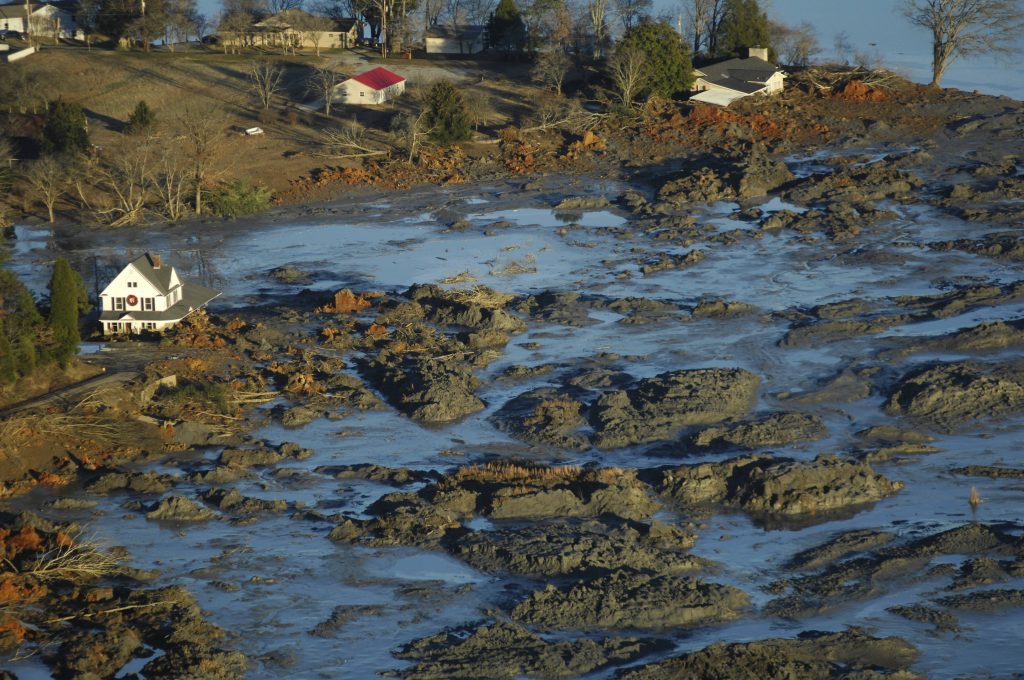
Regulations were originally to have been proposed in 2004, and the six-year delay reflects a heated debate between industry and public health advocates. The December 2008 Tennessee Valley Authority coal ash disaster amplified longstanding concerns.

“There are people who feel very strongly,” Jackson said. “There are equities on both sides, and what we believe would be the next best step would be to open a transparent public process.”

The regulations proposed today could take one of two approaches:

• Federal regulation of coal ash disposal, in some cases through the states (known as option “C”); or

• Weaker enforcement under federal guidelines, which EPA officials projected would lead to half as much compliance with the regulations (known as option “D”). This option would be “self-implementing” by the utilities and would not require federal permits, but would probably involve more enforcement through citizen lawsuits, EPA officials said.

In neither case would coal ash be legally considered “hazardous;” instead, it would be regulated under a special category.

However, in both cases, some of the so-called “beneficial” uses of coal ash would be curtailed, Jackson and other administration officials said. For example, use of coal ash as fill material on construction sites would be considered the same as disposal in a landfill and would require ground liners and monitoring.

Other “beneficial” uses of coal ash, for example as a fill in concrete, would still be permitted. Left open for future regulatory action was the question of coal ash disposal in mines.

Additional inspection and monitoring of 900 coal ash impoundments nationwide will also take place under both options.

Coal ash is the second largest waste product in the United States, and 120 million tons are formed from the residue of over one billion tons of coal burned each year for electricity. Numerous studies, including one in 2007 by the National Science Foundation and others by environmental organizations such as the Waterkeepers, Environmental Justice and Appalachian Voices, have shown serious contamination problems with coal ash dumping.

The utility industry and the Tennessee Valley Authority has maintained, in the face of the evidence, that coal ash is harmless. The American Coal Ash Association dismisses concerns about arsenic and other toxins–which are abundant in coal–as “fear tactics.”

Even before the TVA disaster, there were reported incidents of old fly ash deposits breaking loose, contaminating neighborhoods, threatening health and reducing property values.

The proposed regulations will be open for comment for the next three months, and avenues for public participation will be announced on the EPA web site.

More information about the proposed regulation.

View the chart comparing the Option C and Option D approaches.

View results of the impoundment assessments.