
The Appalachian Voice
The Unhealthy Culture of Coal
The latest in a round of studies on health and well-being in the coal-bearing regions of Appalachia was released in mid-February, with the puzzling conclusion that, while coal mining may not directly contribute to health problems in Appalachia, it still plays a significant role in the health problems in Appalachia. Borak’s study claims that the…
Read MoreNatural Gas: Not All It’s Fracked Up To Be
By Jesse Wood When energy industry giant Halliburton invented hydraulic fracturing in the 1940s, they unlocked the potential for a natural gas boom in the United States. Now, decades later with mounting environmental and health impacts and more accurate estimates of the nation’s reserves, some feel natural gas isn’t all that it’s fracked up to…
Read MoreReclaiming Appalachia: Can Legislation and Enforcement Restore Mountains?
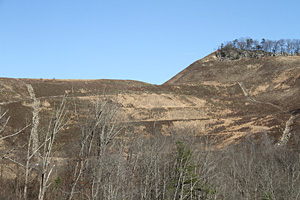
By Molly Moore Kathy Selvage has lived in Stephens, Va., her entire life. From her front porch, she can almost see the field where her childhood home once sat. Instead of the hardwood forest that surrounded her home, graded hills lean against each other like a lumpy bag of onions beneath a blanket of savannah…
Read MoreThe Sewanee Coal Seam: The Dirt on East Tennessee’s Toxic Coal
By Jenni Frankenberg Veal One of the most toxic coal seams east of the Mississippi River has cast a dark shadow over the land and people living in its boundaries. Landon Medley, a resident and former county commissioner of Van Buren County, Tenn., has witnessed the impacts of mining in the Sewanee coal seam firsthand.…
Read MoreRemembering Buffalo Creek
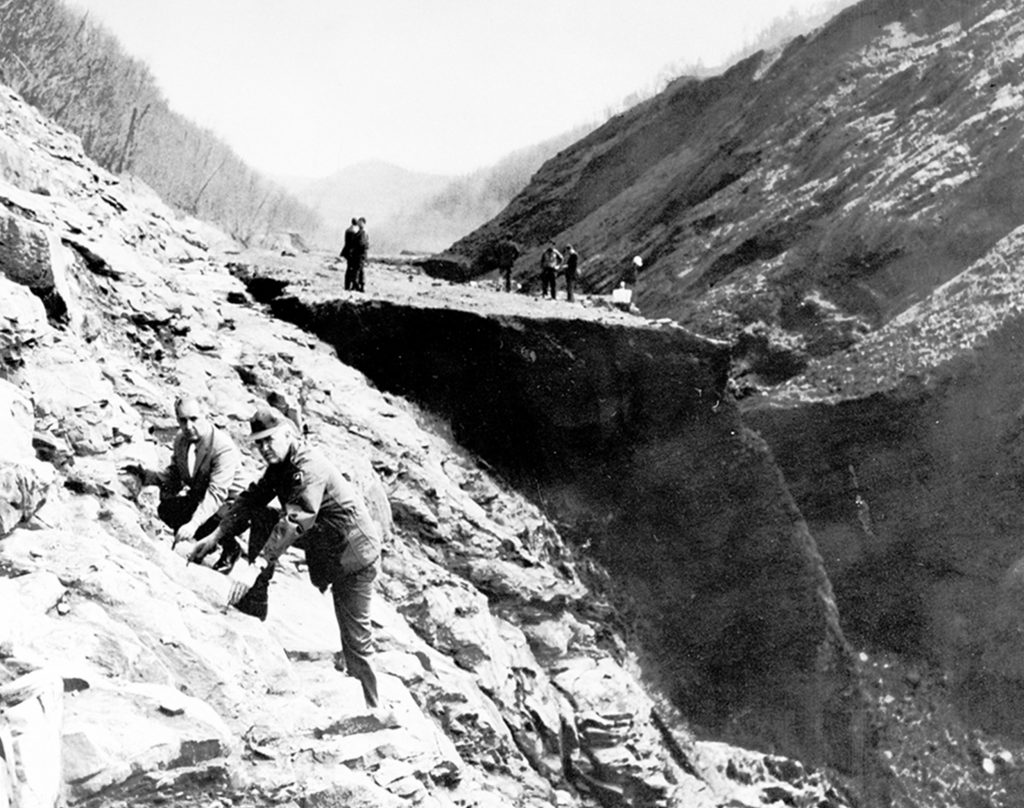
By Brian Sewell In the morning of Feb. 26, 1972, nearly 132 million gallons of water and coal waste rushed from Buffalo Mining Company’s slurry impoundments through Buffalo Creek Hollow, Logan County, W.Va. The flood coursed through 16 coal mining settlements along the creek where hundreds of families lived, while children slept or watched cartoons…
Read MoreNuclear Confusion
The Complicated History of the Atom in Appalachia By Paige Campbell Nuclear Fuel Services, Inc. sits on 66 acres between the Nolichucky River and the south end of Erwin, Tenn. This part of Erwin is the very picture of a small, blue-collar town. Within a quarter-mile of the fence surrounding the industrial site, there’s a…
Read MoreIs There A Kumbaya Moment Coming for the National Forests?
By Randy Johnson As wildflowers and buds break out this spring in the Southern Appalachians, hope that a greener fate for federal forest lands will bloom as well. On Feb. 9, 2012, the U.S. Forest Service and a handful of public and private collaborators — not all of them very collaborative in the past —…
Read MorePlant your Feet on the Battleground
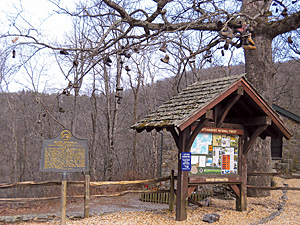
By Robert Sutherland Google “Blood Mountain” and you’ll find enough fodder for any armchair traveler. But like any other escape to the outdoors, Blood Mountain cannot be appreciated online. Named for a battle waged nearby between the Cherokee and Creek peoples, Blood Mountain is the highest peak on the Appalachian Trail in Georgia, and the…
Read MoreYesterday and Today: Defending the Clean Water Act
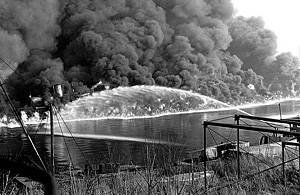
By Jamie Goodman Forty years ago, it took a flaming river to spur our nation to protect its waterways. The river that played a prominent role in the creation of the Clean Water Act and the Environmental Protection Agency is thought to have erupted in flames on thirteen separate occasions in a one-hundred-year period, ending…
Read MoreA PREVENTABLE TRAGEDY- No. 9: The 1968 Farmington Mine Disaster
By Jeff Deal Ninety-nine Americans were working in the No. 9 coal mine just north of Farmington, W.Va., on the morning of Nov. 20, 1968 — but only 21 would return safely to loved ones and the light of day. And of the 78 individuals that died from the coal mine explosion, or by suffocation…
Read More