
Front Porch Blog
Southwest Virginia’s historic buildings gain new life while cutting energy costs
Through the Buildings Upgrade Program, historic sites across Southwest Virginia are working towards energy efficiency and lower operating costs.

The Dante Coal and Railroad Museum building in the center of Dante. Photo by Ben Bolling
By Kaylee Fainter
Driving through Southwest Virginia, you can see evidence of once-bustling and active community buildings. Spaces once abandoned are now back with renewed purpose. By reimagining old buildings, residents of Lee and Russell counties have converted a historic theater, an old school building and an old bank building back into local gathering spots. With help from Appalachian Voices and grant funding, these community institutions are working towards energy efficiency to lower operational costs. For most organizations, one of the largest expenses is the energy bill, and reducing that bill as much as possible is instrumental for an organization’s long-term success.
From energy audits to improved HVAC systems, the Southwest Virginia Building Upgrade Program, administered by Appalachian Voices, is helping organizations update facilities and reduce energy usage. Three recipients — Lee Theater and the Keokee School in Lee County, and Dante Museum in Russell County — are historic sites continuing to serve the community.

Lee Theater
First opening in 1947 and closing in the ‘70s before reopening in 2013, Lee Theater, with the community center right next door, has been a staple in Pennington Gap, Virginia. Together the community center and theater serve as a place for community gathering, meetings, plays and performances, such as the annual holiday movie screenings that families across the county attend.
Before installing an HVAC system, Lee Theater was heated by a coal furnace whose fuel was stored in the dirt-floor basement. There are currently concerns that the exposed soil may have absorbed pollution from the coal and could remain contaminated today. Through the Building Upgrade Program, Lee Theater will receive $14,300 to improve air quality, seal air and duct openings, and purchase dehumidifiers for underneath the community center, ensuring that long-term use and comfort are possible.
Lee Theater’s manager, Tony Lawson, spoke to the need for the building to be more energy efficient.
“Our facility’s energy cost is astronomical. We would love to do what we can to cut it down and do what we can to make it reasonable,” he said, noting that working with Appalachian Voices through the Building UP Program had been a positive experience.

Keokee School and Gym
The Keokee school was completed in 1939 and originally served grades 1-12. On the same site, the Lee County School board bought a building that had previously served as a coal company store until 1032 and converted it into the school gym. In 1954, an industrial arts classroom and workshop were added to the basement. For the past several years, the site has been under the stewardship of the Keokee Alumni Association. The site now serves as a community gathering center for meetings and events and is working to act as emergency shelter for Lee County and residents in neighboring Kentucky counties.
This project received $15,000 for higher-efficiency HVAC improvements to reduce energy bills. The project is still seeking funding for solar power generation with battery storage to keep the lights on during power outages and to address insulation needs and single-pane windows to reduce heating and cooling loss throughout the year.
This loss causes the HVAC system to run more regularly, which is the largest energy user for most buildings. With the Building UP grant, contractors are working to reduce the difficulty of heating and cooling the space, lowering operating costs and making it more comfortable for occupants. With all of the planned upgrades, the Alumni Association’s goal is for the former school to serve as an emergency shelter. Future solar panels and battery energy storage would allow the site to operate during power outages.
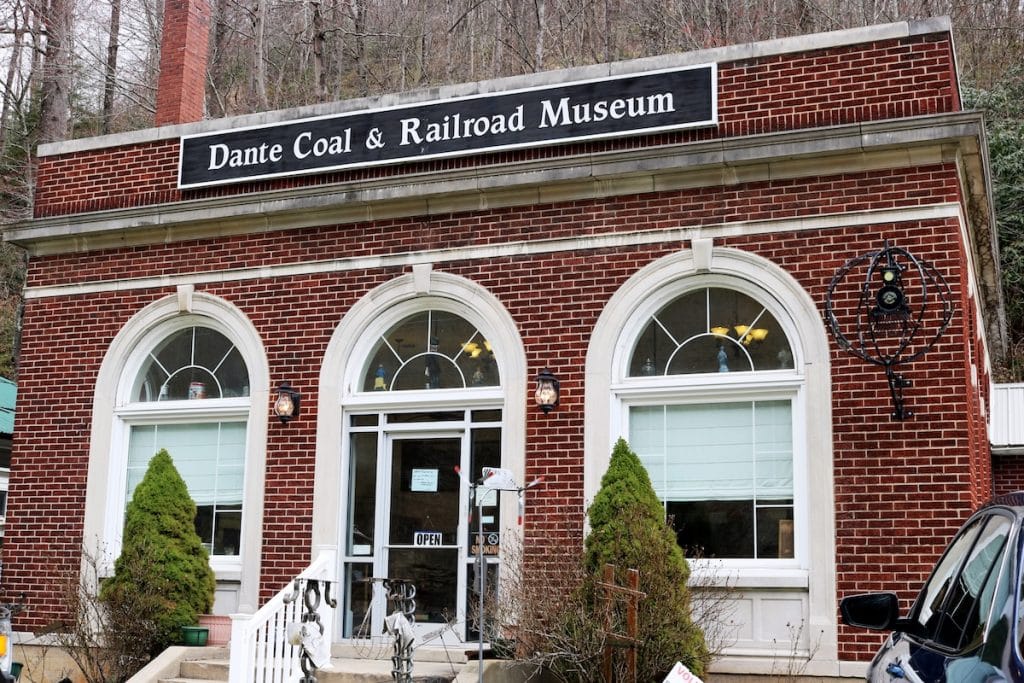
Dante Coal and Railroad Museum
The former Dante branch of the Dickenson County Bank (1919-1931) and later the Beer Garden, is now the Dante Coal and Railroad Museum and is run by volunteers of Dante Lives On. Today, it serves as a place to honor local history and educate visitors about the coal industry in Russell and Dickenson counties, including in Dante and neighboring communities. Across the street sits the former train depot, Coal Miner’s Memorial and community park — framing this part of Dante as a space for the community to come together.
The museum’s roof is constantly leaking, the water heater dates back to the 1970’s, and the insulation and HVAC are insufficient, often requiring space heaters to be brought in during the colder months. But with the help of the Building UP Program and Appalachian Voices, Dante Lives On volunteers are working to replace existing HVAC and water heating equipment, upgrade to LED lights, and install a new roof to reduce the amount of air flowing in and out of the building.
Incorporating energy efficiency into historic preservation provides organizations with long-term sustainability. Improved HVAC and insulation reduce operating costs and ensure more funding for community-wide initiatives.
Upgrade and reuse of historic sites preserves history and minimizes environmental impacts and expenses. By using an existing building, land that would have been cleared for a new structure remains untouched and fewer resources for renovations would be used. Sites such as Lee Theater, the Keokee School and Gym, and Dante Coal and Railroad Museum are reviving community places with the help of dedicated residents and grant funding. Historic sites serve as spaces of memory and offer insight into local heritage. By bringing new life to old buildings and communities, residents can keep gathering while preserving spaces and honoring their history for future generations.
Are you connected to a building in Southwest Virginia that would benefit from this program? Fill out an interest form, and we’ll let you know if we are able to launch a second round!
Kaylee Fainter is Appalachian Voices’ Mine Reclamation Intern for Fall 2026.

PREVIOUS
NEXT
Related News

Leave a comment
Your email address will not be published. Required fields are marked *
Leave a Comment