Follow Us on Twitter: Appalachian Voices | iLoveMountains.org

Posts Tagged ‘Mountaintop Removal’

AV Testifies in Congress

Tuesday, March 6th, 2012 - posted by molly

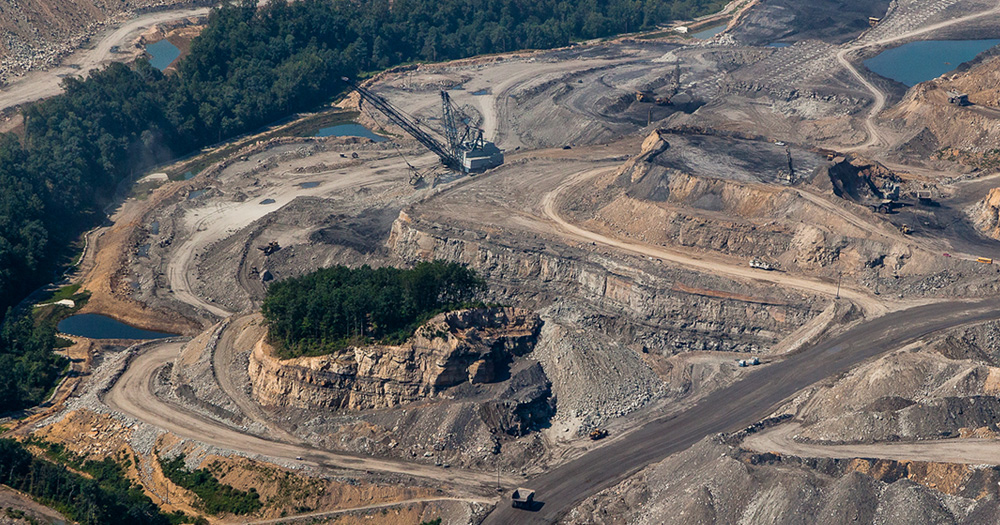
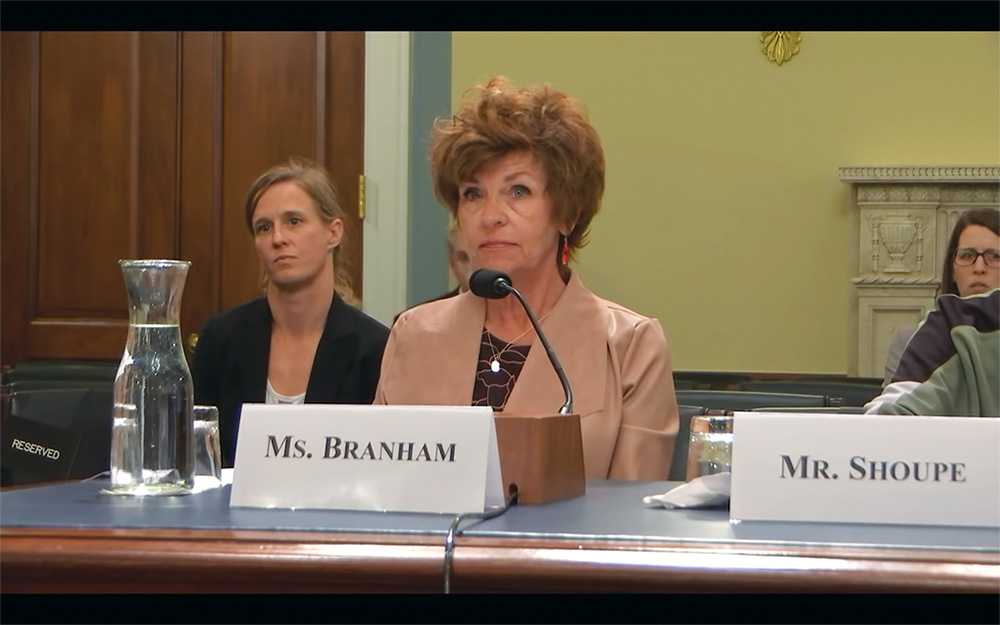
Today, Appalachian Voices’ Director of Programs, Dr. Matt Wasson, is testifying before the Congressional Subcommittee on Energy and Mineral Resources.

The hearing begins at 10 a.m. EST, and you can view the hearing homepage and watch the LIVE video feed here.

The majority of this committee has been pushing a coal-industry agenda this session, and we don’t expect this hearing to be much different. The topic is “Effect of the President’s FY 2013 Budget and Legislative Proposals for the Office of Surface Mining on Private Sector Job Creation, Domestic Energy Production, State Programs and Deficit Reduction,” and discussion will center around the Stream Protection Rule.

Matt Wasson will submit testimony as to why a strong Stream Protection Rule is necessary, and will counter industry disinformation about its effect on jobs and domestic energy protection. Rather, he will show data supporting the fact that previous oversight by the U.S. Department of Environmental Protection and the Office of Surface Mining have had no negative impact on jobs or domestic energy prices.

His testimony argues that pro-industry predictions of the impact of the Stream Protection Rule are based on faulty assumptions and non-existent data.

Stay tuned to our twitter feed (visible on our homepage) for more!

We Can End Mountaintop Removal in Tennessee

Tuesday, February 21st, 2012 - posted by jamie

By Dr. Minnie Vance
Chattanooga, Tenn.

In Tennessee, we love our mountains. These peaks and valleys inform our southern heritage, enhance our connection to family and represent the best of what we call state and country. Our mountains are home. Nevertheless, we too are facing down the barrel of continued mountaintop removal mining. Unfortunately, in that respect, we are not that different than many other states in Appalachia.

But one thing in Tennessee is different: the playing field between the coal industry and the citizens of our state. Because of the relative unimportance of the state’s coal industry we have a tremendous opportunity to play offense on issues like mountaintop removal, and to make Tennessee a leading light among Central Appalachian states. The negative impact that coal is having on our environment, our economy, and on public health is tremendous, but their the coal industry’s contribution to our well-being is lacking. Their influence on the political process remains tenuous in Tennessee. Our state only produces 0.2 percent of America’s coal, 98 percent of our coal comes from just three counties, and Tennessee’s mountain-driven tourism industry employs more than 470 times more people than the state coal industry while bringing in $14 billion each year.

The coal industry’s impact on our state budget is a net loss of more than $3 million every year. All over Tennessee, taxpayers are sick of our money being wasted on subsidies that prop up a coal industry that can’t compete without an influx of our hard-earned cash. And who runs the industry these tax dollars going to prop up? Increasingly, the coal industry in Tennessee is controlled by out-of state operators who come into our state, blast apart our land and take our money and mountains back out of state and overseas, leaving us with poisoned water, layoffs and poverty.

The Tennessee Scenic Vistas Protection Act is one way that Tennessee is fighting back. This bill would eliminate high-elevation surface mining techniques such as mountaintop removal in the state. Ninety-five percent of these high elevation surface mines are owned by out-of-state-operators, and nearly half of them are owned by a single individual. In January, a coal preparation plant owned by this same individual illegally dumped toxic coal slurry into the New River while failing to notify either the Office of Surface Mining or the Tennessee Department of Environment and Conservation. A citizen report came days after the accident, after more than 28 miles of the New River had been sullied. In the same month, this operator shut down National coal and laid off 155 workers, representing roughly 40 percent of Tennessee’s coal workforce.

For these and many other reasons, Tennessee must pass the Scenic Vistas Act and begin to reverse some of these abuses of our state, our communities, and our citizens.

Reclaiming Appalachia: Can Legislation and Enforcement Restore Mountains?

Tuesday, February 21st, 2012 - posted by jamie

By Molly Moore

Reclamation is complete at the former surface mine near Hueysville, Ky.

Reclamation is complete at this former surface mine near Hueysville, Ky. Two rock riprap conduits are designed to channel stormwater runoff. Photo by Molly Moore

Kathy Selvage has lived in Stephens, Va., her entire life. From her front porch, she can almost see the field where her childhood home once sat. Instead of the hardwood forest that surrounded her home, graded hills lean against each other like a lumpy bag of onions beneath a blanket of savannah grasses and gravel. The sparse grassland across the road will never replace the ridgetops where she went berry-picking as a child.

In 2004, this land became an active surface mining site. Now the coal is gone, but orange water seeps out of the earth mere feet from the mine permit boundary, casting a warning glow down the ravine.

Living in Wise County, where 33 percent of the land has been permitted for surface mining, Selvage is familiar with mountaintop removal. For years, she has watched mine operators blast away mountaintops to access seams of coal, dumping overburden into valleys and burying headwater streams.

In 2009, while reclamation was underway, citizens noticed orange water, a signature indicator of pollution, near the site. Just months after the contaminated water was reported, the coal company and the state and federal agencies charged with enforcing mining laws signed a legal agreement that freed the company from further reclamation responsibility, years ahead of schedule. Now the orange water is back in another location.

“How anyone could look at the Appalachian region from far above it and call this reclamation is beyond me. They may call it reclamation but I call it desecration,” Selvage says, and her soft drawl doesn’t quite veil her frustration.

“Reclamation” is a volatile word in Appalachia. For Selvage, it represents her struggle to bring state attention to the polluted water oozing from the mine permit boundary. For those who worked on the surface mining law in the ‘70s, reclamation is a glaring example of the perils of weak enforcement. Researchers who show how, under certain conditions, tree growth on post-mining land can be comparable to growth on native soil, see reclamation as the flawed but necessary intersection of engineering and ecology. And for the coal companies that walk away from their legal responsibility to restore mined lands, reclamation is simply a forfeited bond amount on a spreadsheet.

* * *

Kathy Selvage surveys orange water near her Virginia home.

Kathy Selvage surveys orange water near her Virginia home. The water emerges just feet from a reclaimed mine stie. "It would take nothing short of a fool to try to convince you that a mountain can rise again," she says. Photo by Molly Moore

Thirty-five years after the Surface Mining Control and Reclamation Act became law, there is little evidence that reclamation in Appalachia is being enforced as the law intended, says Louise Dunlap, former head of the nonprofit Environmental Policy Center.

When the federal surface mining law was enacted in 1977, SMCRA was presented as the regulatory medicine needed to rein in the largely unregulated coal industry. The law created the federal Office of Surface Mining for enforcement, and allowed states to create their own regulatory agencies to implement SMCRA at the state level.

The path toward SMCRA started with a surface mining bill proposed in 1940 by Illinois Senator Everett Dirksen. By the early 1970s, when Dunlap got involved with the bill, strip mining was rapidly expanding. West Virginia Representative Ken Hechler introduced a bill in 1971 that would ban the practice within six months of the bill’s enactment. Hechler’s bold bill drew national attention to the issue.

Support from the United Mine Workers of America was also influential in the ‘70s. “Deep miners living in the hollows were having their houses threatened with boulders rolling down the hills from the strip mines up above,” Dunlap says. “At one time, Miners for Democracy and Arnold Miller, a former president of the UMWA, had a position of banning all strip mining.”

Around the same time, Pennsylvania began enforcing new environmental regulations for surface mines, and the coal industry responded by threatening to leave the state. “It became obvious that if we didn’t have a federal law, the coal industry would try to intimidate different states,” Dunlap says.

This coincided with congressional mark-up sessions being opened to the public, which made it easier for citizens to get amendments into legislation. In the days before Xerox and overnight mail, Dunlap recalls her colleagues making carbon copies of proposed amendments and driving to the midfield post office at the Washington, D.C. airport to send the language to citizens groups across the country. People familiar with similar amendments in their state mining laws would call and provide input. “Many of the provisions in the law were written by coal-impacted citizens,” she says.

Finally, after two vetoes from President Gerald Ford, the bill was signed by President Jimmy Carter. Its hardships began early on with lack of funding and challenges to its constitutionality.

“It’s easier to get a law passed than to get it implemented,” says Dunlap. In addition to problems with enforcement, she says some of the regulations, designed for the steep-slope mining of the 1970s, haven’t caught up to the scale of today’s industry.

A Flat Way Out

Three forestry research plots demonstrate some of Patriot Coal Company's reclamation efforts on Kayford Mountain, W. Va.

Three forestry research plots demonstrate some of Patriot Coal Company's reclamation efforts on Kayford Mountain, W. Va. The 750-acre mine site is supposed to be capable of supporting a commercial forest before reclamation can be considered complete. Photo by Vivian Stockman, courtesy of South Wings

Regarding reclamation, SMCRA is fairly clear. The coal operator is required to restore mined land “to a condition capable of supporting the uses which it was capable of supporting prior to any mining, or higher or better uses.”

When applying for permit, companies must present a reclamation plan that describes the condition of the land prior to mining, designates an intended “equal-or-better” post-mining use and explains how the company will make that future land use a reality.

“It it a privilege, not a right, to mine coal,” Dunlap says, adding that companies that can’t prove how they’re going to reclaim shouldn’t receive permits.

In drafting the law, legislators required that coal operators restore the general lay of the land, borrowing the phrase “approximate original contour” from Senator Dirksen’s 1940 bill.

But SMCRA also legalized swaths of flattened mountains by granting an exception to the approximate original contour requirement if the post-mining use generated an added public or economic benefit, such as a hospital, industrial park or residential area.

A 2009 study by the Natural Resources Defense Council surveyed 410 reclaimed mountaintop removal sites and reported that 89 percent had no verifiable economic reclamation, excluding forestry and pasture. Among the verified development projects: a federal prison, three oil and gas fields, two airports, a hospital, an ATV training center, three golf courses, four business parks, two municipal parks and a county fairground.

Research Takes Root

Since 1977, over 2,300 square miles of Appalachia — an area about the size of Delaware — has been surface mined, according to a 2011 study published in Environmental Management. Of those, over 1,540 square miles are in the mountains of Virginia, West Virginia, Tennessee and Kentucky, which are dominated by biodiverse forests.

Following SMCRA’s implementation, much of this forest was lost. Before the law, loose overburden littered the landscape, exacerbating floods, landslides and surface water contamination. Ironically, the new regulations stabilized mined land by compacting soil with heavy equipment and encouraging fast-growing non-native vegetation, inadvertently creating a climate hostile to native plants, including hardwood trees.

Aware that this was a tough environment for trees, mine operators rarely planted any. When they did, they planted species that survive but don’t restore the land’s biodiversity.

But Dr. Carl Zipper, co-author of the 2011 study and director of the Powell River Project, says that reclamation techniques are improving. The Powell River Project, a public-private partnership in Virginia, formed in 1980 with the goal of making reclamation more effective.

The Project’s research was incorporated into the Forestry Reclamation Approach, a five-step reforestation technique for recovering Appalachian strip mines. The FRA aims to restore the soil’s ability to support planted seedlings and to provide fertile ground for native seeds carried by wind or animals. The Appalachian Regional Reforestation Initiative, a seven-state association, formed in 2004 to advocate for the forestry approach.

Since the FRA was implemented in 2006, 15 square miles have been reclaimed using the technique and more than 46 square miles are permitted. Though a small percentage of the 2,300 square miles already surface mined, these 60-plus square miles represent land that might otherwise be barren.

As the Environmental Management study notes, the oldest sites using the forestry technique are only about five years old, so the science is still out on whether these practices are successful in permanently restoring forests.

Zipper says that reclamation techniques need to be cost-effective to be adopted. He explains that some parts of the forestry approach, such as the FRA’s use of loose soil material and lack of emphasis on heavy fertilizer and seed, save coal companies money. Other aspects, such as the seedlings themselves and the selection of appropriate soil and rock
layers, cost more than conventional grass reclamation.

Nathan Hall, an eastern Kentucky native and former deep miner, believes that revisiting post-SMCRA grasslands and applying the forestry approach will help the land and people move forward. Providing equipment operators who used to work for coal companies with jobs preparing compacted land for tree growth will make use of the region’s workforce, he says. And The American Chestnut Foundation recently received a three-year grant to plant hybrid chestnut trees and native hardwoods on compacted reclaimed land.

Dealing with the Damage

While researchers plan for the future, others are trying to mitigate existing problems.

On Kayford Mountain in southern West Virginia, Patriot Coal Company must produce commercial timber on its 750-acre mine site to achieve the designated post mining land use. Rob Goodwin, coordinator of the Citizens Enforcement Project at Coal River Mountain Watch, says the West Virginia Department of Environmental Protection allowed the permit’s post-mining land use to change to commercial forestry. This “higher and better” land use grants the company a cost-cutting approximate original contour variance.

“Even if you were doing commercial forestry, you wouldn’t necessarily need flat land,” Goodwin says.

Part of the permit hosts three West Virginia University forestry research plots, each the size of a football field. According to a permit map, one of the plots is designated a commercial forestry test plot. This plot use natural topsoil combined with weathered sandstone and minimal compaction. Another plot has similar soil with a different type of compaction, and the third had minimally compacted unweathered sandstone. The plots with natural topsoil are clearly more successful.

Goodwin says West Virgina and other Appalachian states have routinely waived SMCRA’s clear requirement to stockpile and re-spread topsoil during reclamation.

When Marfork Coal Company’s Bee Tree permit came up for renewal last summer, Coal River Mountain Watch intervened and was able to get the company to adopt a Forestry Reclamation Approach topsoil advisory. According to the advisory, operators who don’t have enough natural topsoil should combine the topsoil they do have with weathered sandstone.

Foreseeable Floods

Jack Spadaro, former superintendent of the National Mine Health and Safety Academy, was invited to testify before Congress about the relationship between surface mining and flooding just before President Carter signed SMCRA into law. He recalls an exchange from the 1977 hearing.

“The congressman who was conducting the hearing said, ‘Mr. Spadaro, Do you think the new law will be effective in controlling these negative environmental effects?’ I said, ‘Sir, I’m sorry to say that I don’t think so because I don’t think it’s ever going to be enforced.’ And I was right.”

SMCRA intended to protect surface mines’ downstream neighbors from flash floods intensified by huge expanses of barren, loose spoil. Such flooding was common before the law, so SMCRA requires that companies reclaim as they go.

On July 17, 2010, a wall of water rushed through the Harless Creek area of Pike County, Ky. One house exploded; another split in half. 37 families lost use of their wells.

126 residents are suing two surface mining companies that operate in the Harless Creek watershed for damages in a trial that will begin March 5.

Spadaro, who is serving as an expert witness in the Harless Creek case, says “[Regulators routinely let operators] go long, long periods of time without replacing topsoil, grading, seeding and mulching areas. What you get are these vast wastelands.”

At the time of the 2010 flood, one of the companies, Cambrian Coal Corp., hadn’t even begun to reclaim over half of the permited area, according to Spadaro.

“This company was essentially operating the way it wanted to without any control by the state of Kentucky,” he says, adding that the state inspector overseeing the site was “allowing them to violate the law and the intent of the law for months if not years before this flood happened.”

Immediately following the flood, Cambrian was cited for six violations.

The company’s lack of reclamation had drastic consequences for those downstream. Hydrologists serving as expert witnesses for the residents report that the two companies’ surface mines and failure to reclaim resulted in a 44 percent increase in peak runoff during the July 17 storm.

The Cost of Compliance

When it comes to mandating that coal companies clean up their mark on the land, money talks. SMCRA requires that operators post a bond before they begin mining so that the state has funds available for reclamation in case the company fails to comply. In places with state-level enforcement agencies, those agencies set the bond amounts and sign off on the permits. The money is returned to the company in three stages as the land meets the reclamation requirements of each stage.

In 2010, the federal Office of Surface Mining began a nationwide review of bond amounts. When a bond amount is too low, it can be cheaper for a company to forfeit the bond than reclaim. When that happens, states don’t have enough money to complete the reclamation plan. The reclamation cost is either passed on to state taxpayers or the land pays the price.

In Kentucky, nearly fifty permits were forfeited between January 2007 and May 2010. The Kentucky Division of Abandoned Mine Lands estimated reclamation costs for those sites. When those estimates are compared to the bond amounts the companies paid, the difference amounts to a shortfall of nearly $13 million.

After two years of back and forth between Kentucky state agencies and OSM’s Lexington office, the state has proposed new bond practices that OSM says are still deficient.

“Time continues to elapse without a final solution to Kentucky’s bonding issue,” states a Jan. 17 letter from OSM’s Lexington office to the Kentucky Energy and Environment Cabinet. The letter says that, unless the state comes up with a suitable plan soon, OSM might use its authority under SMCRA to federalize Kentucky bond calculations.

On Feb. 13, OSM began an enforcement review in Kentucky. If the agency finds mines without adequate bonds, it will notify the state, which has ten days to either increase the bond or tell OSM that it refuses to. If the state opts for the latter, OSM can use its authority to enforce the law.

The ability of the federal OSM to take direct action in cases where state agencies aren’t doing their jobs is just one of the tools in SMCRA that, if utilized, could help heal Appalachia’s surface mining scars. But bringing enforcement to bear is a difficult undertaking.

“Congress put an unprecedented array of citizen rights into the surface mining act,” says Tom FitzGerald, a lawyer with Kentucky Resources Council. “What they didn’t count on is how difficult it would be for the average citizen to muster the time and the energy and the resources to effectively monitor the performance of the industry. It is far from a level playing field.”

Church “Shares the Plate” with App Voices

Tuesday, February 21st, 2012 - posted by jamie

Appalachian Voices recently had the honor of being chosen for Allegheny Unitarian Universalist Church’s “Share The Plate” program, in which the Pittsburgh, Pa., church donates 50 percent of their quarterly tithings to a justice-related nonprofit. After seeing an Appalachian Treasures presentation organized by local activist Shane Freeman, the Reverend David McFarland and the church board decided to sponsor Appalachian Voices as their fourth quarter “Share The Plate” organization. Longtime field staff member Austin Hall paid a visit to the church to accept the generous $1,250 check. We’re honored and thankful to receive this donation from our new friends at Allegheny Unitarian Universalist Church.

Voice Team Receives Investigative Journalism Grant

In January, the editors of The Appalachian Voice received a grant from the Society of Environmental Journalists’ Fund for Investigative Journalism. Funds from the grant paid for research and travel costs as we investigated issues surrounding the past and present problems of coal slurry impoundments in the region and the enforcement troubles plaguing mined land reclamation under the Surface Mine Control and Reclamation Act. Check out the stories on pages 14 and 18.

Go West, Appalachian Treasures!

Our Appalachian Treasures tour, a multimedia presentation that educates people about the impacts of mountaintop removal coal mining on communities in Appalachia, is feeling spring fever and making plans to head to the other side if the country.

During March, our Director of Campaigns Lenny Kohm will make a Southwestern tour of Nevada, New Mexico, Arizona, California, and in April, our Washington, D.C. Director Kate Rooth will travel to Oregon and Washington state to share our presentation and talk with people about the national campaign to end mountaintop removal. Residents of communities impacted by the mountaintop removal method of coal mining will rendezvous with the tour to provide first-hand testimony.

Since 2002, the Appalachian Treasures tour has traveled to over 30 states and talked to over 10,000 people about mountaintop removal coal mining.

Visit AppalachianVoices.org/apptreasures for updates on our tour schedule!

SAVE THE DATE: Registration Opens March 1 for Week in Washington

Join The Alliance for Appalachia and Appalachian Voices in Washington, D.C., June 4-6, 2012 for the 7th annual End Mountaintop Removal Week in Washington. You’ll get the chance to work toward an end to mountaintop removal coal mining in Central and Southern Appalachia by meeting with members of Congress and the federal agencies that regulate mountaintop removal.

In 2011, more than 150 people from 23 states as well as directly impacted communities in Appalachia gathered to ask Congress to support the Clean Water Protection Act and end mountaintop removal coal mining.

Registration begins March 1. Visit iLoveMountains.org to register.

Tennessee Office Making Ground with State Legislature, TVA

Tuesday, February 21st, 2012 - posted by jamie

In Tennessee, our staff is currently working with the state legislature to pass the Scenic Vistas Protection Act, a bill that would ban high elevation surface mining techniques such as mountaintop removal in the mountains of eastern Tennessee.
In collaboration with partners across the state, we are building relationships with key members of the House and Senate committees and building grassroots pressure in strategic districts, while also advancing legislation that would increase disclosure and responsible party identification for coal operators in our state.

Tennessee Director J.W. Randolph recently gave a presentation to the Tennessee Valley Authority Board of Directors, where he pointed out that a relatively small amount of TVA’s coal comes from Central Appalachian surface mines (around 2.6 percent), the most expensive states for TVA to purchase coal from are the four Central Appalachian states (Tenn., Ky., W.Va., and Va.). As of 2010, surface mined coal was actually more expensive for TVA than underground mined coal from Central Appalachia. Appalachian Voices’ ultimate goal is to help TVA move away from the use of surface-mined Appalachian coal in their power plants.

To keep up to date with our Tennessee work, visit AppalachianVoices.org/tn.

New iLoveMountains.org Tool Reveals “The Human Cost” of Mountaintop Removal

On Valentine’s Day, Appalachian Voices and The Alliance for Appalachia launched a new tool for the campaign to end mountaintop removal.

Dubbed “The Human Cost of Coal,” the tool features an interactive map that definitively plots the connection between mountaintop removal coal mining and significant health problems in Appalachia with detailed profiles of each county.

The data includes poverty rates and population indices from the 2010 U.S. Census, birth defect rates from the Center for Disease Control, the Gallup-Healthways Well-Being Index, and life expectancy and population numbers from the Institute for Health Metrics and Evaluation. The site also includes summaries for twenty one peer-reviewed studies that show human health problems such as heart, respiratory and kidney diseases, cancer, low birth weight and serious birth defects are significantly higher in communities near mountaintop removal mine sites.

“In the past year several studies have come out about the health impacts of living near mountaintop removal mining,” said Ada Smith, 24, a Letcher County, Ky., resident and a speaker at I Love Mountains Day. “Though many of the studies state the obvious for those of us living in these communities, the scientific facts give us much-needed evidence to make sure our laws are truly enforced for the health of our land and people.”

iLoveMountains.org is a project of The Alliance for Appalachia, which is comprised of thirteen local, state and regional organizations across Appalachia working together to end mountaintop removal and create a prosperous future for the region.

To view “The Human Cost of Coal,” visit iLoveMountains.org/the-human-cost.

Concerned Citizens Dispute Water Quality Study

Tuesday, February 21st, 2012 - posted by jamie

The Whitesville, W.Va.-based Sludge Safety Project is claiming that a recent study of the water quality in an area of Boone County by the West Virginia Department of Environmental Protection used flawed research methods, contains errors and misinterprets its own data.

In January, the WVDEP completed a year-long study that found that drinking water supplies in the area surrounding Prenter Hollow were not coal-mining impacted. Residents of Prenter have complained of “blackwater” events and contamination that they believe is the result of injecting coal slurry into abandoned underground mines.

WVDEP commissioned Triad Engineering to conduct the year-long study of the geology and hydrology of the area, interview impacted residents and examine samples from domestic wells.

A week before the WVDEP study was released, the Sludge Safety Project rallied at the state Capitol to share results of independent studies concluding that coal slurry contaminated Prenter residents’ water. In 2008, Prenter residents filed a lawsuit against a group of coal companies claiming that underground slurry injection from a Massey Energy coal facility and other coal preparation plants contaminated their underground water supply.

The Battle For Blair Mountain Continues

With new reports of heavy equipment activity on Blair Mountain, residents are growing increasingly concerned that Arch Coal could begin strip mining the historic site of the 1921 battle for coal miners’ rights.

In February, Arch Coal announced record profits for the fourth quarter of 2011. One of the nation’s largest coal producers, Arch has four planned operations on Blair Mountain, some of which intrude onto the historic battlefield.

Supporters are exploring new ways to protect the mountain. The Blair Community Center and Museum, a non-profit organization located in Logan County, W Va., opened in the fall of 2011 to promote and preserve the history of Blair Mountain and educate the public on the environmental destruction caused by strip mining on the mountain.

The Community Center and Museum is currently running a special fundraising campaign for improvements to the museum building — including much-needed roof repair and a heating system — and to enhance the museum’s collection, including showcases, frames and important museum pieces. Future projects the center hopes to pursue include converting the building to solar power and constructing a community garden greenhouse.

The Blair Mountain Community Center and Museum has a goal of reaching $10,000 by the end of April. Visit indiegogo.com/the-start-of-a-new-beginning, to learn more.

SELC Releases Top Ten Endangered Places List, Shows Threats in Southeast

Tuesday, February 21st, 2012 - posted by jamie

The Southern Environmental Law Center recently released its fourth-annual Top 10 Endangered Places list for 2012, highlighting the ecologically and culturally rich areas throughout the Southeast that are threatened by development, water issues and the environmental impacts of mountaintop removal and hydraulic fracturing. Southeastern states bordering Appalachia, North Carolina, Virginia and Tennessee, are each featured in the list.

The Catawba-Wateree River system, originating in the Blue Ridge Mountains of North Carolina and providing drinking water for over a million people, has been negatively impacted by the presence of coal ash in leaky unlined ponds along major tributaries. In the Piedmont region, lawmakers are considering legalizing hydraulic fracturing, the controversial natural gas drilling method that has been linked to groundwater contamination and other environmental and health concerns.

In southwestern Virginia and eastern Tennessee, mountaintop removal and other destructive coal mining practices have already destroyed at least 500 mountains and damaged 1,700 miles of streams in Virginia, Tennessee and other Central Appalachian states, and pressure continues to mount. On the Virginia coast, decades of pollution in the Chesapeake Bay estuary has created dead zones incapable of supporting aquatic life.

Plans to construct and renovate highways have disrupted many distinguished recreation spots in Charlottesville, Va., and in Chilhowee Mountain, Tenn. Chilhowee Mountain is part of Tennessee’s Cherokee National Forest and known as a destination for outdoor lovers around the country.

Southern states such as South Carolina, Georgia and Alabama are experiencing severe environmental threats as well. The Savannah River, which stretches from South Carolina to Georgia, could lose many aquatic habitats as the Army Corps of Engineers plan to deepen its shipping channel.

The Dawson Forest, located just north of Atlanta, is threatened by a proposed $650 million reservoir that would drain 100 million gallons of water from the Etowah River each day to support Atlanta’s increasing water supply needs. Alabama’s coastline is on SELC’s Top Ten list for a second year because of the potential recurrence of spills like the 2010 Deepwater Horizon explosion — the largest offshore oil spill in U.S. history.

SELC is the largest environmental organization focused exclusively on the South.Their major programs cover clean energy, transportation and land use, southern forests, the coast and wetlands, and preservation of rural countryside and community character.

Tennesseans Launch Statewide Television Ad Campaign to Protect Our Mountains

Monday, February 20th, 2012 - posted by jw

Mountaintop Removal is Destroying Our Proud Mountains. Now TN is Fighting Back.

Advocates of the Tennessee Scenic Vistas Protection Act are raising the bar with a powerful new television ad asking Tennesseans to contact their state elected officials in support of the bill. The ad will be running statewide on Fox News, with heavy buys in strategically targeted legislative districts.

See the ad for the first time here:

If you live in Tennessee, call Governor Haslam (615-741-2001). He opposed mountaintop removal in the campaign. Tell him that now is the time to act to protect our mountains from mountaintop removal.

In addition please call your TN State Senator(1-800-449-8366) and ask them to support the Tennessee Scenic Vistas Protection Act.

The Tennessee Scenic Vistas Protection act would eliminate high-elevation surface mining techniques – such as mountaintop removal – above 2,000 feet of elevation in the state of Tennessee. The legislature is expected to take the bill up later this session.

Kentuckians and Friends Show State Officials Their Love for Mountains on Valetine’s Day

Tuesday, February 14th, 2012 - posted by Erin

Despite cool, rainy weather in Frankfort, KY, more than 1,200 individuals showed up on the steps of the Kentucky state capitol building for I Love Mountains Day. This annual event is held by Kentuckians for the Commonwealth so that KFTC members and other advocates can come together to show their support for protecting eastern Kentucky’s mountains and communities. Eric Chance and I were lucky to be part of a great event with a diverse and enthusiastic crowd.

We were initially met with the sight of several pro-coal billboard trucks circling the capitol building, but they did not appear to stay throughout the entire rally. The mood was immediately lifted upon reaching the steps of the capitol, where 2/3 Goat, a New York band that has become a regular part of many similar gatherings, began to play.

Speakers included Steve Boyce, Ada Smith, Teri Blanton, Melina Laboucan-Massimo, Cody Montgomery, Randy Wilson and Stanley Sturgill. Each spoke to his or her own experience with mountaintop removal and other forms of destructive energy extraction. Senator Kathy Stein also made a brief appearance to voice her support for our continued work and the progress she believes we are making. Speakers voiced their support for their fellow community members who work as miners, but stressed that after over 100 years of providing coal for the state and the country, Kentucky needs to diversify its economy and energy resources. It is time to show the people of eastern Kentucky the respect they deserve, by providing for healthy communities, a healthy environment, energy efficiency, and economic opportunity.

Melina Laboucan-Massimo, from Alberta, Canada, spoke about the impact of tarsands oil extraction on her local community. The problems, including poisoned water and high occurrences of rare cancers, were eerily similar to the problems seen in coal-impacted communities throughout Appalachia. As more studies have been completed, it is clear that these health problems are not just anecdotal, but are verifiable trends that reflect the injustices done to people living near mountaintop removal sites.

Despite the harsh realities many in eastern Kentucky still face, all of the speakers were upbeat and extremely motivating. The crowd seemed equally hopeful. The rally concluded with a march to Governor Beshear’s mansion, where 1,200 pinwheels were left, each on symbolizing 50 people living with cancer caused by strip mining in their community (Source: Journal of Community Health, July 2011). Eric and I left the rally with new motivation for the work we will do this week in Kentucky, as well as the hopefully not-so-long road ahead.

For more information and photographs, check out KFTC’s coverage of the event or click here to see more of our pictures.

Faces of Coal Hates Mountains

Activists Stage Protest, Attempt to Shut Down Operations at Coal Plant in Arden, N.C.

Monday, February 13th, 2012 - posted by jamie

Activists attached signs to the coal loader at the Progress Asheville Power Station early this morning

Please note: Community Meeting Being Held About The Dangers Of Coal This Wednesday at 6p.m. in Asheville at Posana’s Cafe. Click here to learn more.

GreenPeace is bringing the protest on coal pollution to North Carolina today (aka the #1 user of mountaintop removal mined coal), staging a protest at Duke Energy’s Lake Julian power plant in Arden, N.C.

Activists have reportedly secured themselves to the coal loader and conveyer to prevent coal from entering the facility and are planning to scale the 400-foot smoke stack to “send a message to both Progress Energy and Duke Energy that communities and the climate can’t wait for a renewable energy revolution.”

Our Red, White and Water Team is currently on the way to Asheville, so stay tuned for updates!

UPDATE 12:24 p.m.: According to an article by the Asheville Citizen-Times, as of 11:15 three climbers had reached two-thirds of the way up the 400-foot* smokestack. Sixteen activists are involved in the action, and according to a Greenpeace spokesperson some protestors have already been arrested.
(*note, 400ft number comes from Greenpeace Citizen-Times estimates the height at 300-feet)

UPDATE: Photos from Greenpeace’s action today include shots of the enormous banner hung from the 400-foot smoke stack at the Lake Julian power plant. According to an article by Mountain Xpress (which also has a great stop-action photo collage of the banner going up the smokestack), all activists have been arrested and the banner removed. See more pics on Greenpeace’s FlickR feed of the action.

In the meantime…

(more…)