Follow Us on Twitter: Appalachian Voices | iLoveMountains.org

Posts Tagged ‘air quality’

Tuesday, April 16th, 2013 - posted by Jil

A Failure To Cooperate Over Wilderness Right-of-Way

Rutherford Electric Membership Corporation filed a condemnation petition in January that would allow the utility to build power lines through Box Creek Wilderness, a 5,100-acre tract of preserved forest east of Asheville, N.C. REMC says the utility needs the line to supply power to members in McDowell County and has almost reached capacity with current power lines. The wilderness is owned by Epic Games founder Tim Sweeney, who said in a press release that he’s “going to do everything [he] can to protect this beautiful, unique ecosystem from the proposed devastation.” The N.C. Dept. of Environment and Natural Resources recently designated Box Creek as the 24th most significant natural heritage area in the state. Sweeney had until the end of March to respond to REMC’s petition.

Seeing is Believing: Air Quality Improves in Great Smoky NP

A new Colorado State University study of air quality in national parks shows a major reduction in particle pollution in the Great Smoky Mountains National Park. “In the Eastern United States, most of our air pollution comes from power plants and vehicle emissions. Nitrates in the air and sulfates are a lot of what we see,” Molly Schroer, park spokesperson, said in an interview with WBIR in Knoxville, Tenn. “It’s getting better. That is the trend that we are seeing in our data as far as the air.”

Unhappy Appalachia

Gallup and Healthways recently released their annual Well-Being Index for 2012 and, as in years past, Appalachia’s health and happiness ranked low. West Virginia (50th) and Kentucky (49th) brought up the rear, while Tennessee slid down a few spots over the last year to 47. The Well-Being Index compiles survey results from all over the nation on subjects from emotional and physical health to food access and healthcare.

Virginia’s Dominion Settles in Clean Air Pollution Lawsuit

In April, Dominion Resources Inc., a Virginia-based electric utility, agreed to pay $13.2 million to settle federal air pollution violations for three out-of-state coal plants. While the company denies the allegations that it violated the Clean Air Act, it settled rather than engage in a drawn-out and expensive legal fight. The company’s shareholders will bear the cost of the settlement, said company spokesperson Dan Genest.

Road Trippin’: Corridor K Still Threatens Goforth Creek

The Southern Environmental Law Center recently named Goforth Creek Canyon as one of its “Top 10 Endangered Places in the Southeast for 2013.” The wild resource is threatened by the proposed Corridor K, a highway that would connect Chattanooga and Asheville. The Tennessee Department of Transportation said that different alternatives for the highway are being reviewed, and that studies are ongoing to help find the best solution. TDOT will release its draft environmental impact statement about the project late this summer.

Unquenchable Thirst: Water Runs In Ga./Tenn. Land Dispute

Georgia legislators in March passed a resolution authorizing the state’s attorney general to sue the state of Tennessee if it refuses to voluntarily give up a 1.5 square-mile parcel of land that they say is rightfully theirs. The land would grant Georgia access to the Nickajack Reservoir, which is fed by the Tennessee River. The move comes as rapidly expanding metropolitan Atlanta struggles to find a stable water supply after suffering severe droughts in recent years.

Massive VA Forest Fire Does Little Permanent Damage

Monday, June 11th, 2012 - posted by Anna

By Anna Norwood

High winds and low humidity were the perpetrators in starting multiple wildfires in southeast Virginia that burned almost 40,000 acres of national forest in April.

The Fire and Aviation Supervisor for the George Washington and Jefferson National Forests, Michael Quesinberry, says these fires were the largest on record for Virginia. Quesinberry accredited the wildfires to low humidity, and particularly high winds, rather than drought.
While the U.S. Drought Monitor shows a concentrated area of extreme drought intensity in parts of the Southeast, the soil moisture of the George Washington and Jefferson national forests was at normal levels, suggesting that drought was not the cause of the wildfires.

Quesinberry describes a “recipe for disaster;” four days of high winds and a low humidity of 10 percent, which caused these Virginia wildfires to be so severe.

Luckily, Quesinberry says, there were no catastrophic losses to wildlife. He does not anticipate any wildfires of this magnitude during the summer. These fires grew because of a “four day weather event that came through,” Quesinberry says. He expresses how unfortunate it is that these fires simply ignited in such perfect conditions for wildfires to spread.

By the Numbers

68 percent of surveyed Americans who think it’s a bad idea for the nation to put progress toward clean energy on hold during economic difficulty*
76 percentage of Americans who think the U.S. should move to sustainable energy by 2050 *
36 percent of U.S. electricity generated by coal in the first quarter of 2012, the lowest in history, and down more than 8 percentage points since the first quarter of 2011 **
3.1 million new jobs in the U.S. in 2010 associated with the production of green goods and services***
*Civil Society Institute’s Americans and Energy Policy Survey; ** U.S. Energy Information Administration; ***Bureau of Labor Statistics Study

Submit Your Comments On Conservation

The U.S. Fish and Wildlife Service has extended the deadline for public comments about possible changes to the incentives for landowners and others to take voluntary conservation actions that will help species at risk of becoming threatened or endangered. The organization works with landowners to reverse species decline by taking early and effective actions. The extended deadline for public comment is July 13, 2012. Comments can be submitted at regulations.gov.

Land for Tomorrow Announces 5-year Plan

A report released on May 14 by Land for Tomorrow, a coalition of North Carolina organizations advocating land and water protection, calls for the protection of 399,000 acres of land and 1,750 miles of waterways across the state during the next five years and urges state leaders to build on past conservation successes. “Securing North Carolina’s Future: A Five-Year Plan for Investing in Our Land, Water and Quality of Life” provides targets for land protection advocates and state policymakers, and highlights conservation’s tremendous impact on North Carolina’s economy. Visit: landfortomorrow.org

EPA Updates Rules Protecting Air Quality

The U.S. Environmental Protection Agency is taking steps to improve air quality by implementing 2008 air quality standards for ground-level ozone and finalizing standards to reduce harmful air pollution associated with oil and natural gas production. Based on the most recent air quality data, the agency determined that 45 areas across the country are not meeting the 2008 standards. One factor contributing to dangerous levels of ozone is oil and natural gas production. New EPA standards will require operators of new gas wells to use technology that prevents the escape of natural gas. High levels of ozone can aggravate asthma or other respiratory conditions and contribute to premature death, especially in people with heart and lung disease.

Meat Processing Center To Help Small Farmers

The first non-profit meat processing center in the country allows local meat to become even more local. The Foothills Pilot Plant, located 40 miles east of Asheville, N.C., in Marion, opened in January and saves area farmers money and time usually spent transporting fowl and game to other plants. The plant is designed to process chickens, turkeys, rabbits and ducks at the rate of 1,000 per day. McDowell County donated the land, the North Carolina Golden LEAF Foundation provided money to build the facility, and eight inmates from the nearby prison provide most of the plant’s staff.

ASU Students to Install Water Treatment System in Hair Salon

Students from Appalachian State University won a $90,000 grant from the U.S. Environmental Protection Agency for a project inspired by a hair stylist to prevent hair treatment chemicals from going down the drain. For the “Grow Clean Water” program, students created a model biological graywater system that sends chemical water through aquatic plants chosen for their ability to filter water in natural wetland settings. Once installed, the system will recycle the remaining water through the salon’s toilets for flushing. Over the next two years, students will use the grant money to install the first prototype into the Boone, N.C., salon, Haircut 101.

United Mountain Defense: On the Front Lines at TVA Spill Site

Thursday, February 5th, 2009 - posted by Anna

Story by Sarah Vig

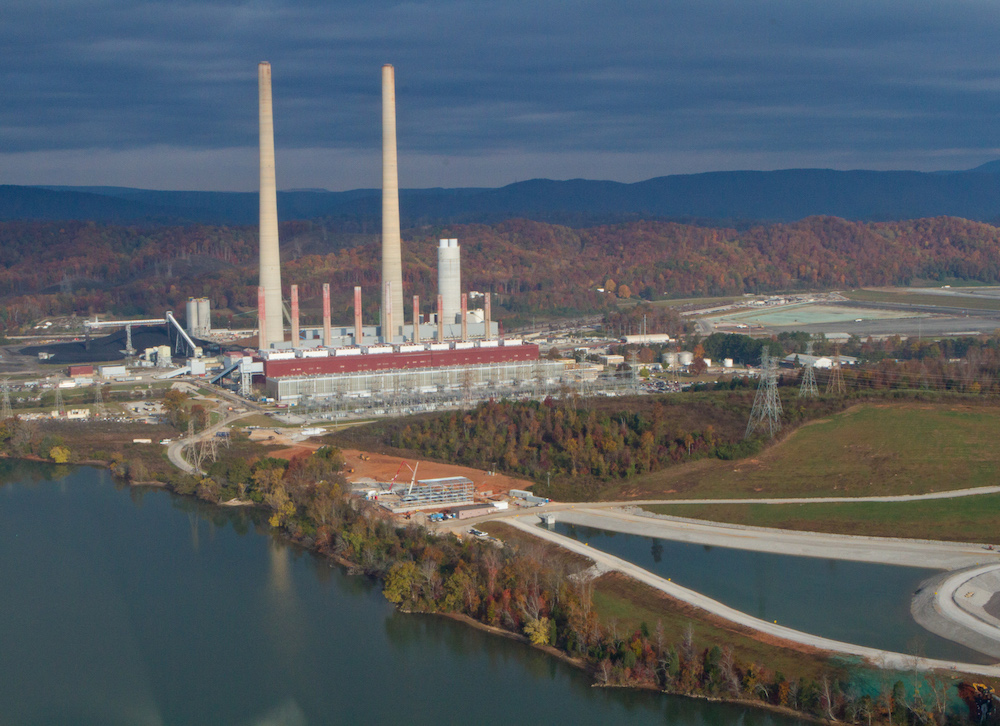
Call them the environmental movement’s equivalent of an emergency response team. Within only 14 hours of the dam failure at the Kingston Fossil Plant, United Mountain Defense mobilized. Having gained years of experience organizing and conducting water sampling in communities throughout Tennessee impacted by mountaintop removal mining, and with headquarters in nearby Knoxville, UMD was uniquely positioned to be on the ground at the disaster site and to get there fast.

United Mountain Defense volunteers arrived at the disaster site within 14 hours to find almost unimaginable destruction. Photo courtesy of United Mountain Defense.

The first thing UMD volunteers organized were door-to-door listening projects to determine the needs of the impacted community. There was an “overwhelming response that people liked to be listened to,” according to Bonnie Swinford, one of UMD’s lead organizers. Through these projects, the UMD volunteers found that people “knew very little about what was happening at the plant and what was in the fly ash,” Swinford said.

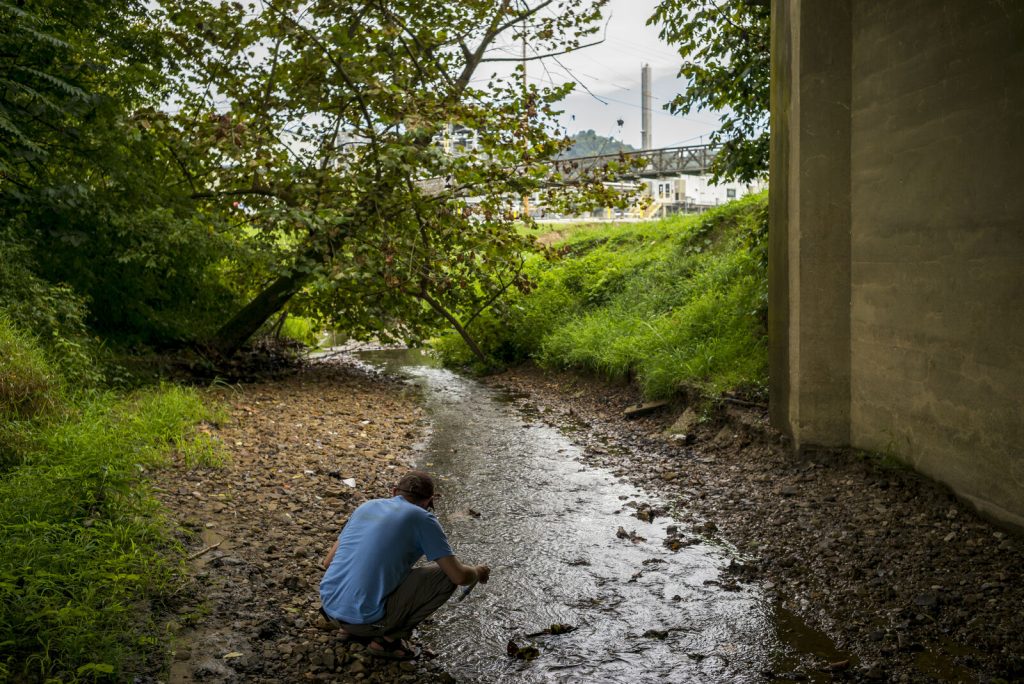
Following the listening projects, UMD began a number of efforts to address residents’ concerns. They printed and distributed copies of informational material, which helped elucidate what materials the fly ash contains, they also began distributing bottled water, collected water samples at a number of sites around the spill area, and organized the first community meeting on January 3, 2009. But that was just the beginning.

They are working now to train the residents themselves to take on the community organizing that UMD initiated following the spill. Matt Landon, a full-time volunteer staff person for UMD recounted giving a “documentation pep talk” to a resident who approached him with a concerning story following one of the meetings UMD helped organize. “If there’s any way you can get out there with a camera and just document what you’re seeing, that will be really important,” Landon told the man, who said he had seen a dump truck washing the coal ash off into the front yard of his relatives.

Matt Landon, a full-time volunteer for UMD is shown here taking ash samples to be tested, one of the many activities initiated by the TN-based grassroots group. Photo courtesy of United Mountain Defense.


In late January, a neighborhood group, the Tennessee Coal Ash Survivors Network (TCASN) formed to continue organizing impacted residents, ensuring accurate and continued air and water quality testing, and keeping the issue in regional and national newspapers.

Currently, one of UMD’s primary projects is ensuring accurate air quality monitoring is being conducted using the proper equipment. Landon and members of TCASN are training on how to construct and use low volume air monitors that are housed inside a five gallon plastic bucket (for more information go to www.bucketbrigade.net). Landon says the greatest challenge they have faced since coming to the area is “getting the regulators to take up their responsibility in holding TVA responsible to cleaning this disaster up in the best way.”

In some ways the TVA coal ash disaster has turned some residents into activists virtually overnight. What was once a “sleepy little community” has become an epi-center of the environmental justice movement, and its residents are “ready to debunk the myth of clean coal,” according to Swinford. UMD says its plans are to continue working with the residents of Roane County as long as they can. “We’ve made lots of relationships and friendships,” Swinford says. “This will just be one more coal impacted community that we will continue working in.”