
Follow Us on Twitter: Appalachian Voices | iLoveMountains.org

Archive for the ‘2010 – Issue 3 (September/October)’ Category

Annual Photo Competition Celebrates Appalachia
Monday, September 6th, 2010 - posted by Anna

By Jillian Randel

Category Winner from the 2009 AMPC- Blue Ridge Parkway Vista—Leave Only Footprints by Dale King; Flora & Fauna

Three men pushing a Christmas tree bailer, a single set of footprints on a snowy highway, morning shadows over the Blue Ridge Mountains… how can one capture the essence of Appalachian life in a frame?

That’s the challenge of the 8th annual Appalachian Mountain Photography Competition, which is accepting submissions now through December 17, 2010. The competition encourages amateur and professional photographers nationwide to highlight some of Appalachia’s most distinguishing features through frame.

For its second year in a row, Appalachian Voices is sponsoring the category titled “Our Ecological Footprint.” This subject encourages photographers to snapshot human behaviors and habits that negatively affect the earth. Capturing images of this kind is not always easy and offers a unique challenge for photographers.

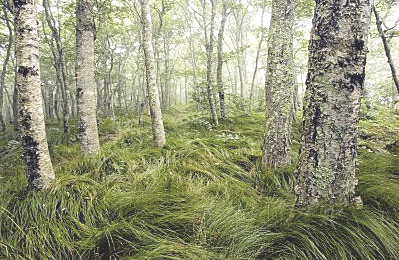
Category winner from the 2009 AMPC-Windswept Grasses in Craggy Gardens by Bill Gozansky; Our Ecological Footprint

“Photographs of the incredible beauty and mystery of Appalachia are always appreciated,” said Willa Mays, Executive Director of Appalachia Voices. “When juxtaposed against those that tell the very real story of the devastation of Appalachian communities and threats to our amazing forests, a real sense of urgency for change can emerge.”

The other six categories for the competition include Adventure; Blue Ridge Parkway Vistas; Blue Ridge Parkway Share the Journey ®; Culture; Flora and Fauna; and Landscape. The Blue Ridge Parkway Share the Journey changing category this year is The Parkway Tree Project. This category encourages photographers to snapshot noteworthy trees along the Parkway that create the diverse and unique character of the Appalachian region. Photographers are asked to identify the species of tree and record its exact location on the Parkway.

Category Winner from the 2009 AMPC- Coal Fly Ash Sludge Disaster by Jerry D. Greer

“As we celebrate the rich cultural and natural heritage of the Southern Appalachians, we feel a responsibility to also highlight threats to that heritage,” said Andrew Miller, coordinator of Appalachia State University’s Outdoor Programs and organizer of the Appalachia Mountain Photography Competition. “We hope to highlight the imagery of photographers and activists capturing the cultural and environmental degradation happening in the Appalachians and support the advocacy efforts of Appalachian Voices.”

Judges will narrow down the competition to 46 photographs which will hang in the Turchin Center for the Visual Arts in Boone, N.C. from Feb. 4 through June 4, 2011. Finalists will receive $4,000 in cash and prizes and a portion of the proceeds will go to support Outdoor Programs Student Outdoor Learning Expeditions at Appalachian State.

The competition runs until 5:00 P.M. on December 17, 2010. Applicants must be age 13 and up. Please submit photos to www.appmtnphotocomp.org.

The Appalachian Mountain Photography Competition is a partnership between Outdoor Programs and the Turchin Center for the Visual Arts at Appalachian State University and the Blue Ridge Parkway Foundation. AMPC is made possible through the sponsorship of Virtual Blue Ridge, the premier online resource for the Blue Ridge Parkway. Support for the AMPC is provided by Appalachian Voices, Bistro Roca Inventive American Cuisine, Footsloggers Outdoor and Travel Outfitters, Mast General Store, Peabody’s Merchants of Fine Beer and Wine, and Smoky Mountain Living Magazine.

A pelican beach sculpture by artist Dan Smith spreads its wings in Pensacola, Fla., just weeks after the oil spill in the Gulf of Mexico. Smith, a finalist in the 2009 Appalachian Mountain Photography Competition, is currently exhibiting a collection of historically inspired installation pieces entitled MANInfested Destiny: From Boone to Boon, at the Turchin Center for the Visual Arts in Boone, N.C. The show incorporates thematic photographs, paintings and natural and manmade objects based on Daniel Boone’s life. The exhibit will be on display through Nov. 5. On Saturdays through Oct. 2, Smith will lead walks from the Turchin Center gallery to locations featured in his work documenting the historical Daniel Boone.

Saving a Species: North carolina’s Red Wolf Recovery Program

Monday, September 6th, 2010 - posted by Anna

By Josephine Butler

The Alligator River National Wildlife Refuge rests on 154,000 acres of marshy swampland just south of the Albemarle Sound in coastal North Carolina. Among the high and low pocosins, fresh and brackish water marshes and swamps, the refuge is home to an array of native species like the American woodcock, the Atlantic white cedar and the elusive red wolf—considered one of the most endangered animals on the planet.

A father tends to his pups, Photo by Greg Koch.

Once an abundant predator of eastern and south-central U.S., red wolf populations were decimated by the 1960s due to aggressive predator control programs and habitat loss.
The refuge, established March 14, 1984, has been home to the red wolf, or Canis rufus, since 1987. A wild population of roughly 100 wolves roams this 28-mile breadth of land. Approximately 200 wolves live in a captive-breeding program known as the Red Wolf Recovery and Species Survival Plan, jointly managed by the Association of Zoos and Aquariums and the U.S. Fish and Wildlife Service (USFWS).

The red wolf is smaller in stature than their more familiar counterparts, Canis lupus, or gray wolf. Weighing in at only 45 to 80 pounds, the average adult red wolf stands 26 inches at the shoulder and measures around 4 feet from the tip of the nose to the tail. While red wolves are mostly brown and beige colored, they are known namely for their reddish tufts of fur found around the ears and neck.

Canis Rufus live in packs of up to eight wolves, usually including a breeding pair and offspring of various ages. They primarily feed on small mammals such as racoons, rabbits and rodents, as well as the larger white-tailed deer.

The once vast range of red wolves, which stretched from Texas all the way east to Florida with some reports of the species as far north as Canada, was diminished to a remnant population discovered by a few concerned scientists along the Gulf coast in the 1970s.

Raising Wolves

Warren Parker is well into his 70s, with eyes that wrinkle in the most earnest kind of way when he smiles. Parker was with the USFWS from 1961 to 1991. This towering but slender and unassuming man vigorously shakes his head in humility should he ever be referred to as “the Father of the red wolf.”

In 1982, fifteen years after the red wolf was catapulted to the top of the endangered list with the passage of the Endangered Species Preservation Act, Parker received a phone call asking him to serve as the director of a new national program that would be the first of its kind—the Red Wolf Recovery Project.

According to Parker, the late Curt Carley, a biologist and former predator control officer for the USFWS, is “the real guy that saved the red wolves.” Carley recognized the near extinction of the red wolf and worked to develop a system of external measurements that would allow scientists to properly distinguish them from coyotes and gray wolves.

Only 17 of the 400 animals Carley and his colleagues initially trapped in southeastern Texas and southwestern Louisiana were found to be “pure” red wolves. Fourteen were shipped to a mink ranch outside of Tacoma, Wash., where they could live without the danger of canine parasites—such as intestinal parasites like heartworms and hookworms—to become the first
captive breeders.

As the population began its slow recovery, Parker understood the need for a suitable stretch of land where the USFWS could eventually reintroduce red wolves into the wild. After relinquishing what initially looked like a promising piece of land between the Kentucky and Tennessee border, he was losing hope.

“It’s the ‘Little Red Riding Hood’ folklore that led to the decimations of wolf populations in the first place,” Parker said. “It seemed like everyone wanted to help the wolves, but not in their own backyards.”

In the spring of 1984, a relieved Parker received notification from the USFWS that Prudential Life Insurance Company had donated a large piece of land spanning parts of Dare and Hyde counties in northeastern North Carolina for the project.

Today, 117 red wolves roam this swampy expanse now known as the Alligator River National Wildlife Refuge.

According to David Rabon, Red Wolf Recovery Program coordinator, “The wolf population has grown and so has the recovery area. Wolves now occur across 1.7 million acres that span five counties, not just the Dare County mainland.”

A Mountain Home

Southern Appalachia has also played a role in the efforts to revitalize red wolf populations. In 1991, the USFWS released red wolves into Great Smoky Mountains National Park. The inability of the wolves to establish a home range within the park and low pup survival rates led to their removal in 1998.

Red wolves can still be found in the region at the Western North Carolina Nature Center in Asheville, one of only 40 breeding sites worldwide.

According to Director Chris Gentile, three red wolves currently reside at the Center – Angel and Rufus, the breeding pair, and their female pup, Mayo (see sidebar at left).
As far as what the future has in store for the red wolves in eastern North Carolina, Rabon and his colleagues are hopeful that the populations will continue to grow.

“It’s important to remember that the red wolves were once a top predator in their food chain,” said Gentile, “and anytime you lose a piece of that puzzle, it becomes a weaker system. When Mayo was born last spring, it was like restoring one of those missing pieces.”

EDITOR’S NOTE: Since the writing of this article, Warren Parker, the “Father of the Red Wolf,” passed away at the age of 76. To remember Warren and to continue his legacy of reviving the red wolf population, his family encourages memorial contributions to the International Wolf Center, 1396 Hwy 169, Ely, MN 55731-8129.

Breeding Recovery at the WNC Nature Center

The Western North Carolina Nature Center is one of 40 red wolf breeding sites. Photo by Josephine Butler.

The Western North Carolina Nature Center, based out of Asheville, is one of 40 facilities participating in the Red Wolf Recovery and Species Survival Plan.

The living public education venue—full of North Carolina-native plants and animals—joined the red wolf recovery reintroduction program in the 1980s.

“Since then, we’ve had several successful breedings from our pairs,” said Chris Gentile, director of the Western North Carolina Nature Center. “We’ve even had two of our red wolves reintroduced into the wild.”

The most recent success was Mayo, the cub of Angel and Rufus named for her birthday, Cinco de Mayo, in 2009. Mayo could be selected for reintroduction or to breed with another red wolf in a few years.

The red wolves are handled differently at the nature center than the rest of the animal residents.

“We are not as hands-on with them as we are with other animals,” Gentile said. “We don’t want them to be used to people, because they might be selected for reintroduction into the wild.”
This recovery program not only helps save a species, but also teaches people about it in a very real setting, emphasizing the importance of each link in the ecosystem.

“Since red wolves are an animal that has long existed in the state of North Carolina, it’s great to show the public and tell them a little bit about some of the problems they are facing,” Gentile said.

You Say Goodbye, I Say Hello!

Monday, September 6th, 2010 - posted by Anna

This last year has been an excellent one, with a team full of talented writers. As this issue goes to press, there are tearful eyes in the newsroom. But as we say goodbye to our Managing Editor, Maureen Halsema, our Voice summer interns Megan Naylor and Derek Speranza (who both have stories in this issue!), and our Riverkeeper interns Kara Dodson and Kimberly Hamilton, we are also saying hello to our newest members of the team.

Parting is Such Sweet Sorrow…

“This year has been one of the most challenging, exciting and educational year of my life,” said Maureen Halsema, who volunteered through the Americorps Communications Outreach Associate for Appalachian Voices this past year and served as Managing Editor of The Voice.

Maureen Halsema

“Working with the Appalachian Voices’ team has been an absolute pleasure, and I hope to continue writing for The Appalachian Voice in the future. Thank you to each of you for your passion and dedication to saving the world, one mountain at a time.”

Maureen is heading to Durham, N.C. to write for Alert Diver magazine; we will miss her vivaciousness and wish her the best of luck; we also look forward to possible collaborations with her new publication!

Welcoming New Friends

In July, Appalachian Voices was pleased to welcome to the team Kate Rooth, our new National Field Coordinator working in our Washington, D.C. office. Kate will be working on our end mountaintop removal coal mining campaign, helping to organize community members and citizens to effect legislation that would stop mountaintop removal.

Kate Rooth

Kate comes to Appalachian Voices from Rainforest Action Network, where she worked on their mountaintop removal campaign, targeting both regulators and financiers of coal mining. She previously worked for Greenpeace, where she contributed to a variety of climate and clean energy campaigns.

“I am thrilled to be working at App Voices,” said Kate. “Not only have I already met so many incredible supporters of our campaign, but I am humbled by each persons dedication to ending mountaintop removal. This fall I look forward to working on two Appalachian Treasures tours as well as our National Lobby Day. Be sure to swing by if you are ever in D.C.!”

Kate originally hails from Cashiers, N.C. and graduated from Lehigh University in 2005 with a degree in Political and Environmental Science. Kate is also involved with Rising Tide North America.

Jillian Randel

We would also like to welcome to the team Jillian Randel, who grew up in New Hampshire and graduated last year from the University of Tampa with a degree in Political Science. Jillian will spend a year as our Americorps Communications Associate volunteer and will serve as The Appalachian Voice Associate Editor.

“I am excited to have the opportunity to work with Appalachian Voices,” said Jillian. “I really enjoy writing and I hope I learn a lot from this organization and community!”
Jillian spent the last six months obtaining her yoga teacher certification. She also loves hiking, biking, reading and playing with her dog, Easton. Welcome Jillian!

Riverkeeper Festival A Success!

Kids explore the wonders of the Watauga River during Watauga Riverkeeper Fest!

By Parker Stevens
On July 24, Appalachian Voices kicked off our first ever Watauga Riverkeeper Festival in Valle Crucis, N.C., where hundreds of visitors joined us to celebrate outdoor recreation, environmental stewardship and of course, the Watauga River.

The Alberta Boys and Melissa Reaves played great music all day while kids and families enjoyed games in the park, dips in the river and lunch featuring local foods from the Boone Meat Center, Earth Fare and our own Executive Director, Willa Mays.

Cerilia Shelton dressed up as a water drop during the river parade.

Donna Lisenby, the Upper Watauga Riverkeeper, led adventures in the river where people learned all about the exciting critters hiding under rocks and played in the water. In light of two separate fish kills that occurred in Boone the previous week, people were particularly excited to learn what they can do to help protect our local waterways.

The afternoon included a river parade complete with costumes on loan from the Elkland Art Center; children dressed as water droplets marched around the park beneath a billowing cloth river. Meanwhile, children and adults along with members of the Appalachian Voices staff and board buried their faces in watermelon for no-hands watermelon eating contest (which is much harder than it looks!).

Thanks to everyone who helped make our inaugural festival a smashing success. See you again next year!

Fish Kill Exposes Asphalt Sealant Pollution Problem

By Jed Grubbs

On July 17, polluted runoff killed all aquatic life in a 1.5-mile long stretch of Hodge’s Creek in Boone, N.C. Donna Lisenby, Appalachian Voices’ Upper Watauga Riverkeeper, was on the scene a few hours after the event. Lisenby, along with the Town of Boone Fire Department, investigated the fish kill, tracing the pollution source to a BB&T parking lot on Hwy. 105.
After days of talking with local contractors, the Boone police department, and a spokesperson from BB&T, the Watauga Riverkeeper team was able to determine the cause of the fish kill to be a coal-tar based asphalt sealant applied to the BB&T parking lot by Sunshine Striping Asphalt and Seal Coat of Pine Hall N.C.

Coal tar—which would be listed as a “hazardous waste” were it not for a special federal exemption—contains benzo[a]pyrene. Benzo[a]pyrene is a chemical that made EPA’s list of 12 priority “persistent bioaccumulative toxins.”

Eyewitnesses report seeing the sealant—which is water soluble—being immediately applied before a heavy storm rain, which washed it from the parking lot into the creek. Of the many fish that were killed, the majority were trout. Lisenby expects it to be more than a year before the trout population recovers.

Neither BB&T nor Sunshine Asphalt Striping and Seal Coat reported the coal tar asphalt sealant spill and subsequent fish kill, nor did either attempt to clean up the spill.

Coal tar is applied to asphalt across the country, and concerns are growing that toxins from the product are being tracked into homes, schools, hospitals and other buildings. Coal tar-based asphalt sealants are a triple threat: it can be inhaled, ingested and absorbed through skin. It even comes off onto basketballs in school gymnasiums.

The city of Austin, Texas, banned the product almost five years ago when it was discovered to be damaging the local ecosystem. More recently other cities, including Washington, D.C., have followed suit. Minnesota has banned the purchase of coal-tar sealcoat products by state agencies as of July 1. Overwhelmingly, however, the product remains unregulated.

On July 21, Lisenby and her team investigated a second fish kill that also occurred in the town of Boone. The kill occurred after kerosene from Mountain Oil Company spilled onto the ground and soaked into the soil, eventually reachingthe water table and seeping into nearby Hardin Creek.

In contrast to the previous incident, Mountain Oil immediately reported their spill and began efforts to minimize the impact to Hardin Creek. Significantly less aquatic life was killed in the Mountain Oil spill.

Appalachian Treasures Launches 3-City Tour
Appalachian Voices is traveling northward this September to showcase our multi-media slideshow, Appalachian Treasures! We will be on the road in Boston, Maine, Philadelphia and D.C. as part of our campaign to end the practice of mountaintop removal coal mining.
Appalachian Treasures is an educational campaign to gain support for the Clean Water Protection Act (H.R. 1310) and the Appalachia Restoration Act (S. 696). The presentation depicts the dire situation in the coal regions of Appalachia and encourages Americans to help protect some of our nation’s oldest mountains and communities.
Visit AppalachianVoices.org for details!

AV To Launch New Water Testing Initiative
Appalachia Water Watch will work to address water quality issues related to coal, one of the biggest polluters in the region. Citizen scientists in select areas will be trained to test their local waterways in order to access potential patterns of violations. Stay tuned for more details.

Musical Tour Gives Us A Louder Appalachian Voice
Musicians Ben Sollee and Daniel Martin Moore, and My Morning Jacket’s Yim Yames recently wrapped up the Appalachian Voices Tour to raise awareness about mountaintop removal mining. A representative from Appalachian Voices was able to join them to pass out information. Thanks to Ben, Daniel and Yim for the opportunity! Learn more at iLoveMountains.org/dear-companion.

Partnership Will Protect Kentucky’s Water
Appalachian Voices’ Upper Watauga Riverkeeper program has entered into a partership to conduct thorough reviews of water quality permits in the Kentucky Coalfields.
The partnership, which includes the Kentucky Riverkeeper and Kentuckians for the Commonwealth, unite the Waterkeeper Alliance and the Alliance for Appalachia in a joint action to investigate water pollution in the coalfields and bring enforcement action.
Pace University Environmental Litigation Clinic, a fourth partner, will lead potential litigation proceedings on violations that are found.

Shoe Shopping That Also Protects Mountains

Mast General Store and Patagonia have teamed up during the month of September to support Appalachian Voices by graciously donating $10 for every pair of Patagonia shoes sold. There is a little time left—and even if you don’t live near a Mast Store, you can order online at MastGeneralStore.com.

Celebration and Inspiration in Charlottesville, VA
On Aug. 12, Appalachian Voices’ staff and board met with members new and old in Charlottesville, Va for a movie date night. After a screening of the documentary, Coal Country, people had the chance to meet with the director, the producer and activists from the film, and also enjoy live music by a local band featured on the soundtrack.
The event in Charlottesville was a great way to join our members and supporters to celebrate how far we’ve come, and to gain inspiration for the work ahead. Thanks to everyone who attended the show; we enjoyed meeting you!

We Had Some Crazy Times Together…

Monday, September 6th, 2010 - posted by Anna

Review by Jed Grubbs

Superfreakonomics is like that outrageous friend of yours from college. Initially, all the scandalous things he says and does are highly entertaining and engrossing. Time goes on, though, and you begin to wonder what this guy won’t do for attention. You start to feel it’d be nice to wake up without a hangover and a black-eye (at least on weekdays).

As you begin spending less time with him and taking what he has to say with a grain or two of salt, don’t feel too guilty. You’re simply concerned about your future – his too. It’s only natural.

Steven Levit and Stephen Dubner’s bestselling Superfreakonimics (William Morrow, $29.99) is much the same. Initially, it’s pretty enthralling. The authors examine a variety of “freaky” topics from an economist’s perspective. Topics include the declining price of oral sex, altruism, drunk walking and monkeys with cash. Good times.

Throughout, the authors maintain: “The economic approach isn’t meant to describe the world as any one of us might want it to be, or fear that it is, or pray that it becomes- but rather to explain what it really is.” The two proclaim, “Most of us want to fix or change the world in some fashion. But to change the world, first you have to understand it.”

On board? Me too. Chooo! Chooo!

Suddenly, though, you find Levit and Dubner pushing a cheap, simple, altogether reckless fix for global warming and the alarm bells begin to sound; think of it as that time in college when you suddenly find yourself naked running from the police with that insane friend. Maybe, it occurs to you, I shouldn’t be drinking everything this guy has to offer.

Essentially, Levit and Dubner confidently suggest that global warming and increased carbon dioxide in the atmosphere can easily be fixed by sending millions of gallons of sulfur dioxide into the stratosphere every year.

Suddenly, I’m having less fun and want my clothes back.

The authors’ cheap and easy global warming fix has been widely debunked by the scientific community. Economists and climate science experts alike have highlighted misleading statements and discredited arguments within. Elizabeth Kolbert of The New Yorker, who has covered climate change extensively, noted that “just about everything [Levitt and Dubner] have to say on the topic is, factually speaking, wrong.”

I’m concerned about my future, Superfreakonomics. I’m concerned about yours too. Let’s not pump that SO2 into the atmosphere.

Distilling Your Way to a Better Energy Future

Review by Jeff Deal

Ever wonder how we came to pay the super-affluent Petro-chemical industry to burn their toxic waste product as a transportation fuel? Or why Henry Ford’s Model T was originally a flex-fuel vehicle? Maybe you’ve scratched your head as to why we unhealthily feed beef cattle the kernel of the corn instead of the cellulosic corn silage their multi-stomach gastrointestinal systems so aptly crave – and in the process lose fatter cows, a high protein animal feed, an “eco-friendlier” transportation and cooking fuel and a host of tasty spirituous liqueurs to boot.

Thanks to farmer-permaculturalist David Blume’s tome Acohol Can be a Gas, you needn’t ponder these questions further! From David’s 30+ years of experience with biofuels, permaculture and farming has emerged the 10 part PBS Series, Alcohol as Fuel, and now his greatly anticipated 600 page magnum opus – three volumes bound in a single book detailing the history of alcohol, the making of alcohol, and the many uses and benefits of alcohol. The foreward of the book is even written by pioneering engineer and ecological thinker Buckminster Fuller, who was awarded the Presidential Medal of Freedom in 1981 by then President Ronald Reagan.

So if you’re still wondering how we can safely capture the nutrients from waste water treatment plants and agricultural fertilizer now causing the algae bloom in the Gulf of Mexico, while gaining a fuel fit for Indy race cars and astronaut piloted high performance jet aircraft, surf to Permaculture.com and get your copy straight from the author – including the riveting two hour DVD special of the same name, Alcohol Can Be a Gas. Enjoy your biofueled, knowledge-filled odyssey!

Movie Review: The “Magic” Behind the Light Switch

By Derek Speranza

There is often a mental disconnect between flicking on the light switch and actually thinking about the source of that electric power. Tom Hansell’s The Electricity Fairy reminds us that there is no magical fairy leaving electricity under our pillow.

The film begins with a cinematic overview of the history of Appalachian Coal mining and electricity and is very accessible, even for people who know nothing of the subject. It examines the lives of real Appalachians who were raised on coal mining and demonstrates the enormous impact of the industry on the region.

From every day citizens to government officials, from environmental activists to Dominion Power executives, the film examines every aspect of the debate surrounding the cleanliness of coal. Eventually, the controversy is embodied in the battle over the approval of Dominion’s new coal-fired power plant in Wise County, Va.

In the spirit of true documentary filmmaking, The Electricity Fairy shows rather than tells. Hansell does not skew the focus of the story with a predisposition or provincial agenda, which is too often the case with modern documentaries intent only on incensing the viewership (á la Michael Moore), but instead gives equal time to both sides of the argument. The Dominion Power executives – who are not portrayed as evil corporate villains – share their honest beliefs about the economic benefits of the power plant, while the renewable energy camp points out the negatives, such as dangerous mercury levels in the water, air pollution and the devastation caused by mountaintop removal mining.

It is this lack of sensationalism and commitment to honesty that allows The Electricity Fairy to believably deliver the facts, and in doing so it is guaranteed to leave the viewer thinking a little more about what actually happens with the flick of a light switch. In the sweeping landscapes of the film (courtesy of some impressive cinematography), the audience can see first-hand the stark destruction caused by strip mining, and is also reminded of a region uncertain of where to go from here.

Visions for the Future: Build It Up, W.Va.

Monday, September 6th, 2010 - posted by Anna

The opinions expressed in Viewpoints are those of the author’s and are not necessarily reflected by The Appalachian Voice

By Joe Gorman

Appalachia’s population is aging and its youth are leaving. This is a critical moment: for a sustainable future we need to give youth a reason to stay here.

Currently, the Appalachian economy is choked by extractive industries and doesn’t offer much for people who don’t want to mine coal or offer ‘fries with that.’ This is the big-picture reason we created the Build-It-Up West Virginia summer program—to instill hope and values of sustainability in young people and hook youth into creative and proactive forms of resistance that are building diverse and regional economies.

I see food and energy as key components of sustainability in Appalachia’s future. All energy production is extractive, but the more we produce our own energy, the bigger the incentive is to boot out practices that destroy our natural systems that supply us with water and food

West Virginia can easily provide all its own energy from less harmful, decentralized, renewable sources if we can break our exploitation by extractive corporations and invest in energy conservation. There is a multifaceted fight against the energy status quo, but we are working to get youth involved in grassroots renewable energy projects as well.

Though our first major exports were pelts, cattle and moonshine, West Virginia now sits at the bottom of the list for agriculture, and most farmers are on the verge of retirement.

But the Green Revolution’s focus on large-scale monocultures caused it to skip over Appalachia, and sustainable food traditions never fully disappeared. Farmers are physically closer than agricultural people in other parts of the country, which facilitates traditional knowledge sharing and building self-sufficient communities.

So in my work, I will continue to foster those connections and inspire youth with the concrete change we make in local and sustainable energy and food.

Joe Gorman is the group coordinator for Build-It-Up West Virginia, a project of the Student Environmental Action Coalition (SEAC) sponsored by Americorps VISTA, Step-by-Step West Virginia, the Ohio Valley Environmental Coalition, and Coal River Mountain Watch. The 2010 program started June 6th and continues through August 1st.

Acknowledging A Time For Transition

Monday, September 6th, 2010 - posted by Anna

A friend of mine has a son who is serving in Afghanistan. His home is in the mountains of Boone, North Carolina, where tourism and a sizable state-run university dictate a relatively stable economy and jobs to be had once he—God willing—returns.

But there are many such sons and daughters with homes in coalfield regions of West Virginia, Virginia and Kentucky who will not be as fortunate in their post-tour-of-duty lives. Available jobs are at an all-time low in these regions, known to be among the poorest in the country. The coal industry blames federal regulations on mountaintop removal coal mining for the decline in jobs.

According to the bureau of labor statistics, however, the 1950s saw 120,000 direct coal miners in the state of West Virginia alone while in 2008 there were around 20,000. Most of these job losses stemmed from the switch from underground to surface and mountaintop removal mining, which requires fewer workers and maximizes company profits.

Coal companies have also increasingly rejected unionization, resulting in fewer worker benefits, lower pay, and increasingly unsafe working conditions. Again, all in the name of profit.

The poverty rate in Appalachia hovers near a staggering 24%, drug usage is at an all time high and an economic future dependent on coal seams beyond peak production looks grim.

If elected officials in West Virginia, Kentucky and Virginia do not cease backdoor deals and intimate relations with the fossil fuels industry and begin to conceive of more realistic—and 21st Century—alternatives, a regional depression of epic proportions seems imminent.

Those who can afford to will migrate to other states, though lack of education or training in industries other than coal mining may relegate many to low-paying jobs with little opportunity for advancement.

Those without the means to move will be left to scramble for odd jobs and remnants of coal-related jobs, while the poorest slip deeper into poverty, some living in houses resembling little more than shacks and suffering from poor health and malnourishment.

Is this what the fossil fuels industry calls the American dream?

Environmental groups have talked for years about ‘now’ being the time to create the foundation of a new economic plan for Appalachia. In truth, Yesterday was the time for laying the foundation. By today we should be implementing said plan, so that we might in days to come reap the rewards with a renewed, vibrant regional pride. Instead, residents of the coalfields are economic prisoners of a system constructed with 19th century ideals and fueled by the pursuit of profit.

We are out of time.

A Glance at the Political Landscape of Appalachia

Monday, September 6th, 2010 - posted by Anna

By Derek Speranza

What is in store for the future of Appalachia? With midterm elections approaching in November, it might be more appropriate to ask: who is in store for the future of Appalachia?

Inextricably tied to its deep-seated history of coal, yet looking toward the future of sustainable energy, the Appalachian region is in a time of transition. The Appalachian Voice examines who will be leading the region come November, and what energy options and viewpoints the potential candidates will bring with them.

EDITOR’S NOTE: Candidates for each race are listed in alphabetical order. The Appalachian Voice does not endorse any of the following political candidates or their affiliate political parties.

Kentucky: Jack Conway (D) vs. Rand Paul (R)

Jack Conway

Rand Paul

The retirement of Kentucky senator Jim Bunning has left open an important U.S. senate seat, and two up-and-coming politicians are squaring off to take the reins.

Jack Conway is a Democrat who has served as Kentucky’s Attorney General since 2008 and previously ran for congress in 2002. In the past, Conway has opposed “cap and trade” legislation that would limit greenhouse gas emissions, citing the potential detriment to the coal industry that he sees as crucial to the Appalachian economy. He does, however, support more environmentally safe mining practices and has shown concern over the practice of mountaintop removal coal mining and valley fills. He does not approve of waivers to regulations that could allow businesses to evade environmental responsibility.

Rand Paul is a Republican who is the son of congressman Ron Paul of Texas, and he is both an ophthalmologist and a politician. Paul has traditionally supported small government and significantly limited regulation of business.

In this vein he supports a free market approach to energy that would allow wind, solar, and geothermal energy industries to freely compete, with potential tax cuts for renewable energy production. However, Paul opposes government subsidies of renewable energy on the grounds that the injection of funding into industry distorts the market and could impede the most efficient development of many energy sources. He is generally supportive of the practice of mountaintop removal coal mining.

Virginia: Robert Hurt (R) vs. Tom Perriello (D)

Robert Hurt

Tom Perillo

Republican Robert Hurt is challenging Democratic incumbent Tom Perriello for Virginia’s 5th congressional district, a race that could have an important impact on Appalachia’s energy future. District 5 covers a large area of central Virginia.

Hurt, a lawyer and a politician, has previously served on the Chatham, Va., town council and the Virginia House of Delegates, and he currently serves in the Virginia state senate. During his time as state senator, he took the lead in creating the executive cabinet position of Secretary of Agriculture and Forestry. He is very passionate about stimulating the economy of Virginia through free market practices and limited government involvement. Hurt opposes the cap and trade legislation supported by the Obama administration.

Tom Perriello, a first-term congressional representative, supports leading Virginia in reducing carbon emissions while simultaneously increasing economic productivity. Periello also supports increased production of domestic oil in the short term, but ultimately favors the discontinuation of fossil fuels altogether. He has co-sponsored the American Clean Energy and Security Act / ACES (H.R. 2454) and other renewable energy initiatives, opposes mountaintop removal coal mining, co-sponsored the Clean Water Protection Act (H.R. 1310) and served as lead proponent of the Rural Star Act (H.R. 4785), which provides incentives for energy efficiency investment in rural areas.

West Virginia: The Special Election

The death of the longest-serving congressman in history, Robert Byrd, D–W.Va., led to the appointment of Carte Goodwin as the interim senator in West Virginia. On November 2, a special election will be held to determine a permanent successor for the final two years of Byrd’s term, and Goodwin has said he will not run in this race.

Robert Byrd

Several candidates are lining up for both primaries. One prominent candidate in the Democratic primary is Joe Manchin, the current governor of West Virginia, who is running as a self-proclaimed “pro-coal” candidate for Byrd’s seat. In addition to coal, Manchin has supported new approaches to biofuels, such as the development of cellulosic fuel as described in the Farm Bill of 2007.

He has also supported renewable sources of energy such as hydroelectric dams and solar energy in West Virginia. Ken Hechler, former West Virginia congressman and Secretary of State from 1984 to 2000 is also running in the Democratic primary, and has been a long-time advocate of ending mountaintop removal coal mining. Rounding out the field is former state legislator Sheirl Fletcher.

The Republican candidate for the seat is John R. Raese, a West Virginia businessman who ran as the Republican candidate in the 1984 and 2006 senate races. Raese supports the development of existing energy industries such as oil and coal and also supports drilling in the Arctic National Wildlife Refuge, but he has also voiced encouragement for the development of energy alternatives, citing pollution concerns.

Natural Gas, Is it Right for Appalachia?
Monday, September 6th, 2010 - posted by Anna

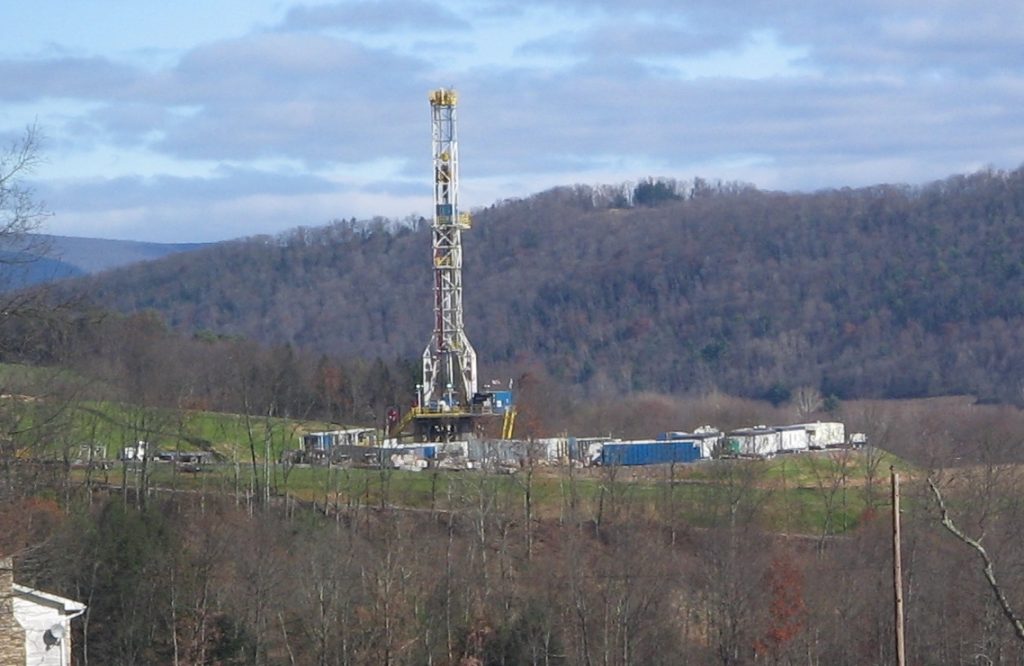
Tower for drilling horizontally into the Marcellus Shale Formation for natural gas, from Pennsylvania Route 118 in eastern Moreland Township, Lycoming County, Penn. Photo by Ruhrfisch

By Derek Speranza

It’s the middle of July in West Trenton, N.J. More than 600 protesters have gathered outside a meeting of the Delaware River Basin Commission, speaking out to protect the region’s drinking water and water reserves from contamination.

The issue? Natural gas drilling – a controversial practice that has been by some labeled “environmentally safe.” But the citizens of West Trenton are calling to end the process altogether until more environmental research can be done.

Despite the environmental concerns, demand for natural gas as both a transportation fuel and an electricity source has been steadily increasing over the last few decades, which has had small, yet demonstrable economic benefits to Appalachia.

Outside of Asheville, N.C., a greenhouse operation relies on natural gas to heat its facilities in the wintertime. The gas they purchase through PSNC Energy, a large gas provider in North Carolina, is cheaper than oil and burns cleaner than coal.

For these reasons, natural gas is gaining popularity – but its position as a sustainable solution for the future of the Appalachian region remains to be determined.

Some of the Issues

A map showing how the Marcellus Shale runs underneath five adjoining states.

Natural gas is a fossil fuel, and its burning releases new CO2 into the air. That said, it is the single cleanest burning fossil fuel on the market, producing about 45 percent less CO2 than coal, and 30 percent less than petroleum.

While gas burns cleaner than its competitors, the extraction of the gas worries many environmentalists. The most common process of natural gas extraction is hydraulic fracturing, or “fracking” – a technique that involves drilling deeply into the earth, fracturing rock beneath the surface, and injecting a solution of water and chemicals to prop open the fissures in order to remove the gas.

Under current copyright laws, gas companies in many states do not have to disclose the mixture of chemicals they inject during fracking, raising questions about the possible presence of contaminants.

Aside from the injected fluid, large amounts of wastewater are created as a byproduct of hydraulic fracturing, placing unprecedented burden on water treatment plants.

The Marcellus Shale is one of the largest natural gas reserves in the United States. A gigantic gas field located in the heart of the Appalachians (covering large portions of New York, Pennsylvania, Ohio, Virginia and West Virginia), the Marcellus Shale is the source of much debate over the sharp increase of “fracking” permits in the region – and incidentally a sharp increase of wastewater.

The wastewater from hydraulic fracturing contains natural contaminants from the earth – mostly a salty mineral mixture called Total Dissolved Solids (TDS), and sometimes carcinogens such as benzene and cadmium.

According to the Pennsylvania Department of Environmental Protection, water treatment plants in the state are not prepared to handle TDS wastewater in the extreme quantities in which it is being produced – and this is exactly what brought the New Jersey protesters out in droves.
The EPA concluded in a 2004 study that the process of hydraulic fracturing is safe and has no definite effects on drinking water, but criticism of the report prompted the U.S. Congress to request a new study, scheduled for release in 2012.

Benefits and Concerns

Natural gas is the cleanest burning fossil fuel. It also comes relatively cheap.
PSNC Energy, the North Carolina provider, says the price of the natural gas equivalent to one gallon of gasoline is currently about $1.50, significantly less than its petroleum counterpart.

Angela Townshend, public relations official for PSNC, says that while demand for natural gas in Western North Carolina has not increased, it can provide key economic support to businesses in the region.

“Natural gas is often that certain aspect of industry businesses are looking for to meet their energy and manufacturing needs,” said Townshend, citing the Asheville greenhouse among other businesses that rely on PSNC’s gas.

Townshend also says that PSNC offers small incentives for people to switch to more efficient natural gas systems in their homes, offering rebates intended to curb greenhouse gas emissions.

While the use of natural gas in the Appalachian region is not nearly as great as in areas further east, Townshend attributes this to differences in economic development, and says that there is nothing inherently prohibiting Appalachia from further utilizing the resource.

“But PSNC is exclusively a provider,” Townshend reminds. “We don’t do drilling or exploration of any kind.”

The excess load that fracking wastewater places on water treatment plants could potentially burden the taxpayers, who would ultimately be responsible for funding any improvements made to government-run treatment facilities.

Large electric utilities in the Southeast, who have long relied on coal as their primary energy source, are also starting to look toward natural gas. Progress and Duke Energies plan to to retire or convert 24 of their 47 coal-fired generators in North Carolina, with plans to replace a portion of this capacity with natural gas.

As Appalachia moves toward the future, the region must consider the vast energy potential of sources other than coal. Is natural gas the answer? All that is certain is as of now is that the true net economic benefit of natural gas remains a question.

Europe’s New Energy: Natural Gas vs. Wind

In 2009, new wind installations in Europe outpaced new gas installations for the first time ever, with 10 gigawatts of new wind capacity and only 7 gigawatts of new gas capacity.

This reverses a trend reported in 2006, when 20 gigawatts of new gas capacity and 9 gigawatts of new wind capacity were added.

In terms of overall capacity, latest figures still have gas in the lead, with 119 gigawatts of gas energy produced annually, compared to 85 gigawatts of wind energy produced annually.

Pond Scum Solutions: Turning Pollution Into Fuel

Monday, September 6th, 2010 - posted by Anna

At Old Dominion University, the site of the Virginia Coastal Energy Reserach Consortium, they conduct algal biomass research. Photo by Chuck Thomas. According to DOE’s National Algal Biofuels Technology Roadmap published in May 2010, algae yields approximately 1,000 to 6,500 gallons of oil per acre per year, while soybeans yield a mere 48 gallons per acre per year and oil palm yields about 635 gallons per acre per year.

By Maureen Halsema

The concept is simple—take one of the most effective photosynthetic life forms on earth and put it to work. The secret weapon: algae.

Algae are organisms that grow quickly in aquatic environments via photosynthesis, CO2 and nutrients, and they can be used to produce biomass and biofuel.

Algae have several advantages over food crop biofuels. For instance, an alga grows faster and does not necessitate the use of agricultural land. Farmers can grow algae on land otherwise considered unsuitable for crop production, expanding and diversifying their options. They could even convert algae into biodiesel and use it to fuel their equipment. Algae can actually double in size in one day while other crops may require up to an entire agricultural season to grow.

Algae do not compete with other food sources, preventing escalating food prices as a result of biofuel production. The oil content of algae is also much higher than that of corn and other food-based biofuels.

Algae production faces several technical challenges, however. In terms of commercial production, expense is the biggest obstacle. Researchers are currently exploring a variety of different methods to cost effectively grow, harvest and convert algae into biofuel. From coupling algae cultivation with wastewater cleanup to using the co-products for green fertilizers, researchers are investigating different means to minimize the production costs.

Many petroleum corporations, including Exxon Mobil, Chevron and Shell have been working on algae research and development technology. Exxon Mobil projected that it would spend more than $600 million over the next decade on research and development of algae-based biofuels.
In addition, the U.S. Department of Energy recently dedicated $24 million to algal biofuel research to supplement the $140 million allocated from the American Recovery and Reinvestment Act.

While the upfront costs for algal biofuel production may be high, the external costs are low: this technology is essentially carbon-neutral.
Algae absorb CO2 during their growth process and then release it when the CO2 is burnt for fuel.

“The carbon never disappears. It just changes from a greenhouse gas to a fertilizer or fuel through photosynthesis,” said Bruce Dannenberg, chief executive officer of Plantonix, a North Carolina corporation dedicated to researching and developing a commercially viable production of algal and cyanobacterial biofuels.

While algae production does require large volumes of water, it does not need treated drinking water; ocean water, polluted river water or treated wastewaters are viable options.

Algae can also consume the CO2 necessary for photosynthesis from power plant and industry emissions—as optimal algal growth occurs in a CO2 rich environment. By strategically placing algae farms near existing power plants, a portion of emissions can effectively be recycled into algae growth fuel for biodiesel. Algae can help clean up the environment and provide the fuel and electricity needed to aid the transition from fossil fuels and their damaging environmental impacts.

While many species of algae require consistent sunlight and temperatures, some scientists believe that this biofuel shows great promise in the Southern Appalachian region. The key: using natural native wild algal species that have adapted to the mountain climate over millions of years.

“What you try to do is to use biomimcry, basically, what nature has provided naturally, to your advantage at growing the crop,” said Dannenberg. “You just have to have the right approach and the right strategy. Planktonix is working with Old Dominion University and we have a joint project to develop a practical, cost-competitive commercial approach to get algae and high lipid cyanobacteria adopted regionally as a new energy microcrop.”

Perhaps with some continued research and technological development, Appalachia may play a role in farming algal biofuels.

Crop/ Oil Yield (Gallons/Acre/Year)
Soybean/ 48
Camelina/ 62
Sunflower/ 102
Jatropha/ 202
Oil Palm/ 635
Algae / 1,000-6,000

Biofuels: Local Gives Way to Large Scale

Monday, September 6th, 2010 - posted by Anna

By Bill Kovarik

In spring 2010 researchers with the University of Tennessee Biofuels Initiative planted 1,000 acres of switchgrass to evaluate the plant’s potential for use in the production of cellulosic ethanol at the Genera Energy/DDCE demonstration scale biorefinery at Vonore, Tenn. Photo by S. Jackson. UTIA.

ASHEVILLE, N.C. – Melita Kyriakou watches as a big blue fuel truck with a green biodiesel logo grinds past the fuel tanks, under the bridge and up the hill – off on another delivery to one of the four biodiesel retailers in the mountain city.

The good news, for Blue Ridge Biodiesel, is that they are still in business. The bad news is that half the staff has been laid off, and most other community-scale biodiesel plants in the state of North Carolina are going out of business.

“Its true – I do wake up in the middle of night,” she said. “There’s too much work, too little time, and too many forces against you.”

The biggest headache was the abrupt expiration of a $1 per gallon federal tax break in December, 2009. Attempts to extend the tax break could eventually succeed in Congress, but for now, biodiesel is quite a bit more expensive than regular diesel.

“Politicians are constantly talking about getting the country free of foreign oil,” Kyriakou said. “Yet here is one industry functioning, viable, directly plugged into the existing infrastructure—and it just had its legs cut out from under it.”

Before the end of the tax credit, the biodiesel industry employed an estimated 53,000 people, according to the National BioDiesel Board. No figures are available for the number of jobs lost so far.

“We just want a level playing field,” she said. “Local foods make sense—why not local fuel?”
Norman Smit of the Biofuels Center of North Carolina, says there is a place for small scale biodiesel. “There certainly is value in being able to convert (waste) into a commodity that can help school busses go,” he said. “The problem is that there isn’t enough of it, it isn’t particularly cheap to produce, and it can’t scale up.”

Replacing large amounts of petroleum is going to take large scale regional planning, he said.

Local fuel losing ground

Thirty years ago, in the wake of the Arab oil embargoes, the wildly popular idea was that farm and community scale efforts should replace foreign oil. Americans would band together, throw off the yoke of petroleum, and create healthy, sustainable jobs in their communities.

Thousands of small scale ethanol and biodiesel plants sprang up, including at least a dozen in the Appalachian region. Ribbon-cuttings and station openings provided regular fare for TV and newspapers, and communities took pride in reclaiming transport fuel technology and putting it under local control.

As late as 2002, most Midwestern corn ethanol plants were locally owned, and economic benefits spread through the communities, according to the Institute for Local Self Reliance (ILSR). But in recent years, a dramatic shift from small locally owned plants serving local markets to large plants serving distant markets has occurred.

“Thus, the close relationship between community and manufacturing facility was severed and the percentage of the dollar that stayed in the local community dropped significantly,” ILSR said in its 2008 Rural Power study. The study recommended re-orienting policy to favor local and rural renewable energy projects.

“From a technological perspective, larger may seem more profitable, but from a community perspective, smaller may be more profitable,” the study authors said. “As it turns out, the benefits of building big are small, while the benefits of building small are quite large.”

It’s ironic that state and federal policies often do just the opposite. Willis, Va., resident Sam Bolt discovered this in 2007 when he sold a few thousand gallons of extra farm-brewed biodiesel. Bolt was charged with tax evasion and given a one year suspended jail sentence. Although many were sympathetic, no one in government asked how they could help.

Region focuses on non-food crops

Biodiesel can be made from any fat or oil. Current U.S. biodiesel production is primarily from the oil from soybeans or from recycled restaurant cooking oil. Cleaner burning and renewable biodiesel is most often blended at 20% with petroleum diesel. Photo by Bob Allan, National Renewable Energy Laboratory

Only two large grain ethanol plants exist in the region. A Loudon, Tenn., plant built mostly for the corn sweeteners market in the 1970s produces 65 million gallons of corn ethanol per year along with many kinds of feed products from the leftover corn. Completed this year, Clean Burn Fuels, of Raeford, N.C., is producing about 60 million gallons of ethanol a year and delivering a daily ration of 18,000 bushels of distillers grains to the hog industry.

Most of the regional scale-up and commercialization of biofuels is focused on two new cellulosic ethanol fuel facilities.

• University of Tennesse at Knoxville, in partnership with Dupont Danisco and Genera Energy, will produce nearly 250,000 gallons of ethanol from an enzymatic process at a Biomass Innovation Park. Over 6,000 acres of switchgrass have been planted under contract with farmers in the region.

• Range Fuels in Soperton, Ga., is using waste wood from the paper industry to produce, at full capacity, up to 100 million gallons of ethanol and methanol a year. The wood is gasified and then converted to liquid fuels by a catalyst.

It is too early to tell how successful these efforts might be, but the resource base for biofuels from non-food sources has the potential to replace at least half of U.S. fuel consumption, according to a 2005 Oak Ridge National Labs study. Excluding grains—the second-generation cellulosic potential from perennial crops—farm and forest residues amount to over 1,200 billon tons of feedstock, which at 80 gallons per ton, would amount to just over 100 billion gallons of fuel, ORNL researchers said.

Impacts of Cellulose Biofuel Crops

Luciana Vergara shows off the fermentation lab on Friday, January 29, 2010 during the grand opening of the Cellulosic Ethanol Biorefinery in Vonore, Tennessee.

Switchgrass, miscanthus and other perennial biomass crops are very much like hay crops and seem to have few environmental drawbacks. According to a 2006 USDA study, benefits include “reduced soil erosion, increased water quality, enhanced soil-carbon sequestration, wildlife habitat and reduced greenhouse gas emissions.”

UT Knoxville researchers found that switchgrass can be left standing through most of the winter and can provide critical winter cover for wildlife.
Critics of the idea, like Timothy Searchinger of Princeton University, warn that forest and grassland will be converted to new cropland to replace the grain once grown elsewhere. Switchgrass, if grown on U.S. corn land, increases greenhouse gas emissions by 50%, he estimated.

“Searchinger’s argument … is flat wrong,” wrote C. Boyden Gray in a February Washington Times article. “He assumes mass conversion of forest land when the opposite is the case… Forest stocks have been stable, not falling, despite increased use of corn for ethanol. There has been no net conversion of land from sustainable forests to biofuel production.”

Like other facets of the “food or fuel” and biodiversity issues surrounding biofuels, the questions often involve future impacts, which are difficult to anticipate based on the limited experience to date.

A 2007 law—the Energy and Independence Security Act—requires that ethanol and other fuels have to produce fewer overall emissions of greenhouse gases over the life cycle of the fuel’s production, transportation and use. So far, according to the U.S. Environmental Protection Agency, the requirement has not proven overly difficult for the biofuels industry.

Biofuel’s future in Appalachia

The focus of research and development in the southeast has been to supply feedstock for the cellulosic ethanol industry, notes Jeremy Ferrell, Biodiesel Operations and Outreach Manager at Appalachian State University.

Yet the technology is not mature. “The promised breakthroughs in cellulosic ethanol technology, namely new lower-cost enzymes, have not yet come to fruition,” said Ferrell.

Along with large scale research into liquid fuels, small community-scaled biomass power plants (around 50MW) have proven successful, and there are many examples for the Appalachian region, Ferrell said. The McNeil Power Station in Burlington, for instance, uses waste wood, yard wastes and forest residues to create 50 MW of power while supporting a local forest industry.   

ASU’s emphasis has been training, research and development for community-scale biomass technologies, such as BlueRidge Biofuels in Asheville, EnergyXChange in Burnsville, N.C., and the Jackson County Green Energy Park in Dillsboro, N.C.

Community technologies should include not only biodiesel, but also gasification, and
anaerobic digestion with raw materials such as agricultural and forestry residues, municipal solid waste, landfill gas, and used cooking oils. 
Replacing even a percentage of petroleum will involve both small and large projects, Smit says.

“The key thing is that biofuels need to be sustainable and we need to have a discussion about it up front.”

“If the world switches from petroleum to bio-based materials, rural land is going to become a strategic asset, and biomass is going to become a major discussion point from policy and scientific point of view.”

From Green & Yellow to Simply Green

By By Maureen Halsema

“When you compare cost of biofuels to cost of petroleum it’s like comparing apples to oranges,” said Patrick Hatcher, executive director of the Virginia Coastal Energy Research Consortium. “The cost of petroleum is actually way under valued, because it is subsidized by the government and by the users. For example, one thing not incorporated into conventional fossil fuels, is the cost of abatement of the pollution. Look at the gulf crisis. Is the cost of fixing that going to go into the cost of petroleum? Probably not.”

While many other petroleum companies are investing hundreds of millions of dollars into algae research, BP has invested approximately $10 million into this next-generation biofuel.

Over the past several years, many executives left BP to become more involved in the research and development of algal biofuels and other green sector technologies.

Cynthia “CJ” Warner is one of those executives. After 20 years with BP, she left her position as head of global refining in February 2009 and is now the president of Sapphire Energy, a company based in California whose focus is the production of algal biofuels.

“I had an epiphany that if I was going to put so much personal energy into making something happen, it was a lot better to create the key to the future than to nurse along the dying past,” said Warner in an interview with Fast Company.

Other BP execs who have left in favor of greener technologies include: Lee Edwards, former president and CEO of BP Solar, left to work in biofuels at Virent Energy Systems; K’Lynne Johnson of BP’s Innovene division, who now leads Elevance Renewable Sciences to search for natural, sustainable alternatives to petrochemicals; and Janet Roemer, also of Innovene, who went on to head up Verenium, focusing on biofuels and enzymes.