
The Appalachian Voice
New Studies Look at Southeast, Climate Change
Scientists gained new insight into how effectively forests capture carbon dioxide and mitigate climate change, and changing weather patterns may bring more tornadoes to the Southeast.
Read MoreNationwide Cleanup Program Comes to Tennessee River
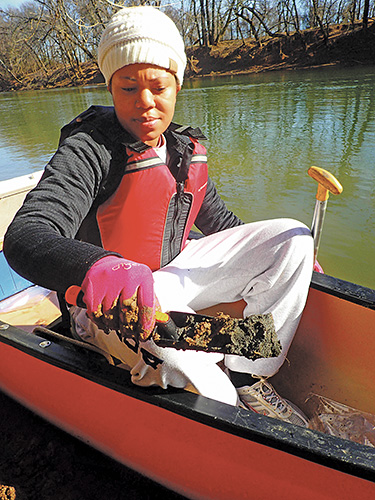
In its first Tennessee River Tour this spring, Living Lands & Water will travel the length of the river in a colossal vessel made of four garbage barges and a floating classroom.
Read MoreNature: There’s an App for That
Many smartphone applications tend to isolate users, since staring at a screen automatically distracts them from their natural surroundings. However, there are some apps that may actually help to bring users closer to nature — here’s a few to try.
Read MoreKentucky Seeks to Keep Asian Carp In Check
In its first annual report to Congress on invasive Asian carp, the U.S. Fish and Wildlife Service said in February that the aggressive fish are spawning in the Ohio River at Louisville, and have been detected as far upriver as Huntington, W.Va.
Read MoreBy the Numbers
An at-a-glance look at Appalachian environmental and cultural news.
Read MoreObama Orders More Climate Change Mitigation
President Obama signed an executive order in March to address human-caused climate change by cutting federal agencies’ greenhouse gas emissions by 40 percent and increasing their renewable energy generation by 30 percent.
Read MoreDOE Pulls Support for “Clean Coal” Plant
Citing a desire to “protect taxpayer interests,” the U.S. Department of Energy announced in February plans to withdraw its $1.1 billion funding commitment to FutureGen 2.0, one of the most high-profile and costly coal-related projects in history.
Read MoreSolar Industry Leaders Arrive in NC
Two national solar companies that focus on residential and business installations have announced they will begin operating in North Carolina.
Read More“Clean coal” is on the fritz
 From The Appalachian Voice Online: As one of the most high-profile and hyped-up projects of its kind, the FutureGen “clean coal” plant in Illinois was supposed make history. So the announcement that the U.S. Department of Energy is backing out of its $1.1 billion funding promise to the project sent a shockwave through the coal sector and investors, energy analysts and environmentalists all took note.
Coal Ash Management
The first federal regulations governing the disposal of toxic coal ash passed in December 2014. The rule provides some safeguards, but environmental advocates aren’t reassured. And in North Carolina, more than a year after the Dan River coal ash spill, communities living near the waste are still concerned about the pollution’s effects.
Read More