

New Books For Thru-Hikers
Reviews by Bill Kovarik
How to hike the Appalachian Trail:The nitty-gritty details of a long-distance trek

By Michelle Ray (Stackpole Books)
“In a world full of mediated spaces and experiences,” writes Michelle Ray, “a trip to the back country allows an individual the sort of autonomy he or she craves.” As Henry D. Thoreau said, a person may rationalize hiking as going to the woods “to live deliberately.”
Out in time for hiking season, this deliberate and lively book explains the why, the how and the where of the Appalachian Trail, offering advice on subjects ranging from physical conditioning (three months of daily training) to packs for women (for narrower shoulders) to drying out wet shoes (take off the laces, and/or stuff with newspaper).
The book also describes some of the AT’s traditions, such as trail names and the “Trail Days” festival in Damascus, VA, held the weekend after Mothers’ Day, and also covers the “who” of hiking with stories about some thru-hiker legends.
The Barefoot Sisters Southbound
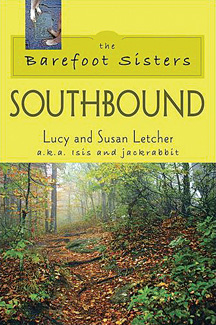
by Lucy and Susan Letcher (Stackpole Books, 2009)
To be on the trail with Isis and Jackrabbit (Lucy and Susan Letcher) is, first of all, to admire some down-home grit. After all, can you imagine these women setting out on a frosty morning, without hiking boots, or even so much as a set of flip-flops?
The sisters prove that good set of calluses on the feet can compensate for a lot of gravel, and – apparently – a little bit of frost.
Like every thru-hiker on the Appalachian Trail, the Barefoot sisters run into a cast of characters worthy of Jack Kerouac on the trail. There’s Tuba Man, German Forest, Solid, and Playfoot – all described with insight and vivid writing.
The determination of the sisters is astonishing. Co-author Susan Letcher (Jackrabbit) recounts the doubt she felt after the first few bare footsteps on the trail; she turned to her sister, “half expecting to see the same doubt mirrored in her face,” she writes. “But her eyes were shining, and she smiled with an almost feral intensity. It was a look I would come to know all too well over the next year and a half, and it meant ‘I am going to do this and no one had better try to stop me.’”
Eventually, hiking in the moonlight, they begin to feel a connection to a different culture, an older, nomadic way of life, as if they belong to the woods and stars.
It’s a fun, refreshing read, just right for packing in a daypack or leaving for friends along the trail.
Other recent AT books include:
— The Appalachian Trail Data Book, by Daniel D. Chazin; Tne Appalachian Trail Thru-Hike Planner by David Lauterborn; and the Appalachian Trail Thru-Hikers’ Companion, all published by the Appalachian Trail Conservancy
— Awol on the Appalachian Trail by David Miller,Wingspan Press
— The Appalachian Trail : How to Prepare for & Hike It by Jan D. Curran, Rainbow Books
— A Walk in the Woods: Rediscovering America on the Appalachian Trail by Bill Bryson, Anchor, Re-issued 2006
Related Articles
Latest News
More Stories

Neighbors Help Neighbors
A photo essay that celebrates the volunteer spirit of the grassroots group Hurricane Helene WNC and speaks to the resourcefulness, collaboration and hard work embodied by thousands and thousands of volunteers, first responders and aid workers across the region after Hurricane Helene.

Halloween Approaches, and Night School Is in Session
The House of Art in Bluefield, West Virginia, looks like a haunted tower, making it the perfect location for its sixth annual haunt event: Night School. The Night School will be open every Friday and Saturday night through Oct. 31.

‘The Most Perfect Act of Love’
Hundreds of people attended the second annual Affirming Sumner Pride celebration on a 24-acre farm dubbed “Fruity Farm” in Bethpage, Sumner County, Tennessee.

Signs of Life: Endangered Bats Found in Nantahala for First Time in More Than a Decade
In the Nantahala National Forest, a team of biologists spotted Indiana bats, an endangered species that hasn’t been seen in North Carolina for the last 11 years.

‘First Line of Defense’
During Hurricane Helene and its aftermath, rural fire departments and other first responder hubs played critical roles in keeping their communities safe, even without power and cut off from outside support for days or weeks after the storm. Two years later, plenty of work remains to ensure these hubs have the resources they need to operate day to day and be ready when emergencies or natural disasters strike.

The Rocky Road — and Bridge — to Recovery
Hurricane Helene is estimated to have damaged nearly 7,000 private roads and bridges in Western North Carolina. Two years later, many restoration projects are complete, but the journey hasn’t been easy — and isn’t over for others.

Leave a comment
Your email address will not be published. Required fields are marked *
Leave a Comment