

Neighbors Help Neighbors
By Max Posner
Editor’s Note: In the wake of Hurricane Helene, the power of the storm’s devastation was matched by the power of communities mobilizing to help one another. Neighborhoods organized, and countless local networks and organizations emerged to support those in need. This photo essay celebrates the volunteer spirit of one such organization and speaks to the resourcefulness, collaboration and hard work embodied by thousands and thousands of volunteers, first responders and aid workers across the region. As recovery continues for many people and places impacted by Helene and as communities prepare for future disasters, it’s essential that we continue to connect to that passion for helping one another.
Before Hurricane Helene tore through Western North Carolina, Lance Buskey, a member of the whitewater paddling community, had just moved to Asheville and was working as a carpenter.
In the days after the storm, Buskey and some friends in the outdoor community immediately got to work, making meals for those in need, distributing water out of 55-gallon barrels, and posting on social media to ask for donations. Within 24 hours of sharing a photo of Cooper Leist in a pickup truck delivering water, people had sent in over $5,000 in aid. Then another $15,000. At this point, Busky realized, “We can either hand this off to someone else, or we can mobilize.” And that’s what they did.
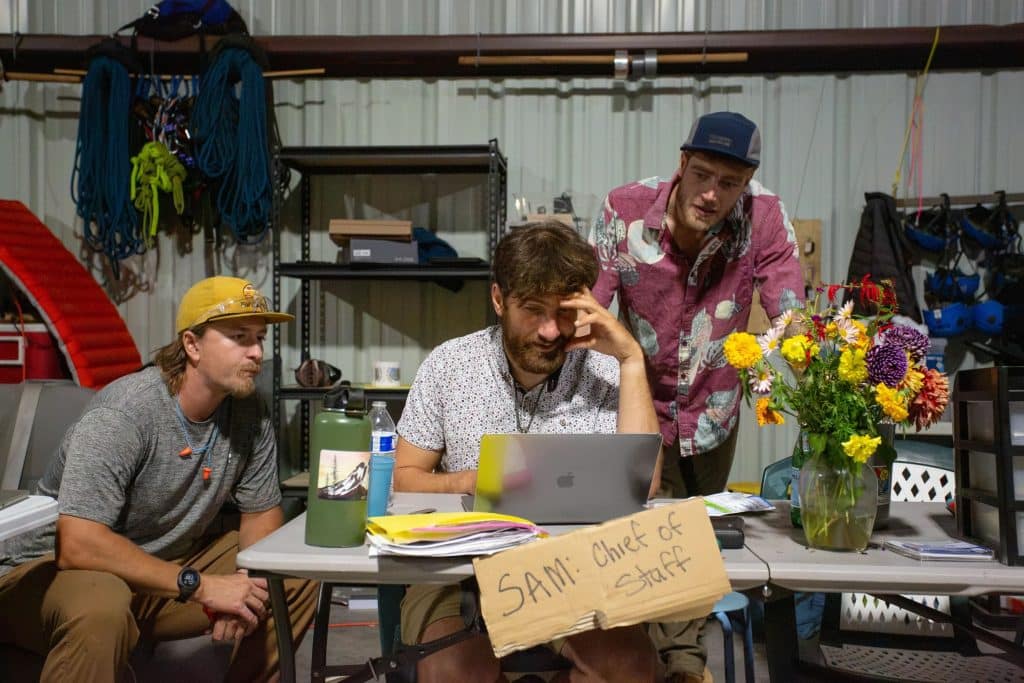
On Monday, Sept. 30, the group of friends and volunteers from the outdoor community began operations out of French Broad River Academy, an independent middle school for 6th-8th graders where one of the effort’s founders, Sam Iatarola, taught. Over the next three days, the effort brought in more than $100,000 from around the world. By early October, the effort poured $500,000 into local communities. By mid-October, volunteers working long hours had completed more than 500 missions in over 12 counties in Western North Carolina and one in Tennessee. The all-volunteer effort, named Hurricane Helene WNC, was largely facilitated by the Asheville paddling and outdoor community, though volunteers also traveled from more than eight states to help.
Hurricane Helene WNC members took ownership of finances, logistics, supplies, operations, medical, and volunteer coordination. At a morning meeting in early October, a member of the U.S. Special Forces stated, “The model is working well here. It’s a model worth replicating … You guys are more organized than most battalion staffs.”
In late 2024, the grassroots effort became the nonprofit Helene Rebuild Collaborative, which continued providing aid to hard-hit communities. The group also helped people who didn’t qualify for FEMA assistance or lacked flood insurance by providing funding, building materials and manpower to rebuild their homes. The nonprofit ceased operations in 2025, but for a time it was a grassroots, youth-driven example of what it looks like when a community shows up to help neighbors and strangers alike.


“We loaded up our car with search and rescue gear and medical equipment, because that’s what we thought was going to be the highest need,” she said. “And we drove down [there] not knowing if we’d be turned away, or if they needed our help. And we ended up working the whole weekend — like 6 a.m. until midnight for the whole weekend.”

“People call us and tell us they need stuff, so we just get a truckload and head that way… This is awesome!” Loftin said. “We’ve been able to get generators, heating supplies…for the people in the hard-hit areas up there that’s not going to get anything for months.” Photo by Max Posner

“We work with people every day that are on our team that literally don’t have houses to go home to, but yet they choose to come in and help others … I kind of call it the American disposition,” Piercy said. “Like there’s certain people in this world, and I’ve gotten to work with a lot of them over the past few weeks — they have an unwavering commitment and support to their neighbor, and to something greater than themselves. And I’ve gotten to see that time and time again.” Photo by Max Posner


“They were a group that showed up and said, ‘Hey, we’re here to help,’” said Jonathan Pulley of Fork Mountain Volunteer Fire and Rescue. “I’d been working on tracking addresses of where we needed some help at. So I dispatched them. They came back; they would check in. They were bringing supplies. Whatever I’ve needed.” Photo by Max Posner


“Grassroots organizations are critical, because they know more about the community than we do … and so partnering with these communities, or these partners that are in the communities, is critical for the success for all of us, to make sure that we’re serving people in the way that they need,” she said. Photo by Max Posner


“I have a ton of history here, and I can’t imagine living anywhere else … If we can rebuild, we’re going to build back stronger here,” said Tissica Schoch, a Swannanoa resident who coordinated with Hurricane Helene WNC volunteers to clean mud out of houses inundated by the river. Photo by Max Posner

“We couldn’t get through this without [the volunteers],” Hyde said. “Our family wants to come help, and our friends, but they can’t because the roads are washed out …We’re just all so grateful. And that keeps us from losing hope.” Photo by Max Posner

“If people can give a moment of their time-one day every month for the next year, it can still be a huge help to all of these folks… I’ve got a house standing,” Manning said. “And I’m standing in this house that’s falling apart, trying to make sure that the baseboards are drying so that they can try to save this house.” Photo by Max Posner

“I think it’s a shame that it takes something like this [Hurricane Helene] for people to do things like this [provide aid]… instead of being greedy all the time,” Shelton said. “And then when something like this happens, they realize that we all got to stick together, or we’re not going to be here.” Photo by Max Posner

“Who am I? Someone who cares deeply about community,” said volunteer Laurel Roser. “That was the biggest thing the Appalachian Mountains taught me — was that mountain folk watch out for mountain folk… The rivers sustain us, and they may come in and destroy things, but we still love them… I love the river. Even now. She’s life, are you kidding me? Without her, where would we be? Nowhere. Even with the stuff that happens… She’s always going to be here. We’re not. We’re just borrowing time that she’s lending us. So we should be grateful. And we clean up after her messes.” Photo by Max Posner
Related Articles
Latest News
More Stories

Halloween Approaches, and Night School Is in Session
The House of Art in Bluefield, West Virginia, looks like a haunted tower, making it the perfect location for its sixth annual haunt event: Night School. The Night School will be open every Friday and Saturday night through Oct. 31.

‘The Most Perfect Act of Love’
Hundreds of people attended the second annual Affirming Sumner Pride celebration on a 24-acre farm dubbed “Fruity Farm” in Bethpage, Sumner County, Tennessee.

Signs of Life
In the Nantahala National Forest, a team of biologists spotted Indiana bats, an endangered species that hasn’t been seen in North Carolina for the last 11 years.

‘First Line of Defense’
During Hurricane Helene and its aftermath, rural fire departments and other first responder hubs played critical roles in keeping their communities safe, even without power and cut off from outside support for days or weeks after the storm. Two years later, plenty of work remains to ensure these hubs have the resources they need to operate day to day and be ready when emergencies or natural disasters strike.

The Rocky Road — and Bridge — to Recovery
Hurricane Helene is estimated to have damaged nearly 7,000 private roads and bridges in Western North Carolina. Two years later, many restoration projects are complete, but the journey hasn’t been easy — and isn’t over for others.
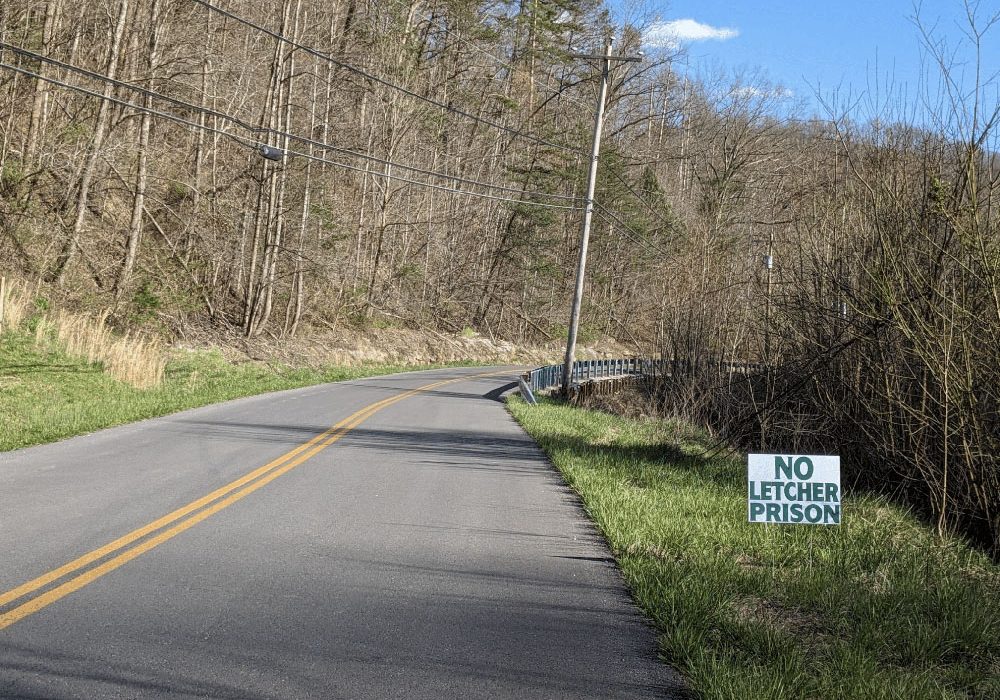
After 20 Years, Letcher County Prison Proposal Is Still Alive, Though Obstacles Remain
A $605 million proposal for a federal prison on a former strip mine site in Letcher County, Kentucky, championed by U.S. Rep. Hal Rogers, refuses to die, despite local opposition, a lack of support from the executive branch and numerous other obstacles.

Leave a comment
Your email address will not be published. Required fields are marked *
Leave a Comment