
Front Porch Blog
What we learned in three years of community air monitoring in Central Appalachia

Willie Dodson installs an air monitor as part of the USACAMP project. Photo by Michael Swensen, Earthjustice
For years, residents across Appalachia have raised concerns about the air they breathe near coal mines, haul roads, landfills, industrial facilities and other potential sources of pollution. But in many rural communities, the nearest state or federal air monitor may be many miles away, too far to tell residents much about what is happening in their own neighborhoods.
In 2023, Appalachian Voices and community partners set out to help fill that gap.
Through the Upper South and Appalachia Citizen Air Monitoring Project, or USACAMP, Appalachian Voices worked with community organizations, universities and local residents across Kentucky, Pennsylvania, Tennessee, Virginia and West Virginia to build a large, community-based air-monitoring network.
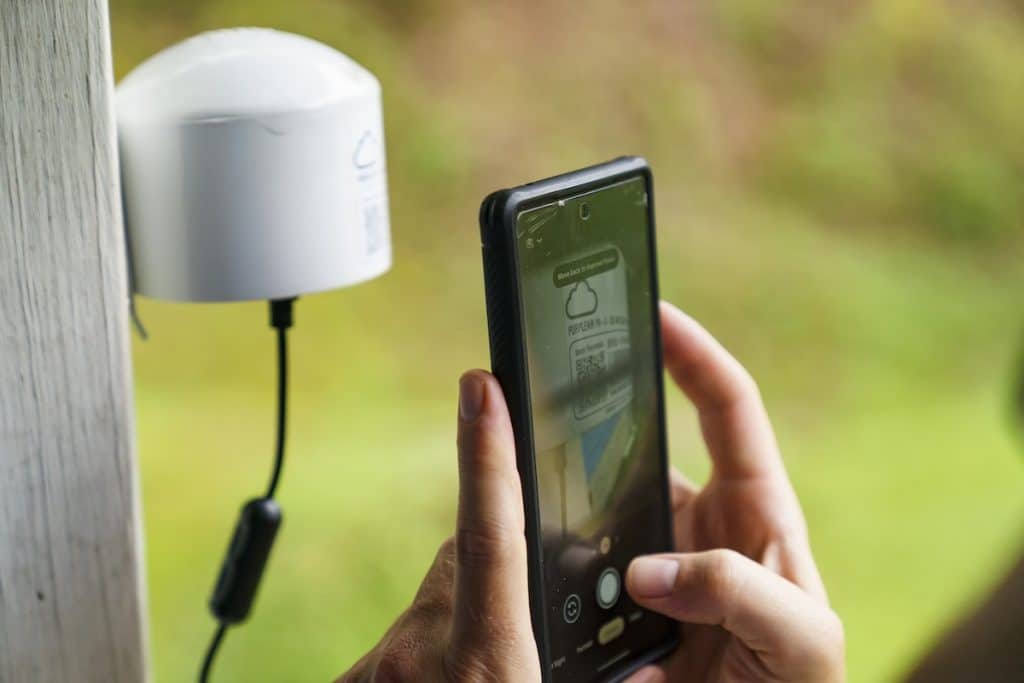
Over the course of the project, Appalachian Voices deployed 75 PurpleAir particulate matter monitors across 35 communities. We also conducted more specialized monitoring in communities concerned about pollutants that PurpleAir monitors cannot measure, including sulfur dioxide and volatile organic compounds.
After nearly three years of monitoring, the project has produced a substantial public dataset and some important lessons about both air quality and the challenges of monitoring pollution across a large, primarily rural region.
What did we find about particulate matter?
Most of the USACAMP network consisted of PurpleAir monitors measuring particulate matter, including PM2.5 and PM10.
PM2.5 refers to particles 2.5 micrometers wide or smaller, while PM10 includes somewhat larger particles up to 10 micrometers. These pollutants can come from many sources, including combustion, industrial activity, vehicle traffic and coal dust.
Because PurpleAir monitors are lower-cost sensors rather than regulatory air monitors, we used quality-control procedures and an EPA-supported data correction method for PM2.5 before comparing the results with the numerical levels of federal air-quality standards.
Overall, the corrected PM2.5 measurements and our screening-level PM10 estimates were generally consistent with the numerical levels of current federal particulate-matter standards.
That is encouraging, but it comes with some important qualifications.
USACAMP was designed as a community screening project, not as a regulatory monitoring network. Most locations produced about 10 quarters of monitoring data rather than the full 12 quarters needed for a complete three-year regulatory comparison. Monitors also occasionally went offline, were replaced or had to be removed when a community host could no longer participate.
To build longer-term records, we sometimes used data from other nearby USACAMP monitors within the same community to fill gaps after data from the original monitor and its replacements was no longer available. That means some of the longer-term results are best understood as representing conditions at a community scale, rather than a continuous three-year record from a single point.
Even with those limitations, nearly three years of measurements provide a substantial record of particulate-matter conditions in places where little localized monitoring previously existed.
And measurements below federal particulate-matter standards do not necessarily mean that dust has had no impact on residents.
Federal standards focus on particular particle sizes and averaging periods. Residents may also experience short dust events, visible clouds of dust, material deposited on homes and vehicles, the need to repeatedly spend time and money cleaning, reduced ability to enjoy outdoor spaces and the stress of living near a potential pollution source. A PurpleAir monitor can help answer some questions about particulate matter, but it cannot measure every way pollution affects daily life.
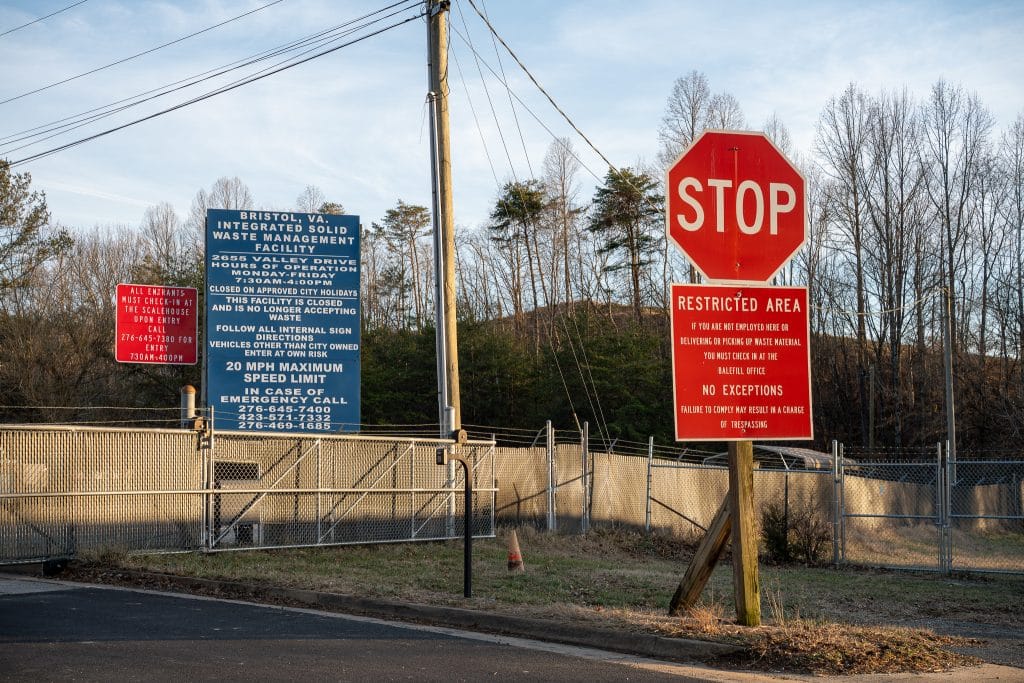
Bristol monitoring found a recurring elevated levels of sulphur dioxide
Bristol Virginia/Tennessee also purchased additional monitoring equipment known as Sensit Ramps that use electronic sensors to monitor for gases including SO2, VOC’s, NH3 and H2S.
Our multi-year community monitoring project revealed that sulfur dioxide levels near the Bristol landfill are the most critical localized air-quality pattern requiring immediate investigation, with short-term pollution spikes drastically outpacing national averages. The data uncovered a distinct seasonal trend, showing that elevated sulfur dioxide concentrations occurred far more frequently during the summer months, with the highest hourly pollution peaks documented during summer 2025. Throughout the monitoring period, the Bristol project’s specialized monitors captured dozens of separate hourly averages that breached the numerical level of the federal one-hour standard baseline, with peak hourly concentrations skyrocketing well past normal federal limits.
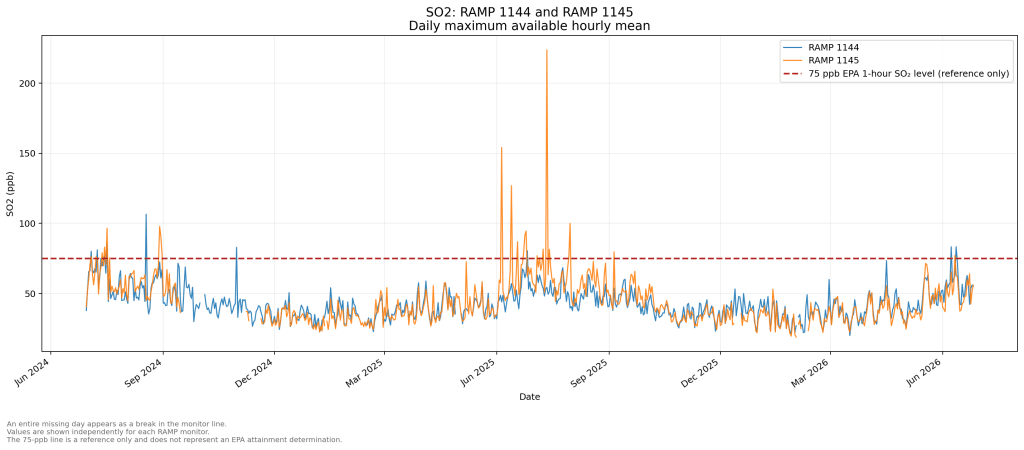
On an even shorter, 10-minute scale, the network identified numerous distinct pollution episodes where concentrations crossed severe environmental thresholds. These recurring, short-duration spikes validate long-standing community odor complaints and reinforce the warnings of federal health consultations, which note that short-term sulfur dioxide exposures at these levels can cause severe airway narrowing in individuals with asthma.
Because these screening-level results indicate a persistent and potentially harmful pollution pattern, Appalachian Voices officially recommends that local agencies, universities and community partners immediately continue and strengthen sulfur dioxide monitoring near the Bristol landfill using more sensitive, regulatory-grade equipment to precisely track these emission spikes and protect public health.
Laboratory sampling gave us a closer look at VOCs
The Bristol project also examined volatile organic compounds, or VOCs.
The Sensit Ramp devices measure VOCs as a broad group, but are unable to identify specific compounds. Residents were specifically concerned about the compound benzene, which is a more common pollutant in the VOC class. To better detect specific VOC compounds, USACAMP deployed sorbent tubes, small tubes which collect air samples, for two weeks every quarter and sent them to a lab for analysis.
As a whole we did not detect very high levels of any of the VOCs through the sorbent tube sampling.
ATSDR’s 2025 health consultation identified benzene as a pollutant of concern based on earlier monitoring and reported that the highest time-weighted concentrations occurred on Jan. 25, 2022, when the landfill operator was conducting pipe and well cleaning. ATSDR concluded that this temporary activity may have caused benzene concentrations to rise above typical levels.
Periodic laboratory sampling should continue so the community can see whether benzene or the broader VOC mixture changes over time, given that the ATSDR report did find it, but we did not.
Community monitoring data are already being used
HOPE for Bristol, a community-based organization concerned about the impacts of the landfill, used USACAMP sulfur dioxide monitoring results in discussions with ATSDR about conditions near the landfill. University of Kentucky researchers followed project data during their own Bristol landfill research. In Virginia, the Protect Our Water, Heritage, Rights coalition used PurpleAir monitoring information in a 2026 presentation to a state council.
The project also helped groups outside the original USACAMP partnership. At least three organizations contacted Appalachian Voices for help establishing their own air-monitoring efforts, and we shared our EPA-approved Quality Assurance Project Plan with other nonprofit organizations looking for a model for their own projects.
Just as importantly, the data remain public.
The USACAMP project page includes quarterly and annual reports along with corrected PurpleAir datasets, SENSIT RAMP data and Bristol sorbent-tube laboratory results. Because the PurpleAir monitors are also part of a publicly accessible network, these measurements can continue supporting community members, researchers and others long after the original grant period ends.
What comes next?
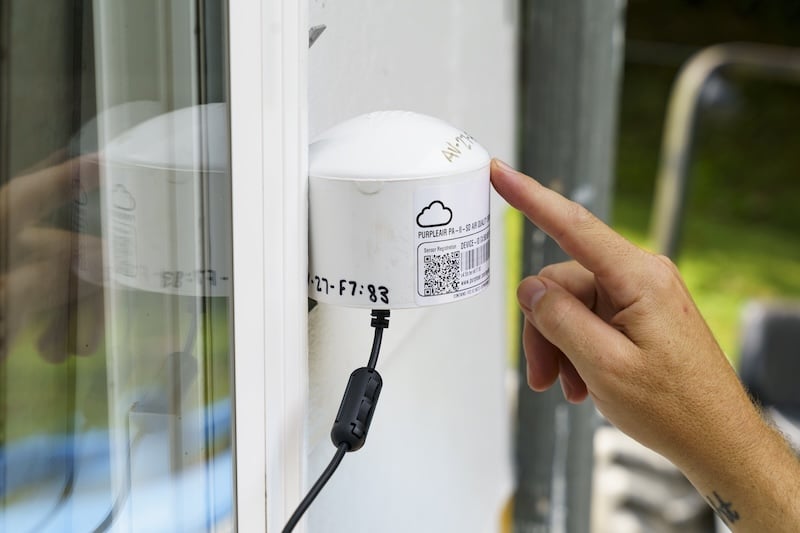
Three years of monitoring also taught us that operating a large community sensor network across five states is difficult.
Equipment fails. Internet connections disappear. Hosts move or decide they no longer want to participate. A monitor several hours away can be difficult for staff to repair quickly. Over the course of the project, monitors had to be cleaned, repaired, replaced and, in some cases, permanently removed. Future community-monitoring projects should account for that reality from the beginning.
For projects without dedicated monitoring staff, concentrating multiple monitors in a smaller number of communities may make it easier to maintain equipment and respond quickly when something goes wrong. If a project needs to operate a large regional network, its budget should include ample dedicated staff time for monitor maintenance, troubleshooting, replacement and communication with community hosts.
Appalachian Voices also hopes to keep portions of the existing PurpleAir network operating where community hosts remain interested and the monitors can be maintained. Keeping those monitors online would preserve valuable long-term records and allow communities to compare future conditions with measurements collected during USACAMP.
In Bristol, the work is even more urgent. Local agencies, universities and community organizations should continue sulfur dioxide monitoring with more sensitive equipment and continue periodic laboratory sampling for benzene and other VOCs. HOPE for Bristol plans to continue that monitoring.
Communities deserve information about the air they breathe
USACAMP began with a relatively simple idea: Communities concerned about air pollution should not have to live in an information vacuum.
Three years later, the project has created a regional public air-quality dataset, established long-term monitoring records in dozens of communities, strengthened partnerships between residents and researchers and identified pollution patterns that deserve additional investigation.
Community sensors cannot replace state and federal regulatory monitoring. But they can help residents ask better questions, identify patterns that might otherwise go unnoticed and provide evidence for deciding where more rigorous investigation is needed.
Most importantly, the project has put more information about local air quality directly into the hands of the people who live there.

PREVIOUS
NEXT

Leave a comment
Your email address will not be published. Required fields are marked *
Leave a Comment