
Front Porch Blog
SWVA leaders advocate for community resilience projects in D.C.

On an extraordinarily hot, humid day in July, three Southwest Virginia community leaders climbed their way around Capitol Hill. Leabern Kennedy, Vice Mayor of Pound, Linda Kiser of Dante and Melissa Gillenwater of Dungannon had endured the eight-hour drive from the other end of the state the previous day and were now making their way through a slew of meetings with congressional staffers to advocate for their homes.
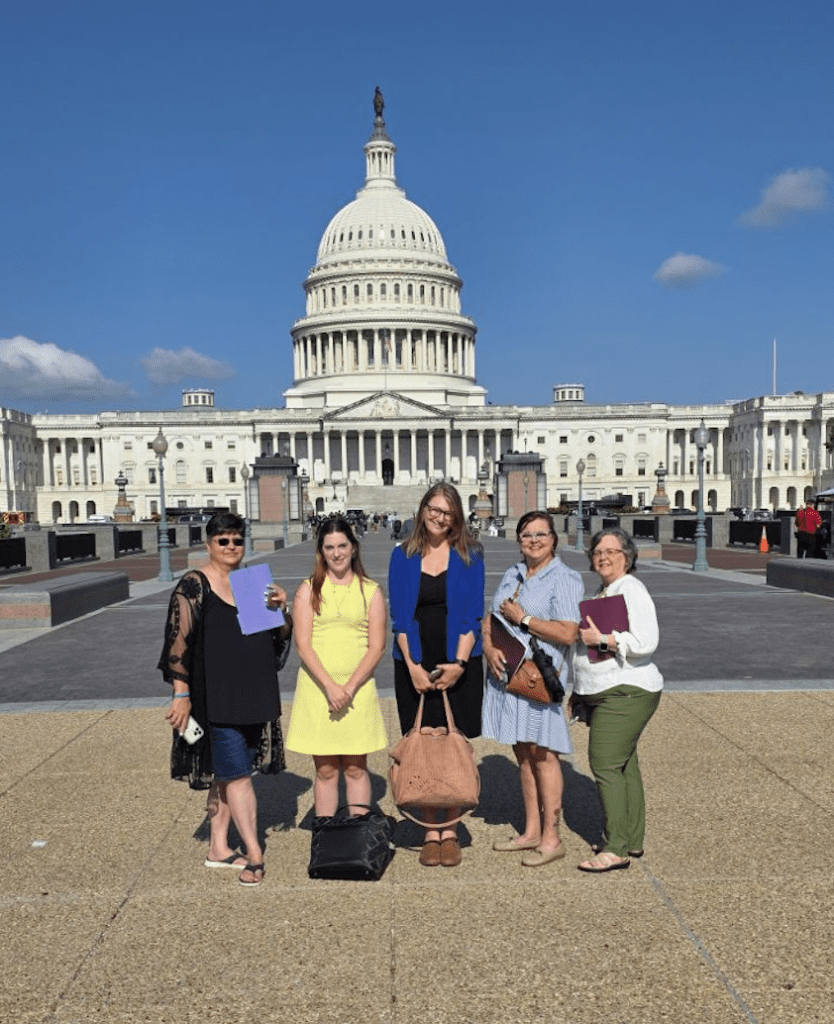
They were joined by New Economy Program Manager Emma Kelly, New Economy Program Coordinator Kara Dotten and Government Affairs Specialist Kevin Zedack.
In 2023, Appalachian Voices launched our Community Strong program, a cross-county effort to build community resiliency from the ground up. Resiliency is the ability to bounce back from adverse events like flooding or other disasters.
This effort was primarily funded by an Environmental Justice Collaborative Problem-Solving grant administered by the Environmental Protection Agency. It focused on having impacted community members define and design their own resiliency priorities for their homes.
The communities developed proposals like this to improve their resiliency:
- A flood-mitigating riverwalk in Pound that would help stabilize eroding banks while providing a new recreational space.
- Structural engineers and surveys to prepare for demolishing asbestos-ridden and abandoned buildings that sit in the floodplains.
- Plans for disaster resilience hubs that can provide shelter for folks during disasters and power outages.
In February 2025, this grant was terminated with the vast majority of funds for the vulnerable participating communities remaining unspent.
Appalachian Voices initially filed an appeal challenging the termination. When that approach didn’t pan out, we joined several partner entities in a class-action lawsuit, Appalachian Voices v. Environmental Protection Agency, to fight for our communities to the best of our ability. You can read more about our decision from our Executive Director Tom Cormons here. While we are proud to stand up for our region in court, there’s just no substitute for community members speaking directly to our lawmakers — and that’s how three strong Appalachian women ended up on Capitol Hill a few weeks ago.Kiser, Kennedy and Gillenwater met with staffers from several Congressional offices, including West Virginia’s Sen. Shelley Moore Capito, Virginia’s Sens Tim Kaine and Mark Warner, Southwest Virginia Rep. Morgan Griffith, and Rhode Island’s Sen. Sheldon Whitehouse.
The community leaders spoke personally and passionately about their homes’ limited capacity for applying for replacement funds, the ticking clock on disaster mitigation before another catastrophe strikes, and the trust that has now been destroyed between our local communities and the federal government.
The group was also able to squeeze in two meetings with House Transportation & Infrastructure subcommittee staffers and House Appropriations Homeland Security subcommittee staffers to speak in support of the Federal Emergency Management Administration and the Building Resilient Infrastructure and Communities program that was terminated for Pound.
Our lawsuit is being heard in court on Aug. 5, but our Community Strong work isn’t waiting. The July 18 flash floods that hit Dante have highlighted the need for immediate action to prepare for future climate events. Town residents continue to show up and uplift these projects, acting as the heartbeat for strengthening our region.
Both Dungannon and Dante are currently moving ahead with plans to renovate their historic depots into resilience hubs, as well as exploring options for stormwater-mitigating green infrastructure. In Pound, town leadership is continuing to pursue their riverwalk project, as well as a small park on a former brownfield landslide site.
Pennington Gap is making active moves towards demolishing the Cas Walker building, a brownfield site that floods often, and replacing it with a new park and greenbelt extension. Clinchco is participating in a statewide program to explore pathways to a resilience hub while also eyeing some public land parcels for flood-mitigating landscaping. For more details on the ongoing resilience work, check out our Community Strong webpage.
Flooding in Dante highlights need for resilience work
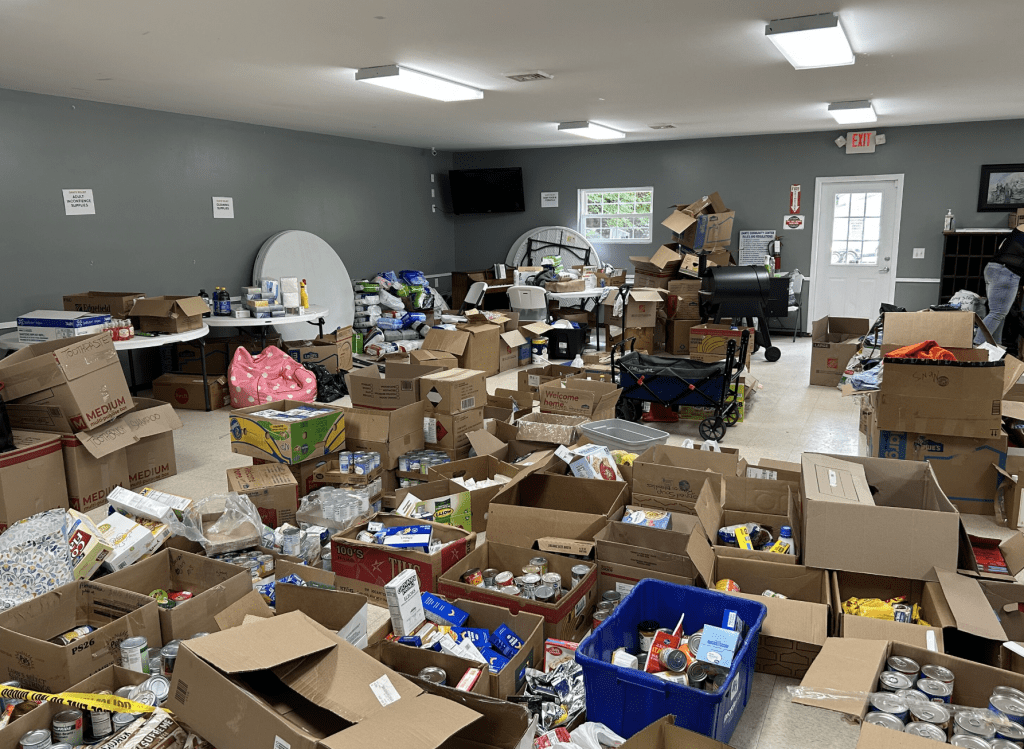
In July, our Community Strong partners in Dante faced a devastating flood, leaving behind both private and public property damage and monumental challenges for local residents to overcome. The small, localized impact of the flood is unlikely to earn a federal disaster declaration, leaving state and local authorities, nonprofits, churches and volunteers to deal with the aftermath and clean-up without FEMA assistance, and highlighting the urgent need for environmental resilience work across small, rural communities in Appalachia as severe storms and flooding become more common.
As part of the Community Strong initiative, the need for a resilience hub was one of the top priorities identified by community leaders and members. Plans were underway to further develop the Dante Depot into a resilience hub that would supply emergency necessities such as access to electricity, shelter and emergency supplies as part of the funding awarded for resilience work from the Biden-era Environmental Protection Agency; however, this funding was rescinded under the current administration.
Russell County Supervisor Lou Ann Wallace says that this funding could have been instrumental in helping to recover from the current disaster. “The money was going to be spent for further resiliency to make sure that we were better prepared,” she said.
“We wanted to be a model in our community, and show other communities in these hills and hollers here that yes, you can be resilient, you can rise up above all the problems, but we do need to have federal and state monies, and there needs to be a way to funnel that to the communities as opposed to it stopping at one place or just going away.”
Currently, the Dante Community Center is pulling double duty as a makeshift resilience hub and donation center, where community members can stock up on essential items like non-perishable food, bottled water, diapers and hygiene products. Donations are still being accepted in nearby Saint Paul at the town hall and the Russell County administrator’s office in Lebanon.

PREVIOUS
NEXT

Leave a comment
Your email address will not be published. Required fields are marked *
Leave a Comment