
Front Porch Blog
Coal ash: The next-door neighbor no one is talking about

TVA Kingston Coal Ash Spill. Photo courtesy of Dot Griffith photography
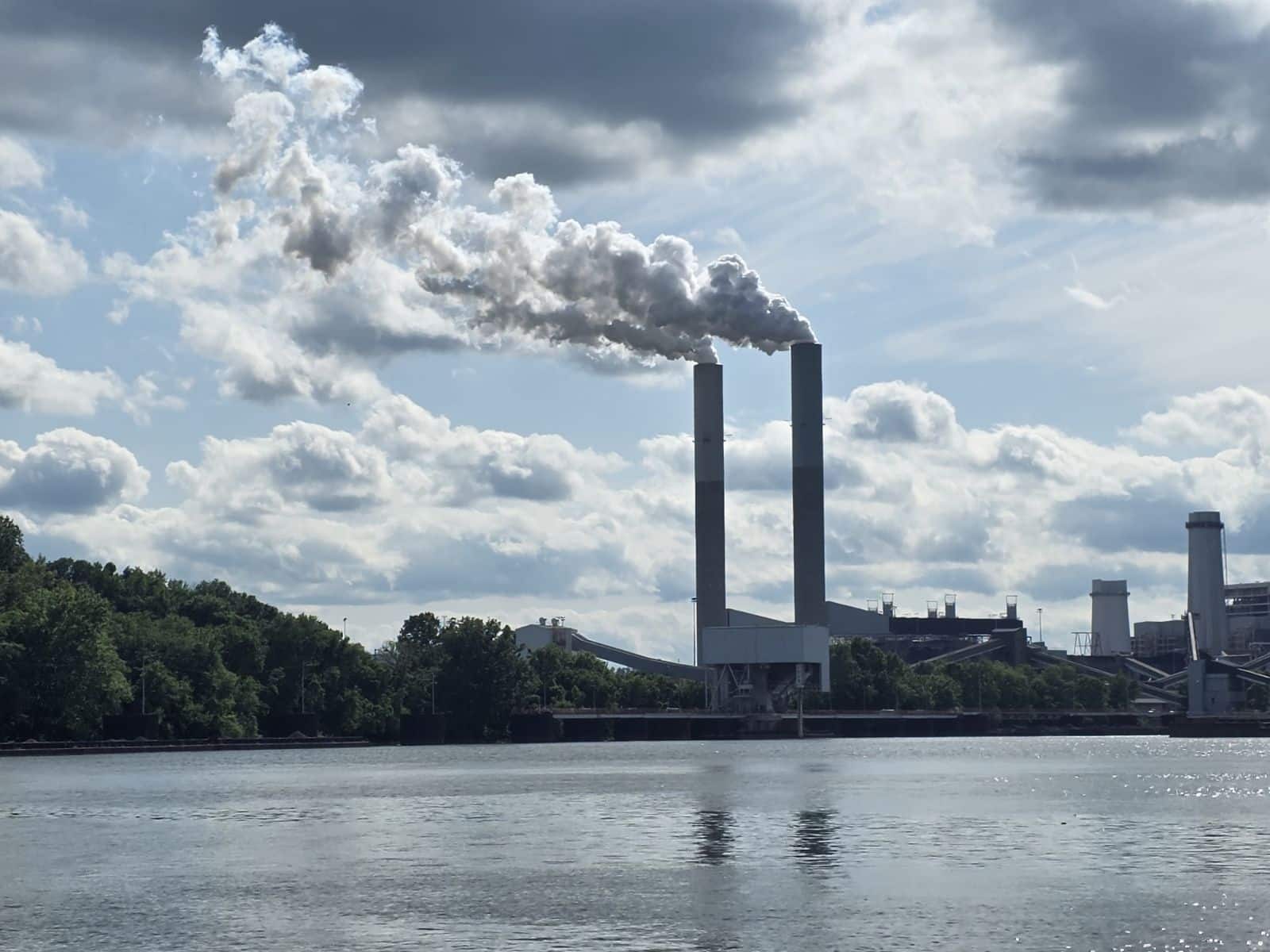
On clear days, I can see the smokestacks of the Cumberland Fossil Plant from my farm in Woodlawn, Tennessee. The Cumberland River flows past the plant on its way through communities that rely on its water for drinking, fishing and boating. Growing up, those smokestacks were simply part of the scenery, and I rarely thought about what was left behind after coal was burned for electricity year after year. These days, I can’t stop thinking about it.
More than a smoke show
Coal plants like Cumberland leave behind coal ash, which sounds benign enough — ash, like what’s left in a fireplace. But it’s not like that at all.
Coal ash contains mercury, lead, arsenic and many other harmful components that can cause serious health issues like cancer and organ failure.
There are millions and millions of tons of coal ash sitting in unlined ponds and pits right next to our waterways. And right now, the Tennessee Valley Authority and the Tennessee Department of Environment and Conservation are holding public hearings to gather community input on the future of that waste. These Corrective Action/Risk Assessment plans, or CARA plans, outline TVA’s proposals for how it intends to handle the coal ash and groundwater contamination at its fossil plant sites.
The most important TVA decision you’ve probably never heard of

TVA is a federal utility that owns and operates coal plants, so it’s responsible for managing and cleaning up coal ash contamination. TDEC is Tennessee’s environmental agency that serves as the regulator, reviewing TVA’s CARA plans to determine whether they adequately protect groundwater, waterways and nearby communities. TVA proposes a solution, but TDEC decides whether that plan meets state and federal environmental requirements. This process is a result of an administrative order that TDEC issued back in 2015, meant to ensure a transparent and comprehensive approach to TVA’s investigation and remediation of CCR sites. Part of that process includes public hearings and comment periods where community members can weigh in on TVA’s proposed cleanup — or in some cases, non-cleanup — plans.
In most cases, TVA’s preferred solution is not to remove the waste at all. Instead, TVA proposes to leave millions of tons of coal ash where it sits today in unlined pits and landfills, even where groundwater contamination has been documented. The process is known as “cap-in-place” — essentially covering coal ash with an engineered cap and monitoring conditions over time. But cap-in-place is not the only option. Coal ash can be excavated and moved to modern lined landfills designed to prevent contamination, or stored onsite in lined facilities located away from groundwater and waterways.
TVA argues that removal would take longer and cost more. Those concerns deserve consideration, but they should not outweigh the long-term protection of groundwater and the safety of nearby communities. The question at the heart of these hearings is whether the easiest and least costly solution for TVA is also the safest solution for the public.
TVA has an especially loud voice. It is the largest public power utility in the country, serving over 10 million customers across seven states. It has lawyers, lobbyists, communications staff and substantial resources dedicated to shaping how we think about this issue. Despite this reach, public comments submitted to TDEC can help influence the final decision. It’s one of the few genuine pressure points the community has over TVA.
So these hearings are the moment. They are the public’s seat at the table.
Welcome to the hearing; don’t worry about the coal ash
During the Cumberland CARA hearing, I provided a public comment suggesting that TVA use its existing permit to build a lined landfill at the Cumberland site that meets regulatory requirements. I also voiced concerns that multiple groundwater monitoring wells at the Cumberland site showed contaminants exceeding groundwater protection standards, including arsenic, cobalt, lithium and molybdenum. After I finished my comment, a TVA staff member handed me a stack of fact sheets. The very first page, in bold, read: “Coal Ash is Not Hazardous.”
The situation was absurd. I was at a public hearing about cleaning up coal ash contamination, where I was given fact sheets that claimed coal ash isn’t even hazardous. When I read that pamphlet, I thought about the Cumberland River. I thought about the fish. I thought about my neighbors who rely on private wells and have no other source of drinking water. And I thought: Who authorized this? If coal ash were truly harmless, why were we discussing groundwater protection standards, corrective actions and long-term treatment plans?
That propaganda was later described by top scientists as filled with lies and misleading information. In an interview with Inside Climate News, Avner Vengosh, chair of environmental quality at Duke University’s Nicholas School of the Environment, called it “unbelievable” and part of a “misleading public campaign.”
“It’s scary,” he told the news outlet. “It’s like alternative reality.”
In the same article, Howard Frumkin, professor emeritus at the University of Washington School of Public Health and former director of the CDC’s National Center for Environmental Health, told the publication, “The headline declares that ‘Coal Ash Is Not Hazardous;’ this is simply untrue.” Later in the piece, he said that the handouts seemed “much more dedicated to protecting polluters than to protecting the health of people and communities.”
TVA’s own spokesman defended the materials, saying they were meant to “advance public understanding.” But the fact sheets used charts to show that coal ash contains many of the same elements found in ordinary rocks and soil — without mentioning that in coal ash, those elements are concentrated at levels that pose serious health risks
You don’t have to be a scientist to know propaganda when you see it. And you can bet that when a company hands you a fact sheet telling you not to worry, at a hearing where folks are commenting on its plan to clean up the contamination it’s causing, something is off.
The truth is that coal ash contains known neurotoxins, heavy metals and established carcinogens. And coal ash doesn’t just stay put in a pond or landfill. It leaches into groundwater. It works its way into rivers and aquifers — and in many places across Tennessee, this has been happening for years.
Data from monitoring wells at the Cumberland Fossil Plant show groundwater contamination. This is not speculation or fearmongering. It’s documented. And yet we’re being handed “fact” sheets that essentially say, “Nothing to see here.”
For those of us who fish these waters, boat on them, live beside them — this should make your stomach drop. Because coal ash has been stored in unlined landfills and pits for decades, and has been leaching into our groundwater, yet TVA’s current proposal won’t do anything to change that.
What happened the last time they said coal ash was safe
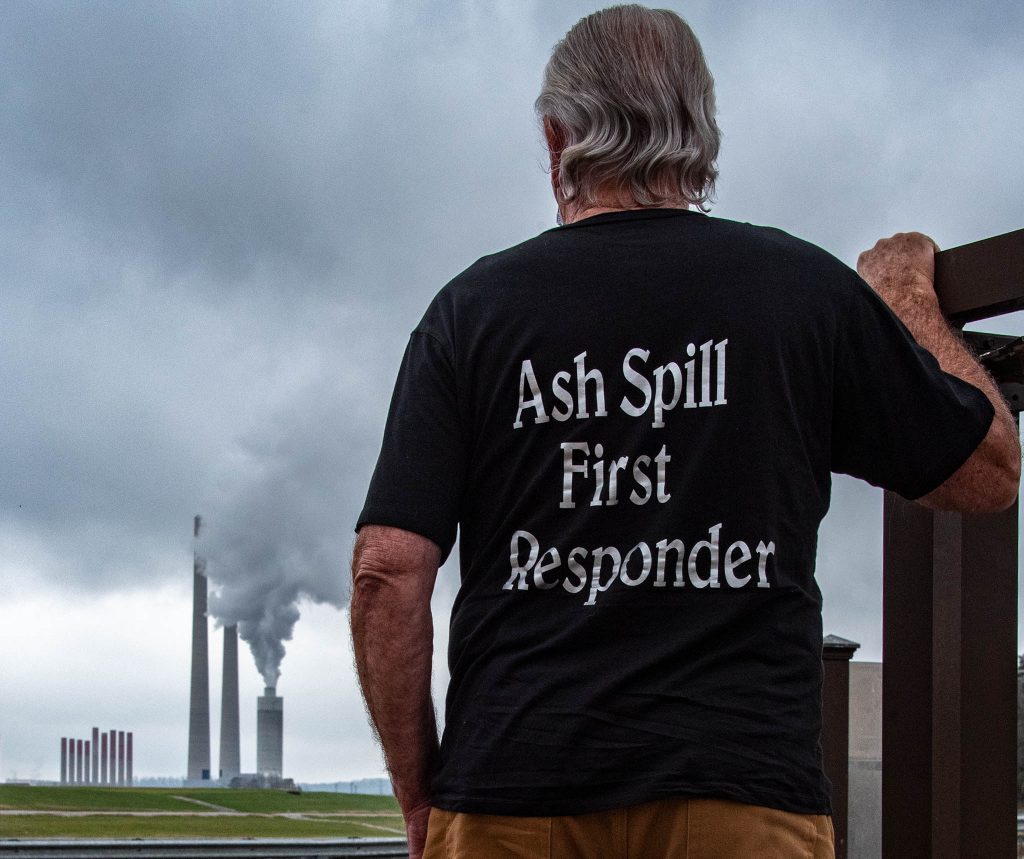
If you want to truly understand what’s at stake with these CARA hearings, let me tell you about Kingston.
On Dec. 22, 2008, a dike at TVA’s Kingston Fossil Plant in Roane County gave way. A billion gallons of coal ash slurry burst from a coal ash pond into hundreds of surrounding acres and nearby waterways. Houses were knocked from their foundations, and fish were thrown from the river when a 40-foot wall of coal ash erupted into the surrounding land and water. It is still considered one of the largest industrial spills in United States history.
For six years, hundreds of cleanup workers labored in the ash. These workers reported being told the coal ash was safe enough to eat and were denied protective equipment — even threatened with termination for wearing masks. There are photos of these workers covered with coal ash, standing waist-deep in the spill without protective suits.
Sound familiar?
“It’s safe.”
“Don’t worry.”
“Here’s a fact sheet.”
In the years that followed, hundreds of cleanup workers became seriously ill. More than 60 have died.
My colleagues at Appalachian Voices have done powerful, heartbreaking reporting on the Kingston families and their ongoing fight for accountability and the enormous price these communities paid to win the federal coal ash regulations that are now being rolled back.
That’s right, rolled back. The U.S. Environmental Protection Agency is now planning to dismantle key provisions of the 2015 and 2024 coal combustion residuals rules — the first federal regulations ever placed on coal ash cleanup and storage. The EPA’s latest proposal would exempt hundreds of coal ash dumps from regulation.
And TVA? TVA has scrapped plans to retire two of its old and costly coal plants, including the Cumberland plant near me, and the Kingston plant, which means more coal ash will continue accumulating at both sites.
In a recent interview with Inside Climate News, Stephen Smith, executive director of the Southern Alliance for Clean Energy, put it plainly: “It’s breathtaking that they’re now going this far backwards.” He noted the bitter irony of TVA — the utility responsible for the worst coal ash disaster in the country, whose cleanup workers died — now pushing materials that downplay the dangers of coal ash to the public.
Millions of tons of coal ash. One chance to get it right
I know a lot of people reading this don’t spend their days in advocacy, but maybe you spend them on the water. Maybe you’ve got a favorite spot on the Cumberland you hit every spring. Or you set out trotlines or have a bass boat. Perhaps you’re filling a glass of water from a well or a tap right now.
This is your fight, too.
When we are talking about toxic coal ash leaching into groundwater and rivers, we’re talking about the fish you eat. The water you drink. The places you love.
The CARA process is one of the few moments where your voice — your specific, local, “I live here, and I use this river” voice — is supposed to carry real weight. TVA is powerful and well-resourced, so TDEC needs to hear that the community is paying attention. That people like us care what happens to dangerous coal ash sitting in aging, unlined ponds.
Make your voice heard!
The CARA hearing at Kingston is coming up on Aug. 13. This community bore the worst of it, watched workers get sick and die, and has lived for nearly two decades in the shadow of what TVA’s coal ash can do when things go wrong.
If you’ve never attended a public hearing, I get it. They can feel formal, technical and a little intimidating. But you don’t need a degree in environmental science to participate. You just need to care, show up and say, “I live here. I fish here. I drink this water. I want honest answers. I want a cleanup plan that protects people, not polluters.” Because once the hearing is over, the comments are counted and the decisions are made, we all have to live with the outcome.
What can you do right now?
- Come to a Kingston community event to learn more about the dangers of coal ash.
- When: July 30 from 6-8 p.m. Eastern
- Where: Kingston Community Center, 201 Patten Ferry Rd., Kingston, Tennessee
- Attend the Kingston CARA hearing. Bring a neighbor. Bring your fishing buddy. Bring whoever you know who has a stake in these waterways.
- Submit written comments. Even if you can’t make it in person, TDEC accepts written public comments on these plans. Your words will go into the official record.
- Tell someone. Talk about it at the boat ramp, at your local diner, at church. Most people haven’t heard of CARA plans, which means important decisions about our communities are being made without folks even realizing it.
Public participation matters. These hearings exist because ordinary people demanded a seat at the table. Every comment, question and voice shines a light on what’s important to the people who live here.
That’s reason enough to show up.
I hope to see you in Kingston.

PREVIOUS
NEXT

Leave a comment
Your email address will not be published. Required fields are marked *
Leave a Comment