

River Cleanup of Helene Debris Continues
By Erin Savage
More than a year and a half after Hurricane Helene devastated communities across a swath of Appalachia and the Southeast, river recovery efforts are still underway. While most large-scale debris removal operations have ended, many rivers still require extensive cleanup. As the region continues to recover, a look at cleanup efforts in East Tennessee and Western North Carolina reveals lessons about how to improve the cleanup of public waterways after future floods.
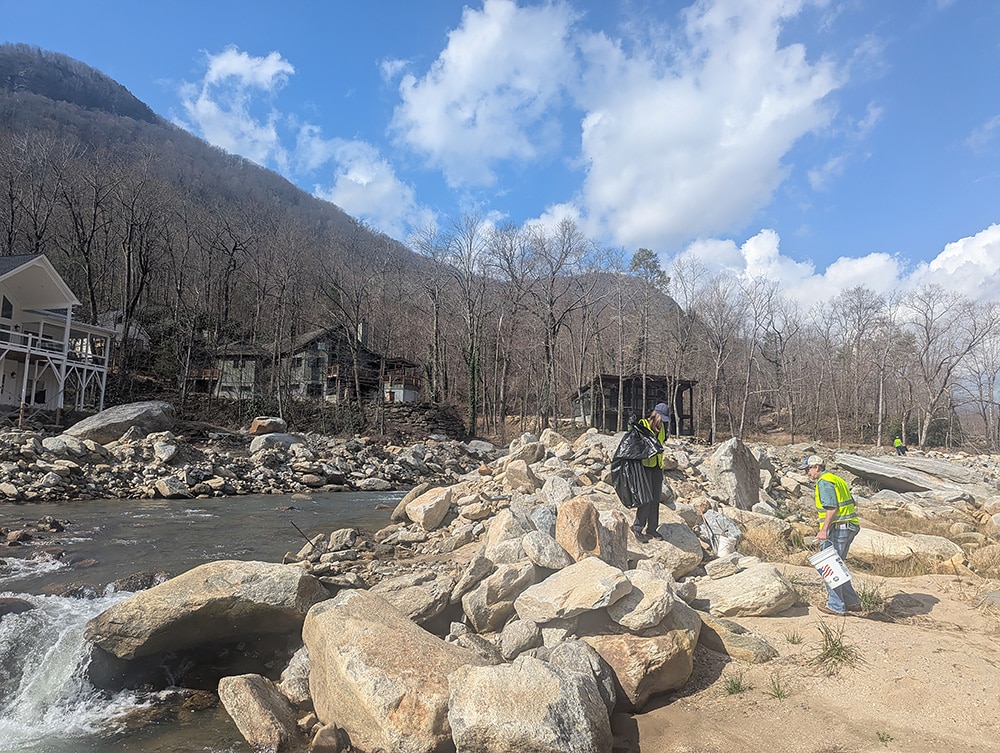
In September 2024, Helene washed homes, campers, storage containers, fuel tanks, vehicles, trees and other debris into Appalachian rivers. As floodwaters receded, volunteers from the region and beyond, eager to begin recovery efforts, attempted to remove debris from riverbanks and disentangle human-made debris from riverside log jams, so that the trash could eventually be removed. But it soon became evident that much of this work was beyond the capacity of local volunteers.
After major disasters, it is typical for debris removal projects to be undertaken by contractors and subcontractors, whether organized through the federal, state or local government. Some contractors have built huge businesses on the disaster economy, traveling across the country to sites in need of recovery work. While these companies bring much-needed capacity and expertise, they also have a history of creating problems in local communities.
By early 2025, large-scale debris removal projects were underway, either through the United States Army Corps of Engineers or county contracts. In either case, the work is eligible for Federal Emergency Management Agency funding.
Debris contractor successes and problems
The U.S. Army Corps of Engineers, contractors and subcontractors removed 6.6 million cubic yards of debris from North Carolina rivers at a cost of $1.6 billion.
AshBritt, a Florida-based disaster recovery company founded in the 1990s, has worked on recovery efforts following Hurricane Katrina, the 2022 Kentucky floods, the 2025 Los Angeles fires and Hurricane Helene. In 2023, Louisville Public Media uncovered multiple issues with AshBritt’s work in Eastern Kentucky, including leaving nearly 40% of debris behind, costs ballooning to 400% of the original estimates, multiple lawsuits over damage to private property, removing live trees from private property and failing to pay workers.
When debris removal began in North Carolina and Tennessee rivers, similar complaints arose about AshBritt and other contractors. Community members across multiple counties complained about contractors removing live trees and large woody debris that predated the storm, while leaving human-made debris behind. Removing live trees from riverbanks can worsen damage from future floods, as can removing natural debris that existed before Helene and helped to slow floodwaters.
Peggy Cantrell lives along the Nolichucky River in Unicoi County, Tennessee, and experienced significant flooding during Hurricane Helene. Cars, tractors and storage tanks ended up on the banks of the Nolichucky River along Cantrell’s land. Phillips and Jordan, Inc., a Knoxville-based construction company, conducted debris removal from the Nolichucky River.
“The guys running the equipment were very respectful and nice, but they had huge equipment and wanted to remove trees to move their equipment across my property,” Cantrell says. “If we hadn’t intervened, I don’t think we’d have a tree left.”
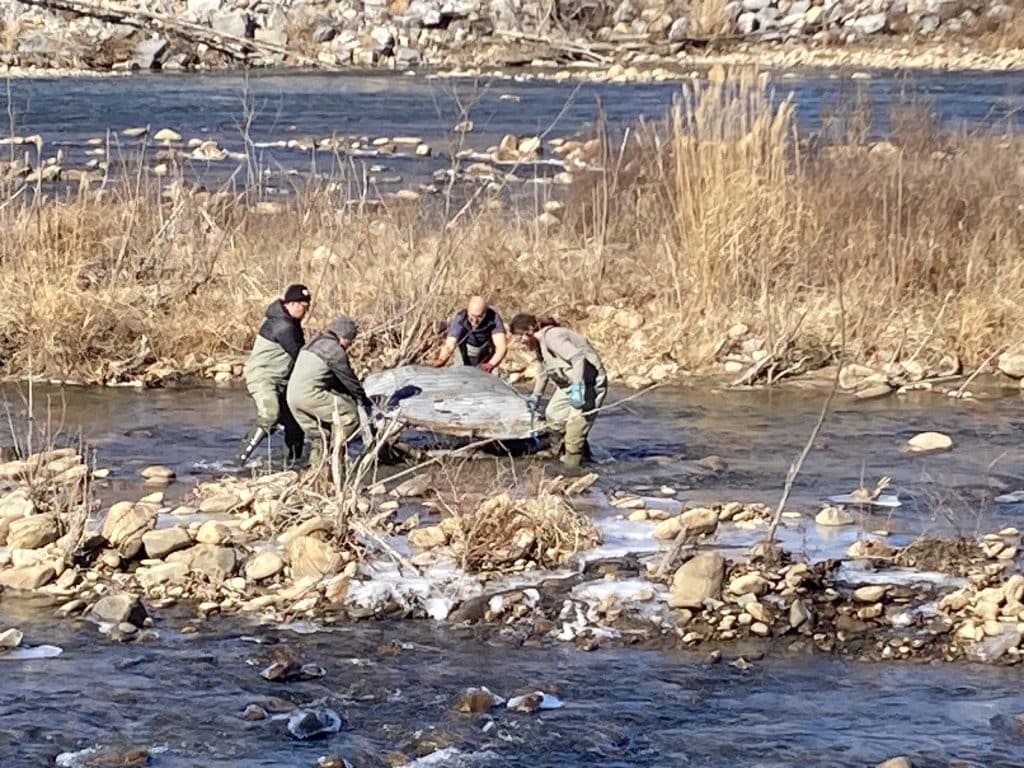
The contractors removed some trees that had washed onto an island in the river, but left behind large pieces of metal, which a local nonprofit group later had to remove.
Similar complaints were raised in North Carolina. Local nonprofits and residents noted that contractors were removing large downed trees along riverbanks that were stable and predated the hurricane. Under FEMA guidance, only storm-related debris removal is supposed to be reimbursed. But debris removal contracts often pay by volume, which can incentivize workers to remove the largest, heaviest items.
Crews often graded riverbanks as a final step, which removes most remaining vegetation and leaves bare ground that is prone to erosion. Restoration work, such as planting live stakes to revegetate riverbanks, is typically not included in federal debris removal.
The debris removal process varied across North Carolina counties, depending on contract terms and the crews performing the work. Floating the French Broad in Henderson County downstream into Buncombe County, it is evident that more large woody debris – which supports a healthy ecosystem – was left on the riverbanks in Henderson County. Some large woody debris along the French Broad predated the storm and should have been left in place according to federal regulation, which specifies that debris removed must be the result of the storm for which the funding has been provided. But the banks of the French Broad through Buncombe County, where the Army Corps was in charge of cleanup, are largely devoid of all woody debris. Henderson County contracted with debris removal crews directly, and the contract was based on linear feet of stream cleaned, rather than volume of debris removed, which incentivized more judicious debris removal.
Additionally, North Carolina Wildlife Resources Commission biologists marked large woody debris that provides important habitat, and asked contractors to leave the material in place. But opportunities for cooperation between contractors and the state biologists primarily occurred in counties that hired contractors through pre-arranged state contracts, as in Henderson County.
Henderson County’s direct involvement in the debris removal contract may have resulted in more careful work, but it may not be feasible for counties with smaller budgets. Like other counties in the region, Henderson County did not receive timely reimbursement from FEMA and is still waiting for significant funds. As of early April, the Hendersonville Times-News reported that the county was still waiting for reimbursement of more than $27 million after spending $66 million on storm-related costs, with much of that going toward debris removal.
Improving river cleanup following future disasters
David Ellum is the dean and director of working lands at Warren Wilson College, which owns 2.5 miles of land along the Swannanoa River, just east of Asheville. Contractors hired through the Army Corps and funded by FEMA worked along this stretch of river to remove debris. Ellum spent many hours monitoring the contractor’s activities to ensure the best possible ecological outcome for the river and surrounding areas.
“We made the decision that it was probably better for our river to give contractors some access points in, so they’d get into the river and back up on the farm roads, and not be tearing up the river,” Ellum says.
He notes that an important lesson learned is that landowners have agency to control what happens on their riverside land. He recognizes that not all local residents can devote the time he did to monitoring debris removal, but suggests that monitoring may be more feasible for a group of neighbors working together. Ellum also envisions a scenario in which the quantities and locations of debris could be estimated through remote sensing, which could assist in more thoughtful debris removal practices.
There’s widespread agreement among local environmental advocates that improving contract terms and predetermining contracts, strengthening oversight, empowering landowners and integrating restoration into cleanup efforts will help to ensure debris is removed efficiently and river ecosystems are restored effectively. Looking forward, many advocates suggest changing how debris removal contracts are structured, removing the volume measurements that can incentivize the removal of trees and stable large woody debris. Some advocate for contracts based on linear feet of stream cleared.
In either case, on-the-ground monitoring by individuals educated in river ecology is probably necessary to ensure that contractors do not prioritize the debris that is easiest to remove, even if it might not actually need to be removed. For example, large woody debris likely needs to be removed just upstream of bridges, but elsewhere these fallen trees provide important habitat and can often be left in place.
A local workforce takes on river cleanup and restoration
“We knew that a federally funded effort would be necessary to remove the large debris, but we didn’t understand exactly how destructive that effort would be in terms of tearing up river banks and removing live trees and large woody debris,” says Gray Jernigan, deputy director and general counsel for MountainTrue.
The nonprofit is home to the French Broad, Green, Broad, Watauga and Upper New Riverkeepers, as well as a number of other staff focused on social and environmental issues. The organization began cleanup efforts shortly after the storm, demonstrating that a local workforce was available and eager to work.
In mid-2025, MountainTrue received $10 million from the North Carolina Department of Environmental Quality to undertake a long-term river cleanup and restoration effort. Later that year, it received an additional $750,000 from the Center for Disaster Philanthropy, which allowed the organization to expand river cleanup efforts into Tennessee. The program launched in the summer of 2025 and is expected to last 24 months, covering 150 miles of rivers and streams, as well as riverfront property. With the funding, the nonprofit hired 90 staff, many of whom are outdoor guides who lost work due to the storm. The group hopes to secure more funding to extend the program.
On the French Broad River, the MountainTrue cleanup crew has been dealing with huge amounts of PVC pipe, which washed into the river from a riverside storage site run by IPEX, Inc. Jon Stamper, river clean-up operations director at MountainTrue, estimates that pipe accounts for 80% of what his crews remove directly below the IPEX facility, and 40% further down.
Thinking about how to avoid these problems in future floods, Jernigan says, “We’d like to see floodway regulations statute at the state level improved to empower local governments to do more to raise the minimum standards for what’s appropriate in the floodway.”
Utilizing a crew with whitewater experience and proper equipment, including rafts and safety gear, MountainTrue has been able to reach debris that federal contractors were unable to reach. The organization completed debris removal from Section 9 of the French Broad River, the river’s most technical section. The team used rafts and motorboats to move debris from areas of the river inaccessible from the shore to several drop points along the railroad, where debris could then be moved along the railway out of the river gorge.
Stamper notes that his crews’ experience helps them maintain a high level of safety while working in technical water and ensures that the contractors they work with are also educated.
“Safety is the number one thing for me,” Stamper says.
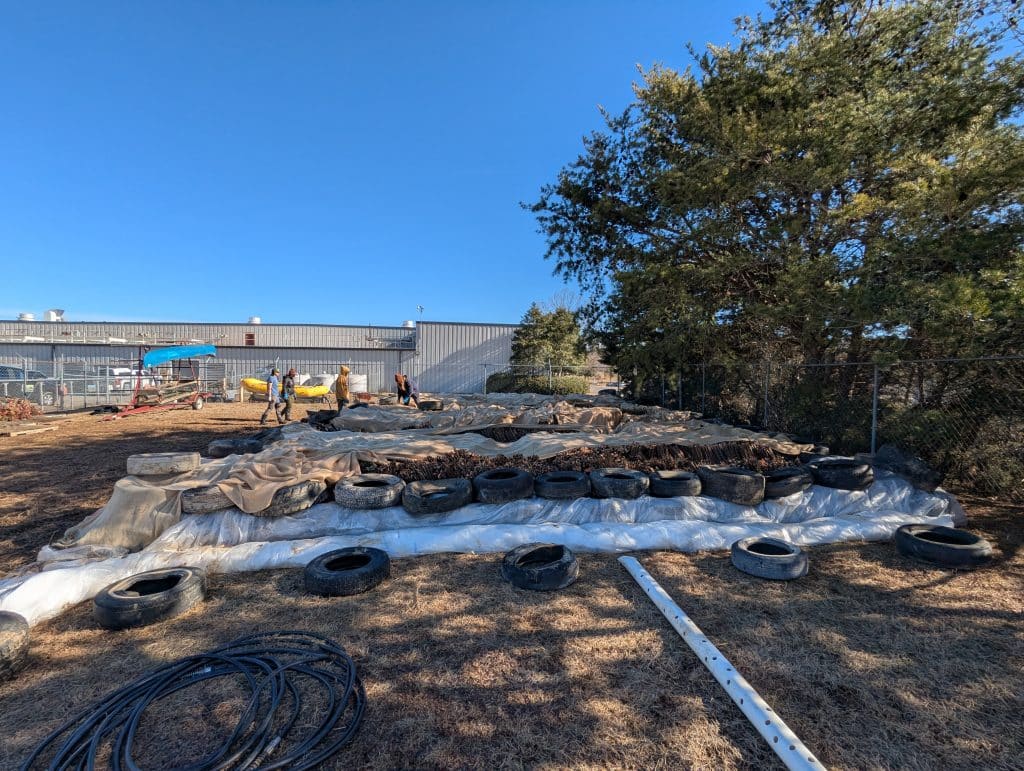
MountainTrue staff and volunteers are not only removing garbage from North Carolina rivers, but also conducting crucial streambank restoration. Heavy rainfall and floodwaters caused landslides and other erosion issues during Helene, and some debris contractors graded riverbanks, leaving little vegetation behind.
Through funding from the Community Foundation of Western North Carolina, MountainTrue has purchased 350,000 live stakes to revegetate riverbanks. Revegetation with appropriate native riparian species is critical to restoring healthy ecosystems by providing habitat, regulating water temperature by shading streams, and reducing siltation and erosion.
Recovery from Hurricane Helene has demonstrated the need for large-scale federal assistance to remove large debris from waterways, but greater coordination and funding for local efforts are also critical to the full restoration of public rivers and streams.
“My crew and I have been able to measure success not only by weight of debris removed, but also by the number of contacts we have made through the community and every conversation along the way,” says Hayden Cheek, North Toe River team lead for MountainTrue. “The funding we have received ensures that we are given the tools and resources to provide the best possible service to these communities day in and day out.”
Related Articles
Latest News
More Stories
Neighbors Help Neighbors
A photo essay that celebrates the volunteer spirit of the grassroots group Hurricane Helene WNC and speaks to the resourcefulness, collaboration and hard work embodied by thousands and thousands of volunteers, first responders and aid workers across the region after Hurricane Helene.

Halloween Approaches, and Night School Is in Session
The House of Art in Bluefield, West Virginia, looks like a haunted tower, making it the perfect location for its sixth annual haunt event: Night School. The Night School will be open every Friday and Saturday night through Oct. 31.
‘The Most Perfect Act of Love’
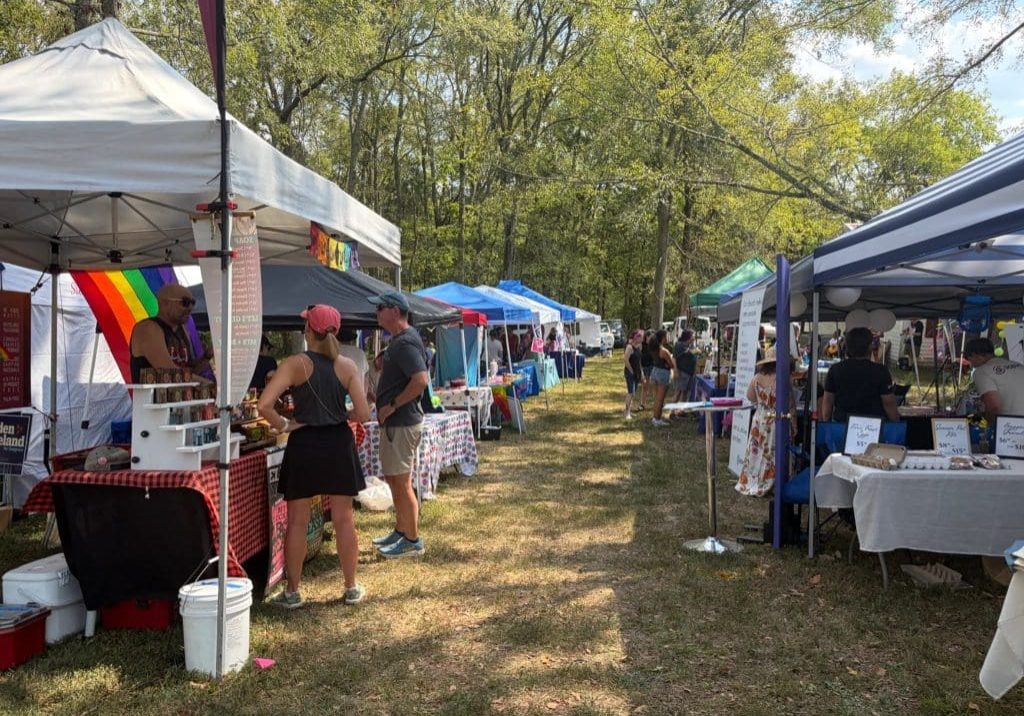
Hundreds of people attended the second annual Affirming Sumner Pride celebration on a 24-acre farm dubbed “Fruity Farm” in Bethpage, Sumner County, Tennessee.

Signs of Life: Endangered Bats Found in Nantahala for First Time in More Than a Decade
In the Nantahala National Forest, a team of biologists spotted Indiana bats, an endangered species that hasn’t been seen in North Carolina for the last 11 years.

‘First Line of Defense’
During Hurricane Helene and its aftermath, rural fire departments and other first responder hubs played critical roles in keeping their communities safe, even without power and cut off from outside support for days or weeks after the storm. Two years later, plenty of work remains to ensure these hubs have the resources they need to operate day to day and be ready when emergencies or natural disasters strike.

The Rocky Road — and Bridge — to Recovery
Hurricane Helene is estimated to have damaged nearly 7,000 private roads and bridges in Western North Carolina. Two years later, many restoration projects are complete, but the journey hasn’t been easy — and isn’t over for others.

Leave a comment
Your email address will not be published. Required fields are marked *
3 responses to “River Cleanup of Helene Debris Continues”
-

We have videos of water clogging off Nettle Knob from Beaver Creek. We sent them to Andrew at New River Conservancy. We have many videos of the devastation on our land from both the smaller storms and the larger ones. Please, we beg you. We have worked with the Army Corps of Engineers and have spent so much money trying to restore our banks to NO avail. We have to believe there is another option rather than just giving up and moving.
-
🤦♀️
To whom it may concern:
We are desperately seeking help with the debris filtering into Beaver Creek and then going into Ashe Lake. The debris/sedimitation is filling up Ashe Lake so much that soon, the water will just spread out instead of going into the reservoir and then reaching the New River. It seems to be backing up more and more into Beaver Creek. We live on a peninsula, with Beaver Creek on three sides of us. Our land is getting more devastated with each storm, and especially again after Isaias. What kind of solutions are there? We would like to know.
We are seniors and can’t help physically, but maybe we can help financially. We need to do something or we will lose our home eventually. There isn’t enough time or space to tell you how we were impacted by Helene. This is not the purpose of this post anyhow. We just want to know what we can do to help save our land, and the impacts the storms are having on our resources.
We have been in touch with Andrew at the New River Conservancy and have sent him water back up further up on Beaver Creek Road. I hope he sent it to you. If not, we will be glad to send it to you. It is part of the problem on Beaver Creek. There are so many smaller streams that become large during these storms that pour into Beaver Creek, making it wild and totally threatening to our lives.
We do humbly thank you for any help or guidance you may give to us. In return, we will do what we can do to help your organization.
Please contact us with any updates.
Burno and Dori Gold
3229 Nettle Knob Road
West Jefferson, NC 28694
(336) 649-1275 -
Are there any grants for bank restoration in Ashe County for private homeowner ?

Leave a Comment