

Building Community Resilience Hubs in Appalachia
The term “community resilience hubs” is becoming more common lately, especially in Appalachia following extreme flooding from Hurricane Helene. But what are resilience hubs, and why are people talking about them?
At its core, a resilience hub is a trusted, community-serving space that connects people with resources and services — in good times and bad. In fair weather times, it may offer workforce development training or serve as a local gathering space. During disasters or emergencies, the hub can offer shelter, sustenance and access to communications, especially if it’s prepared for power outages with portable or fixed renewable energy systems. It’s not a one-size-fits-all solution, either, and each hub reflects the specific community it serves.
Many community resilience hub projects are underway around the region. Here are just a few in North Carolina, Tennessee and Virginia.
$5 million community resilience hub initiative in North Carolina
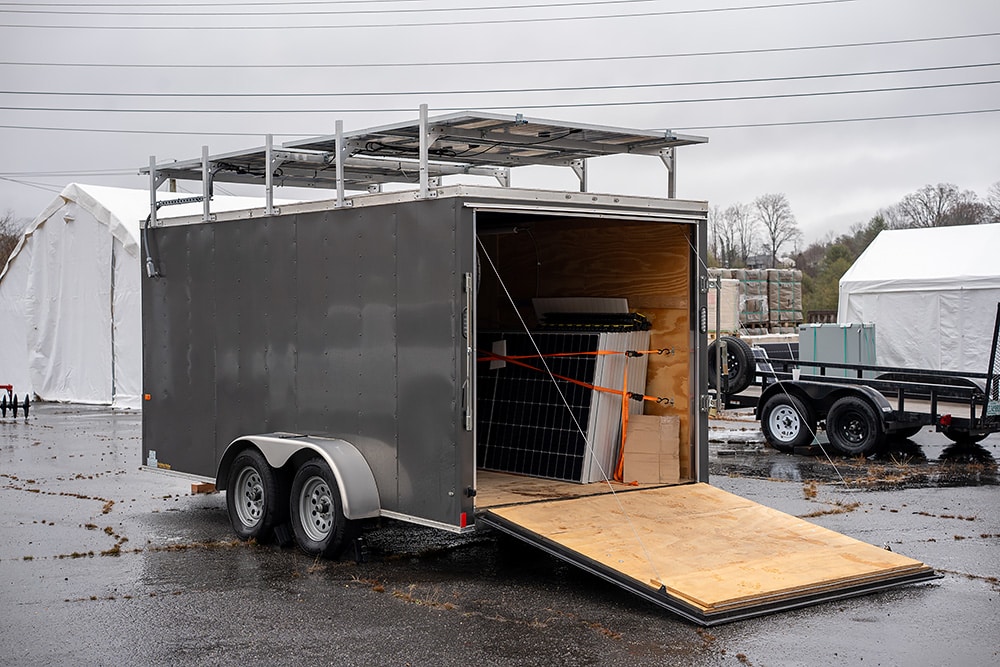
“What does resilience mean to you?” reads a sign hanging in Footprint Project’s warehouse office in Mars Hill, North Carolina.
The New Orleans-based nonprofit distributes clean energy technologies to support immediate and extended recovery needs after a natural disaster. From Hurricane Helene to the Los Angeles fires, Footprint Project equips people and groups with modular, solar-powered generators for rapid power needs, and with mobile and fixed solar systems.
Currently, the organization is co-leading a $5 million resiliency project with Land of Sky Regional Council, a multi-county local government organization. This project is funded by the state through the North Carolina Department of Environmental Quality. Other partners include Appalachian Voices, the publisher of this newspaper; Invest Appalachia, a regional investment fund; and the N.C. Sustainable Energy Association, a nonprofit clean energy group.
The goal is to equip approximately 24 community and first-responder hubs with microgrids consisting of stationary solar and battery storage systems in six Helene-impacted counties in North Carolina, and deploy two mobile microgrids for regional response in both western and eastern parts of the state. Award selections are being made in four rounds through mid-2026, and applications are required for consideration. As of press time in April, groundbreaking for the first round of sites is scheduled for May.
Dungannon’s historic depot becoming a resilience hub
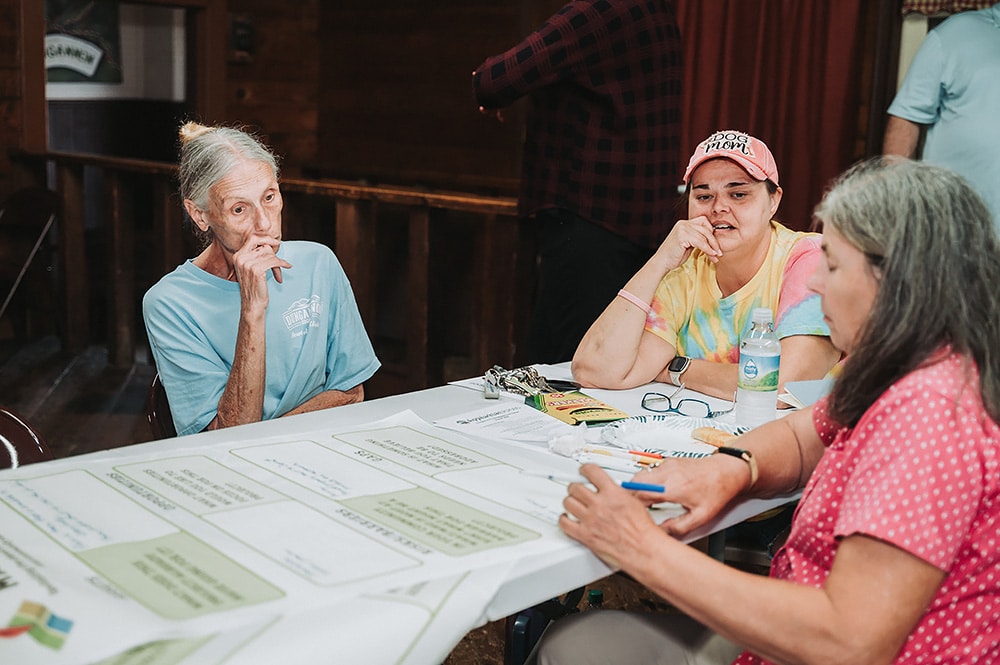
Home to about 270 residents within its town limits and no stoplights, Dungannon, Virginia, may appear to be “a one-horse town,” says Mayor Melissa Gillenwater, but it’s so much more than that.
“Everybody knows everybody — everybody cares for somebody,” she says. “If something happens to somebody in the community, it seems like everybody’s there rallying around to help.”
Now, the community has identified a new way to support one another: a resilience hub. The town is collaborating with Appalachian Voices, Tiger Solar, Invest Appalachia, American Microgrid Solutions, Google, and the Appalachian Solar Finance Fund to install 30.5 kilowatts of solar energy on its town hall and historic depot, and 115 kilowatt-hours of battery energy storage at the depot.
Currently, the old train depot serves as a community center, meeting location, outdoor recreation space and library.
From snowstorms to heavy rains, the town deals with bad weather that brings power outages. With solar and battery energy storage, the depot can serve as a central location to recharge phones or oxygen machines and access emergency resources during grid outages, especially for the town’s disabled, elderly and low-wealth residents.
But beyond emergencies, the depot will save the town money on its electric bill and provide a place for families to host birthday parties, for kids to play on the upgraded playground, and for town residents to commune with one another.
“We’re just trying to make it a place where people can come back together in the community like they used to in the old days,” Gillenwater says. She hopes the hub will serve as a model for other towns in the region.
Bookstore co-op and hub adds on-site battery storage
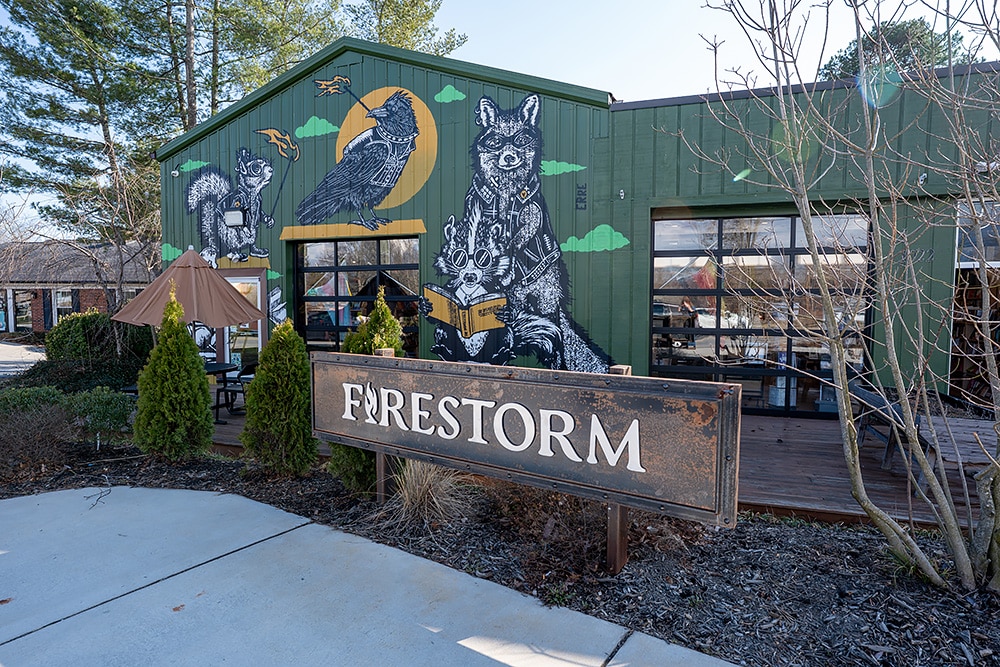
Within 24 hours after Hurricane Helene, community members began gathering at Firestorm Books, a bookstore cooperative in Asheville, North Carolina.
“Everybody just knew that we were going to open our doors, and we were going to support and participate in whatever organic community organizing and mutual aid was going to take place,” says Libertie Valance, a Firestorm Books staff member.
But despite having a 7.5-kilowatt solar system on its roof, the building was without power for several days because it was tied to the electrical grid, which went down. Initially, the team couldn’t store perishable foods and temperature-controlled medications or charge power tools.
“We really lived out what resilience means during Helene,” Valance says.
This experience led Firestorm to seek out ways to add on-site battery storage to its existing solar system. The team connected with the nonprofit Footprint Project, which later donated a SolArk inverter and 20-kilowatt-hour battery. The Appalachian Solar Finance Fund, fiscally sponsored by Appalachian Voices, facilitated a no-interest loan from Invest Appalachia to support engineering and installation work completed by Asheville Solar Company.
For Firestorm Books, on-site energy storage isn’t about saving money. Rather, Valance says, “The batteries are 100% about resilience and about the ability to continue operating, continue showing up for our community in the event that there is a disruption to the grid.”
West Marion Resilience Hub closer to a reality
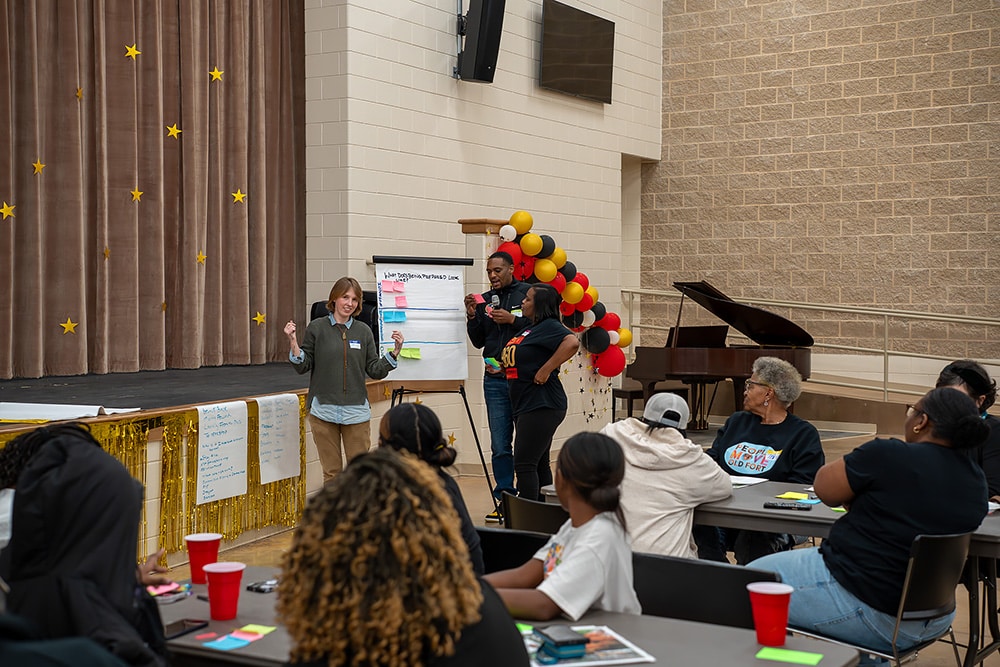
The West Marion Resilience Hub is several steps closer to becoming a reality in McDowell County, North Carolina, thanks to the dedication of the team at West Marion Inc., the county’s first and only Black-led nonprofit.
The nonprofit is seeking to transform the historic Mountain View School, a Black high school that closed its doors in 1966, into a 50,000 square-foot resilience hub. The space will offer a primary care clinic, childcare facilities, an event space, a Black history museum, a community kitchen and more. It will be equipped with renewable energy and battery storage to keep the lights on and people safe during emergencies and extreme weather.
“[This project is] for everybody — everybody’s welcome,” says Paula Swepson, executive director of West Marion Inc. “It’s a legacy project.”
As of April, West Marion Inc. has raised $800,000 toward the $26 million redevelopment project. Additionally, US Bancorp is paying for new markets tax credit consulting services to spur further investment in the project. The New Markets Tax Credits program, managed by the Community Development Financial Institutions Fund out of the U.S. Department of the Treasury, leverages tax credits to spur private investment in distressed regions.
To receive the tax credits and move the project forward, West Marion Inc. is looking to raise $15 million by the end of 2026.
Grassroots nonprofit bootstraps resilience hub in East Tennessee
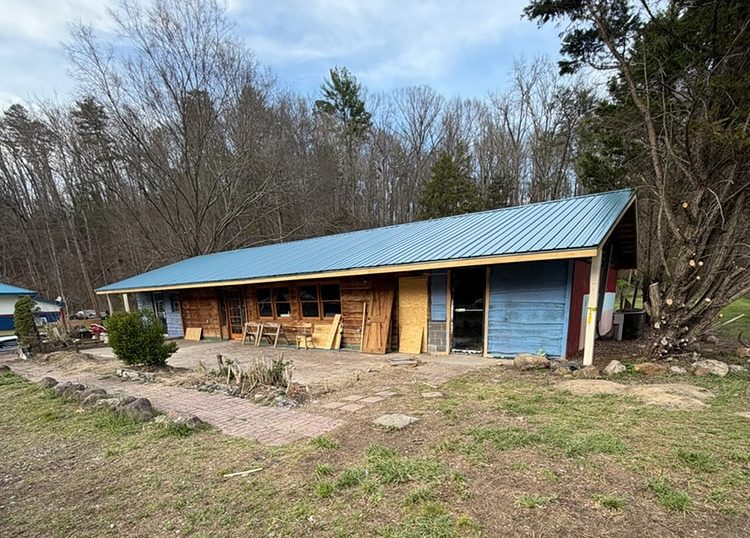
After 15 years of operation, the grassroots organization Clean Water Expected in East Tennessee, or CWEET, will soon have a building to call home in Cosby, Tennessee. This space will double as a resilience hub for the community.
CWEET received an outpouring of financial support after Hurricane Helene, but since the team is primarily volunteer-based, they turned to the community to ask how best to leverage some of the funding.
“Our main job has always been listening to the community,” says Deborah Bahr, facilitating director of CWEET. “And space is what they said they needed.”
A former family restaurant and gathering spot for over 50 years, the building had been dormant for several years before CWEET signed the mortgage in 2025. The team didn’t have significant funding to renovate the space, so it’s been a major bootstrapping operation, involving upcycling and scrounging for supplies, removing the old front porch, gutting the interior and installing a new roof, among other updates.
The final two hurdles that remain are reworking the electrical and plumbing systems. CWEET hopes to fundraise $50,000 or more to cover these unexpected costs.
Once it’s move-in ready, CWEET hopes to offer a gathering space, a community garden, a home-style kitchen, a free store, a library, skill-sharing and much more. In the future, the team hopes to install solar energy and backup energy storage for grid outages.
“We want to turn it into a land trust so that it’s something that nobody can take from the community,” Bahr says.
Related Articles
Latest News
More Stories
Halloween Approaches, and Night School Is in Session
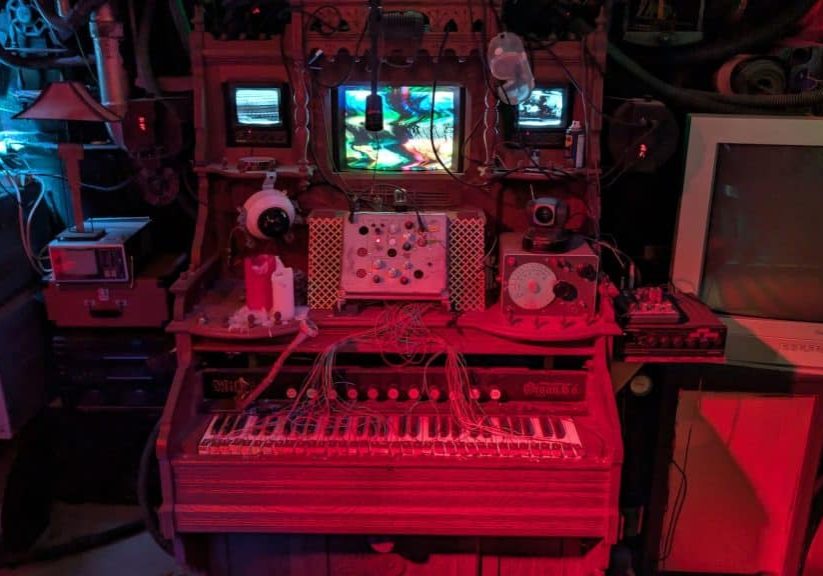
The House of Art in Bluefield, West Virginia, looks like a haunted tower, making it the perfect location for its sixth annual haunt event: Night School. The Night School will be open every Friday and Saturday night through Oct. 31.
‘The Most Perfect Act of Love’
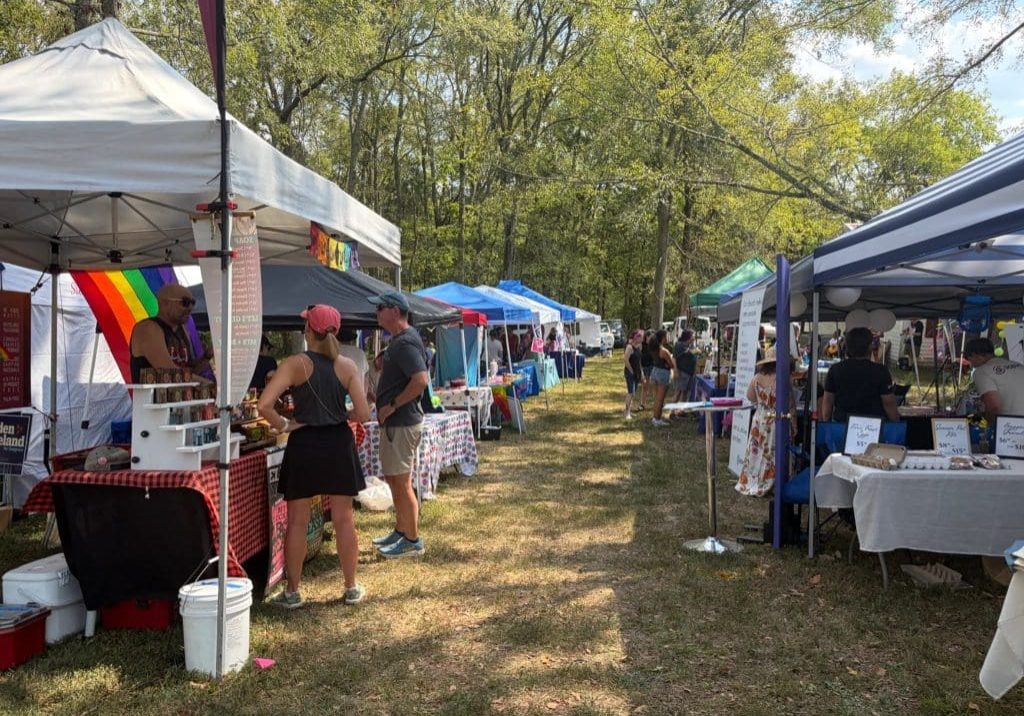
After losing its rural pride celebration, hundreds of people attended the second annual Affirming Sumner Pride celebration on a 24-acre farm dubbed “Fruity Farm” in Bethpage, Sumner County, Tennessee.

Signs of Life
In the Nantahala National Forest, a team of biologists spotted Indiana bats, an endangered species that hasn’t been seen in North Carolina for the last 11 years.
‘First Line of Defense’
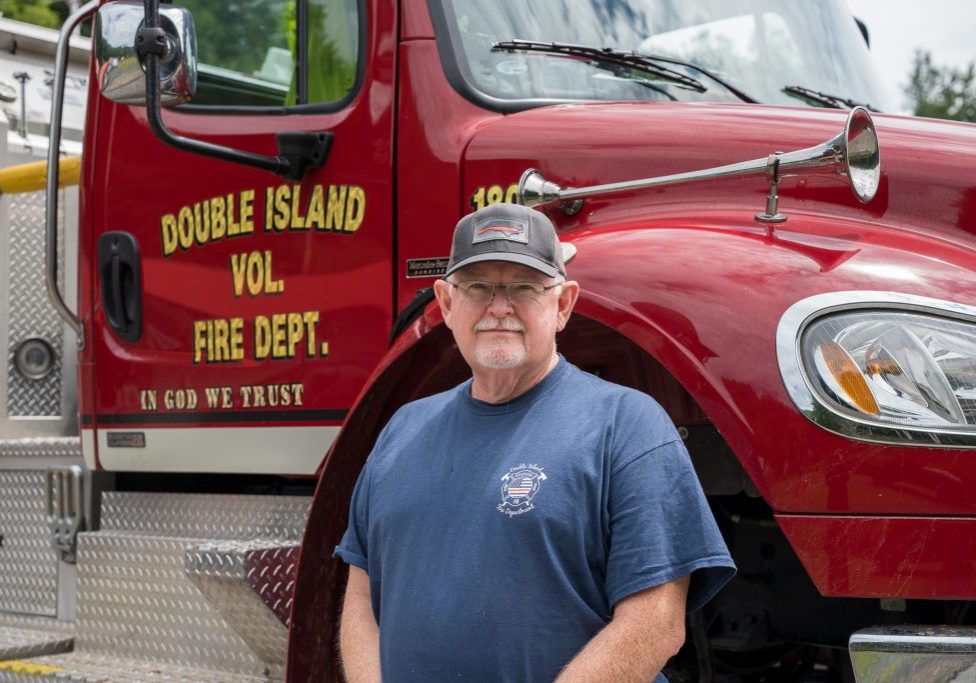
During Hurricane Helene and its aftermath, rural fire departments and other first responder hubs played critical roles in keeping their communities safe, even without power and cut off from outside support for days or weeks after the storm. Two years later, plenty of work remains to ensure these hubs have the resources they need to operate day to day and be ready when emergencies or natural disasters strike.
The Rocky Road — and Bridge — to Recovery
Hurricane Helene is estimated to have damaged nearly 7,000 private roads and bridges in Western North Carolina. Two years later, many restoration projects are complete, but the journey hasn’t been easy — and isn’t over for others.
After 20 Years, Letcher County Prison Proposal Is Still Alive, Though Obstacles Remain
A $605 million proposal for a federal prison on a former strip mine site in Letcher County, Kentucky, championed by U.S. Rep. Hal Rogers, refuses to die, despite local opposition, a lack of support from the executive branch and numerous other obstacles.

Leave a comment
Your email address will not be published. Required fields are marked *
Leave a Comment