

What’s behind the species’ decline in the region — and how conservation organizations are working to slow it down
By Debra Murray
At first, in the distance, people hear a quiet thumping. That noise then accelerates in both speed and volume for 5 to 10 seconds — then abruptly ceases. It sounds like a lawnmower starting in the distance, but it’s no landscaping equipment. It’s the ruffed grouse.
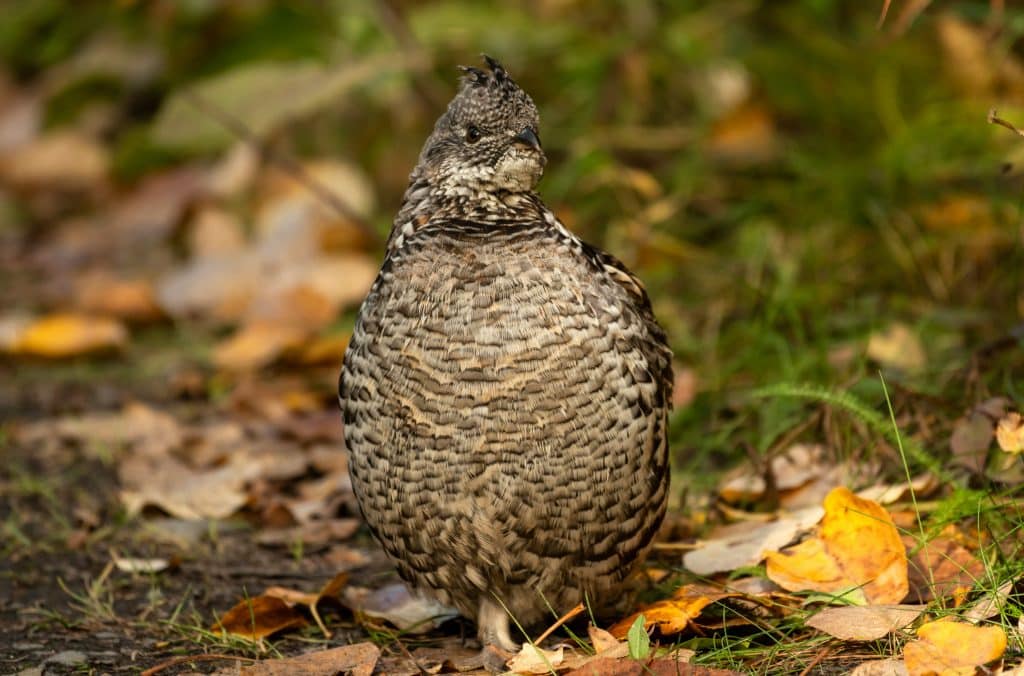
The ruffed grouse is a woodland bird that lives in young, regenerative forests in Appalachia and is considered one of the most commonly hunted birds for sport. The ruffed grouse has black or dark brown feathers on their neck, which they can raise into a distinctive collar — the ruff that gives them their name.
Often compared to chickens, the ruffed grouse is one of the smallest of the ten grouse species in the United States. The ruffed grouse typically resembles the size of a small crow, weighing roughly 17 to 25 ounces.
In the Southern Appalachians, the ruffed grouse population has declined 71% since 1989, according to the Ruffed Grouse Society, a conservation organization. Their population is dwindling in Appalachia as a result of habitat loss, overhunting and West Nile virus.
“There’s certainly a lot of things stacked against ruffed grouse in the Appalachians,” says Sean Barry, the forest conservation director of the Southern Appalachian region for the Ruffed Grouse Society. “The main thing that they don’t have down here at the scale that they need is young forest. It creates high stem density, so cover for them, and also provides a food source as well.”
In the spring, it’s common to hear male grouse drumming, which is when the grouse beats its wings against the air, creating a vacuum while standing on a log or tree stump. The low, thunderous drumming is unique to the ruffed grouse.
“A lot of times those vibrations, those calls, are so low on our scale that people tend to feel them more than they actually hear them,” says Hannah Plumpton, upland game bird biologist for the North Carolina Wildlife Resources Commission.
Male ruffed grouse, considered aggressively territorial, will drum to signal the claiming of their territory. The male ruffed grouse will drum to indicate to other males that the six to ten acres of woodland are his property. There are typically one or two hens in the proclaimed territory. While other birds may also claim their territory through sound, only the grouse uses this technique.
“I think (the grouse’s drumming) in a lot of ways, made it a very interesting and charismatic bird to the region,” Barry says. “With their decline, I think we’re losing a very emblematic species in Appalachia. I think there’s lots of folks that are rightfully concerned about that decline.”
Seeking ideal habitat
Ruffed grouse thrive in complex forests where there are young and mature areas. A complex forest provides food and shelter year-round. While the shelter available in younger forests that are between 6 and 20 years old protects the grouse from predators, older forests provide nutrients the grouse needs to survive.
“What you would want to see is a juxtaposition of different forest age classes,” Barry says. “And so you’d have some young forest over here in pockets. You’d have some mature, old-growth kind of interspersed throughout the landscape. But what we have now is just sort of generally one age class, especially on our public lands.”
The methods used to maintain a complex forest include logging techniques such as small-scale clear-cutting, leaving a few mature trees and shrubs in clearings and leaving downed wood in place. It’s important for species like the grouse to live somewhere without any obvious edges, so they are surrounded by old and young trees alike.
Another method is prescribed burns, which are planned fires that can clear brush while leaving mature trees, and help create a diverse habitat. But Plumpton explains there are a lot of limitations that prevent mature forests from being burned, including working with several entities, forests on private lands, and the public’s concerns about fire being used in forests.
“There’s been a lot of push for old growth, and that’s important for several species,” Plumpton says. “But we don’t need an entire forest of old growth. We need a lot of structure and a mixture of age classes, often right next to each other, for a lot of species to thrive and grow and have stable populations.”
For the Ruffed Grouse Society, the grouse’s population is used to indicate a decline in other species that rely on younger forests.
“The grouse is sort of our canary in the coal mine, so to speak, about current forest conditions,” Barry says.
It’s hard out there for a grouse
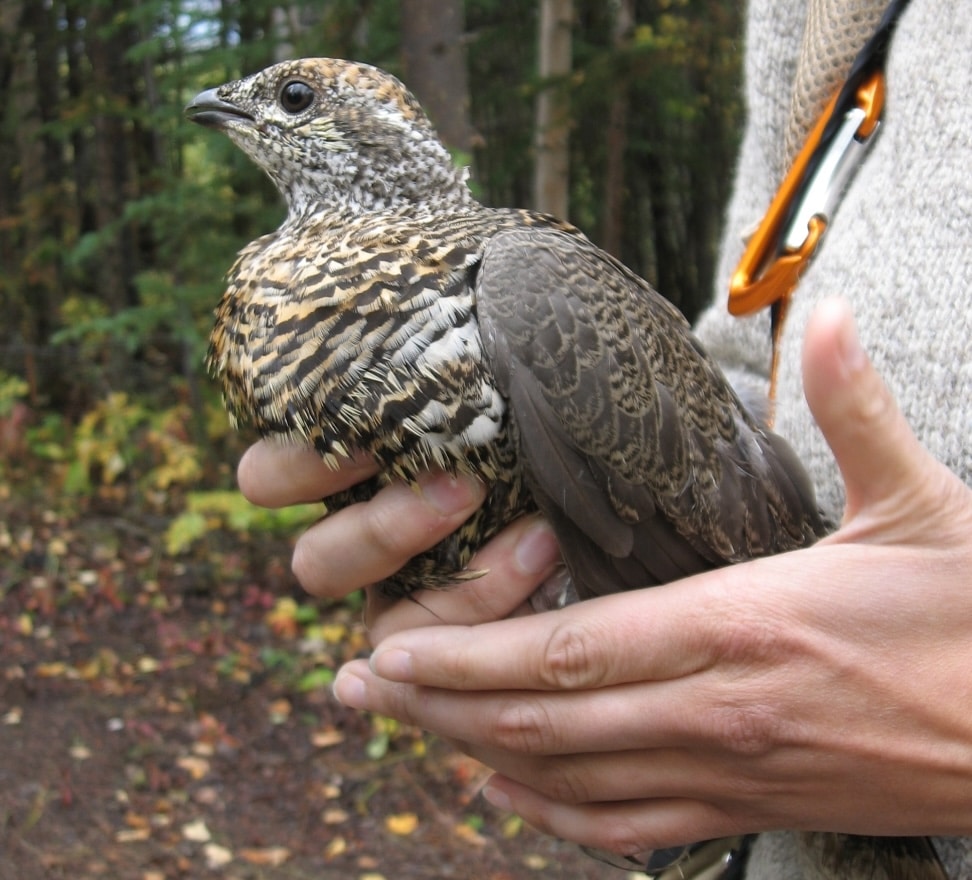
Ruffed grouse are also susceptible to West Nile virus, which could be to blame for the high mortality rate.
“We also have disease, so climate change sort of feeds into that,” Barry says. “One of the things that grouse are susceptible to is West Nile virus, so a mosquito-transmitted disease. We found that it can have negative impacts on grouse survival.”
In Appalachia, their winter diets consist of evergreen leaves, as their food sources have decomposed by winter, according to the Ruffed Grouse Society. In summer, the grouse primarily eats nonwoody plants, blackberries and blueberries. In the fall, the grouse begin eating beechnuts, acorns, grapes and rosehips.
In other regions of the country, the ruffed grouse depends on stands of aspen for habitat, cover and nutrition, eating the dormant flowers produced by mature aspen.
“Without aspen down here, we generally have less nutrients available to them,” Barry says. “That’s been a challenge. Our grouse survival rate and chick survival rate is a lot lower in the Appalachians than it is in the upper Midwest, for example. That can be a real challenge for the species, and that can be dictated by food and cover as lacking.”
Ruffed grouse also have a typically short life span. When a brood of 10 to 12 ruffed grouse hatches in the spring, usually half have died before the beginning of fall. Sometimes their nests are too close to roads or in forest openings, which are vulnerable places for grouse chicks. The safest place for the chicks is deeper in the forest near uniform bushes or saplings.
Ruffed grouse are prey to many predators, including Cooper’s hawks, bobcats and great horned owls. Some may also die as a result of disease or exposure to severe weather.
Organizations like the Ruffed Grouse Society, the Appalachian Habitat Association and local fish and wildlife departments are working to help the ruffed grouse population’s survival in Appalachia.
“It’s a rough life out there for these birds,” Barry says. “When they don’t have the things that they need, it becomes increasingly difficult for them to survive. That’s what we’re trying to do to help them out a little bit.”
Despite the various factors contributing to the population’s decline, Barry explains that the Ruffed Grouse Society and other organizations working to increase grouse numbers can still make a difference.
“My hope would be that my kids can experience these birds and all that they have to offer the ecosystem,” says Barry. “I think there’s certainly a lot that it’s going to take a lot to make sure that’s a possibility, but it’s a good opportunity for us across the region to rally around the birds and see what we can do.”
He hopes that his children can hear the ruffed grouses’ iconic drumming.
Related Articles
Latest News
More Stories
Signs of Life
In the Nantahala National Forest, a team of biologists spotted Indiana bats, an endangered species that hasn’t been seen in North Carolina for the last 11 years.

‘First Line of Defense’
During Hurricane Helene and its aftermath, rural fire departments and other first responder hubs played critical roles in keeping their communities safe, even without power and cut off from outside support for days or weeks after the storm. Two years later, plenty of work remains to ensure these hubs have the resources they need to operate day to day and be ready when emergencies or natural disasters strike.

The Rocky Road — and Bridge — to Recovery
Hurricane Helene is estimated to have damaged nearly 7,000 private roads and bridges in Western North Carolina. Two years later, many restoration projects are complete, but the journey hasn’t been easy — and isn’t over for others.
After 20 Years, Letcher County Prison Proposal Is Still Alive, Though Obstacles Remain
A $605 million proposal for a federal prison on a former strip mine site in Letcher County, Kentucky, championed by U.S. Rep. Hal Rogers, refuses to die, despite local opposition, a lack of support from the executive branch and numerous other obstacles.
The Washout and Rebuild
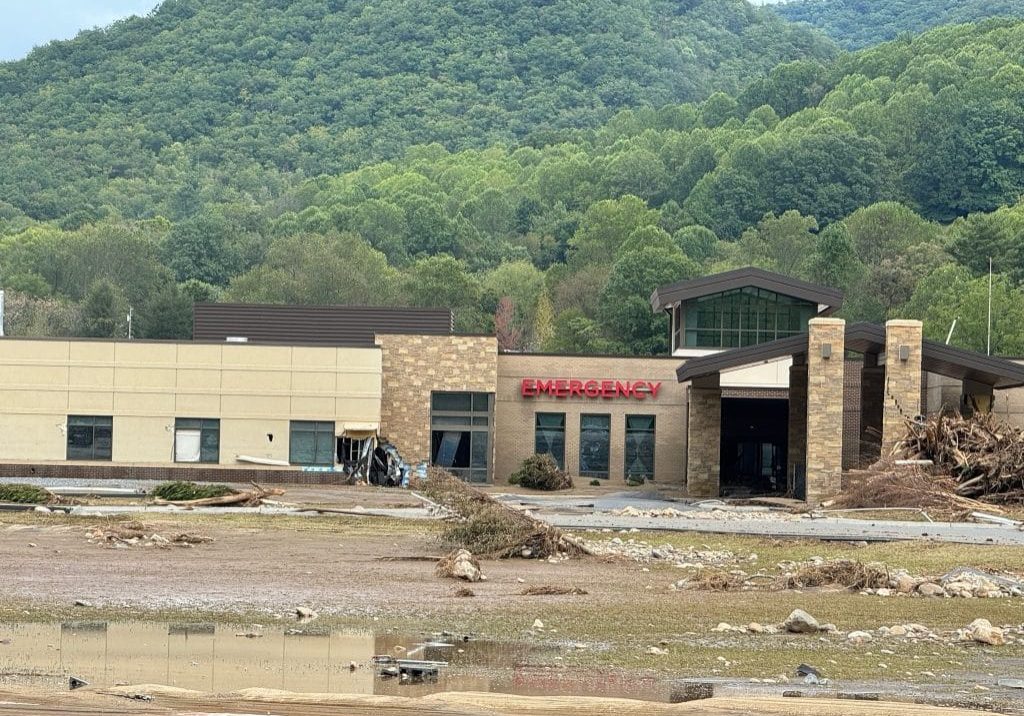
For nearly two years, residents of Unicoi County, Tennessee, have had to make do without a hospital after Hurricane Helene destroyed the rural hospital. Ballad Health, which owns the hospital, broke ground on a new location — in another floodplain — in August 2026.
The Shenandoah Salamander
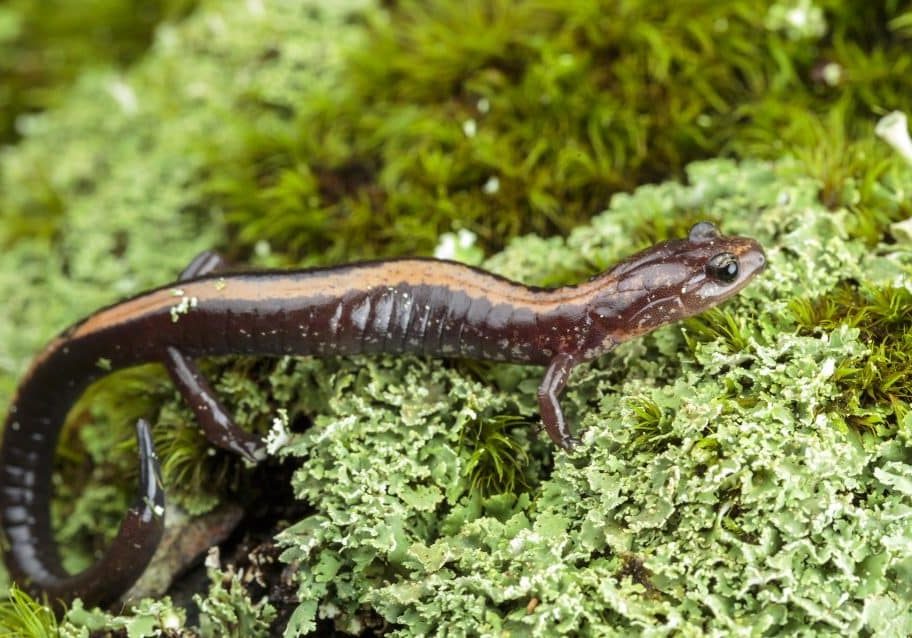
The Shenandoah salamander is a woodland salamander, which has adapted to life at higher elevations away from water. This sparkling rarity lives among the dry leaves, cracked logs, and stony hillocks on the highest peaks of Shenandoah National Park.

Leave a comment
Your email address will not be published. Required fields are marked *
Leave a Comment