
Front Porch Blog
Coalfield communities leading in resilience
How community members are working to strengthen their homes against future disasters

Spring 2025 meeting with Lee County stakeholders to finalize Pennington Gap’s Comprehensive Flood Mitigation Plan. Photo by Emma Kelly
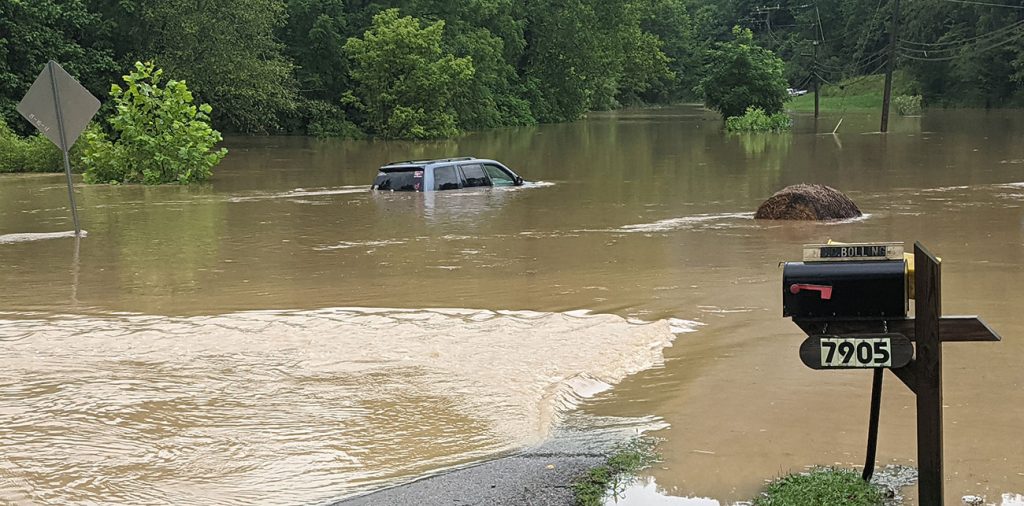
In 2021, Southwest Virginia was hit by a devastating flood. One year later, rainclouds gathered again, and floodwaters rushed through our communities. Smaller, more localized flood events have continued to hammer our homes in the years since, and in 2024, Hurricane Helene tore through the mountains and brought broader national attention to the impacts of the climate crisis in Central Appalachia.
Deep and consistent community engagement is central to our region’s ability to effectively adapt and mitigate ongoing climate disasters. Over the past few years, Appalachian Voices has worked with local residents, governments, partner organizations and state agencies to collect flood data, undertake asset and hazard mapping, and build a strong foundation for effectively accomplishing future resilience projects.
Guidance and input from local residents is essential, and the ability to offer residents meals and stipends to help cover their labor and time spent showing up for their communities has helped ensure robust participation. (Shout-out to the Environmental Defense Fund for supplying these stipends and meals!)
One of our goals with these meetings is to turn planning and implementing community development projects into a fun and joyful activity that’s accessible to everyone. It can be intimidating to step into the world of grants, compliance and jargon, and making sure folks are fed and that they know their time and knowledge are valued goes a long way. Creating a collaborative sense of ownership over these projects helps counter the traditional development dynamic in Appalachia, in which outside groups maintained control over social gathering spots and needed infrastructure.
Clinchco
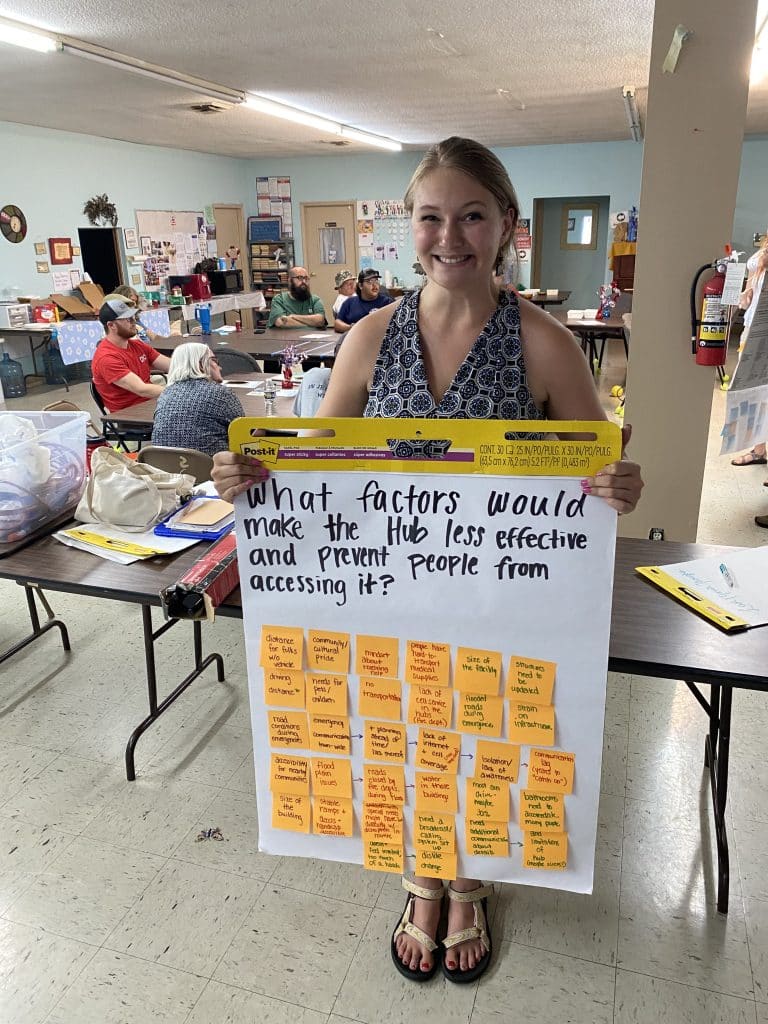
In the middle of mountainous Dickenson County, the small town of Clinchco sits along the McClure River. Named for the Clinchfield Coal Corporation, Clinchco is surrounded by old mining properties and small waterways that are extremely prone to flooding. Clinchco residents have consistently named flooding resilience as a priority across community meetings in partnership with Appalachian Voices, including Community Strong listening sessions and collaboration on the Virginia Energy Resilience Study. Community members have highlighted needs for the town that include a central gathering place for residents during emergencies, as well as the need to make the town more walkable due to lack of transportation and roadways that become impassable during flooding events.
Clinchco is currently working with Appalachian Voices and other community partners, including Clinchco Missionary Baptist Church, on multiple community resilience projects to address these needs. The Baptist church is looking to become a resilience hub, with clean energy backup and supplies to shelter folks in need when the next storm hits. We’re working with local partners to develop a comprehensive flood-mitigation plan that, once it receives state approval, will open the doors for project funding.
Prioritizing ongoing community meetings to inform this process produces real results that take community needs into account. These meetings are open to all members of the public and facilitated by trusted community partners such as the pastor of the Baptist church, town staff such as the town clerk, and a flooding specialist to interpret community concerns into actionable flood plan steps. To prepare for worsening flooding in Clinchco, an effective flood-mitigation plan will include details about emergency management that only residents can provide, such as community assets, residential vulnerabilities and ongoing community projects that can be incorporated into the plan.
Pennington Gap
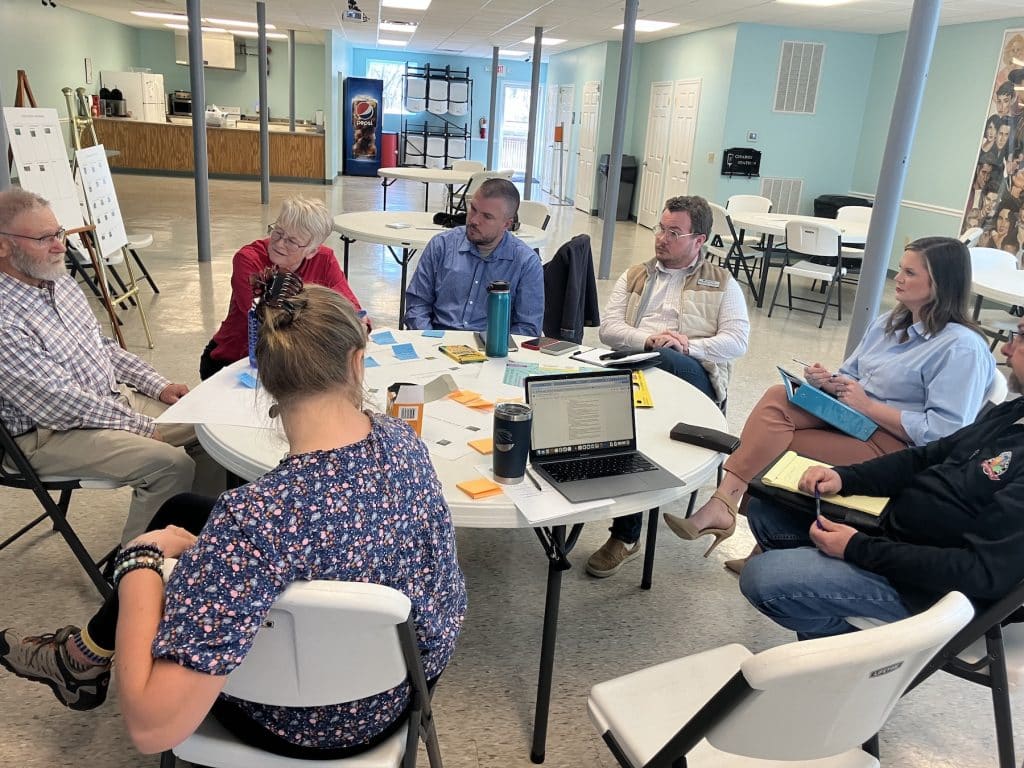
In Pennington Gap, a small community nestled in the eastern side of Lee County, community members had two clear priorities. First was the demolition of the former Cas Walker building, a key community landmark that was home to several businesses through the years. The site was no longer usable as it was ridden with asbestos and prone to frequent flooding. Second, community members identified the need to protect their recreational spaces and adjacent neighborhoods.
These priorities lined up well with a comprehensive flood mitigation plan that the town received from Hirschman Water & Environment, LLC. and Ecosystem Services in 2025 — the plan came about because of Pennington Gap’s partnership in Appalachian Voices’ Community Strong initiative. Now, as the daffodils start to emerge throughout the coalfields, community members are embarking on another series of community meetings for two projects: Redesigning the now-empty lot where the former Cas Walker stood to include a new recreational area while reducing flooding severity, and reconstructing a portion of wetlands to provide new habitat and floodwater storage in their local park.
Emerging Work
Over the past year, we’ve been excited to be a part of new community development work, forming new partnerships in some localities and deepening our organizing in others. Part of this effort has included working together to identify energy-efficiency and energy storage needs for resilience hubs in communities like Keokee and Coeburn so that local folks have safe, warm places to go when disaster strikes, no matter how remote they may be. Other organizing has led to the formation of new community associations so that community members and local governments can better support each other in the future. It’s slow work, but we are so excited to be a part of Southwest Virginia’s transition towards a resilient and thriving future.

PREVIOUS
NEXT

Leave a comment
Your email address will not be published. Required fields are marked *
Leave a Comment