

Study Shows Steep Decline in Fish Populations Near Mountaintop Removal
By Matt Wasson, Ph.D., Director of Programs for Appalachian Voices
A study from researchers at the U.S. Geological Survey published in July provides strong new evidence that mountaintop removal coal mining in Appalachia is devastating downstream fish populations.
The new findings echo previous science demonstrating the negative environmental effects of mountaintop removal, a coal mining practice that uses explosives to blast away the tops of mountains to access thin seams of coal and dump the waste into valleys below. In 2010, a group of 13 prestigious biologists published a paper in the scientific journal Science that analyzed peer-reviewed studies and West Virginia water quality data. According to the paper, the group found “serious environmental impacts that mitigation practices cannot successfully address.”
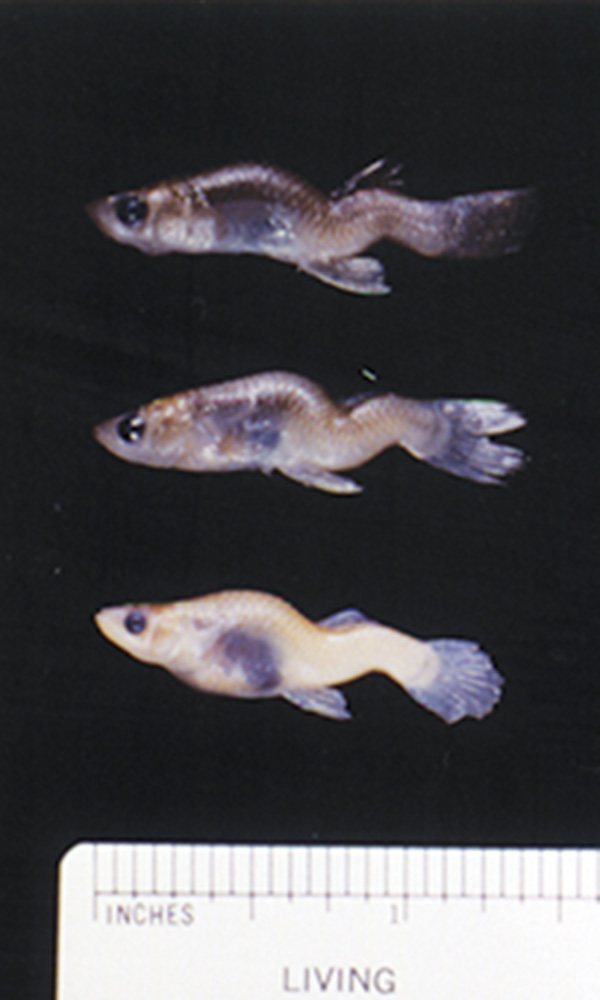
Selenium has caused grotesque deformities from s-curved spines and double-headed larvae to fish with both eyes on the same side of their heads. These fish (above) were caught at Belews Lake, N.C., which is adjacent to a Duke Energy coal-fired power plant. Photo by Dr. Dennis Lemly
The authors of the recent study, published in the peer-reviewed journal Freshwater Science, found a 50 percent decline in the number of fish species and a two-thirds decline in the total number of fish in streams below mountaintop removal mines in West Virginia’s Guyandotte River drainage.
“Our results indicate that headwater mining may be limiting fish communities by restricting the prey base available for fish,” Nathaniel Hitt, a USGS research fish biologist and lead author of the study, said in a press statement. “For instance, fish species with specialized diets of stream insects were more likely to be lost from the streams over time than fish species with more diverse diets.”
The study also indicated that water quality played a more significant role than habitat in influencing fish population health. Previous research has focused on how water quality deterioration from mountaintop removal mining has impacted aquatic insects, but the July study is the first USGS paper to examine the issue from the perspective of fish.
Declines in populations of both fish and aquatic insects indicate the declining health of an ecosystem on which all organisms depend, including people. The “ecological indicator” theory is consistent with the dozens of scientific studies published in the last few years that show communities near mountaintop removal mines suffer an array of poor health outcomes ranging from high rates of cancer, respiratory illness, heart disease and birth defects to low life expectancies that are comparable to those in developing nations like Iran, Syria, El Salvador and Vietnam.
Stream decline also has a significant impact on the economy. In Appalachia, sportfishing is a multi-billion dollar industry, creating more jobs than surface mining in each of the states where mountaintop removal mining occurs. Unlike coal, it is also a growing industry: the number of jobs it created in West Virginia more than tripled between 2001 and 2011.
The USGS study comes as the EPA and other federal agencies grapple with rules intended to protect streams from the types of pollution cited by the study’s authors.
Related Articles
Latest News
More Stories

Halloween Approaches, and Night School Is in Session
The House of Art in Bluefield, West Virginia, looks like a haunted tower, making it the perfect location for its sixth annual haunt event: Night School. The Night School will be open every Friday and Saturday night through Oct. 31.

‘The Most Perfect Act of Love’
After losing its rural pride celebration, hundreds of people attended the second annual Affirming Sumner Pride celebration on a 24-acre farm dubbed “Fruity Farm” in Bethpage, Sumner County, Tennessee.

Signs of Life
In the Nantahala National Forest, a team of biologists spotted Indiana bats, an endangered species that hasn’t been seen in North Carolina for the last 11 years.

‘First Line of Defense’
During Hurricane Helene and its aftermath, rural fire departments and other first responder hubs played critical roles in keeping their communities safe, even without power and cut off from outside support for days or weeks after the storm. Two years later, plenty of work remains to ensure these hubs have the resources they need to operate day to day and be ready when emergencies or natural disasters strike.

The Rocky Road — and Bridge — to Recovery
Hurricane Helene is estimated to have damaged nearly 7,000 private roads and bridges in Western North Carolina. Two years later, many restoration projects are complete, but the journey hasn’t been easy — and isn’t over for others.
After 20 Years, Letcher County Prison Proposal Is Still Alive, Though Obstacles Remain
A $605 million proposal for a federal prison on a former strip mine site in Letcher County, Kentucky, championed by U.S. Rep. Hal Rogers, refuses to die, despite local opposition, a lack of support from the executive branch and numerous other obstacles.

Leave a comment
Your email address will not be published. Required fields are marked *
Leave a Comment