Follow Us on Twitter: Appalachian Voices | iLoveMountains.org

Archive for the ‘All Posts’ Category

Appalachian Voices and Partners Challenge Kentucky’s Backroom Deal With Coal Company

Friday, May 17th, 2013 - posted by eric

Watercolors by Frasure Creek. State inspector's photos show a variety of colors of water at Frasure Creek mines.

Yesterday, Appalachian Voices and our partner organizations filed a “petition for review”, essentially an appeal of a settlement between Frasure Creek Mining and the Kentucky Energy and Environment Cabinet. This settlement lets Frasure Creek off the hook for thousands of water quality violations over the past two years, while doing little to ensure that the company fixes its water quality problems.

Our challenge of this settlement focuses on the way in which it came about. But first, a bit of background.

We have a separate case that is ongoing against Frasure Creek for submitting false water monitoring data (entire reports were duplicated and only the dates were changed). After we uncovered this problem the company began turning in more accurate reports, which for the first time showed lots of pollution problems. We then filed a second suit against Frasure Creek for thousands of these pollution problems (which had been hidden by reporting problems before our first suit). Then the cabinet also filed a complaint for these pollution violations and more like them in state administrative court (a court run by the cabinet itself).

We intervened in that case and became full parties to it, but were then shut out of it completely. In fact the settlement was entered despite our previous objections, and there is no evidence that our objections were even considered. The cabinet and Frasure Creek negotiated a settlement completely without us. The law and common sense both dictate that an agreement is not valid unless all the parties involved agree to it, and that is the basis for our challenge of this settlement yesterday.
(more…)

EPA’s Benefits Greatly Outweigh Costs, According to OMB Report

Wednesday, May 15th, 2013 - posted by Davis Wax

A new report shows the EPA's rules, especially on air pollution, are saving money and lives.

During their push to abolish, obstruct and stymie the Environmental Protection Agency over the past few years, House Republicans have beleaguered the agency for regulatory measures they consider “job-killing” or “anti-industry,” hoping to revert federal environmental regulation to state control or make protections obsolete altogether.

Those in favor of federal rules have argued that national standards allow for the most effective and consistent protections and, as a result, will lead to reduced costs in health care directly associated with air and water pollution.

A new report from the White House’s Office of Management and Budget makes a clear case for why the country needs the EPA. The report includes an analysis of the costs and benefits of a number of federal regulations over the past decade and shows EPA rules, especially those pertaining to air protection, to be the most costly among all the rules evaluated but also the most beneficial.

The budget office estimates that the EPA’s rules account for 58 to 80 percent of the monetized benefits of all federal rules, but 44 to 54 percent of the total costs. Out of these benefits, close to 99 percent come from rules that seek to improve air quality. The report claims that the large estimated benefits of the EPA rules following the arrival of the Clean Air Act stem mostly from the reduction of a single air pollutant: fine particulate matter.
(more…)

A Must-Read Report, Another Reminder It’s Time to Build Something New in Central Appalachia

Tuesday, May 14th, 2013 - posted by brian

An updated and expanded report is a potent reminder that coal's decline isn't going away and policymakers should accept the challenges, just as many people already have. Click through to read the report's key findings.

The litany of voices pointing to the writing on the wall for the Central Appalachian coal industry continues to grow. They’re saying the same thing in almost every way imaginable, and have been for some time.

Watching coal production decline and demand shift as other energy sources out-compete coal domestically, it is vital that policymakers in Central Appalachia begin implementing policies and investments aimed at building a foundation for economic alternatives in coal-producing counties. A report released this morning by the consulting firm Downstream Strategies is a pretty good reminder why.

“The Continuing Decline in Demand for Central Appalachian Coal: Market and Regulatory Influences” expands on a January 2010 study and provides a detailed look at the challenges Central Appalachia faces, further making the case for the urgent need to act.

As the report’s lead author, Rory McIlmoil, who recently joined Appalachian Voices’ staff as energy policy director, points out:

Numerous factors influence demand for Central Appalachian coal, each of which has had — and will continue to have — a significant impact on the local economies where the coal is mined. In 2010, we recommended that state and local leaders take immediate steps to help diversify coalfield economies. To a large extent, that has not happened. However, it is vital that public officials begin making the political and financial investments necessary to build the foundation for new economic development opportunities in coal-producing counties.

(more…)

Tending to Appalachia’s Bright Future

Tuesday, May 14th, 2013 - posted by Cat

A word cloud created from workshops and panel sessions at the conference show the prevalence of positive thinking and themes. Courtesy of Kentuckians for the Commonwealth

I had never been to Harlan County. Sure, I’ve heard the songs, seen the movie, and know the stories, but nothing compares to being there, driving the Kentucky back roads, stopping in local shops, talking to folks.

It’s beautiful country, especially in April with the redbuds blooming and the bright greens of spring blushing up the mountainsides. It’s a friendly place – people went out of their way to make me feel welcome.

It also has more than its share of economic troubles. This is coal country, after all, where big companies haul out the black rock and most of the profits along with it. Harlan County and most of the surrounding counties have a poverty rate in the range of 20 to 28 percent.

This is not news to people living here. They know it, they live it, and they are looking at a million different ways to change it, to create Appalachia’s Bright Future. This was the name of the three-day conference in Harlan, hosted by Kentuckians for the Commonwealth a few weeks ago. It brought together more than 200 people from eastern Kentucky and beyond for an extended conversation about creating a just economy in the region. There was much discussion about what that even means, and while attendees each had a slight variation, several common themes emerged:

1. There is no silver bullet. There is no single industry or company that will turn it all around. Which is a good thing, most agreed, because a root cause of the region’s woes is being too dependent for too long on one industry.

2. There is no magic wand. No one is going to come in “from the outside” to rescue Harlan, or the rest of Appalachia’s’ coal country.

3. It’s about “leadership in place.” The future lies in nurturing home-grown entrepreneurship. Unlike a generation or two ago, young people today want to stay here, and many people who moved away want to return. This profound sense of homeplace was evident throughout the conference.

4. It’s about community and resilience, improving the quality of life and opportunity for everyone, collaborating with neighbors down the street or two counties over so that all can benefit.

5. It’s also about honoring coal miners and their families, those who have sacrificed in untold ways to help build our nation and power our modern lives, who deserve all the opportunity and benefit of a “just economy” as well.
(more…)

Clean Water Protection Act Introduced with 45 Cosponsors

Tuesday, May 7th, 2013 - posted by thom

Yesterday, Rep. Frank Pallone (D-NJ) and Rep. Dave Reichert (R-WA) introduced the Clean Water Protection Act in the 113th Congress with 45 original cosponsors.

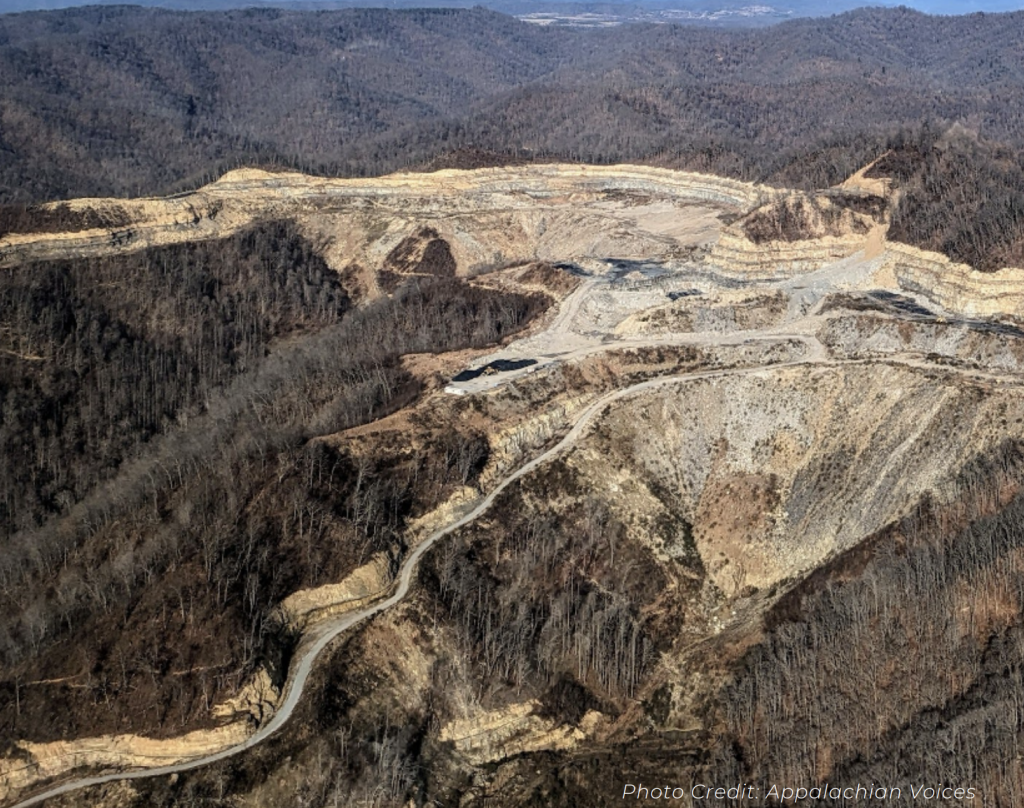
The Clean Water Protection Act, H.R. 1837, is a bill in the U.S. House of Representatives which would sharply reduce mountaintop removal coal mining by making it illegal to dump mining waste into valleys and streams. To date, more than 2,000 miles of streams have been buried or severely polluted.

As the bill sponsors point out in their Dear Colleague letter to other members of Congress:

An EPA scientific study in 2008 shows that more than 63% of the streams sampled below mountaintop removal coal mining operations exhibited long-term impairments to aquatic organisms. In some large watersheds, more than half of the streams are impaired.

Last Congress, more than 130 representatives, from Kentucky to Hawaii, took a stand against mountaintop removal coal mining by cosponsoring the Clean Water Protection Act.

It is crucial that we carry over the momentum we built during the last Congress by having a large group of cosponsors. For your Representative to sign onto the bill, they need to hear from you.

Take action now and tell your Congressperson you expect their support of this important legislation.

Of Monsters and Zombies: NC Legislature Turning into Bad Horror Flick

Monday, May 6th, 2013 - posted by Davis Wax
NC Legislative Building.

Scary things are going on in the NC Legislative Building in Raleigh. Photo by Yassie

Among the scary legislation developing in the North Carolina assembly, there are two bills — one a monster of bad environmental reform and the other back from the dead in order to snuff out the state’s renewable energy — which stand out from the creepy pack. These bills are not exactly the slow and shambling kind of creatures from old 50s horror movies, though, and are moving quickly through the state legislature.

The first, the newly-drafted Senate Bill 612, or Regulatory Reform Act, could have many wide-sweeping and detrimental consequences for environmental regulations in North Carolina. The legislation, which passed through the state Senate last Thursday, would limit how local governments can produce and control regulations to protect the environment. Among other measures to weaken environmental protections, the bill would:

  • Loosen requirements for cleaning up groundwater pollution
  • Loosen requirements for burying demolition debris
  • Force state environmental rules to be equal to or less strong than federal standards
  • Loosen regulations in place to help wetlands
  • Create a fast-track system for erosion-control permits

The first point, fewer requirements for cleaning up pollution in groundwater, is hugely concerning. This provision would increase compliance boundaries to a facility’s property line, allowing coal-fired power plants and other industrial facilities to pollute groundwater farther away from their sites.

Second on the list, demolition debris can contain anything from lead paint to asbestos to PCBs, all of which are more likely to pollute water sources if not adequately buried. The provision does not clarify how coal ash waste applies to “demolition debris” and thus the bill could help power plants avoid certain aspects of the permitting process for coal ash ponds.

Another worrisome aspect of the bill is that it would require state environmental agencies and commissions to identify and repeal any existing rules that are stricter than similar federal rules and likewise would not allow local governments to produce rules stronger than state or federal rules. (more…)

Mountaintop Removal 101: Congressional Research Service Updates Report

Thursday, May 2nd, 2013 - posted by brian

An updated report by the Congressional Research Service provides a look at the current legal and legislative challenges to mountaintop removal.

Every day, more Americans become concerned with the threat of mountaintop removal in Appalachia. Just yesterday, I was made aware of a website called “What About Mountains?” created by a fourth grade class at the Episcopal School of Knoxville. These students may just be learning about the issue, but they know that “mountaintop removal coal mining is not OK,” and seeing a photo of lush mountains reduced to “ugly blobs of land” is as fine a place to start as any.

Whether you’re in fourth grade or in your forties, it’s helpful to have a convenient compendium on the issue of mountaintop removal, especially considering the ever-evolving legal battles, status of bills on Capitol Hill, and state and federal level regulations. An updated report from the nonpartisan Congressional Research Service called Mountaintop Mining: Background on Current Controversies acts as a CliffsNotes for anyone concerned with the situation and interested in catching up.

The report summarizes the legal challenges, agency and congressional actions related to mountaintop removal and points out that, despite two recent court rulings underscoring the need for greater protections, few people on either side are please with the U.S. Environmental Protection Agency’s record on the issue. Mountaintop removal supporters complain of onerous rules that hamper employment and opponents point to poisoned water, unhealthy communities and shortened lives.
(more…)

Kentucky’s Lab Certification- Is it strong enough?

Wednesday, May 1st, 2013 - posted by eric

Yesterday, Appalachian Voices submitted public comments on a proposed wastewater lab certification program in Kentucky. To discharge polluted water, coal companies must receive a permit under the Clean Water Act. This permit that requires companies to test wastewater and report the data to ensure it falls within the limits of the permit. In Kentucky, there are currently no standards for labs that do this type of testing.

The proposed certification program is a direct result of the lawsuits for falsified water monitoring data we filed against three of the state’s largest coal mining companies. Our investigation revealed that many coal companies were repeatedly submitting the same data and knowingly leaving out reports of any violations of their permits. After we filed these lawsuits, the Kentucky Energy and Environment Cabinet inspected the labs being used for this monitoring and found that in many cases they were not even capable of correctly performing the required tests.

This graph shows some of the inaccurate data submitted by Frasure Creek Mining before our lawsuits lead them to start using a new lab. Click to enlarge.

We believe that enforcing standards on labs used by coal companies will help ensure that labs report accurate data, and that the regulations meant to protect water and those that depend on it from dangerous pollution are effectively enforced. This proposed rule will be a big step forward and we have applauded the cabinet for its efforts to fix these problems. However, there are several weaknesses in the rule that we hope are fixed before it is finalized.

All too often the cabinet has failed to live up to its obligations to protect the people and environment in Kentucky. That is why our comments suggest that discretionary duties given to the cabinet in this rule be made mandatory. Appalachian Voices will continue to work to require the state agencies to actually enforce these standards.

>>Click here to see our comments
>>Click here to read the proposed lab certification rule
>>Click here to read the draft lab manual

Advancing Energy Efficiency in Virginia

Wednesday, May 1st, 2013 - posted by nathan

Learn about the electric membership cooperatives that serve Virginians and communities across the region on our Energy Savings for Appalachia page.

When it comes to energy efficiency, Virginia’s policymakers could do more, a lot more. The commonwealth came in 37th place on the American Council for an Energy-Efficient Economy’s (ACEEE) most recent state scorecard, which ranks states by energy efficiency policies.

The scorecard follows up on a report the group published in 2008, stating that Virginia could meet 31 percent of projected demand by 2025 with “cost-effective” energy efficiency initiatives.

The report defines cost-effective measures as those that would cost less to implement than what the average resident currently pays for electricity. In Virginia, that is slightly over 10 cents per kilowatt hour meaning that for less than 10 cents per kilowatt-hour, Virginia could avoid 31 percent of projected electricity demand. In fact, 85 percent of the recommendations would cost less than eight cents per kilowatt hour.

Contrasting what is possible with what would have a chance in the Virginia legislature, the report also looked at a less aggressive option of 19 percent efficiency by 2025. The costs for these measures would all be less than 8 cents per kilowatt hour and many would be under three cents — or less than one-third of what it would cost to fill that gap by burning coal and natural gas.
(more…)

The Dollars and Sense of Energy Savings

Thursday, April 25th, 2013 - posted by molly

Using electricity wisely is vital for Appalachia, a region that has borne the burdens of our national appetite for cheap energy. Unlocking the Southeast’s vast energy savings potential could be the key to forging a cleaner, greener future.

That’s the premise behind The Dollars and Sense of Energy Savings, our first-ever issue devoted to electricity conservation. This April/May issue is stuffed with 28 pages of stories, profiles and resources. The Appalachian Voice is available free on newsstands across the region, and is delivered to the mailboxes of Appalachian Voices members.

We begin with Power to the People, which takes a broad look at how different electricity providers approach energy efficiency — hint: companies such as Duke Energy have very different motivations than member-owned electric cooperatives. While researching the story Powering With Change, Matt Grimley discovers how member-owned electric cooperatives in South Carolina are finding ways to help homeowners trim utility bills while strengthening the cooperative as a whole.
(more…)