
Community Strong: A Vision for Southwest Virginia's Future
Community Strong
A Vision for Southwest Virginia's Future
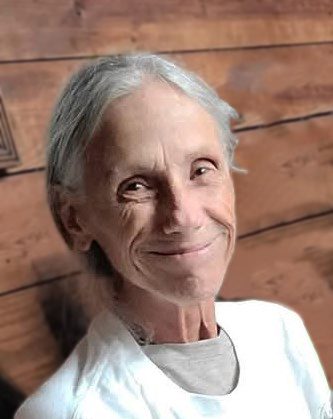
Dedicated to the Memory of Mayor Debra Horne of Dungannon, Virginia
Our team is forever indebted to the work of Mayor Debra Horne, who was instrumental in helping to shape the Community Strong initiative from its inception. We were lucky to work closely with Mayor Horne and witness her love for the people of her community.
She was a dedicated public servant, a powerful advocate and a truly kind and compassionate person, modeling what it means to devote time and energy to the town she loved.
We will miss her greatly and we dedicate our continuing efforts to her memory.
The Community Strong Project
For generations, Southwest Virginia has been a key producer in America's coal industry, which shaped the region’s economy and identity. But as the industry declines, coal communities across the region are forging new paths forward. At Appalachian Voices, we believe that the people who call these communities home should be at the forefront of shaping their future.
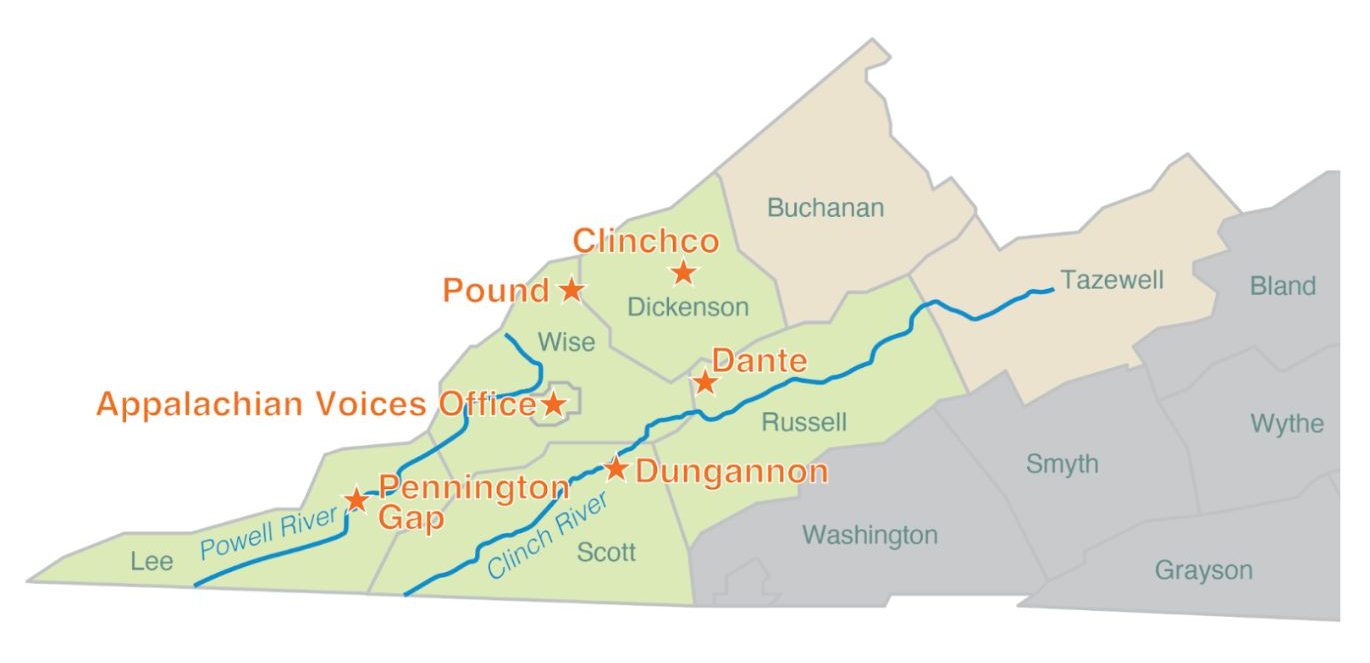
Community Strong is led by our New Economy team, which works alongside local residents to identify community priorities, facilitate planning and provide technical assistance for project development. Our work focuses on five communities—Clinchco, Dante, Dungannon, Pennington Gap and Pound—to create locally driven initiatives that strengthen economies, address environmental challenges and improve quality of life.
Our work is made possible through collaboration with local leaders, funding partners and community members. This page provides updates on listening sessions, project developments and opportunities to get involved.
IMPORTANT UPDATE:
On June 25, 2025, Appalachian Voices joined our partners and attorneys in a class-action lawsuit against the U.S. Environmental Protection Agency for unlawfully terminating its Environmental and Climate Justice Block Grant Program. On Monday, March 16, the U.S. Court of Appeals for the D.C. Circuit heard oral arguments from attorneys representing community-based nonprofits, tribes, and local governments and higher education institutions seeking to restore the program.
Dedicated to the Memory of Mayor Debra Horne of Dungannon, Virginia
Our team is forever indebted to the work of Mayor Debra Horne, who was instrumental in helping to shape the Community Strong initiative from its inception. We were lucky to work closely with Mayor Horne and witness her love for the people of her community.
She was a dedicated public servant, a powerful advocate and a truly kind and compassionate person, modeling what it means to devote time and energy to the town she loved.
We will miss her greatly and we dedicate our continuing efforts to her memory.
What’s happened so far?
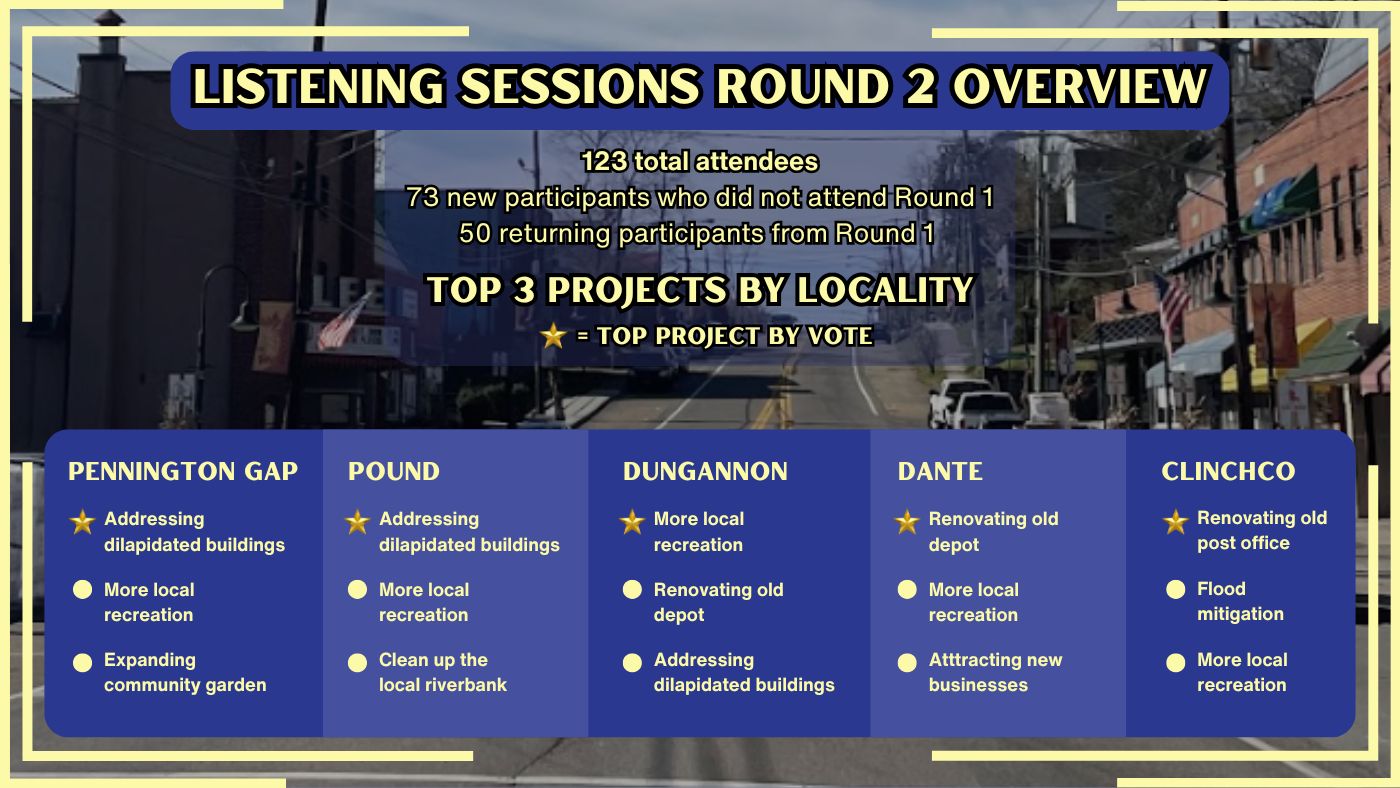
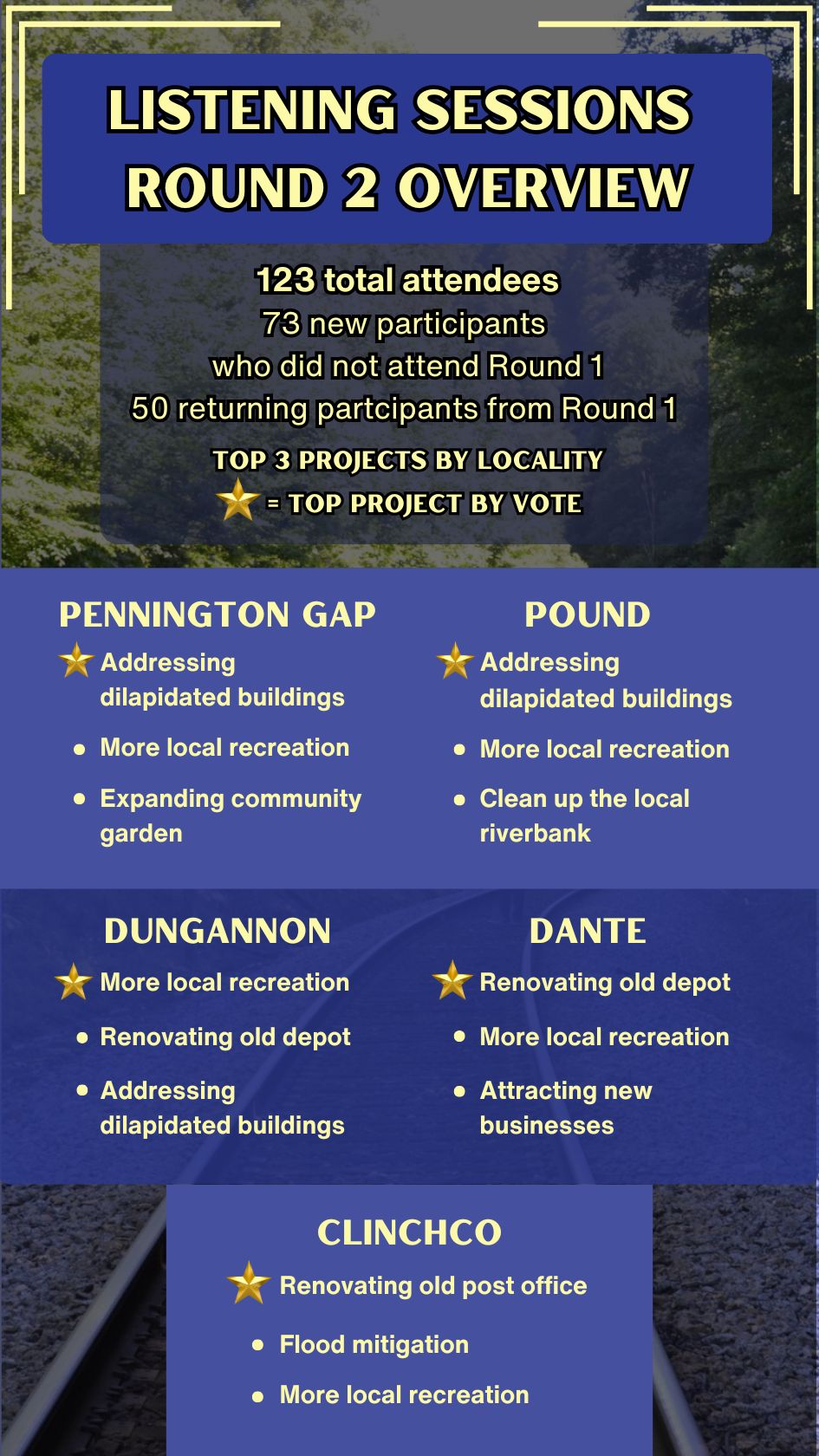
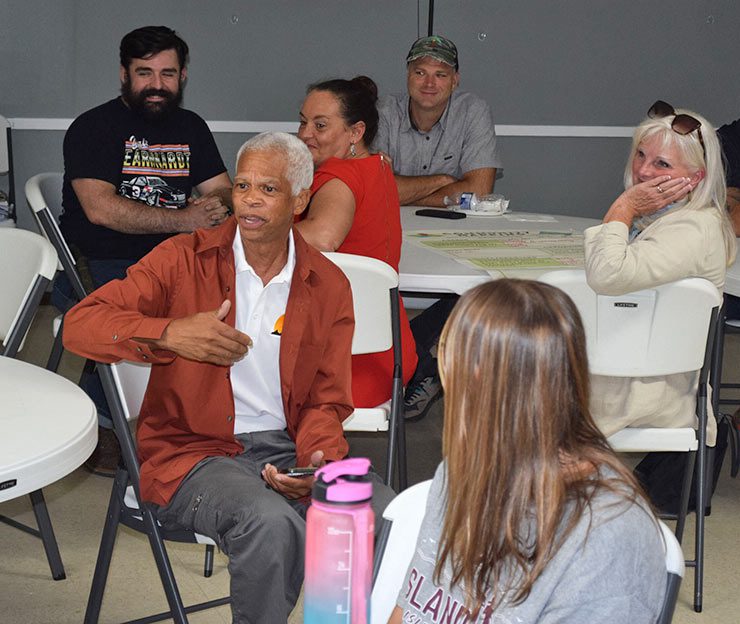
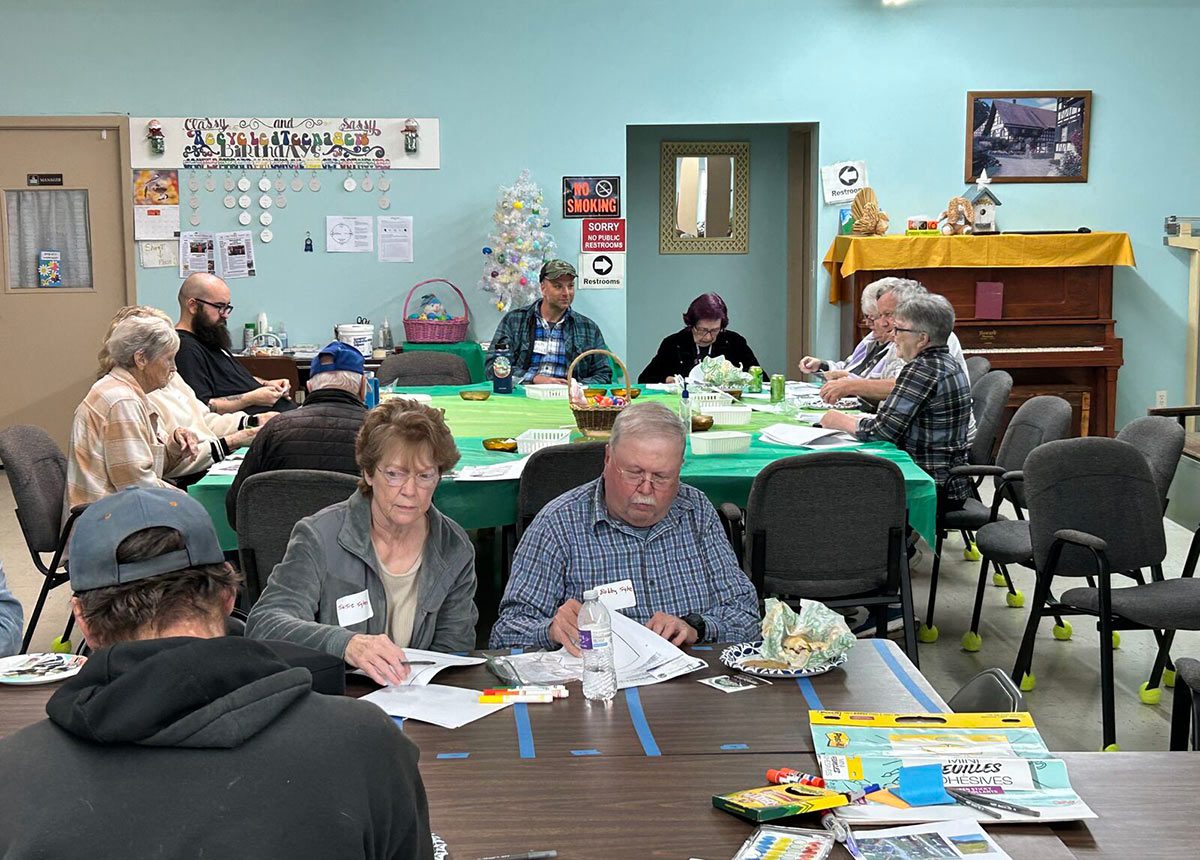
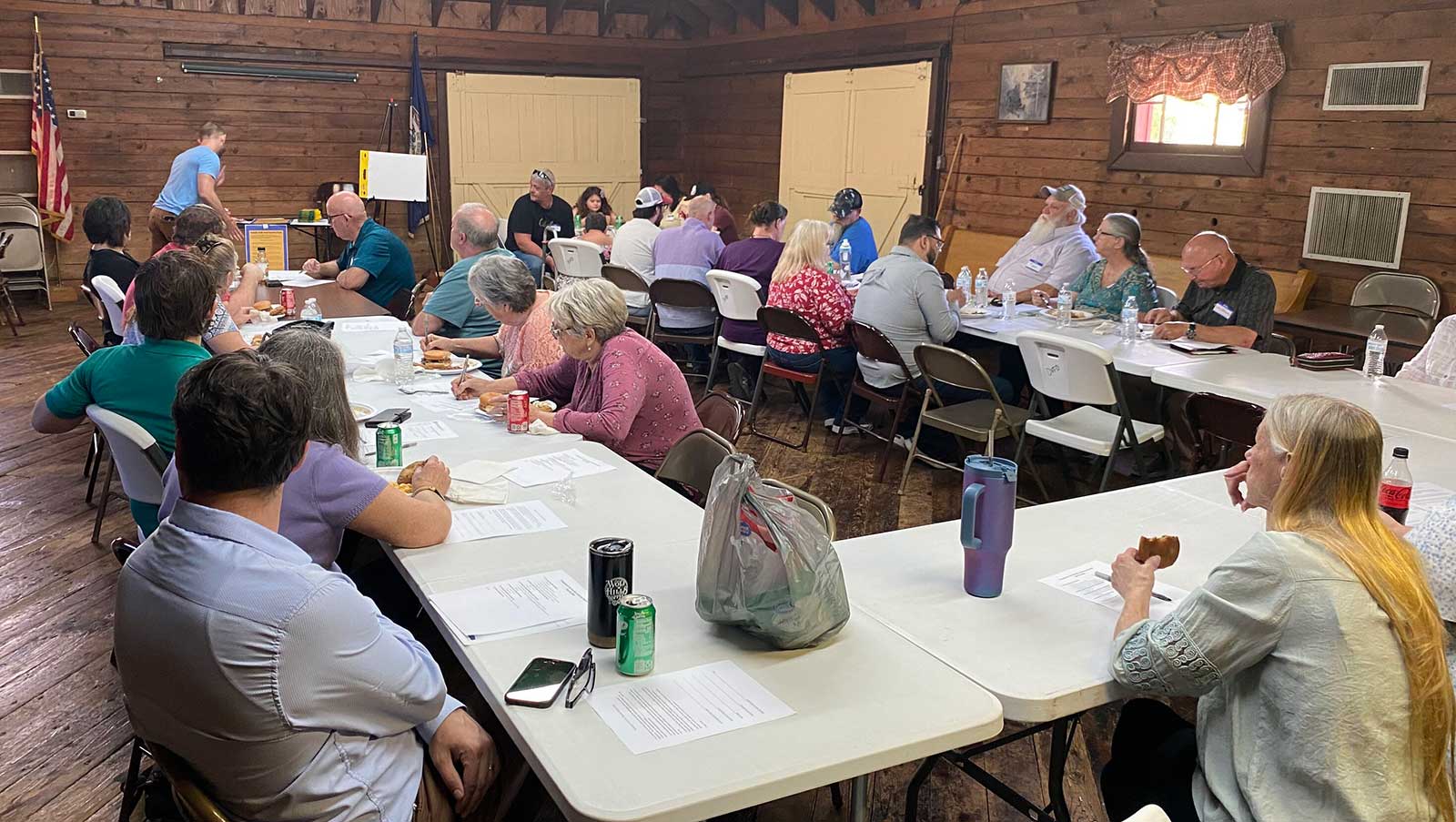
At the first meeting for each locality, community members brainstormed common themes, issues and hopes for their communities, collectively forming a long-term vision. These initial ideas were narrowed down into the top three most common themes for each locality. At the second session, attendees chose a theme for their project in an anonymous vote. A few months later, folks came back together to collaboratively design their chosen projects and put the finishing touches on plans to pursue funding. Overall, we welcomed nearly 300 local residents across 15 community meetings.
Funding from a U.S. Environmental Protection Agency Environmental Justice Collaborative Problem Solving grant supported the launch of the Community Strong initiative in early 2024 and funded critical, community-driven work until the EPA terminated the grant program on Feb. 22, 2025. The loss of the grant impacted continued project development, such as hiring contractors to prepare to remove a dilapidated building that was impeding floodplain improvements.
On June 25, 2025, Appalachian Voices joined a group of nonprofits, local governments and Tribes from across the country in filing a class-action lawsuit against the EPA for unlawfully terminating its congressionally mandated Environmental and Climate Justice Block Grant Program.
“We are proud to be standing up for the communities and environment where we work — and, very importantly, for the rule of law and the U.S. Constitution,” said Appalachian Voices Executive Director Tom Cormons.

What's happening now
Appalachian Voices and others are appealing a U.S. District Court judge’s August 2025 decision to dismiss our class-action case, Appalachian Voices et al v. U.S. Environmental Protection Agency. The District Court judge had granted the government’s motion arguing that the case belongs in the U.S. Court of Federal Claims.
Oral arguments in our appeal were presented before the US. Court of Appeals for the D.C. Circuit on March 16, 2026. The plaintiffs contend that the decision by the administration to cancel an entire program enacted and funded by Congress raises important questions related to the constitutional separation of powers and the Administrative Procedures Act that are under the District Court’s purview.The Environmental and Climate Justice Block Grant Program was created by the Inflation Reduction Act under Clean Air Act Section 138.
“The arbitrary and abrupt cancellation of these grants pulled the rug out from under local environmental projects across the country, disrupting and halting projects that meet the goals set by Congress,” said Cormons. “Our case is about core constitutional separation of powers and rule of law issues that need to be considered on their merits.”
Despite the loss of the EPA EJCPS grant, Appalachian Voices is hard at work advancing these initiatives and identifying opportunities to support project development at each of the sites prioritized by the community.
The towns of Pennington Gap and Pound formed temporary Residents Advisory Councils to ensure that project control and benefits are directly in the hands of local folks, and Dungannon residents voted to officially form the Dungannon Community Association.
Pennington Gap has received several new funding sources to transform the former site of the old Cas Walker supermarket — a community landmark that repeatedly flooded and was home to several businesses through the years — into a community green space that will help prevent flooding.
In Pound, a new report lays out plans for remediating local abandoned and dilapidated buildings, several of which increase the severity of local flooding. The report was generated by the West Virginia University B.A.D. Buildings program in partnership with the Virginia Department of Environmental Quality.
Clinchco, Dante and Dungannon were awarded Department of Energy Virginia Energy Reliability Study grants. In Clinchco, these funds will pay for a customized case study and design for a solar plus storage facility and resilience hub at the Clinchco Missionary Baptist Church. In Dante, a community that was hit hard by flooding in 2025, we are attempting to secure funding for a mobile solar unit.
Dungannon will be enhancing their recreation area to include a pickleball conversion cover for the basketball court. The grant will also fund new sports supplies and storage, new rubber mulch, and recycled plastic picnic tables and benches. The town has also purchased the land beside the historic depot to plant native trees. Dungannon is also in the midst of converting its historic depot into a resilience hub, with solar panels on a new pavilion on recently purchased land.
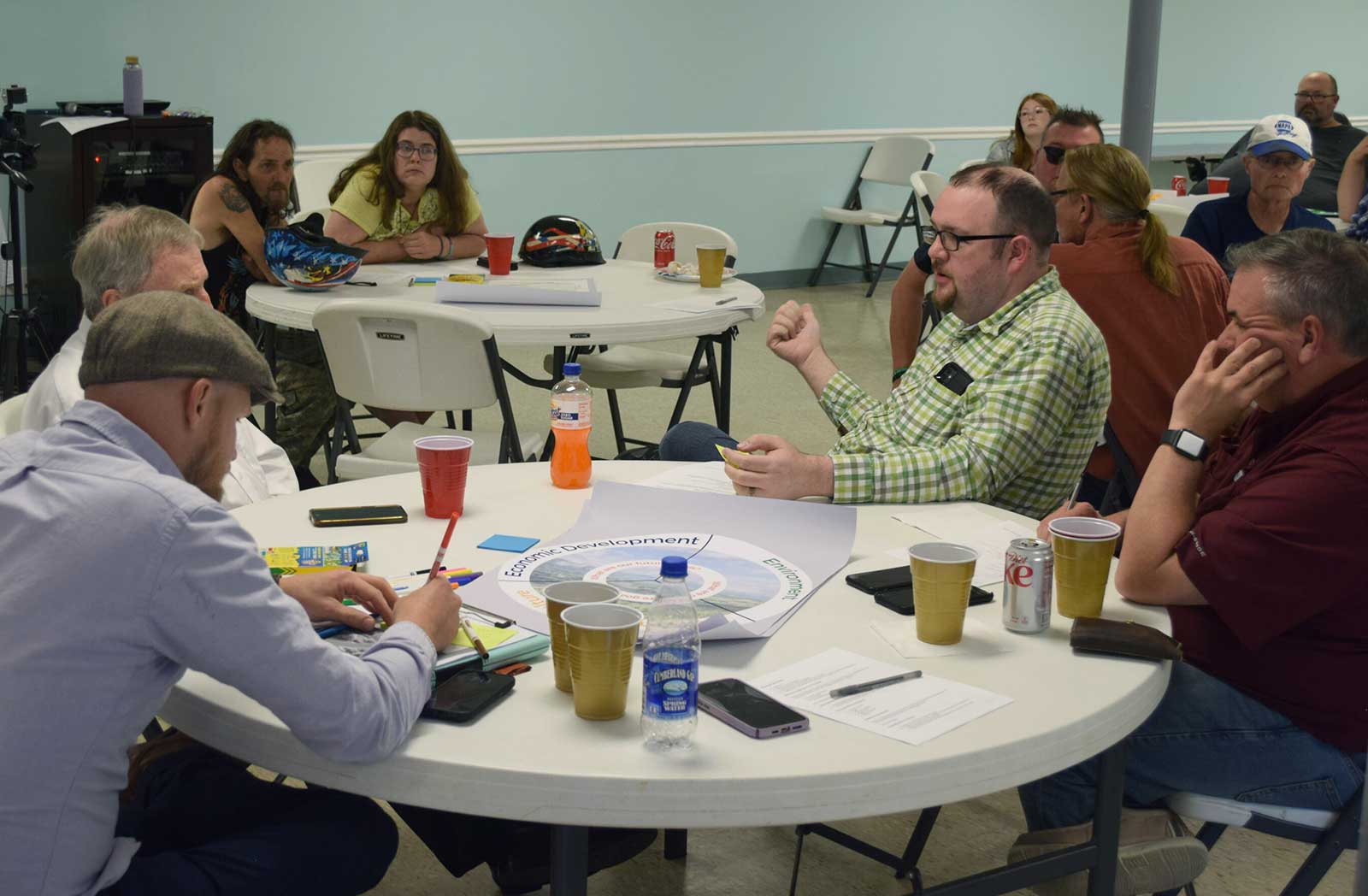
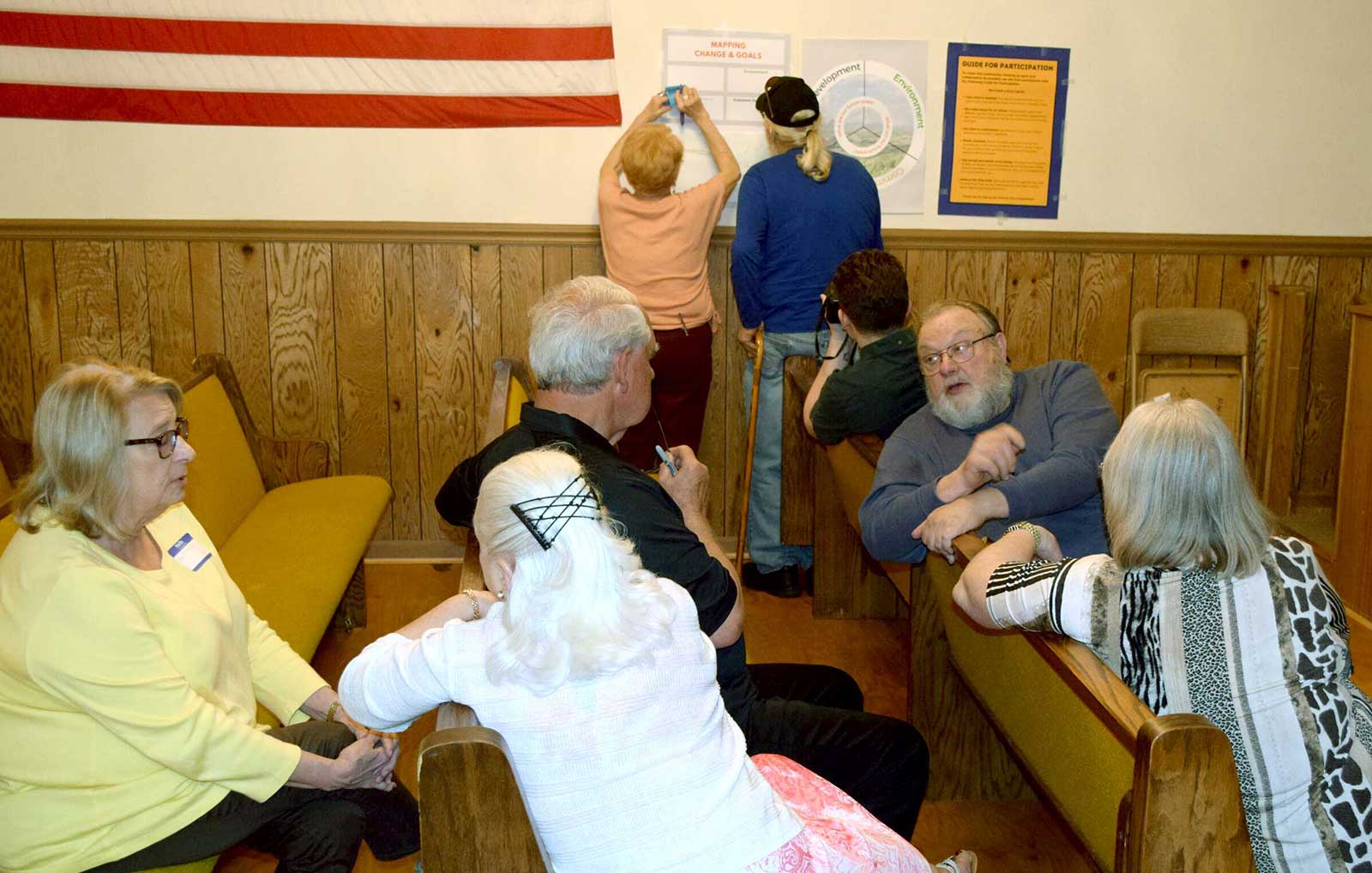
Here’s where things currently stand in each locality:
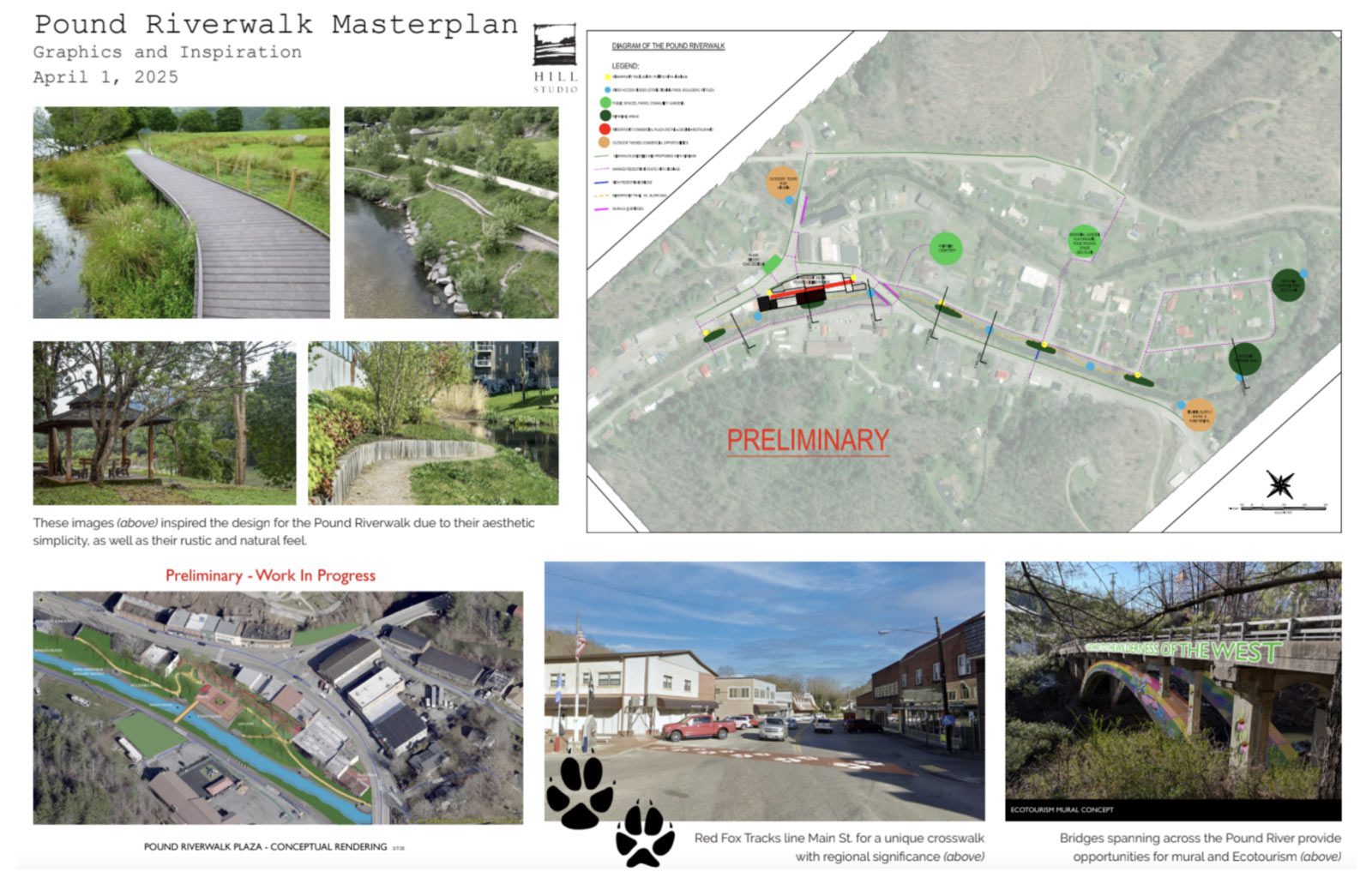
Pound: The old People’s Bank building downtown recently underwent demolition. In its place, community members and leaders are planning a monument to labor and a pocket park. You helped design a stage for community use and talked about splash pads, a farmer’s market and a place for town events. The stage and park are slated to be unveiled next spring. A design firm has also completed new plans for a flood-mitigating riverwalk to bring a new recreational opportunity to the area.
Pennington Gap: The town received a completed flood-mitigation greenscaping project report and is preparing to apply for project implementation funding. The town is applying for state funding to demolish the Cas Walker building and build a recreational area in its place. New energy-efficient LED lighting is being installed along the greenbelt, made possible by federal funding from the Department of Energy’s SOLVE-IT prize.
Dungannon: We are working with the community to purchase land to create a flood-mitigating wetland education area and recreation space near the historic Dungannon Depot, which currently serves as a community center. In partnership with Appalachian Voices, the town used federal Buildings Up funding to install energy efficiency upgrades and heat pumps at the Dungannon Depot, and the town is also conducting a feasibility study with American Microgrid Solutions for using the depot as the site for a future resilience hub.
Dante: The community is working on revitalization of the Dante Depot to be used as a central hub for community resilience. Russell County received a Community Development Planning Grant for Dante to inventory residential properties to compile a plan for building revitalization. Appalachian Voices has also worked with Dante to complete a solar and battery storage feasibility study for the depot building.
Clinchco: We are working with the community to build resilience against flooding while working on plans to repurpose unused town-owned property. The town also received a Department of Energy Virginia Energy Resilience Study grant to fund a resilience and energy efficiency study in the community and develop plans for a community resilience hub.
Investing in Community-Led Solutions
Our New Economy team helps communities design and implement projects that support long-term revitalization and resilience. We provide technical assistance, grant support and planning expertise in four key areas:
- Disaster Preparedness – Strengthening infrastructure to mitigate flood risks and other hazards.
- Energy Deployment – Supporting clean energy solutions that reduce costs and improve resilience.
- Environmental Reclamation & Cleanup – Revitalizing land impacted by industrial activity.
- Green Space & Outdoor Recreation – Creating parks, trails and other outdoor assets that attract visitors and businesses while enhancing public spaces and improving quality of life.
Through these efforts, we aim to strengthen communities by increasing access to funding opportunities for long-term community success.
Read more on our blog
- The need for disaster preparedness in one rural community
- Community improvement projects proceed in Pound as some funding remains uncertain
- Connecting the future to the past through five special places
- Revitalizing Pennington Gap: Clean energy and economic investment in Southwest Virginia
- Building collaborative communities in Southwest Virginia
- Homecoming: Why rural community economic development matters
- Communities identify priorities during first listening sessions of multi-year project
- Building energy-resilient communities in far Southwest Virginia
- Investing in what matters: Federal funding to kick off community-led resiliency projects
Contact Us
For more information about the Community Strong project, email community-strong (at) appvoices.org
Some of the initiatives described on this page were funded by a U.S. Environmental Protection Agency Environmental Justice Collaborative Problem Solving grant until Feb. 22, 2025. EPA funding for these activities ceased on that date.