

‘First Line of Defense’
Rural volunteer fire departments revisit Hurricane Helene two years later, discuss how they can be better resourced for the future
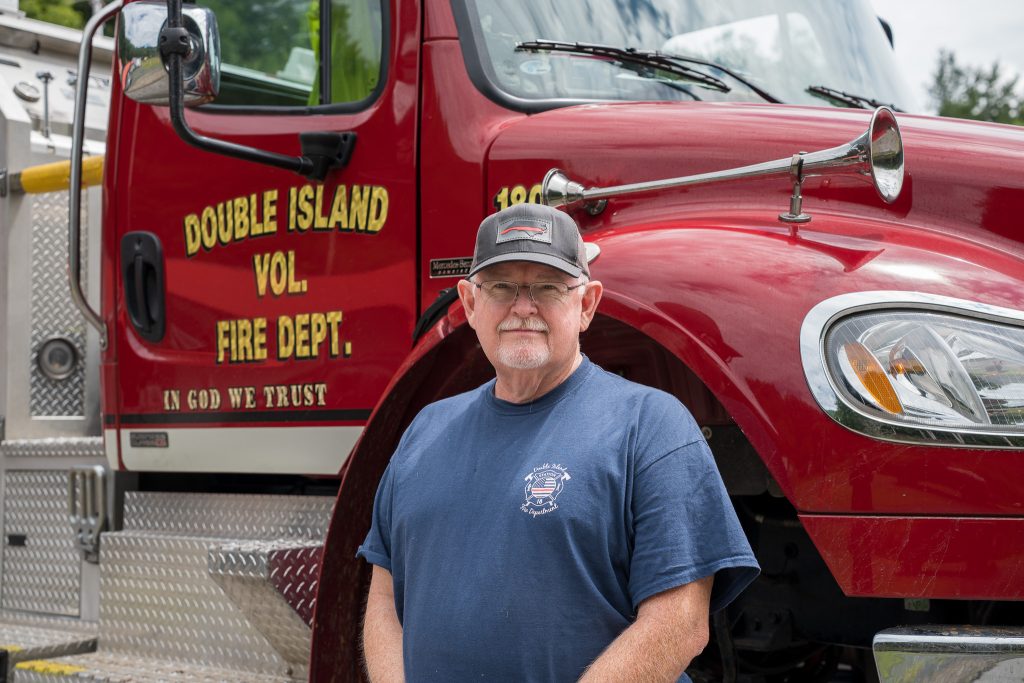
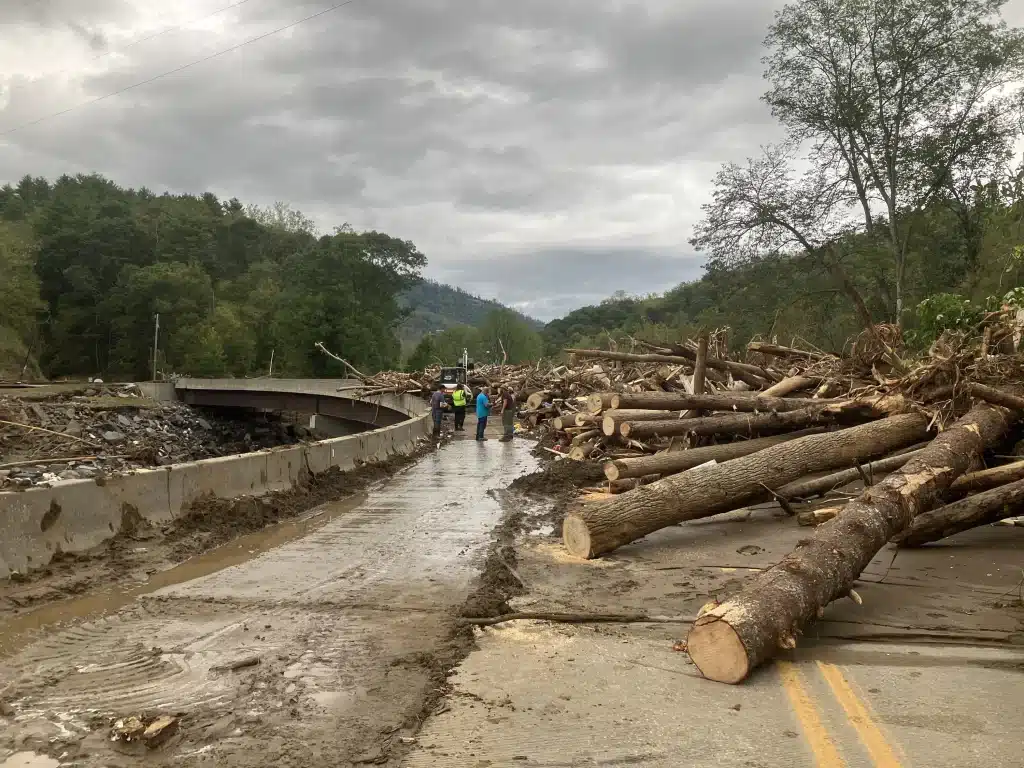
During Hurricane Helene and its aftermath, rural fire departments and other first responder hubs played critical roles in keeping their communities safe, even without power and cut off from outside support for days or weeks after the storm.
“We’re the first line of defense,” says Dan Buchanan, assistant chief at Double Island Volunteer Fire Department in Yancey County, North Carolina.
And two years later, plenty of work remains to ensure these hubs have the resources they need to operate day to day and be ready when emergencies or natural disasters strike. A few, like Double Island, have turned to solar energy with backup battery storage to better prepare for future power outages.
Rural volunteer fire departments are the ‘lifeblood’ of communities, especially after Hurricane Helene
Double Island, an all-volunteer department of 26 people, serves a little more than 2,500 homes and 5,500 full-time residents over 14 square miles in a remote, mountainous area of Western North Carolina. They operate on an annual budget of $52,000 — up from $48,000 before Helene.
In normal times, the Double Island team fights house fires, provides emergency medical aid and offers community education. But after Helene, they checked in on and rescued neighbors, managed relief centers, removed downed trees, served more than 10,000 meals to residents, coordinated over 150 volunteers in rebuilding efforts, handled fuel deliveries and much more. Members of Double Island lived at the station for weeks after the storm.
“We had no loss of life in our district,” Buchanan says, who has been with the department for four years after moving back home to care for his ailing parents. “We had some close calls, but no one in our district died from Helene or anything associated with Helene.”
Buchanan calls volunteer departments like his the “lifeblood” of communities in fair-weather times and disasters like Helene. His grandfather was one of the founding charter members for Double Island in the 1970s.
“If these folks weren’t here, this community would have been in really bad shape, worse than it was damage-wise,” Buchanan says.
A growing volunteer crisis
“Volunteers have always been the core of the fire service in this country,” says Bruce Cook, assistant fire chief at Broad River Volunteer Fire and Rescue Department, located in a rural southeast corner of Buncombe County, North Carolina.
Across its main station and two substations, Broad River has 30 members, a mix of 10 part-time and full-time paid staff and 20 volunteers, serving around 1,200 people across 40 square miles.
Out of 1,089 fire departments in North Carolina on the National Fire Department Registry, 87% are all-volunteer or mostly volunteer, according to the U.S. Fire Administration.
During Buchanan’s tenure at Double Island, he has had to fight house fires single-handedly until mutual aid or neighboring fire departments arrive.
“With a volunteer system, people have soccer games, baseball games to go to, kids on Saturday, family events, or they’re running businesses,” he says. “It’s really difficult for them to break away sometimes to be able to be in the right spot at the right time.”
For all volunteer or majority-volunteer departments, a sharp decline in volunteerism is leaving them vulnerable to closure and communities at risk during future emergency situations. And a growing number of active volunteer firefighters are over 50, especially in smaller communities, according to 2020 National Fire Protection Association data.
“I’m 70 years old, and I’m still volunteering,” Cook says. “Do I run into burning houses anymore? Not so much, but I still show up to the calls and do as much as I can.”
The number of volunteers keeps going down because of time commitments, required certifications and regulations, Cook explains. He has been with the department for 31 years.
“We’re losing volunteers faster than they can be replaced with paid people,” Cook continues. “And that’s going to be another disaster because the economic value of the volunteers just in North Carolina is millions and millions of dollars for the service that they provide.”
Solar energy is another tool in first-responders’ toolbox
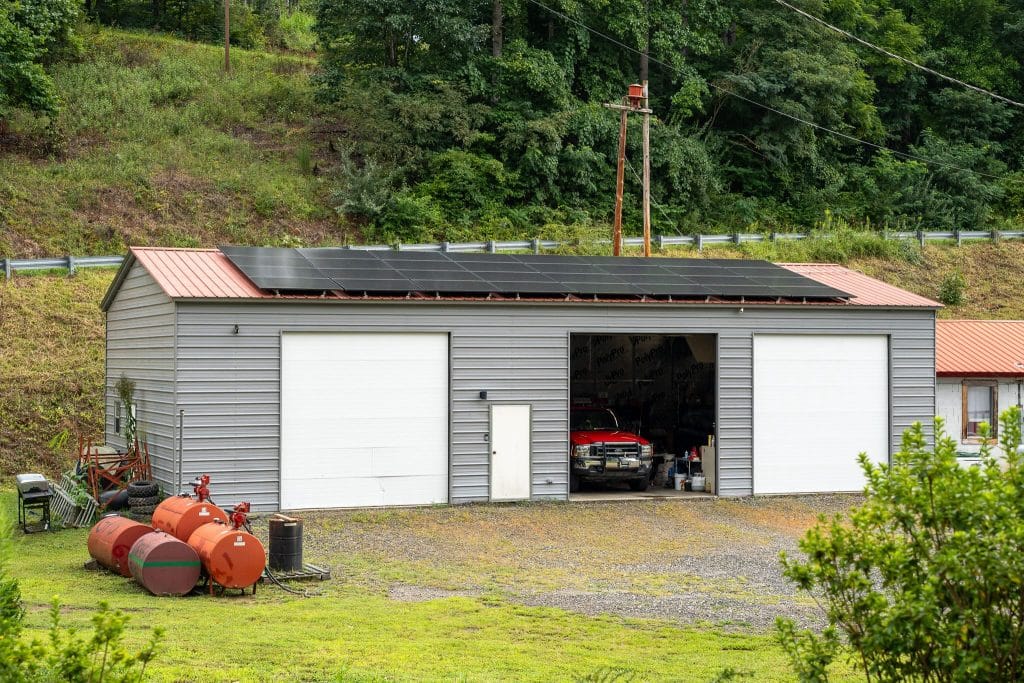
A big challenge many rural first responders encountered after Helene was a lack of power. Double Island didn’t have grid power for 16 days, but they had small generators to power lights and access radio communications.
Now, thanks to Footprint Project, a nonprofit disaster management organization, and other partners, the station has a more permanent solution for future power outages. The station is equipped with a solar microgrid made up of rooftop solar panels to generate energy and batteries to store it. They are already seeing about 20% savings on their electric bill.
With a shoestring operating budget, the department never considered installing a solar microgrid, but Footprint Project donated much of the equipment, while Invest Appalachia provided short-term bridge funding in the form of a recoverable grant for its installation.
Since then, Double Island Fire Chief Daniel Stiles shares that the station has lost utility grid power twice, already proving the system’s value. Each time, the solar system kept his radios and internet running and stopped his computers from resetting.
“All those things were able to stay operational to where we could keep communication with everyone, know what was going on, versus in Hurricane Helene — everything just went silent all at one time,” he says.
Meanwhile, at Broad River, the grid was down for two weeks after Helene. Cook and his team connected with Footprint Project, which helped them set up a temporary microgrid at the Shumont Substation near Bat Cave, North Carolina, allowing community members to stay connected with family outside the area and charge devices. Now, the Shumont Substation has a permanent solar microgrid to handle future power outages and save money on its monthly electric bill, thanks to donated panels, batteries and inverters from Footprint and other partners.
“Having that solar backup is just going to give us another tool in our toolbox,” Cook says.
Soon, Footprint and a coalition of partners will equip Broad River with a solar microgrid trailer, dubbed a “Power Bee,” to provide an agile, renewable power solution for future disaster or emergency response.
Broad River will use the solar trailer to power distribution hubs or mobile command centers in future disasters, even bringing it to neighboring fire departments if the grid is down and other stations don’t have backup power.
“It’s anything from lights to opening doors to charging the multitude of different kinds of batteries that we have to have to operate our equipment, radios — communication backup is big too,” Cook says.
Double Island and Broad River served as test sites for the North Carolina Department of Environmental Quality’s $5 million regional effort to equip first-responder hubs, libraries and other community gathering spaces with permanent and mobile solar microgrids to become more resilient for future emergencies and disasters. Footprint Project and Land of Sky Regional Council are leading the initiative, with support from the NC Sustainable Energy Association, Invest Appalachia and Appalachian Voices, publisher of The Appalachian Voice.
A fight for funding, against bureaucracy
“We received very little support or anything else from [the Federal Emergency Management Agency],” Stiles says about the federal government’s response to assisting Double Island.
Three days before Hurricane Helene, Stiles requested food, water and supplies from FEMA. Two days after the storm, the fire department hadn’t received anything other than a pallet of water and another of MREs. On the third day, Buchanan traveled to a FEMA command center at the Fairview Volunteer Fire Department to advocate for the requested supplies and contact his kids living in Asheville. A few hours later, helicopters started showing up with what they needed.
Over time, Double Island has received some FEMA funding, recently using a portion to buy its first new fire truck in 21 years. Since October 2025, their old truck has cost the department $23,000 in repairs — a large chunk of its annual budget. But mostly, they have received private donations and support from nonprofits like Samaritan’s Purse, an international Christian disaster recovery organization, along with some state funding.
While the new fire engine is welcome, Buchanan explains, the department needs funding to repair its main station and substation. During Helene, three inches of water flooded the main station, and recently, part of the driveway has begun caving in, making it unsafe for emergency vehicles.
“We’re at 80% damage — structural damage — on this station, and our number two station is at over 90%,” Buchanan says.
Double Island has been fighting “tooth and nail” for months to get funding for repairs, Buchanan explains.
“I just hope that they come through and we can rebuild our stations, and we’ll be a little more prepared for the next storm,” Stiles says.
Related Articles
Latest News
More Stories

The Rocky Road — and Bridge — to Recovery
Hurricane Helene is estimated to have damaged nearly 7,000 private roads and bridges in Western North Carolina. Two years later, many restoration projects are complete, but the journey hasn’t been easy — and isn’t over for others.
After 20 Years, Letcher County Prison Proposal Is Still Alive, Though Obstacles Remain
A $605 million proposal for a federal prison on a former strip mine site in Letcher County, Kentucky, championed by U.S. Rep. Hal Rogers, refuses to die, despite local opposition, a lack of support from the executive branch and numerous other obstacles.
The Washout and Rebuild
For nearly two years, residents of Unicoi County, Tennessee, have had to make do without a hospital after Hurricane Helene destroyed the rural hospital. Ballad Health, which owns the hospital, broke ground on a new location — in another floodplain — in August 2026.

The Shenandoah Salamander
The Shenandoah salamander is a woodland salamander, which has adapted to life at higher elevations away from water. This sparkling rarity lives among the dry leaves, cracked logs, and stony hillocks on the highest peaks of Shenandoah National Park.
‘Foraging Is a Way of Connecting’
Foraging has experienced a modern resurgence, partly because of social media, online groups, the pandemic and people wanting to connect with nature. It also builds community, whether in person or online.

Colorblind Viewfinders Make Appalachian State Parks More Accessible
Virginia State Parks is the first park system in the nation to have a colorblind viewfinder at each one of its 43 locations — thanks to the dedication of one park ranger. Other states are following suit.

Leave a comment
Your email address will not be published. Required fields are marked *
Leave a Comment