

Increasing Human-Bear Conflict Prompts Legislation, Need for More Public Awareness
Experts attribute increased interactions to growing human and bear populations, among other factors
By Cyndy Merse
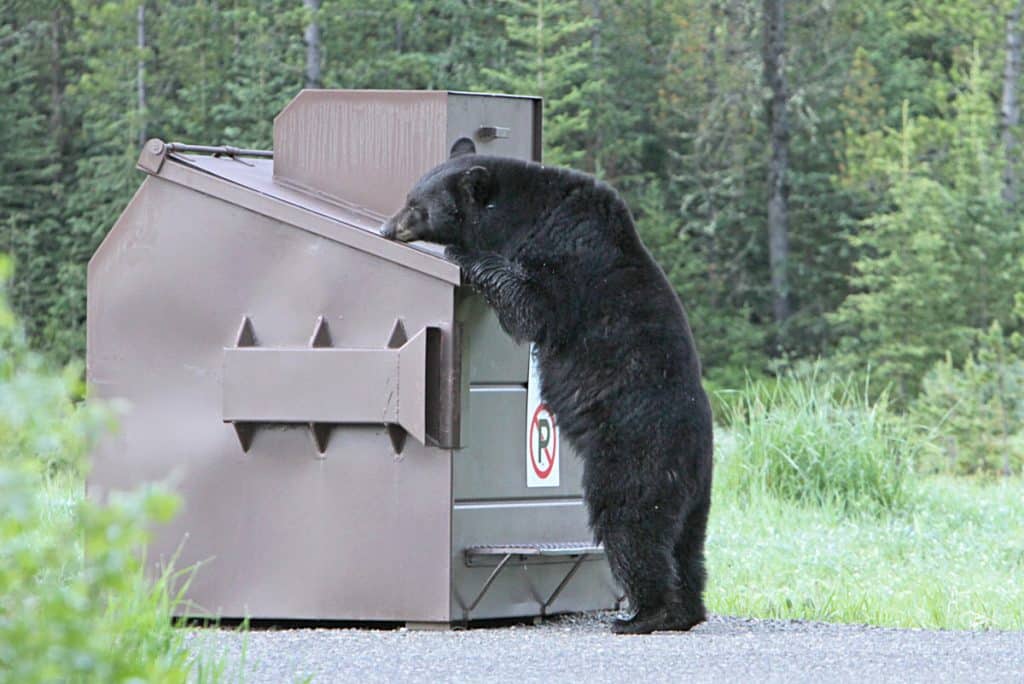
Black bears are the unofficial mascot of the Great Smoky Mountains, and people love to catch a glimpse of them when they visit. Yet, not all bear encounters are harmless photo opportunities. In January, a bear ransacked a Gatlinburg, Tennessee, candy store, while a bear entered a home in Asheville, North Carolina, injuring its resident in August.
Experts suggest interactions like these are on the rise in Western North Carolina and East Tennessee, and across other parts of the country, due to a combination of factors, including an increasing bear population, development encroaching on bear habitat and greater public awareness about reporting human-bear conflict.
Human-bear interactions on the rise in North Carolina and Tennessee

In recent years, the North Carolina Wildlife Resources Commission has seen an uptick in bear-related calls. Most of these calls are from Western North Carolina, specifically Buncombe County, home of Asheville. In 2025, the NCWRC helpline received 842 bear-related calls — almost double the number received in 2017. For 2026, NCWRC has already received 836 reports from May 1 to Sept. 30. The Tennessee Wildlife Resources Agency has seen a similar increase, with calls more than doubling between 2011 and 2025.
The primary reason for human-bear conflict is that bears are becoming habituated to human food and trash, explains Ashley Hobbs, District 9 special projects biologist and BearWise coordinator at NCWRC.
“Bears seek out easy food sources, and things like human food, pet food, birdseed and trash draw them into populated areas,” Hobbs says, pointing out that development is also playing a role by displacing bears from their natural habitat and food sources like berries and acorns.
Both human and bear populations have been increasing across the region. In 2011, estimates put Tennessee’s black bear population at around 4,500. Today, TWRA puts that number closer to 6,000. This growth coincides with Sevier County’s population almost doubling over the last 30 years. Similarly, North Carolina’s bear population has more than quadrupled over the last 20 years to around 20,000 statewide, while Asheville’s population has increased from around 77,000 residents to over 93,000 during the same time period.

“As you see more people move into an area, you see them bring more human food,” Hobbs says. “Bears are incredibly adaptable, and they are more than happy to live alongside people in our communities. Within Asheville city limits, bears are so reliant on human food that there is a disconnect between bears and their natural food sources.”
However, an increase in human-bear interactions does not necessarily mean the area has a large or growing bear population.
“One bear can cause a lot of conflict because bears cover large home ranges,” says Janelle Musser, black bear biologist and assistant bear program coordinator at TWRA. “If one bear is causing property damage in an area or getting into everyone’s garbage cans, it can seem like there’s bears everywhere, but really it is just one bear doing that.”
Bears that routinely feed on human food and trash can lose their fear of people and start exhibiting bad behaviors like breaking into cars or homes, putting both people and bears at risk.
“When bears exhibit behavior that is a threat to human safety, the bear ends up suffering the consequences,” Hobbs says. “Our agency has to put that bear down.”
In North Carolina, NCWRC euthanized 12 bears in Buncombe County this year because of human-bear conflicts. In Tennessee, TWRA euthanized 61 bears — more than double the 23 from last year, and all but one bear was in Sevier County.
What is being done about human-bear conflicts?
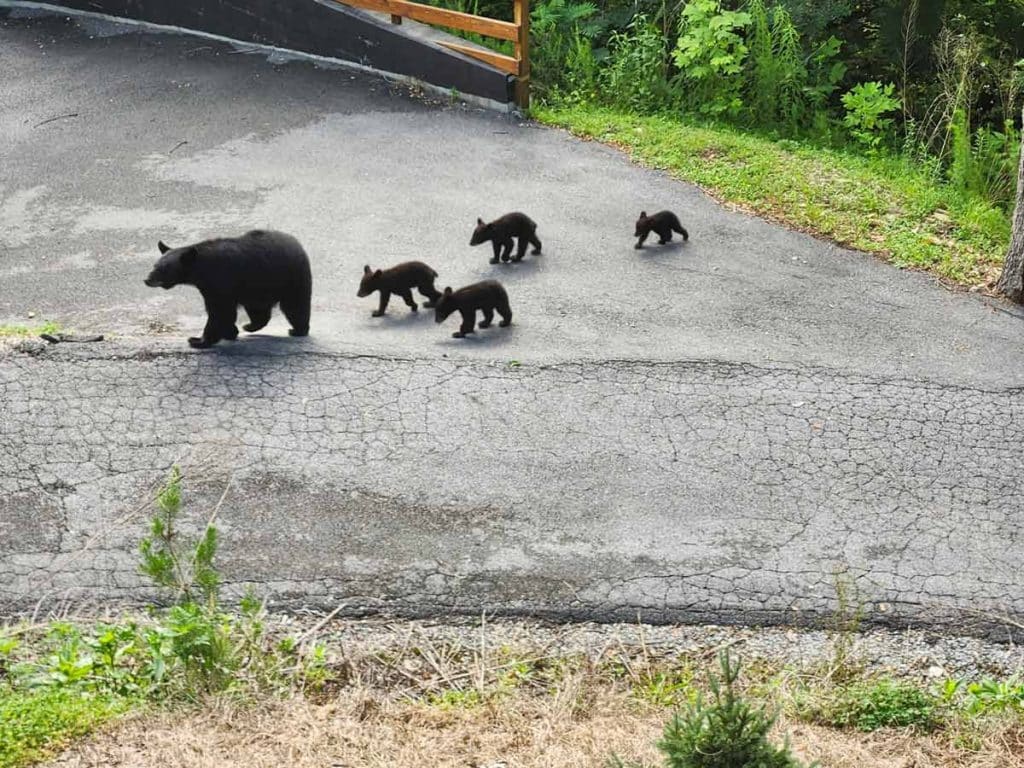
Tennessee and North Carolina are taking some action to address human-bear conflict. NCWRC has proposed a temporary rule prohibiting feeding and attracting black bears in Buncombe County. The rule would add to existing ordinances in the county and the city of Asheville and would impose a misdemeanor penalty and a fine for feeding or attracting bears. NCWRC will consider adopting the temporary rule at its December meeting. A permanent rule with similar language is also in the works.
In April, outgoing Tennessee Governor Bill Lee signed a bill making it a Class B misdemeanor, punishable by a $250 fine, for anyone who feeds black bears in areas where notices are in place stating it is unlawful to feed bears.
“Unfortunately, its enforcement is extremely limited,” shares Greg Grieco, executive director of Appalachian Bear Rescue. “While the bill is a step in the right direction, to have a state law that gives a classification to the offense so counties and municipalities can pass their own ordinances, the law is only enforceable in a small part of Gatlinburg’s city limits. Outside of that, the law has no teeth.”
Education also helps reduce human-bear conflict. The widely recognized BearWise program offers tips and resources on how people can live responsibly alongside these furry creatures. The BearWise Basics focuses on six things you can do around your home, like securing food, garbage and recycling, along with letting neighbors know when bears are active in the community.
Despite its importance, education only goes so far, notes Grieco, who stresses the need to advocate for strategies that reduce sources of human-bear conflict, such as stricter development regulations and preserving natural habitat.
Related Articles
Latest News
More Stories
Planting for the Grandkids
Gardening from memory is getting trickier in Appalachia as hardiness zones change. Some areas, like parts of Asheville, Knoxville and Johnson City, have shifted full hardiness zones since 1990. An arborist explains what this shift means for the trees you plant this fall, and for the grandchildren who’ll live with them.

Ridgeline Pipeline Construction Impacts in Rural East Tennessee
Neighbors share concerns about noise, unpredictable construction schedules and other disruptions due to methane gas pipeline construction in East Tennessee.

Neighbors Help Neighbors
A photo essay that celebrates the volunteer spirit of the grassroots group Hurricane Helene WNC and speaks to the resourcefulness, collaboration and hard work embodied by thousands and thousands of volunteers, first responders and aid workers across the region after Hurricane Helene.

Halloween Approaches, and Night School Is in Session
The House of Art in Bluefield, West Virginia, looks like a haunted tower, making it the perfect location for its sixth annual haunt event: Night School. The Night School will be open every Friday and Saturday night through Oct. 31.

‘The Most Perfect Act of Love’
Hundreds of people attended the second annual Affirming Sumner Pride celebration on a 24-acre farm dubbed “Fruity Farm” in Bethpage, Sumner County, Tennessee.

Signs of Life: Endangered Bats Found in Nantahala for First Time in More Than a Decade
In the Nantahala National Forest, a team of biologists spotted Indiana bats, an endangered species that hasn’t been seen in North Carolina for the last 11 years.

Leave a comment
Your email address will not be published. Required fields are marked *
Leave a Comment