

Planting for the Grandkids
By Chris White
A woman in Pickens County, South Carolina, called me in March about a saucer magnolia — the kind her grandmother wanted in Ohio and never got the winters to allow. Fifteen years ago I’d have called it a bad bet here too. I stood in her yard, soil probe in one hand and the updated U.S. Department of Agriculture plant hardiness zone map on my phone in the other, and told her to plant it.
As a certified arborist, I have that conversation a lot more now, and it cuts both ways. Some plantings got safer. Some got riskier. The only way to tell which is which is to look at what’s actually changed, instead of gardening from memory.
Shifting hardiness zones
Many plant tags at your local nursery have a zone number. It comes from the USDA’s plant hardiness map, which runs from Zone 1 (coldest) to Zone 13 (warmest), with each zone split into an “a” and a “b” half. It’s how growers know which plants will make it where. The map is based on one thing: the average annual extreme minimum temperature. In plain terms, that’s how cold it gets on the coldest night of a normal winter. In 2023, the USDA redrew this map. For instance, here in Oconee and Pickens counties in South Carolina, we slid from the cold end of Zone 7b toward the mild end. Not a big move.

Up in the mountains, it’s a bigger one. On the 1990 map, parts of Asheville, North Carolina, and Knoxville and Johnson City, Tennessee, were Zone 6b. Those areas are 7b now. That’s a full zone in about 30 years, which means the coldest night of a normal winter there runs roughly 10 degrees milder than it used to. Areas of Boone, North Carolina, were still 6b on the 2012 map. They’re 7a today. The hard cold that used to make the High Country feel like a different place has been pushed back up toward the ridgetops.
Two things are behind the change. One is the winters themselves. The 2023 map averages 1991 to 2020, a warmer stretch than the 1976 to 2005 years behind the 2012 map. The other is that scientists are better at measuring. The new map draws on 13,412 weather stations, up from 7,983, and a lot of the new ones sit in mountain hollows the old map had to guess at. Put together, the 2023 map runs about 2.5 degrees warmer on average, and about half the country moved up a half zone.
The USDA is careful to say a zone change on its own isn’t proof of climate change, which scientists measure over 50 to 100 years. That’s fair. But when three maps in a row move in the same direction, I pay attention to it when I’m choosing what to plant.
One more thing if you live in the mountains: enter your ZIP code on the USDA map, then zoom in to see which zone your own house falls in. A north-facing cove and a south-facing slope a mile apart can land in different zones.
Bugs, rain and other challenges
Milder winters sound like good news, and for planting they partly are. A few plants that used to be borderline here are safe now. Others that like a cold winter are going to struggle more in our summers.
The bigger problem is bugs. Winter keeps a lot of insect pests in check. Real estate agents have been making that pitch for years to folks trying to decide between our part of the world and Florida: The cold here keeps the bugs down. They weren’t wrong. A hard freeze kills off much of the overwintering population and resets the count for spring. When hard freezes stop showing up reliably, that reset doesn’t happen.

For example, the invasive brown marmorated stink bug, first found in Pennsylvania in the late 1990s, is now settled in across the region. And invasive hemlock woolly adelgid used to get knocked back hard by a cold mountain winter. Now more of them survive to spring, threatening the survival of our mighty hemlocks.
Rain is changing too. Most of us still get somewhere around 50 inches a year, so the problem isn’t drought, exactly. It’s whiplash. Dry spells run longer, the rain comes harder when it finally comes, and we get summer stretches of heat, low humidity and dry soil all at once, which was rarer 20 years ago. Trees can adjust to steady conditions. The swings are what wear them down. A wet May, then a bone-dry July, then 3 inches of rain in August is harder on a tree than one long, steady drought.
What I’m really talking about is phenology, which is just the study of when things happen in nature: when leaves open, when bugs hatch, when birds come back. A tree you plant this year will still be standing in 2060. If you pick it without thinking about where things are headed, you can end up with a yard that’s wrong for the climate by the time the trees are grown.
Spring is the clearest example. It’s coming earlier, and not everything is keeping up. The timing is supposed to go like this. Trees leaf out. Caterpillars hatch to eat the new leaves. Songbirds come back from the tropics just in time to stuff those caterpillars into their nestlings. Trees and caterpillars go by temperature, so they’re running earlier. The birds go mostly by day length, and that hasn’t changed.
One study tracked 48 North American songbird species from 2001 to 2012. Over those years, the gap between spring green-up and the birds’ arrival grew by more than half a day a year. Here in the East, where spring is coming earlier, the birds are increasingly showing up late. Two that nest in these mountains, the Northern Parula and the Yellow-billed Cuckoo, were among the nine species that fell furthest behind. A bird that shows up a week after the caterpillars have peaked has less to feed its babies.
A thicker mix of natives that leaf out and bloom over a long stretch of the season helps, so the food doesn’t all arrive and disappear at once. One or two nonnative ornamentals can’t give the birds that kind of margin.
How to plant trees for your grandkids
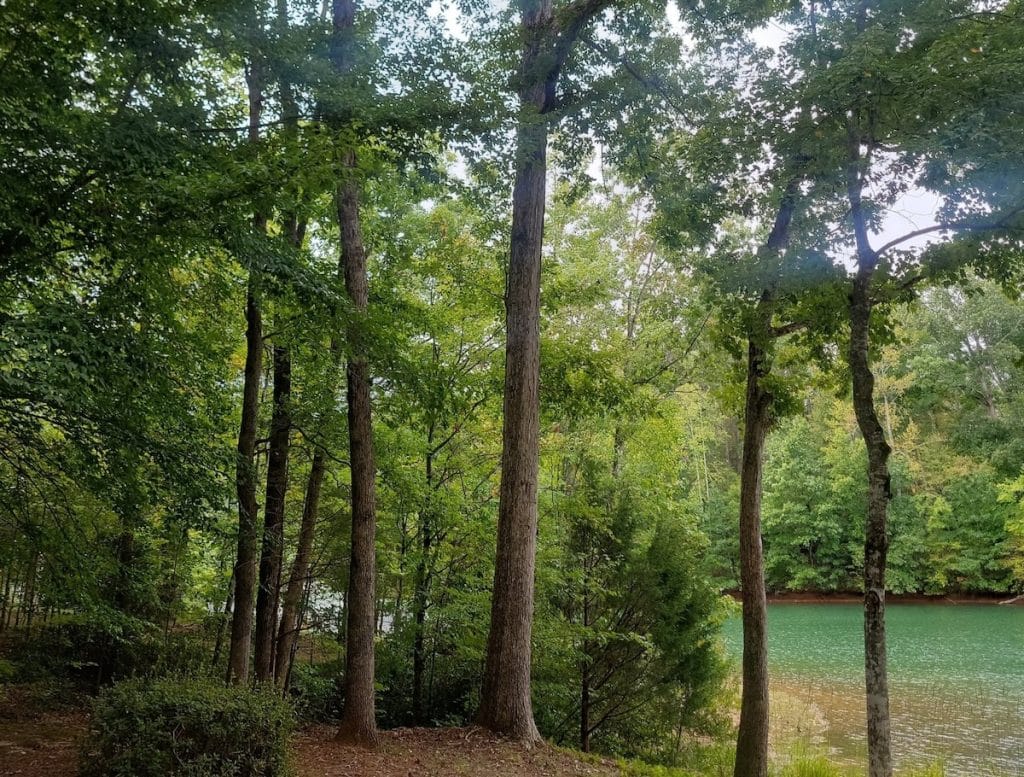
So what should you plant? The natives that have always done well in the Southern Appalachians, from the foothills up into the coves, aren’t going anywhere: white oak, tulip poplar, black cherry, river birch, serviceberry, spicebush and beautyberry. They grew up in a place with hot summers and dry spells.
If I could plant only one, it would be the white oak. It feeds more kinds of caterpillars than almost any tree in the East, making it a bird feeder you never have to fill, and it will still drop acorns long after your grandchildren have grandchildren of their own. I’d also recommend two more, both at home from the Piedmont to the mountains: black gum, which shrugs off wet feet and dry spells and turns scarlet in fall, and sourwood, whose summer flowers the bees work so hard there’s a whole honey named for it.
One thing people don’t talk about enough is provenance, where the seed came from. A white oak grown from seed collected a few hundred miles north, or a few thousand feet higher, won’t handle your summers as well as one grown from seed collected close to home. Same name on the tag, different tree. Ask your nursery where its stock comes from. A good nursery knows and will tell you. If they go blank, that tells you something too.
There are two things you can do now. First, look up your zip code and zoom into your address on the 2023 USDA map at planthardiness.ars.usda.gov. Second, before you buy, ask the nursery where its plants were grown. Stock raised in local conditions does better here.
The trees you plant this fall will still be there when your grandchildren are deciding what to do with them. Plant like they’re the ones who’ll live with it. They will.
Related Articles
Latest News
More Stories
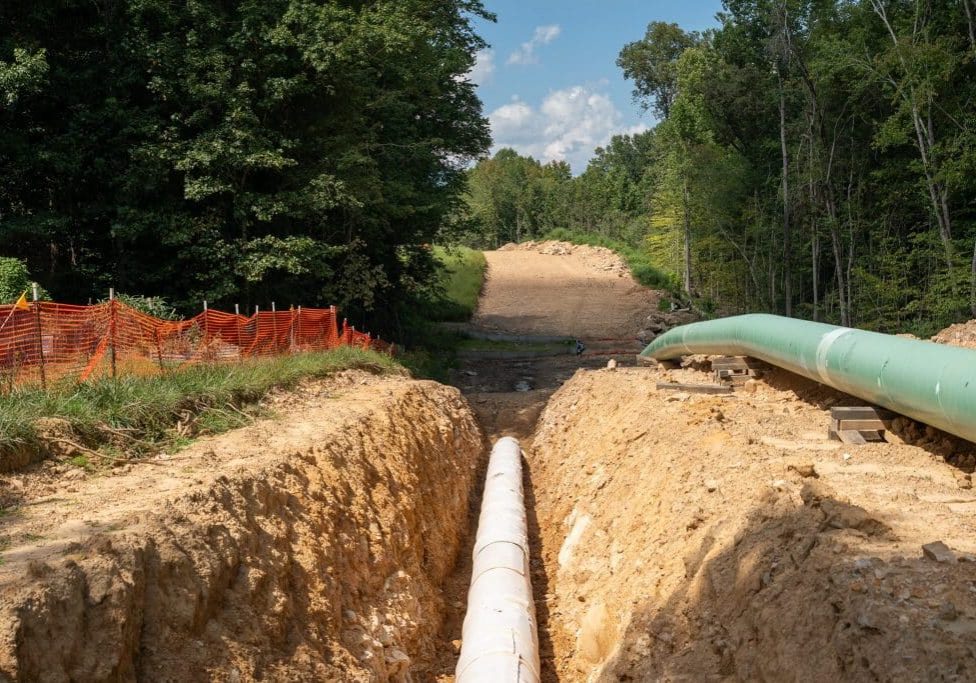
Ridgeline Pipeline Construction Impacts in Rural East Tennessee
Neighbors share concerns about noise, unpredictable construction schedules and other disruptions due to methane gas pipeline construction in East Tennessee.

Neighbors Help Neighbors
A photo essay that celebrates the volunteer spirit of the grassroots group Hurricane Helene WNC and speaks to the resourcefulness, collaboration and hard work embodied by thousands and thousands of volunteers, first responders and aid workers across the region after Hurricane Helene.

Halloween Approaches, and Night School Is in Session
The House of Art in Bluefield, West Virginia, looks like a haunted tower, making it the perfect location for its sixth annual haunt event: Night School. The Night School will be open every Friday and Saturday night through Oct. 31.

‘The Most Perfect Act of Love’
Hundreds of people attended the second annual Affirming Sumner Pride celebration on a 24-acre farm dubbed “Fruity Farm” in Bethpage, Sumner County, Tennessee.

Signs of Life: Endangered Bats Found in Nantahala for First Time in More Than a Decade
In the Nantahala National Forest, a team of biologists spotted Indiana bats, an endangered species that hasn’t been seen in North Carolina for the last 11 years.

‘First Line of Defense’
During Hurricane Helene and its aftermath, rural fire departments and other first responder hubs played critical roles in keeping their communities safe, even without power and cut off from outside support for days or weeks after the storm. Two years later, plenty of work remains to ensure these hubs have the resources they need to operate day to day and be ready when emergencies or natural disasters strike.

Leave a comment
Your email address will not be published. Required fields are marked *
Leave a Comment