
Front Porch Blog
Appalachian Voices’ priorities for the 2026 Virginia General Assembly
Preview the legislative session!

The Virginia Capitol. Photo by J.M. Davidson
On Jan. 14, 2026, the Virginia General Assembly session got underway with big changes and a number of historic firsts. In 2025, Virginians elected Abigail Spanberger as the 75th governor of the Commonwealth of Virginia and the first woman to hold that office. State Sen. Ghazala Hashmi was also elected as lieutenant governor, making her the first Muslim woman elected to statewide office in American history.
This also marks a major shift in power with Democrats taking control of these offices and the office of the attorney general, and maintaining majorities in the state Senate and House of Delegates. Outgoing Gov. Glenn Youngkin, who is term-limited under Virginia law, will pass the reigns of power to Gov.-elect Spanberger on Jan. 17. During his time in office, Youngkin vetoed more pieces of legislation in each of his final two years in office than his predecessors did during their entire terms.
Appalachian Voices looks forward to working with Gov.-elect Spanberger and all elected members of the legislature as we advocate for clean energy, strong communities and a healthy environment.

Defending the Virginia Clean Economy Act
In 2020, the General Assembly passed the Virginia Clean Economy Act, a major legislative package requiring our largest electric utilities to transition to 100% clean energy by mid-century. However, every year a variety of stakeholders, including fossil fuel interests and their legislative allies, have attempted to weaken or repeal this landmark law. The General Assembly stood its ground and maintained the commonwealth’s clean energy targets in every legislative session since the VCEA’s passage. We expect to see similar efforts to undermine the VCEA in 2026, and we will work to defeat bills that would slow clean energy progress or promote new polluting infrastructure.
At the same time, we expect legislators to file a variety of bills aimed at strengthening and improving the commonwealth’s clean energy standards, including more aggressive energy storage targets and an increased emphasis on building solar on rooftops and land that has already been disturbed by other industrial activities.
Ensuring common-sense safeguards around data center growth
In the last few years, data centers have gone from an obscure industry concentrated in Northern Virginia to a major driver of electricity demand across the commonwealth and in many other parts of the world. The largest of these facilities — so called hyperscale data centers — can consume as much energy as a mid-sized city and several million gallons of water per year. While most data centers are connected to the electric grid, they generally rely on diesel generators for backup power, threatening local air quality. The surge in electricity demand experienced in our region, driven by data centers, is driving up electricity bills in many places. Meanwhile, Dominion Energy Virginia and several independent power companies are proposing to meet projected electricity demand growth with expensive and polluting new gas-fired power plants.
Virginia currently offers a generous sales and use tax exemption for data center companies to reward them for locating and investing in Virginia; data centers qualify for the tax exemption if they make a certain level of capital investment in Virginia and create a minimum number of new jobs.
However, there are no guardrails to protect people from the health and environmental impacts of building dozens of new polluting power plants that are being proposed to serve the eye-popping new electricity demand associated with data centers. If Virginia is going to reward data centers with a significant tax break, the state should attach clean energy requirements. We support bills requiring these facilities use clean energy, meet energy efficiency goals and eventually phase out the use of diesel generators for backup power. There are also bills this year that would require transparency around data centers’ water use, ensuring that the Virginia Department of Environmental Quality can fully understand this industry’s impact on water withdrawals across the commonwealth. We support these efforts as well.
Currently, there are also no requirements for Virginia data centers to adjust their power consumption during the hours of the year with the highest electricity demand. In 2025, researchers found that we could meet growing electricity demand from data centers without building new power plants if we require large energy users like data centers to shift their energy use by operating less during the hours of the year when electricity demand is at its peak. Legislators should require data centers to participate in a regulated flexibility program so that we can avoid the costs and environmental impacts associated with new power infrastructure.
Finally, we need to make sure that Virginia residents don’t pay higher energy bills to subsidize the energy demands of Big Tech. The state took a step in the right direction recently when the State Corporation Commission approved a separate rate class for high-energy-use customers like data centers, but more action is required to fully protect residential customers from subsidizing energy consumption for massive corporations.
Appalachian Voices supports legislation that:
- Ensures residential and small business customers are not paying more for their electricity to subsidize data centers.
- Enhances transparency of data centers’ energy use, water consumption and emissions.
- Empowers state oversight of large new electricity users like data centers to ensure that our grid is reliable, affordable and continues on a path to zero emissions by mid-century.
- Aligns any state tax incentives for data centers developers with our climate goals by requiring use of clean energy, efficient operations and a gradual phaseout of diesel backup power.
Taking advantage of advancements in battery storage technology
A key aspect of the clean energy transition is storing the energy produced during sunny or windy days for later use in the evening or at night during peak demand time. The VCEA requires a modest investment in battery energy storage, but recent developments make clear that the commonwealth must go further.
Why energy storage matters now:
- Costs are falling fast. Battery energy storage is significantly cheaper than just a few years ago.
- Technology has improved. Modern systems are more efficient, reliable and flexible with the ability to store enough electricity for at least 10 hours and up to several days.
- Solar is Virginia’s lowest-cost energy source. Storage allows utilities to maximize clean, affordable solar power, even after the sun sets.
- Batteries and other energy storage technologies have a smaller footprint than large-scale solar.
Modeling has demonstrated that for much of Virginia, the projected increase in energy demand driven primarily by data centers can be met entirely with clean energy resources if we invest now in energy storage.
How Virginia lawmakers can lower rising electric bills
All across Virginia, everyday folks are feeling the strain of rising utility bills. After a recent ruling by the State Corporation Commission, customers of Dominion Energy will see their monthly bills increase on average by $11.24 in 2026. Appalachian Power customers’ monthly bills this spring will be almost $44 higher than in July 2022.
Energy affordability is a complex topic, but here are three ways that legislators can give folks some relief:
- Establish an energy efficiency task force to identify barriers that prevent people from taking advantage of energy efficiency programs and weatherization services — and recommend solutions. The General Assembly passed a bill doing just this with broad bipartisan support in 2025, but it was vetoed by Gov. Youngkin. A nearly identical bill is pending this year.
- Let more Virginians opt in to programs that allow them to connect their smart appliances to the grid and save money when electric demand is high. The legislature can do this by expanding the virtual power plant program to include Appalachian Power territory and allow rural electric co-operatives to offer these programs.
- Direct state regulators to stop utility companies from charging their customers extra when the company chooses to operate power plants in costly and inefficient ways. This is called uneconomic dispatch, and it’s a topic you’ll be hearing more about in the coming years. In short, coal-fired power plants are sometimes allowed to operate outside of the regular energy market process. The result is that we pay more money for dirtier power.
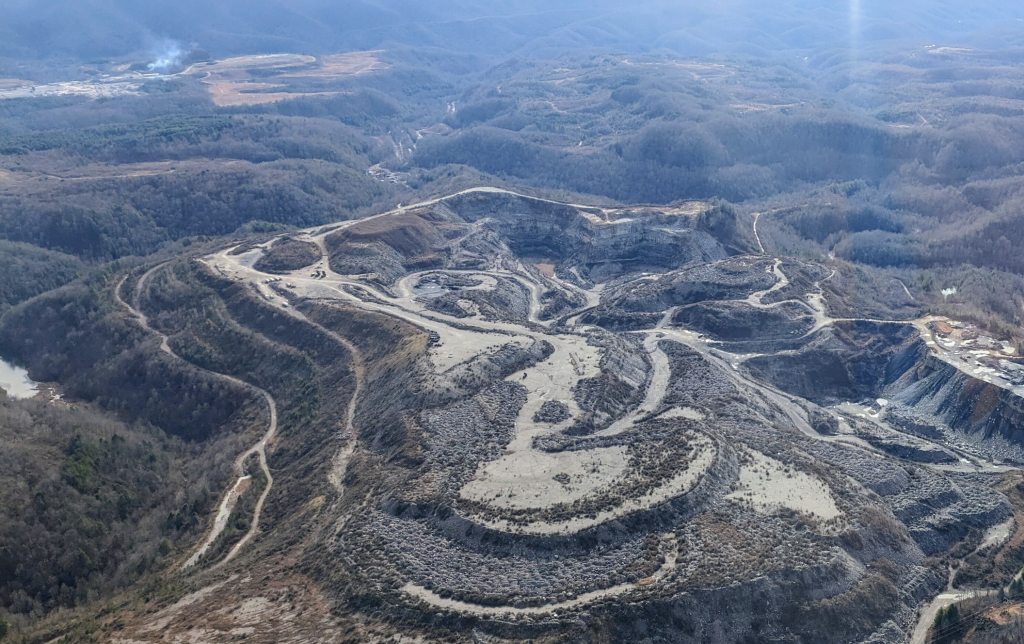
Cleaning up coal mines
The story of Appalachia can’t be told without coal. Its impacts to the people, communities, water and landscape of the region is wide-ranging and persists long after a mine closes. In Virginia, approximately 45,000 acres of former surface coal mines still need reclamation work, according to a recent Appalachian Voices analysis. These damaged lands pollute waterways and endanger nearby communities. Unfortunately, the current system of coal mine reclamation bonding — a sort of insurance requirement for environmental cleanup — is insufficient to ensure that the costs of cleanup will be covered when coal companies fail to clean up their mess.
One key problem has to do with the use of a bond pool. This is a mechanism by which many coal companies pay certain fees amounting to only a fraction of expected reclamation costs into a collective pool, instead of obtaining a reclamation bond for the full cost of cleaning up a given mine. That pool is currently capped at $20 million — an arbitrary figure. While the reclamation bonding system is in need of various reforms, raising these fees and eliminating this cap on the pool bond fund would be a clear and easy way to allow regulators to collect more funds from the industry over time in order to backstop reclamation needs.
Pipeline safety
Methane gas pipelines crisscross Virginia, putting nearby communities and the environment at risk. An essential part of keeping communities safe from operational gas pipelines is the prevention and detection of leaks. Virginia can do more to improve leak detection standards for in-state pipelines through commonsense safety measures like requiring annual leak detection surveys and minimizing intentional methane emissions.
Every General Assembly session, staff at Appalachian Voices work with members of both political parties to protect the people, places and environment of Appalachia. But we can’t do it without you. This session there will be a lot of opportunities to get involved including lobby days where you can meet with your legislators in person and action alerts on key pieces of legislation. Together we can advocate for clean energy, strong communities and a healthy environment in Appalachia.

PREVIOUS
NEXT
Related News

Leave a comment
Your email address will not be published. Required fields are marked *
Leave a Comment