

By Hannah Gillespie
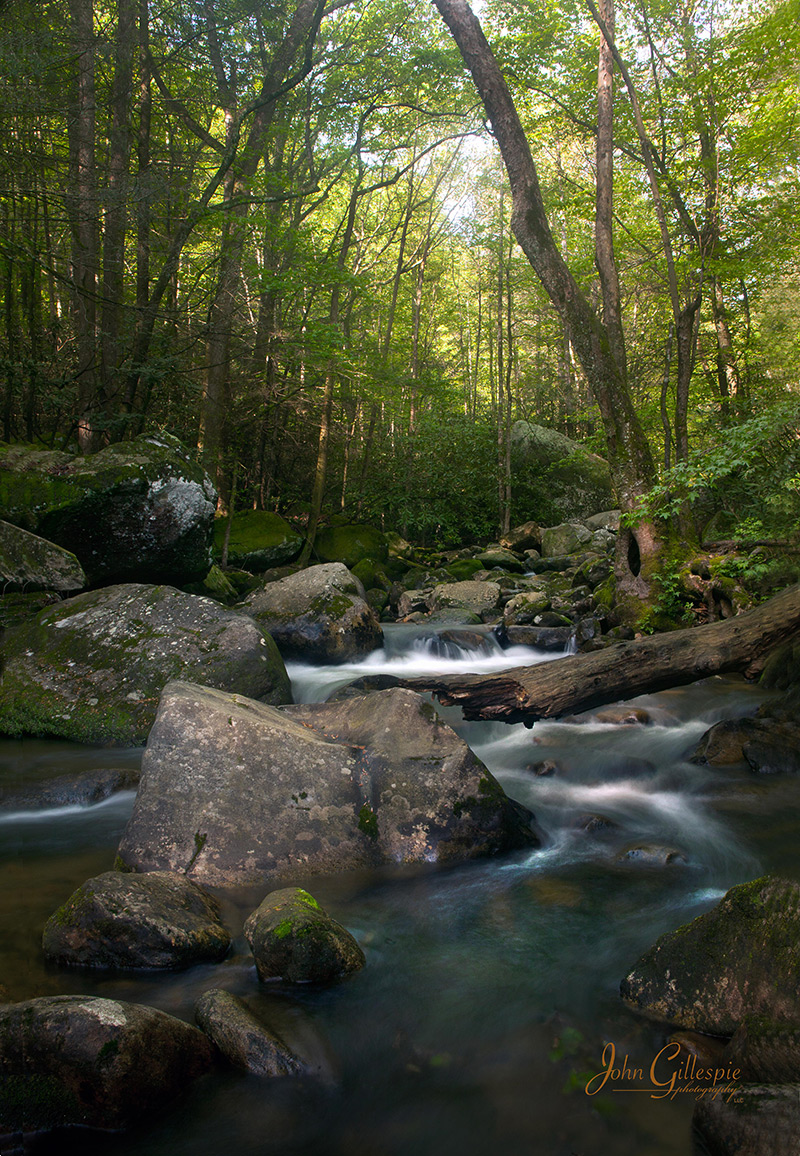
The Middle Saluda River. Photo courtesy of John Gillespie Photography, LLC
One of my first memories at Jones Gap State Park was testing the pH of the Middle Saluda River on an elementary school field trip. This nature-based education made an impression, furthering an appreciation of the outdoors my parents had instilled in me. Our class trip was part of the Discover Carolina program, which provides education on forest and river ecology for South Carolina public schools.
For me, this was one of many trips to the park. Jones Gap was only 20 minutes away from my family’s home in north Travelers Rest, S.C., and it became our favorite spot for hiking, camping and photography.
The 4,246-acre park is located in Cleveland, S.C., near the North Carolina-South Carolina border, and attracts 60,000 visitors every year. Naturaland Trust, a land conservancy started by environmentalist Thomas Wyche, acquired the land to form Jones Gap State Park in 1979. According to Park Interpreter Tim Lee, the park was named for Solomon Jones, who surveyed and built the Solomon Jones Toll Road that provided passage up the mountain from the 1850s until 1925.
In December, The Nature Conservancy bought 955 acres of private land within the Mountain Bridge Wilderness Area, a stretch of land comprised of two state parks, including Jones Gap, and private woodlands. The conservation group plans to transfer the new acreage to the park to provide opportunities for additional parking and trails. The current parking lot fills up quickly on weekends and holidays.
“The additional acreage will move us one step closer to completing the vision of conserving the mountain ‘bridge’ connecting the Poinsett Reservoir and the Table Rock Reservoir,” says Lee. This will preserve and protect over 13,000 acres from development.
Trek to the Falls
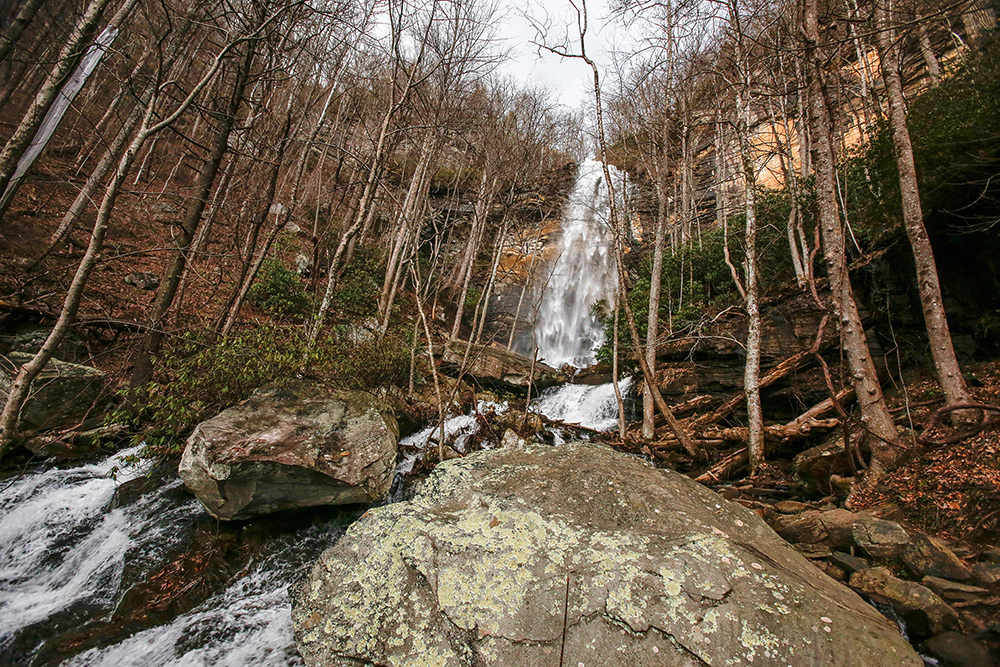
Rainbow Falls flows into the Middle Saluda River at Jones Gap State Park. Photo courtesy of John Gillespie Photography, LLC
To reach the stunning Rainbow Falls, leave the parking lot after collecting a park passport to follow the trail past the Jones Gap Learning Center and across the wooden bridge. When you reach the trailhead, register using the information sheets located below the trail map. Please note that the trails close one hour before dark year-round.
Afterwards, keep straight and follow the blue trail blazes on the Jones Gap Trail. While I’ve seen all ages on this trail and it’s not as strenuous as others in the park, watch your feet as it can be quite rocky. On a pleasant day, this part of the trail can be crowded.
If you need a break, there is a beautiful miniature waterfall off to the far left of the trail. Make sure to check out the campsites and the Middle Saluda River, which the trail winds around. You will also cross a number of small creeks on your journey, so pack appropriate footwear.
When the Jones Gap Trail diverges about a half-mile in, keep to the left and follow the red blazes marking the Rainbow Falls Trail. The steep trail features a number of rocky staircases and gains 800 feet in elevation over the next 1.6 miles en route to the waterfall.
The main attraction is the 100-foot Rainbow Falls, which used to only be accessible through the strenuous Camp Greenville Trail. According to Park Ranger Michael Watkins, who helped build the new trail, it was completed in 2008 after five months of work.
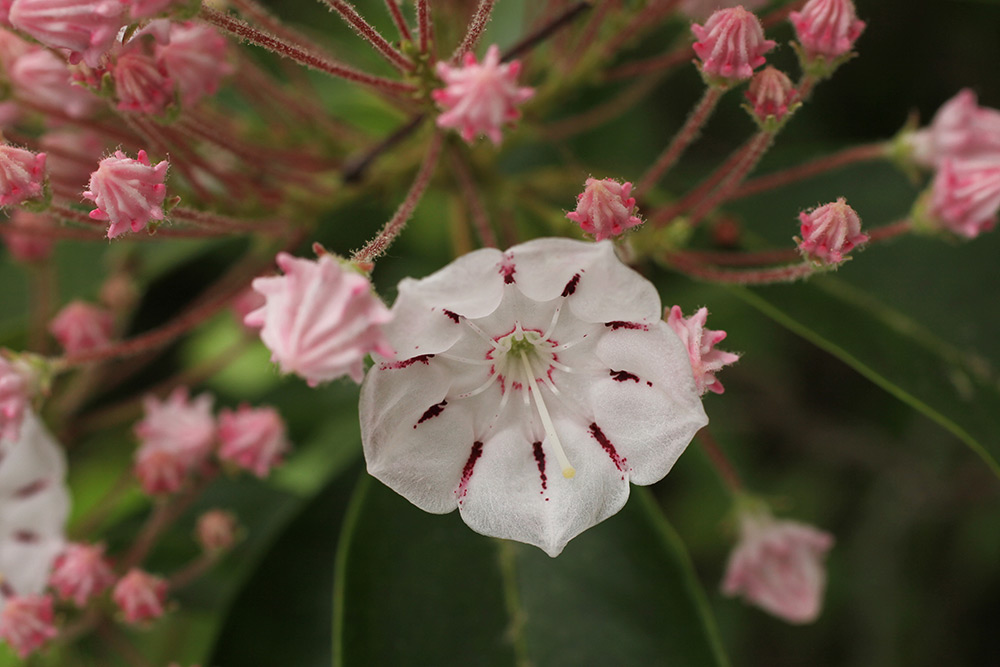
A mountain laurel blooms in April. Photo courtesy of John Gillespie Photography, LLC
There are more than 600 species of vascular plants, 44 species of mammals, 168 species of birds, 19 species of salamanders, 20 species of reptiles and over 1,000 species of invertebrates known to be living within the park, according to Lee. He recommends visiting in April and May as it’s the prime season for wildflowers.
As my father and I hiked the trail in late February, he identified plants along the way, including a little wild blue violet, mountain laurel, Christmas fern and wild ginger.
This area is part of the Southern Blue Ridge Escarpment. According to The Nature Conservancy, the escarpment supports 40 percent of South Carolina’s rare plant and animal species — including the mountain sweet pitcher plant, native brook trout and peregrine falcon.
We could tell we were approaching the falls when we started to hear its boisterous roar. We took a seat on one of the many rugged boulders near the river to take in the beauty of the falls and enjoyed a break before making the descent.
The Hike to Rainbow Falls
Length: 4.2 miles, out and back
Difficulty: Strenuous
Directions: From U.S. Route 276, turn onto River Falls Road for 4.6 miles until it becomes Jones Gap Road, and continue for one mile.
Amenities: Camping with permit, fishing, fish hatchery, gift shop, geocaching, over 60 miles of hiking trails, two waterfalls and Discover Carolina, a curriculum-based science education program for South Carolina school children
Events: The park’s annual Wildflower Walk will be held on April 14, 2018, from 10:30 a.m. to 12 p.m.
Fee: $5 adults, $3.25 seniors, $3 children, free under 5
Park Hours: 9 a.m. – 6 p.m.
Contact: Call Jones Gap State Park at (864)-836-3647, or visit southcarolinaparks.com/jones-gap
Related Articles
Latest News
More Stories
Signs of Life
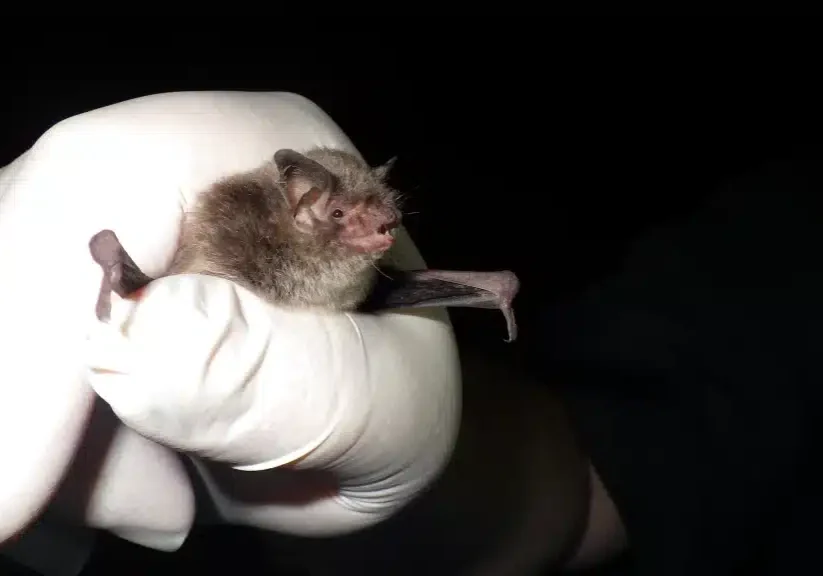
In the Nantahala National Forest, a team of biologists spotted Indiana bats, an endangered species that hasn’t been seen in North Carolina for the last 11 years.

‘First Line of Defense’
During Hurricane Helene and its aftermath, rural fire departments and other first responder hubs played critical roles in keeping their communities safe, even without power and cut off from outside support for days or weeks after the storm. Two years later, plenty of work remains to ensure these hubs have the resources they need to operate day to day and be ready when emergencies or natural disasters strike.

The Rocky Road — and Bridge — to Recovery
Hurricane Helene is estimated to have damaged nearly 7,000 private roads and bridges in Western North Carolina. Two years later, many restoration projects are complete, but the journey hasn’t been easy — and isn’t over for others.
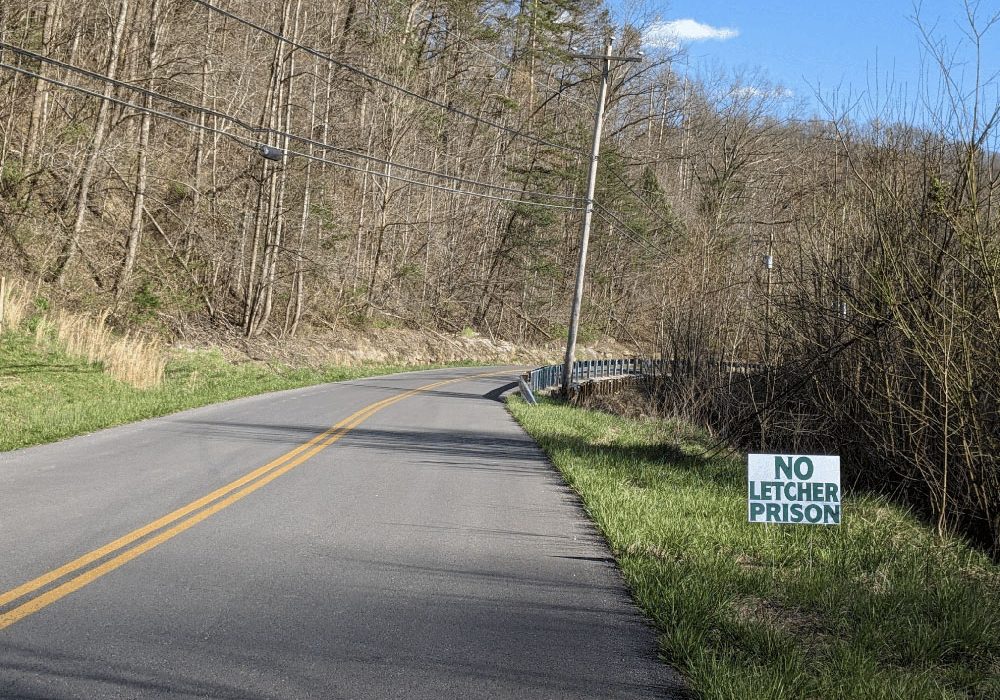
After 20 Years, Letcher County Prison Proposal Is Still Alive, Though Obstacles Remain
A $605 million proposal for a federal prison on a former strip mine site in Letcher County, Kentucky, championed by U.S. Rep. Hal Rogers, refuses to die, despite local opposition, a lack of support from the executive branch and numerous other obstacles.
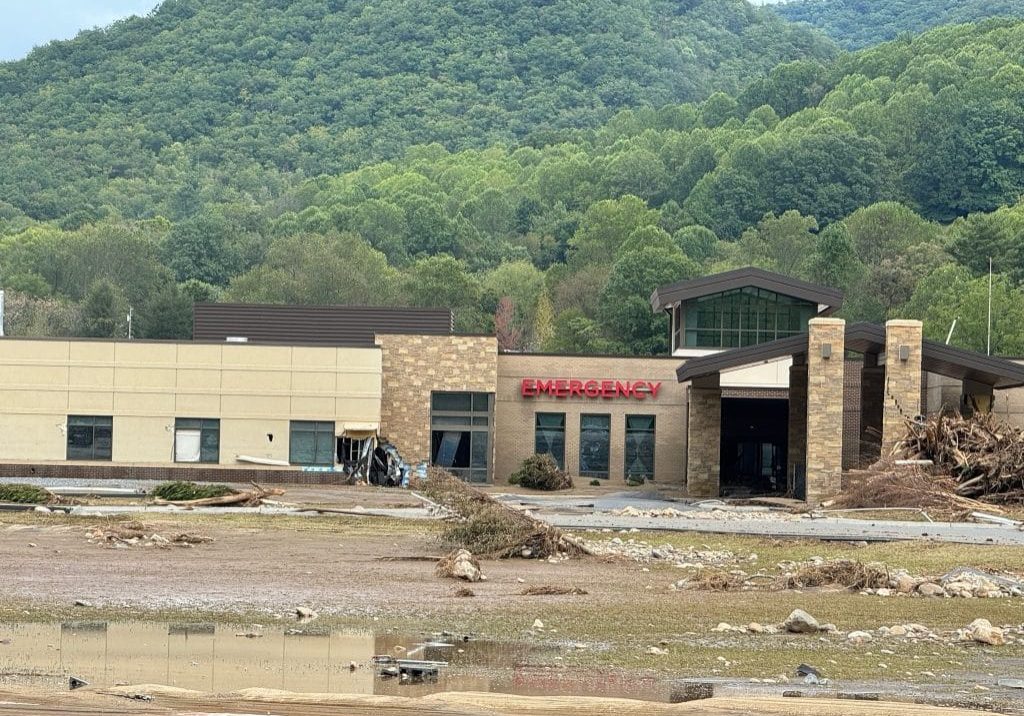
The Washout and Rebuild
For nearly two years, residents of Unicoi County, Tennessee, have had to make do without a hospital after Hurricane Helene destroyed the rural hospital. Ballad Health, which owns the hospital, broke ground on a new location — in another floodplain — in August 2026.
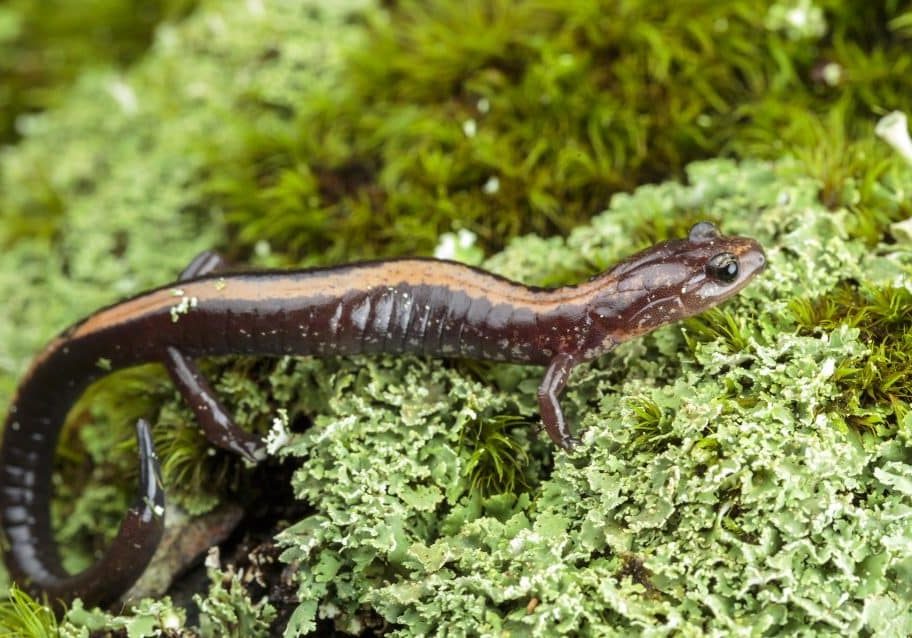
The Shenandoah Salamander
The Shenandoah salamander is a woodland salamander, which has adapted to life at higher elevations away from water. This sparkling rarity lives among the dry leaves, cracked logs, and stony hillocks on the highest peaks of Shenandoah National Park.

Leave a comment
Your email address will not be published. Required fields are marked *
Leave a Comment