

1,000 Days on Bottled Water
Jan. 11 marked the 1,000th day that hundreds of North Carolinians living near Duke Energy’s coal ash basins have lived on bottled water. Affected residents spoke at press conferences in Raleigh and Charlotte that day along with lawmakers and representatives from environmental groups, including Appalachian Voices, the publisher of this newspaper.
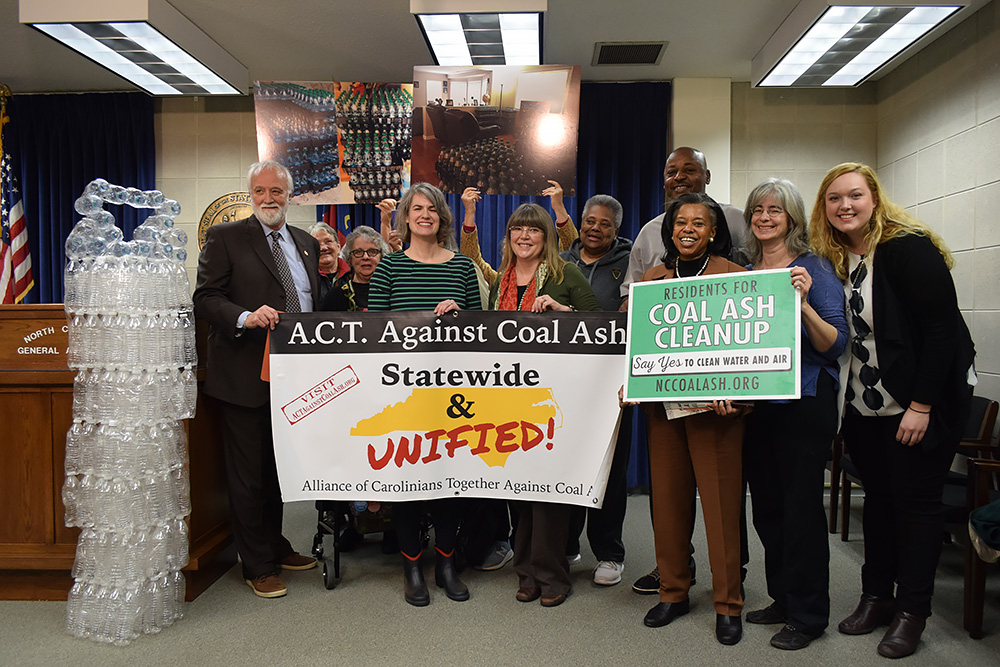
Members of ACT Against Coal Ash stand with legislators and allies after the press conference in Raleigh. Photo by Kevin Ridder
According to Caroline Armijo with Stokes County Residents for Coal Ash Cleanup, families have learned some uncomfortable realities after being on bottled water for nearly three years.
“Your children can’t play in the bathtub or swim in your pool,” Armijo says. “You have to brush your teeth with bottled water. You have to make your coffee with bottled water. You know how many bottles it takes to boil a box of pasta.”
State Rep. John Autry took the podium to call out his colleagues in the General Assembly.
“I urge the leadership in the legislature and the [N.C. Department of Environmental Quality] to demand that Duke Energy remove all of its coal ash from unlined pits and safely recycle it or dispose of it aboveground on Duke’s property,” he said.
Duke Energy spokesman Jeff Brooks, however, states that the coal ash ponds did not contaminate the well water.
“We’ve not seen to this point a connection between Duke Energy’s operations and the findings in their wells,” Brooks says. “But we’ve worked from the beginning to try to address [residents’] concerns and provide peace of mind.”
Under North Carolina law, Duke has until October 2018 to install permanent water supplies for residents within a half-mile radius of coal ash basins near 10 of the utility’s power plants in the state. According to a Duke press release, affected residents near public water supplies have the option of being connected to municipal water or having a well filtration system installed, while those in more remote areas will only have the filtration option.
But Duke won’t be providing a permanent water supply for people like Roger Hollis, who lives just outside the half-mile radius of a Cleveland County, N.C., coal ash basin and has a contaminated well.
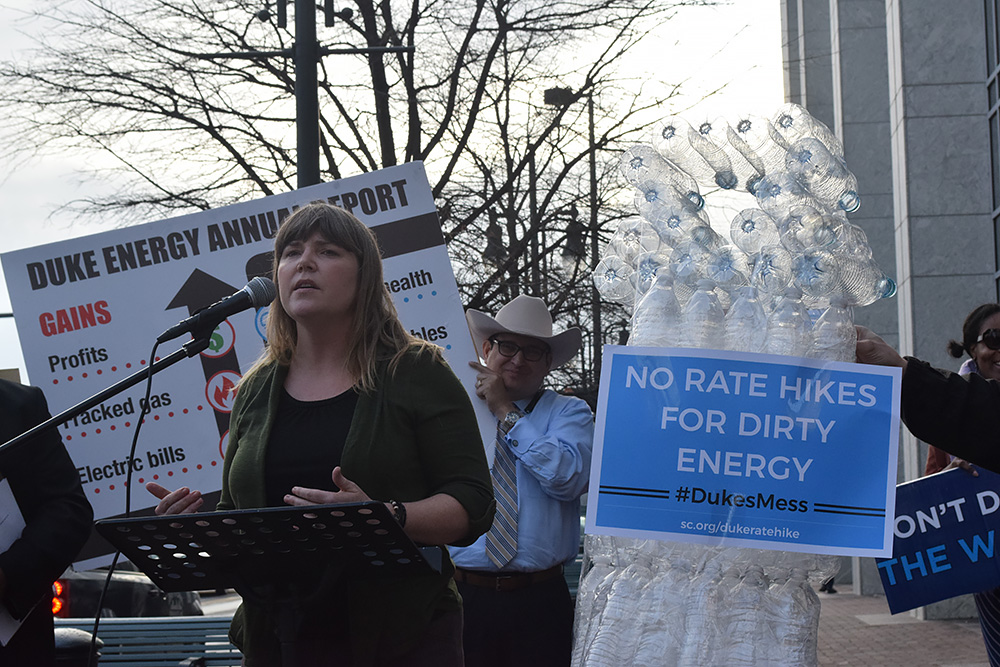
Appalachian Voices N.C. Program Manager Amy Adams calls for coal ash cleanup during a press conference outside of Duke Energy’s Charlotte headquarters. Photo by Kevin Ridder
“I’m assuming that the money is the problem,” Hollis said at the press conference outside Duke’s Charlotte headquarters. “But with [$22.74 billion] in revenue and Duke Energy CEO Lynn Good making over $13 million a year salary, with a $2.6 million bonus just a couple years ago, why can’t our small community get drinking water?”
The N.C. Utilities Commission is currently deciding whether to approve a 16.7 percent rate increase for residential customers of Duke Energy Progress and Duke Energy Carolinas. If approved, a portion would fund the cleanup of Duke’s unlined coal ash basins.
“We are definitely in favor of seeing Duke Energy pay for its negligence in regards to its coal ash waste disposal,” Luis Rodriguez with the Sierra Club said in Charlotte. “And we definitely want to make sure that Duke does not pass the cost of this off to ratepayers in the form of rate hikes.”
According to Rep. Autry, legislative action is needed.
“I think the ultimate solution is to make sure that [the General Assembly] properly funds the Department of Environmental Quality and the Department of Health and Human Services to deal with those issues,” he said.
“It’s time for two things to happen,” Appalachian Voices’ N.C. Program Manager Amy Adams said at the Charlotte event. “One, to make sure the corporations who make money and reside in our state are doing the right thing by the citizens who live here. Secondly, it’s time for the state of North Carolina to set groundwater standards that are protective of human health for all 3.5 million North Carolinians who rely on groundwater.”
Related Articles
Latest News
More Stories

Halloween Approaches, and Night School Is in Session
The House of Art in Bluefield, West Virginia, looks like a haunted tower, making it the perfect location for its sixth annual haunt event: Night School. The Night School will be open every Friday and Saturday night through Oct. 31.
‘The Most Perfect Act of Love’
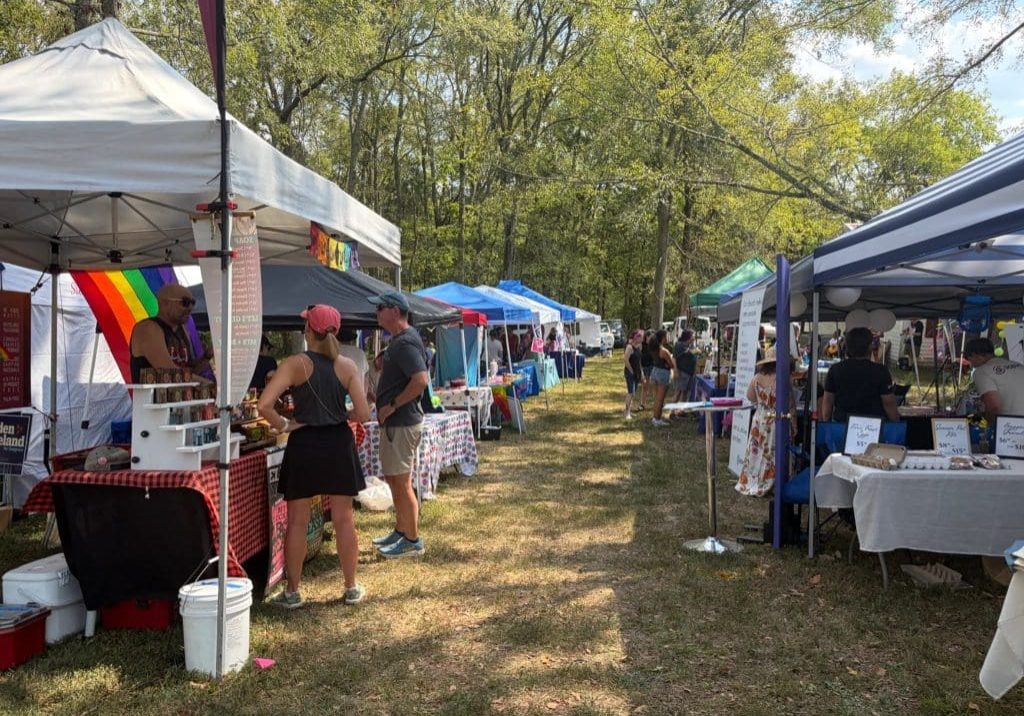
After losing its rural pride celebration, hundreds of people attended the second annual Affirming Sumner Pride celebration on a 24-acre farm dubbed “Fruity Farm” in Bethpage, Sumner County, Tennessee.

Signs of Life
In the Nantahala National Forest, a team of biologists spotted Indiana bats, an endangered species that hasn’t been seen in North Carolina for the last 11 years.

‘First Line of Defense’
During Hurricane Helene and its aftermath, rural fire departments and other first responder hubs played critical roles in keeping their communities safe, even without power and cut off from outside support for days or weeks after the storm. Two years later, plenty of work remains to ensure these hubs have the resources they need to operate day to day and be ready when emergencies or natural disasters strike.

The Rocky Road — and Bridge — to Recovery
Hurricane Helene is estimated to have damaged nearly 7,000 private roads and bridges in Western North Carolina. Two years later, many restoration projects are complete, but the journey hasn’t been easy — and isn’t over for others.
After 20 Years, Letcher County Prison Proposal Is Still Alive, Though Obstacles Remain
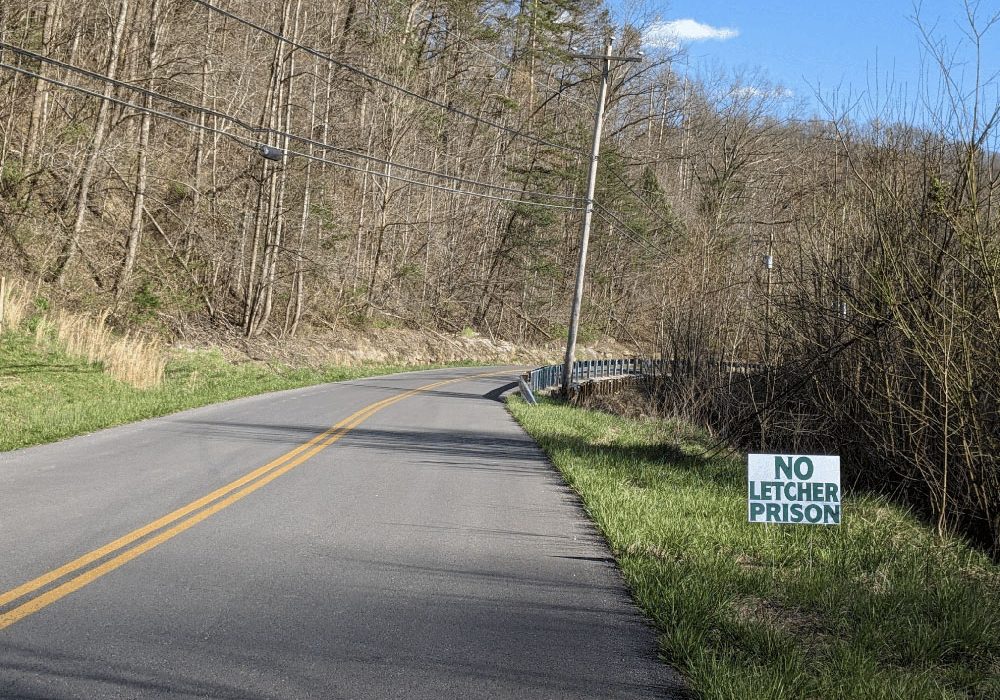
A $605 million proposal for a federal prison on a former strip mine site in Letcher County, Kentucky, championed by U.S. Rep. Hal Rogers, refuses to die, despite local opposition, a lack of support from the executive branch and numerous other obstacles.

Leave a comment
Your email address will not be published. Required fields are marked *
Leave a Comment