

Exposed: Pesticides
Whether in food, water or air, current research suggests that no corner of the global environment is spared from pesticide contamination — not even the bacteria and fungi needed to regenerate soil.
Pesticides include popular products such as insecticides, herbicides, fungicides and rodenticides. Many properties and impacts of these chemicals remain unstudied, but researchers are continuing to uncover links to cancer, respiratory diseases and neurological impacts such as altered brain development and Parkinson’s disease. Some pesticides break down into less harmful substances over time, but others, such as DDT, can persist for decades.
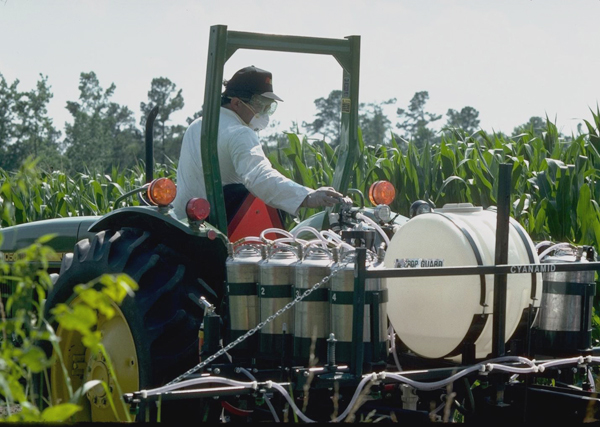
Agricultural workers are particularly at risk of the dangers posed by pesticides used to fight off weeds, funguses and insects. Photo courtesy of the U.S. Environmental Protection Agency
Agricultural field crop workers face the most pronounced and long-term risk of harm, but chemicals in products for lawn care, household pest control, flea and tick collars and lice treatment shampoos are also significant sources of exposure. Scientists remain divided on whether residues on food are significant enough to affect health.
Up to a quarter of pesticides sprayed outdoors are carried as far as hundreds of miles away. In samples taken across the country, the U.S. Geological Survey found that pesticides have contributed to pervasive air pollution, and the agency has discovered these chemicals in underground aquifers that supply drinking water.
Pesticides also drain into surface watersheds — in 2014, the USGS estimated that nearly all national waterways contain at least one pesticide, often at levels exceeding federal standards for aquatic life, but rarely considered dangerous to human health. Yet there is scant research on the combined effect of multiple pesticides, so the agency notes “the potential for adverse effects is likely greater than these results indicate.”
Related Articles
Latest News
More Stories

Halloween Approaches, and Night School Is in Session
The House of Art in Bluefield, West Virginia, looks like a haunted tower, making it the perfect location for its sixth annual haunt event: Night School. The Night School will be open every Friday and Saturday night through Oct. 31.

‘The Most Perfect Act of Love’
After losing its rural pride celebration, hundreds of people attended the second annual Affirming Sumner Pride celebration on a 24-acre farm dubbed “Fruity Farm” in Bethpage, Sumner County, Tennessee.

Signs of Life
In the Nantahala National Forest, a team of biologists spotted Indiana bats, an endangered species that hasn’t been seen in North Carolina for the last 11 years.

‘First Line of Defense’
During Hurricane Helene and its aftermath, rural fire departments and other first responder hubs played critical roles in keeping their communities safe, even without power and cut off from outside support for days or weeks after the storm. Two years later, plenty of work remains to ensure these hubs have the resources they need to operate day to day and be ready when emergencies or natural disasters strike.

The Rocky Road — and Bridge — to Recovery
Hurricane Helene is estimated to have damaged nearly 7,000 private roads and bridges in Western North Carolina. Two years later, many restoration projects are complete, but the journey hasn’t been easy — and isn’t over for others.

After 20 Years, Letcher County Prison Proposal Is Still Alive, Though Obstacles Remain
A $605 million proposal for a federal prison on a former strip mine site in Letcher County, Kentucky, championed by U.S. Rep. Hal Rogers, refuses to die, despite local opposition, a lack of support from the executive branch and numerous other obstacles.

Leave a comment
Your email address will not be published. Required fields are marked *
Leave a Comment