

Tennessee Legislators Dodge Vote on Mountaintop Removal
Although a bill to protect Tennessee’s mountains received broad citizen and political support — and media attention from around the world — state legislators chose to deny public testimony on the measure and instead let the Scenic Vistas Protection Act die without a vote. Appalachian Voices Tennessee Director J.W. Randolph worked long hours in the halls of the state legislature to introduce and promote the bill, and was scheduled to testify along with Ann League, a good friend of our organization and a resident in Tennessee’s coal-bearing region. Just as they were called up to speak, however, the chairman stopped them short and declared the bill dead. Bill sponsors Rep. Gloria Johnson (D-Knoxville) and Senator Lowe Finney (D-Jackson) vowed to continue to build on this year’s efforts and bring the bill back in 2014 with even more grassroots support. To stay up-to-date on our work in Tennessee, visit appvoices.org/tn.
Building A Bridge Over Troubled Waters
The Red, White and Water team is working to find out what residents living around coal-fired power plants have to say about water pollution in their communities.
Belmont, N.C., was the first stop. There, as with other coal-burning facilities, the G.G. Allen Steam Station contaminates the groundwater, usually from coal ash pond seepage. The plant also discharges toxic heavy metals into nearby Lake Wylie.
This March, our crew canvassed those living in the shadow of the G.G. Allen Plant. One resident, Archie Dixon, has a driveway that is stained with coal ash and keeps a stack of bottled water in his garage, saying he refuses to drink the well water.
Looking ahead, the RWW team will encourage more residents living near coal plants to tell their stories. Follow the latest at appvoices.org/red-white-and-water.
Related Articles
Latest News
More Stories

Halloween Approaches, and Night School Is in Session
The House of Art in Bluefield, West Virginia, looks like a haunted tower, making it the perfect location for its sixth annual haunt event: Night School. The Night School will be open every Friday and Saturday night through Oct. 31.
‘The Most Perfect Act of Love’
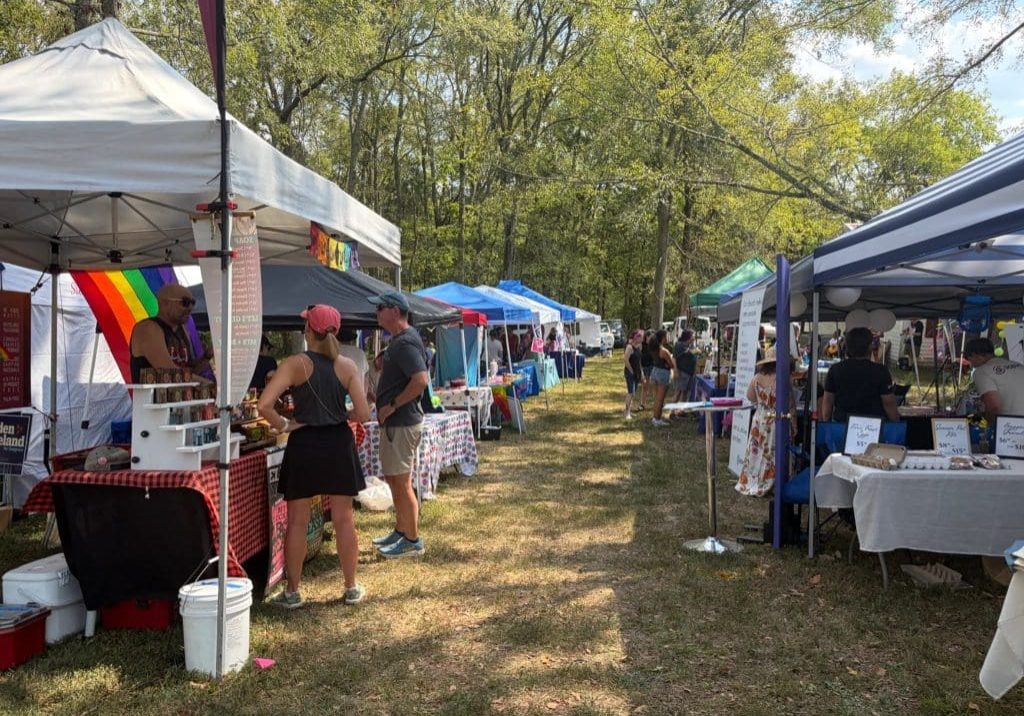
After losing its rural pride celebration, hundreds of people attended the second annual Affirming Sumner Pride celebration on a 24-acre farm dubbed “Fruity Farm” in Bethpage, Sumner County, Tennessee.

Signs of Life
In the Nantahala National Forest, a team of biologists spotted Indiana bats, an endangered species that hasn’t been seen in North Carolina for the last 11 years.

‘First Line of Defense’
During Hurricane Helene and its aftermath, rural fire departments and other first responder hubs played critical roles in keeping their communities safe, even without power and cut off from outside support for days or weeks after the storm. Two years later, plenty of work remains to ensure these hubs have the resources they need to operate day to day and be ready when emergencies or natural disasters strike.

The Rocky Road — and Bridge — to Recovery
Hurricane Helene is estimated to have damaged nearly 7,000 private roads and bridges in Western North Carolina. Two years later, many restoration projects are complete, but the journey hasn’t been easy — and isn’t over for others.

After 20 Years, Letcher County Prison Proposal Is Still Alive, Though Obstacles Remain
A $605 million proposal for a federal prison on a former strip mine site in Letcher County, Kentucky, championed by U.S. Rep. Hal Rogers, refuses to die, despite local opposition, a lack of support from the executive branch and numerous other obstacles.

Leave a comment
Your email address will not be published. Required fields are marked *
Leave a Comment