

In Memoriam
Since Europeans arrived, excessive hunting and deforestation has led to the demise of a number of Appalachian creatures.
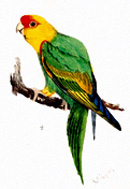
Carolina Parakeet
The only parrot native to the United States favored old forests along rivers. Farmers saw it as a despised agricultural pest and ladies prized its feathers for their hats — it was extinct by the early 1900s.
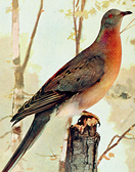
Passenger Pigeon
Nesting colonies of passenger pigeons could be several miles wide and 40 miles long, with hundreds of birds in each tree. The birds could fly at 60 mph, but that didn’t save them from extinction in the early 20th century.
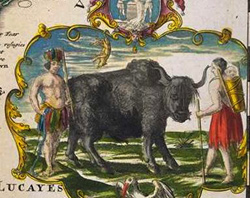
Eastern Wood Bison
Smaller than their western counterparts, migratory eastern wood bison carved paths through the forest, and their trails were used by Native Americans as well as early European settlers. The last herd was slaughtered during the winter of 1799-1800, though a few individuals survived until 1825.
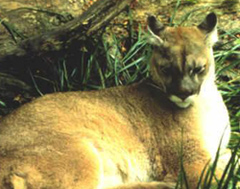
Eastern Mountain Lion
Experts believe the last of the eastern subspecies of mountain lion, or cougar, went extinct in the 1930s. It was officially declared extinct in 2011, the same year a cougar was killed by an SUV in Connecticut. That kitty had wandered east from South Dakota. It’s also likely that Florida panthers journey north to the mountains.
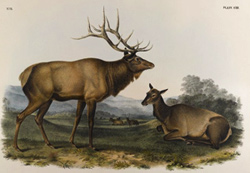
Eastern Elk
Extinct by the end of the 19th century, eastern elk were larger than their western cousins. Recently, western elk have been reintroduced to some parts of Appalachia. Remnants of the eastern elk’s bloodline might persist — Theodore Roosevelt sent 18 elk to New Zealand, and some might have been the eastern variety.
Read more about Appalachia’s remarkable biodiversity here.
Carolina parakeet and passenger pigeon drawings courtesy of Biodiversity Heritage Library; “Hennepin, Amplissimae Regionali Mississipi” 1687 map, from Yale University Library, Map Collection; Cougar courtesy of U.S. Fish and Wildlife; John James Audobon Elk lithograph courtesy of Brooklyn Museum
Related Articles
Latest News
More Stories

Halloween Approaches, and Night School Is in Session
The House of Art in Bluefield, West Virginia, looks like a haunted tower, making it the perfect location for its sixth annual haunt event: Night School. The Night School will be open every Friday and Saturday night through Oct. 31.

‘The Most Perfect Act of Love’
After losing its rural pride celebration, hundreds of people attended the second annual Affirming Sumner Pride celebration on a 24-acre farm dubbed “Fruity Farm” in Bethpage, Sumner County, Tennessee.

Signs of Life
In the Nantahala National Forest, a team of biologists spotted Indiana bats, an endangered species that hasn’t been seen in North Carolina for the last 11 years.

‘First Line of Defense’
During Hurricane Helene and its aftermath, rural fire departments and other first responder hubs played critical roles in keeping their communities safe, even without power and cut off from outside support for days or weeks after the storm. Two years later, plenty of work remains to ensure these hubs have the resources they need to operate day to day and be ready when emergencies or natural disasters strike.

The Rocky Road — and Bridge — to Recovery
Hurricane Helene is estimated to have damaged nearly 7,000 private roads and bridges in Western North Carolina. Two years later, many restoration projects are complete, but the journey hasn’t been easy — and isn’t over for others.
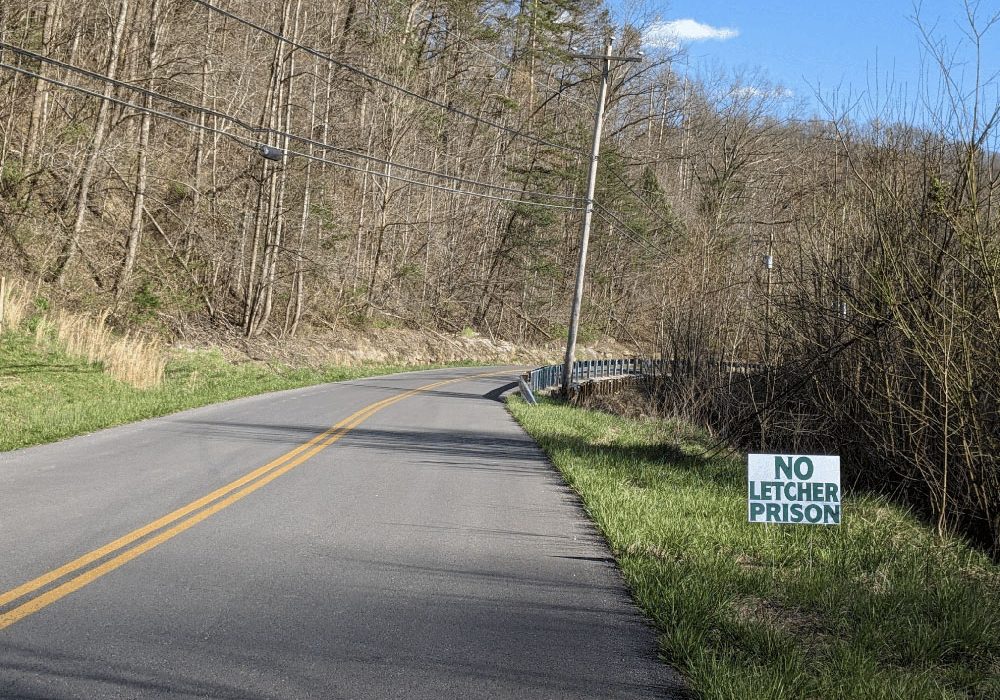
After 20 Years, Letcher County Prison Proposal Is Still Alive, Though Obstacles Remain
A $605 million proposal for a federal prison on a former strip mine site in Letcher County, Kentucky, championed by U.S. Rep. Hal Rogers, refuses to die, despite local opposition, a lack of support from the executive branch and numerous other obstacles.

Leave a comment
Your email address will not be published. Required fields are marked *
3 responses to “In Memoriam”
-

Original bison range included most of Western NC, northern Ga, western SC
-
Check this site fro the historic account of the buffalo migration through western PA
-
It’s my understanding that there is no record of bison in the historic archaeological record in Appalachia.There was a bison skull dated to the late pleistocent in Florida, but nothing since. Can anyone give some more current information or insight? I’ve researched historical accounts, but they’ve only been second hand perspectives.


Leave a Comment